
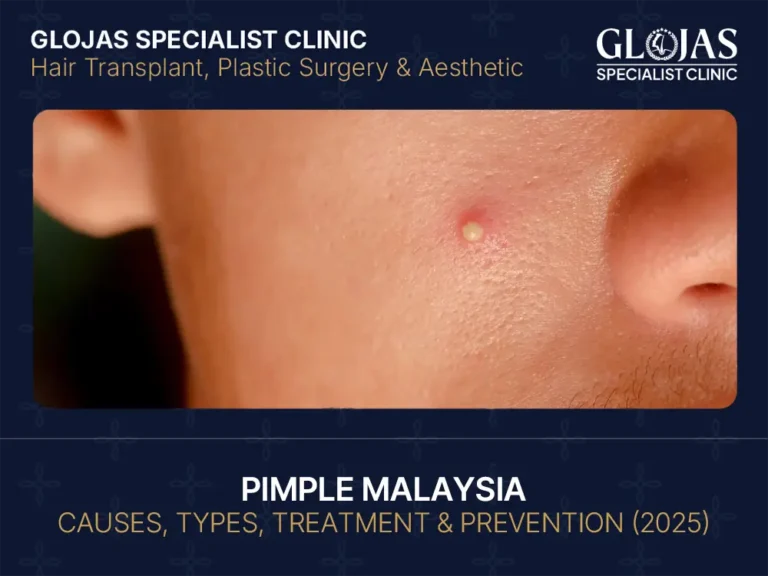
Pimples are small skin lesions or inflammations that occur when hair follicles become clogged with excess sebum and dead skin cells. This blockage allows bacteria like C. acnes to thrive, leading to the redness, swelling, and pus often seen in whiteheads, pustules, or deeper cystic acne lesions on the face and body.
What Are Pimples? (Medical Definition and Skin Process)
How Pimples Form in the Skin
Pimples start deep within the pore where sebaceous glands produce oil to keep the skin hydrated.
When oil production is too high, dead skin cells stick together and form a “plug” that traps bacteria inside the follicle.
The body’s immune system reacts to this bacterial overgrowth, causing the classic signs of inflammation: redness, heat, and swelling.
In Malaysia’s humid climate, the external moisture can prevent these plugs from drying out naturally, often leading to more persistent lesions.
Difference Between Pimples, Acne, and Breakouts
A “breakout” is a general term for the sudden appearance of several skin blemishes at once.
A “pimple” is an individual lesion—the actual bump you see on your skin surface.
Acne (Acne Vulgaris) is a chronic medical condition where someone experiences frequent and recurring pimples over a long period.
Understanding this distinction is vital, as a single pimple might just need a spot treatment, whereas acne requires a full clinical skin management plan.
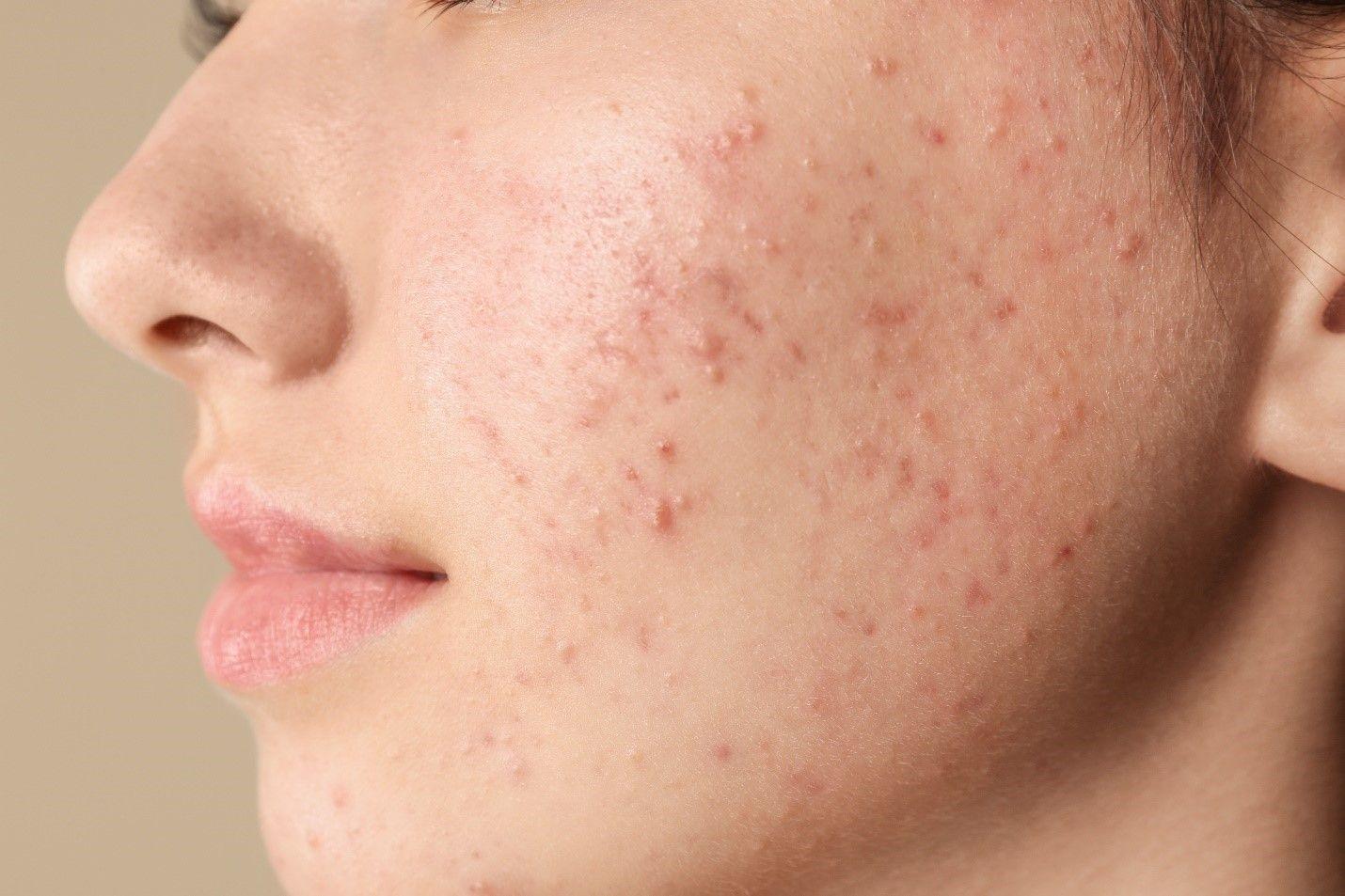
Types of Pimples Common in Malaysia
Whiteheads and Blackheads
Whiteheads (Closed Comedones): These occur when the pore is completely blocked, keeping the trapped oil and cells white or flesh-colored.
Blackheads (Open Comedones): The pore remains slightly open, allowing oxygen to turn the trapped oil dark through a process called oxidation.
Both are non-inflammatory but can quickly turn into red pimples if the bacteria inside begin to multiply rapidly.
Papules and Pustules
Papules: These are small, hard, red bumps that feel tender but do not have a visible “head” of pus.
Pustules: These look like papules but have a defined white or yellow center filled with fluid, indicating the body is actively fighting an infection.
Sweating in tropical heat can often make these types feel more itchy or irritated than in cooler environments.
Cystic and Severe Acne
Cystic acne consists of deep, painful, pus-filled lumps that sit far below the skin’s surface.
Because these lesions are so deep, they are the most likely to cause permanent structural damage to the skin.
Severe cases often require a dermatological assessment to prevent long-term physical and emotional scarring.
Causes of Pimples in Malaysia Climate and Lifestyle
Excess Oil Production and Clogged Pores
High temperatures stimulate the sebaceous glands to produce more oil to protect the skin from heat.
This excess oil mixes with urban pollutants and haze particles, creating a thick paste that easily blocks pore openings.
Hormonal Changes (Teenagers and Adults)
Androgens increase during puberty, making glands larger and oilier.
Adult female acne is frequently triggered by menstrual cycles, pregnancy, or conditions like PCOS.
Diet and High Glycemic Foods
Many Malaysian favorites, like white rice and sugary local desserts, have a high Glycemic Index (GI).
High-GI diets spike insulin levels, which directly triggers more oil production and worsens skin inflammation.
Stress and Sleep Disruption
Stress causes the body to release cortisol, which signals your skin’s oil glands to go into “overdrive.”
Lack of sleep prevents the skin from repairing its natural barrier, making it easier for bacteria to cause an infection.
Hot and Humid Weather Effects
Malaysia’s 80% average humidity prevents sweat from evaporating quickly, leading to “Tropical Acne.”
The combination of heat and humidity creates a perfect breeding ground for bacteria on the face, back, and chest.
How Pimples Develop Into Acne Conditions
Role of Bacteria (C. acnes)
Cutibacterium acnes is a bacteria that lives naturally on the skin but becomes harmful when trapped in an oily, oxygen-free pore.
The bacteria feed on the sebum, releasing waste products that irritate the lining of the follicle.
Inflammation Process in the Skin
As the follicle wall weakens from bacterial activity, it eventually ruptures.
This rupture leaks oil and bacteria into the surrounding skin, causing the large, red, and painful swelling we recognize as an acne flare.
Progression from Mild to Severe Acne
Mild acne is usually limited to blackheads and small bumps.
Without proper care, the cycle of inflammation can spread, turning occasional pimples into a chronic, severe condition.
Pimples Treatment in Malaysia (Clinically Proven Options)
Topical Treatments (Retinoids, Benzoyl Peroxide, Antibiotics)
Retinoids: These speed up cell turnover to stop pores from clogging.
Benzoyl Peroxide: A powerful antibacterial that kills the germs inside the pore.
Salicylic Acid: A BHA that dissolves the “glue” holding dead skin cells together inside the oily follicle.
Oral Medications for Moderate to Severe Acne
Doctors may prescribe oral antibiotics to reduce the amount of bacteria throughout the body.
Isotretinoin is a very strong Vitamin A medication used for the most stubborn, cystic cases.
Hormonal Treatment for Female Acne
Certain birth control pills can help balance the hormones that cause cyclical breakouts.
Spironolactone is another medication that can be used to block the specific hormones that tell oil glands to produce too much sebum.
Dermatologist-Guided Treatment Plans
A professional can create a custom plan that combines different medications for a “multi-pronged” attack on acne.
In Malaysia, it is standard for doctors to follow National Clinical Practice Guidelines to ensure patient safety.
Professional Acne Treatments in Malaysia Clinics
Chemical Peels for Active Pimples
Clinical peels use high concentrations of acids to deeply exfoliate the skin and clear out “congested” pores.
They are especially helpful for fading the red or dark marks left behind after a pimple heals.
Laser Treatment for Acne Control
Certain lasers target the sebaceous glands directly, shrinking them so they produce less oil.
Lasers also reduce the redness of active acne and help kill surface bacteria without using harsh chemicals.
Light Therapy (Blue Light / PDT)
Blue light therapy uses a specific light frequency that is toxic to C. acnes bacteria.
It is a painless, non-invasive option for those who want to avoid oral medications or have sensitive skin.
Microneedling for Acne Recovery
Microneedling is used once active pimples have cleared to help the skin rebuild its texture.
It is highly effective for “rolling” scars, as it triggers a natural healing response to smooth out the skin.
Skincare Routine for Pimples Control
Gentle Cleansing and Oil Control
Wash your face twice daily with a pH-balanced cleanser to remove excess oil without damaging your skin barrier.
Avoid “scrubbing” your face, as physical irritation can make inflammatory pimples much worse.
Non-Comedogenic Moisturizer and Sunscreen
“Non-comedogenic” means the product has been tested to ensure it won’t block your pores.
Sunscreen is essential in Malaysia’s bright sun to prevent acne marks from turning into permanent dark spots.
Active Ingredients That Help Acne Skin
Niacinamide: Helps control oil and reduces the appearance of large pores.
Azelaic Acid: A gentle acid that kills bacteria and fades post-pimple redness.
Ingredients to Avoid That Worsen Pimples
Heavy oils like coconut oil or cocoa butter can be very “occlusive,” meaning they sit on top of the skin and trap oil underneath.
Be cautious of thick “cold creams” or oil-based foundations if you have naturally oily skin.
Pimples Prevention Strategies
Daily Skincare Habits
Wash your hair regularly, as hair oils can travel to your forehead and cause “pomade acne.”
Try not to touch your face during the day to avoid transferring bacteria from your hands to your skin.
Diet and Lifestyle Adjustments
Try swapping high-sugar snacks for whole grains or nuts to keep your insulin levels stable.
Drinking enough water helps your skin stay hydrated so it doesn’t over-produce oil to compensate for dryness.
Makeup and Hygiene Control
Always remove your makeup thoroughly before sleep using a gentle “double-cleansing” method.
Clean your mobile phone screen regularly, as it carries bacteria that can cause breakouts on your cheeks.
Managing Stress for Skin Health
Finding time for relaxation can lower your cortisol levels, which in turn calms your oil glands.
Consistency is the most important part of prevention—don’t wait for a breakout to start your routine.
When Pimples Need Medical Attention
Persistent or Worsening Acne
If your skin hasn’t improved after 6 to 8 weeks of using drugstore products, it’s time to see a doctor.
Professional help can prevent the condition from becoming a lifelong struggle.
Painful or Cystic Breakouts
Deep, painful lumps should never be squeezed at home, as this can lead to serious infection.
A doctor can provide specialized acne injections to quickly flatten a painful cyst.
Acne That Causes Scarring
If you notice small pits or permanent marks forming, seek treatment immediately.
Stopping the acne now is much easier than trying to fix deep scars years later.
Pimples and Acne Scarring
How Acne Scars Develop
Scars happen when the inflammation is so deep that it destroys the collagen and elastin that give skin its structure.
The body tries to fix the hole, but the “patch” is rarely as smooth as the original skin.
Types of Acne Scars
Atrophic Scars: These are depressed “pits” like ice-pick or boxcar scars.
Hypertrophic Scars: These are raised, thickened bumps caused by too much collagen during healing.
Early Treatment to Prevent Scarring
Using medical-grade topical retinoids early on is the best way to keep the skin’s texture smooth.
The faster you clear an active pimple, the less time it has to damage your deeper skin layers.
Pimples Treatment in Malaysia: Cost and Expectations
Average Treatment Cost Range
| Treatment Type | Estimated Price (MYR) |
| GP Consultation | RM 50 – RM 150 |
| Chemical Peel | RM 200 – RM 500 |
| Laser Session | RM 300 – RM 1,200 |
| Monthly Medications | RM 100 – RM 400 |
Factors Affecting Price
Location: Clinics in central Kuala Lumpur or Penang may have different pricing than smaller towns.
Expertise: Specialists with years of clinical experience may charge higher consultation fees.
Technology: Modern lasers and equipment often cost more but can provide faster results.
Timeline for Visible Improvement
Weeks 1–4: You may notice your skin feeling less oily and looking “calmer.”
Weeks 4–8: Fewer new pimples should be appearing.
Months 3+: This is when you will see the most significant clearing and a more even skin tone.
FAQs About Pimples in Malaysia
What is the main cause of pimples?
The main cause is a combination of excessive oil, dead skin cells, and a common bacteria called C. acnes clogging the pores.
Can pimples go away naturally?
While a single pimple may heal on its own, chronic acne usually needs an active skincare routine or medical intervention to stop the cycle.
How long does acne treatment take?
Most treatments require 8 to 12 weeks of consistent use before you see a significant change in your skin.
What foods cause pimples?
High-sugar foods, white bread, and for some people, dairy products, are the most common dietary triggers.
Is professional treatment necessary for pimples?
Yes, especially if the pimples are painful, widespread, or starting to leave permanent scars on your skin.