- Glomac Galeria Hartamas, Kuala Lumpur
- +60123426370
- info@glojasaesthetic.com
Liposuction is one of the most performed cosmetic surgeries worldwide, designed to remove stubborn pockets of fat that don’t respond to diet or exercise. Using a thin cannula and suction, liposuction reshapes and contours areas like the abdomen, hips, thighs, arms, and chin — revealing a slimmer, more defined silhouette.
At GLOJAS Specialist Clinic in Kuala Lumpur, liposuction is performed by LCP-Certified and NSR-Certified Surgeons, with a focus on natural-looking contours, safety, and results tailored to each patient’s body type.
Liposuction is a body contouring procedure that removes localized, stubborn fat deposits from specific areas of the body using a thin tube called a cannula. It’s designed to sculpt and refine shape, not to produce significant weight loss.
A sterile solution is first injected into the treatment area to reduce bleeding and discomfort. A thin, hollow cannula is then inserted through small incisions and moved back and forth to loosen fat cells, which are suctioned out using a surgical vacuum or syringe. Because the fat cells removed are gone permanently, the treated area has a reduced capacity to store fat in the future.
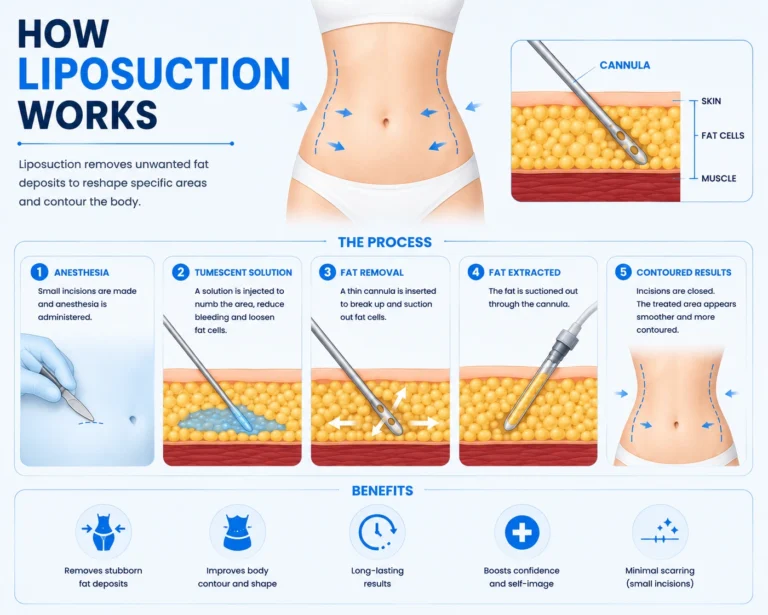
Liposuction is effective for removing pockets of stubborn subcutaneous fat that haven’t responded to diet or exercise. It is not a treatment for obesity, does not tighten loose or sagging skin, and won’t remove visceral fat (the fat around internal organs). Patients with significant loose skin, often after major weight loss, may need a skin-removal procedure such as a tummy tuck instead of, or alongside, liposuction.
Diet and exercise reduce fat cell size across the whole body, while liposuction physically removes fat cells from a specific, targeted area. This is why liposuction can create defined contours — like a visible waistline or jawline — that diet and exercise alone often can’t achieve, even in people who are already close to their target weight. It works best as a contouring tool, not a substitute for a healthy weight.
The most common and traditional method, using a large volume of fluid injected into the treatment area to reduce bleeding, minimize pain, and make fat easier to remove. It’s used as the foundation for most modern liposuction techniques, including several of those below.
Uses laser energy to liquefy fat before it’s suctioned out. The heat generated can also encourage mild skin tightening, making this option appealing for smaller areas or patients with slightly looser skin. Recovery is generally comparable to standard liposuction.
Uses ultrasound energy to break down fat cells before removal, allowing for more precise, targeted contouring while being gentler on surrounding tissue such as blood vessels and nerves. VASER is popular for detailed sculpting, such as defining abdominal muscle contours, and typically costs more than tumescent liposuction alone.
Uses a cannula with a rapid, mechanized back-and-forth motion to loosen fat more efficiently, reducing surgeon fatigue and treatment time in larger-volume cases. It can allow for smoother fat removal, particularly in fibrous areas like the back or male chest.
| Factor | Tumescent | Laser-Assisted | VASER | PAL |
|---|---|---|---|---|
| Best for | General fat removal | Smaller areas, mild skin tightening | Precision contouring, fibrous areas | Larger areas, fibrous tissue |
| Skin tightening | Minimal | Mild | Moderate | Minimal |
| Relative cost | Lower | Moderate | Higher | Moderate |
| Recovery | Standard | Standard | Standard, sometimes smoother | Standard |
Your surgeon will recommend the best technique, or combination, based on the treatment area, your skin quality, and your goals.
In Malaysia, liposuction pricing generally runs as follows:
Across Malaysian clinics, single-area liposuction generally falls between RM8,000 and RM19,000, with multi-area or advanced VASER packages extending up to RM30,000+. Your exact cost depends on your treatment plan.
Generally speaking:
Liposuction is considered a cosmetic procedure and typically isn’t covered by insurance. Many clinics offer installment plans or work with third-party medical financing to help spread the cost. Ask our patient coordinators about the options available at GLOJAS Specialist Clinic.
Your surgeon assesses the treatment area, your skin elasticity, fat distribution, and overall health, and discusses your goals to determine the right technique and expected outcome. This is also when your BMI and candidacy are confirmed.
Smaller, single-area treatments can often be performed under local anesthesia with sedation, keeping you comfortable while minimizing recovery time. Larger or multi-area sessions typically use general anesthesia in an accredited operating theater. Your surgeon will recommend the safest, most appropriate option for your case.
Small, inconspicuous incisions are made near the treatment area. A tumescent solution is injected to reduce bleeding and discomfort, then a cannula is used to loosen and suction out fat, following the treatment plan discussed during consultation. The surgeon shapes the area meticulously to achieve a smooth, natural contour.
Depending on the number of areas treated and the technique used, liposuction typically takes one to three hours. Larger, multi-area sessions may take longer.
Expect swelling, bruising, and mild to moderate soreness for the first several days, generally manageable with prescribed pain medication. A compression garment is worn from the start to control swelling and support the treated area as it heals.
Most patients wear a compression garment continuously for the first one to two weeks, then part-time for a further several weeks. This helps reduce swelling, supports skin retraction, and helps the final contour settle evenly.
Most patients return to light daily activities and desk-based work within a few days to a week. Light cardio can often resume within two to three weeks, with full exercise, including strength training, typically cleared around four to six weeks. Always follow your surgeon’s individual guidance rather than a generic timeline.
Contact your clinic promptly if you notice:
Swelling can mask results in the first few weeks, so early progress photos often understate the final outcome. As swelling resolves, a smoother, more defined contour becomes increasingly visible.
Initial improvement is visible within the first month, but the final, settled contour is typically seen at three to six months, once all residual swelling has resolved and the skin has fully adapted to the new shape.
The fat cells removed during liposuction are gone permanently and don’t regenerate. However, remaining fat cells in the body — including in untreated areas — can still expand with weight gain. Maintaining a stable weight after liposuction is the main factor in keeping results consistent over time.
Incisions used for liposuction are small — typically just a few millimeters — and placed in inconspicuous locations such as natural skin folds. Most scars fade significantly within several months to a year and are barely noticeable once healed.
Good candidates generally:
Liposuction is generally best suited to patients with a BMI under 30, since higher BMI can increase surgical risk and reduce the precision of contouring. Skin elasticity also matters: patients with significant loose or sagging skin, often following major weight loss, may not see the smooth results they expect from liposuction alone, since the procedure doesn’t tighten skin.
Liposuction removes excess fat but doesn’t address loose skin or separated abdominal muscles. A tummy tuck (abdominoplasty) removes excess skin, tightens the abdominal muscles, and is generally recommended for patients with significant skin laxity, often after pregnancy or major weight loss. Some patients benefit from a combination of both procedures. Your surgeon can advise which — or both — suits your body and goals.











At GLOJAS Specialist Clinic, highly qualified surgeons use advanced laser technology for non-surgical body shaping. Every treatment is performed in our government-approved facility under strict safety protocols. We deliver natural, proven results in fat reduction and skin tightening with professional expertise you can trust.

Liposuction is a cosmetic surgery procedure that removes stubborn fat deposits from areas like the abdomen, thighs, arms, and chin using a suction technique, contouring the body shape.
No. Liposuction is a body contouring procedure, not a weight loss solution. It's best for removing localized fat pockets that resist diet and exercise, not for significant weight reduction.
Safe fat removal typically ranges up to 5 liters per session, depending on the patient's health, treatment area, and surgeon's assessment. Larger volumes may require staged procedures.
Cost varies based on the treatment area(s), technique used, and number of sessions needed. Book a consultation for a personalized quote based on your goals.
Yes, the fat cells removed are gone permanently. However, remaining fat cells can still expand with significant weight gain, so maintaining a stable weight is important.
The procedure is done under anesthesia, so there's no pain during surgery. Mild soreness, swelling, and bruising for 1–2 weeks afterward is normal and manageable with medication.
Most patients return to light activities within 3–5 days and normal exercise within 4–6 weeks. Final results become visible after swelling subsides, usually in 3 months.
The treated fat cells don't return, but new fat can accumulate in untreated areas if you gain significant weight. A stable lifestyle helps maintain long-term results.
Liposuction removes fat only, while a tummy tuck removes excess skin and tightens abdominal muscles. Patients with loose skin often need a tummy tuck instead of, or with, liposuction.
Ideal candidates are close to their target weight, have good skin elasticity, and want to remove localized fat pockets rather than lose significant weight overall.
