
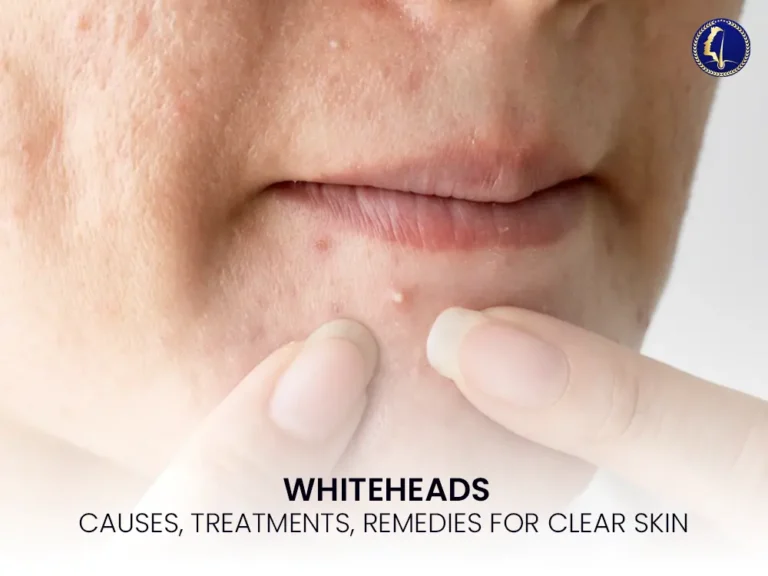
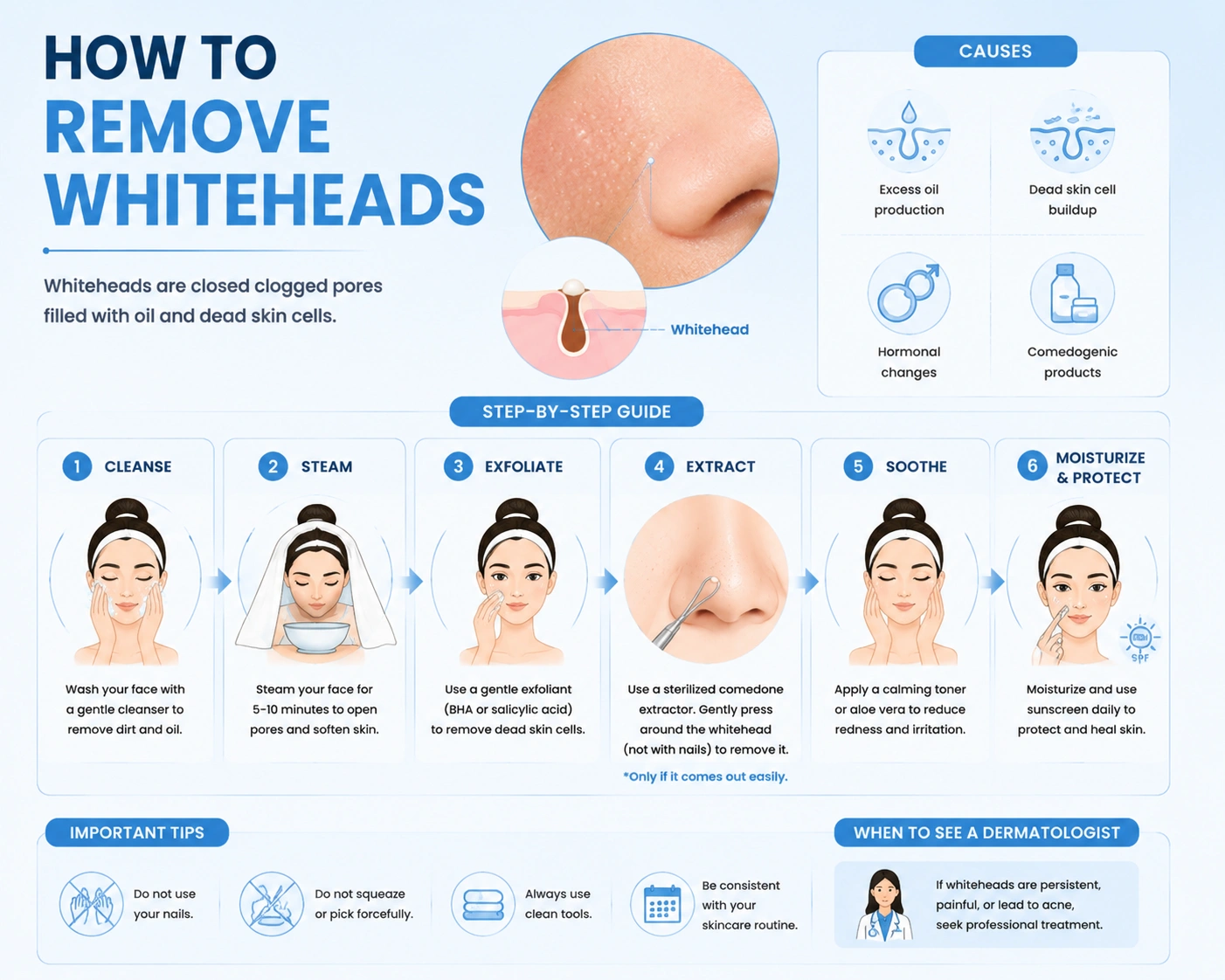
A whitehead is a type of acne lesion medically known as a closed comedo. It forms when dead skin cells, natural sebum (oil), and microscopic debris become trapped inside a hair follicle, creating a small, flesh-colored or white bump that remains completely covered by a thin layer of skin.
Because the trapped contents are sealed away from the outside air, the debris does not oxidize or change color, allowing the bump to maintain its distinct white or yellowish head.
Whiteheads vs. Blackheads vs. Pimples
While all three originate from clogged pores, their structural differences change how they look and how they must be treated.
Whiteheads (Closed Comedones): The pore remains completely closed by a microscopic layer of skin cells. The trapped sebum and dead cells stay white or flesh-colored. There is minimal to no active inflammation or redness.
Blackheads (Open Comedones): The pore is widened and open to the surface environment. Exposure to air causes the trapped lipids and melanin to oxidize, turning the debris a dark black or brown color. Like whiteheads, they are non-inflammatory.
Pimples (Papules and Pustules): These occur when the trapped plug ruptures the follicle wall or when Cutibacterium acnes bacteria multiply inside the pore. The body responds with an immune defense, resulting in a swollen, painful, red bump that often develops a pus-filled tip.
What Causes Whiteheads
Whiteheads are caused by an accumulation of cellular debris and sebum production failures:
Excess Sebum Production: Hormonal fluctuations (such as during puberty, menstrual cycles, or stress) trigger the sebaceous glands to overproduce natural oils.
Abnormal Desquamation: The body fails to properly shed dead epidermal cells. Instead of rising and washing away, these sticky cells clump together inside the pore opening.
Comedogenic Products: Using thick, heavy moisturizers, foundations, or hair styling oils that physically block the skin’s surface pores.
Friction and Sweat: Consistent pressure or rubbing from face masks (maskne), tight hats, or sports helmets traps sweat and sebum against the skin surface.
How to Get Rid of Whiteheads Safely
Clearing whiteheads requires a patient, chemical-based approach rather than aggressive physical scrubbing, which can damage the skin barrier.
Chemical Exfoliation: Using leave-on liquid exfoliants that penetrate deep into the skin’s pores to break down the sticky cellular glue binding the plug together.
Double Cleansing: Utilizing a oil-based pre-cleanser at night to break down excess surface sebum and water-resistant sunscreen, followed by a gentle water-based foaming cleanser.
Professional Extractions: Visiting a licensed aesthetic clinic or medical spa where an aesthetician uses sterile comedone extractors to apply uniform, safe lateral pressure to drain the stubborn plug without tearing the surrounding tissue.
Skincare Ingredients for Whiteheads: Salicylic Acid, Benzoyl Peroxide, Retinoids
To clear closed comedones effectively, incorporate targeted, clinically-proven topical active ingredients into your daily skincare regimen.
| Active Ingredient | How It Works | Best Used For |
| Salicylic Acid (BHA) | A oil-soluble chemical acid that dissolves the lipid bonds holding dead skin cells together inside the lining of the pore. | Daily pore decongestion, reduction of localized oil production, and smoothing texture. |
| Benzoyl Peroxide | An antimicrobial agent that introduces oxygen into the pore, killing acne-causing bacteria while helping to dry and clear cellular plugs. | Disinfecting pores and preventing whiteheads from inflamed turning into painful pimples. |
| Topical Retinoids (Retinol / Adapalene) | Vitamin A derivatives that accelerate skin cell turnover, forcing old cells to shed quickly and preventing pores from clogging. | The gold standard for long-term prevention of new comedones and boosting skin texture. |
Should You Pop Whiteheads
No, you should never squeeze or pop whiteheads at home. Because the pore is closed by a layer of skin, squeezing forces the trapped debris and bacteria deeper into the dermis, causing tissue damage, hyperpigmentation, or permanent scarring.
Attempting to pop a closed comedone manually usually results in a localized infection, transforming a minor, flesh-colored bump into a swollen, painful nodule or cyst.
Over-the-Counter Treatments for Whiteheads
Most mild to moderate cases of whiteheads respond well to non-prescription skincare regimens used consistently for 4 to 8 weeks.
BHA Toners or Serums: Look for leave-on products containing 2% Salicylic Acid. Apply this to clean, dry skin 2 to 3 times a week at night, gradually increasing frequency as tolerated.
Targeted Spot Gels: Formulations combining 2.5% Benzoyl Peroxide with soothing botanical extracts can be applied directly to stubborn clusters to reduce lipid blockages.
Non-Comedogenic Moisturizers: Lightweight, gel-based lotions containing hyaluronic acid or glycerin that hydrate the skin barrier without adding heavy, pore-clogging oils.
Prescription Treatments for Persistent Whiteheads
When over-the-counter options fail to clear dense clusters of closed comedones, a doctor can prescribe stronger, targeted medical formulations.
Prescription Retinoids: Tretinoin or Adapalene (Differin) gel. These powerful topicals drastically alter how cells grow and shed within the oil glands, systematically clearing deep blockages.
Azelaic Acid (15% – 20%): A prescription-strength cream that acts as a mild exfoliant, antimicrobial agent, and anti-inflammatory treatment, making it highly effective for sensitive skin types prone to redness.
Oral Medications: For severe cases driven by hormonal imbalances, medical practitioners may prescribe oral contraceptive pills, spironolactone, or oral isotretinoin (Roaccutane) to suppress systemic sebum production.
How to Prevent Whiteheads
Maintaining clear skin requires proactive habits that prevent the initial accumulation of sebum and cellular debris.
Verify Product Labels: Ensure all skincare, sunscreens, and makeup cosmetics are explicitly labeled as non-comedogenic, oil-free, or won’t clog pores.
Wash After Sweating: Cleanse your face immediately after strenuous physical activity or workouts to prevent sweat from trapping ambient dirt and oils inside the skin.
Avoid Over-Exfoliation: Do not use coarse physical face scrubs or combine too many strong chemical acids at once. Over-stripping the skin moisture barrier can trigger a compensatory overproduction of sebum.
Change Pillowcases Regularly: Wash bedding weekly to prevent old facial oils, sweat, and hair product residues from transferring back onto your skin while you sleep.
When to See a Dermatologist for Whiteheads
If your skin texture does not show visible improvement after 8 to 12 weeks of consistent over-the-counter care, seek specialized guidance from a dermatologist.
Signs It’s Time for a Visit: Your whiteheads cover large areas of your face, chest, or back, are accompanied by painful deep cysts, or are leaving dark spots or pitted scars behind as they heal.
Cost of Consultation in Malaysia: A specialist dermatology assessment at a private clinic or medical center in Malaysia typically ranges from RM70 to RM250 for the initial consultation, excluding any prescribed medications or specialized in-clinic peeling treatments.
Frequently Asked Questions
1. Should I pop a whitehead?
No. Squeezing or popping a whitehead can push the bacteria and debris deeper into the skin, leading to more severe inflammation, hyperpigmentation, or permanent scarring.
2. How long do whiteheads take to go away?
With proper topical treatment, an individual whitehead typically resolves within several days to two weeks. However, a consistent routine requires 4 to 6 weeks to show a reduction in new breakouts.
3. Does diet cause whiteheads?
While diet alone does not cause acne, high-glycemic foods (like sugary snacks and white bread) can cause spikes in blood sugar. This can trigger hormonal fluctuations that increase sebum production.
4. Can stress cause whiteheads to form?
Yes. Stress triggers the release of cortisol, a hormone that stimulates the sebaceous glands to produce more oil, increasing the likelihood of clogged pores.
5. What is the difference between a whitehead and a pustule?
A whitehead is a non-inflammatory closed pore filled with oil and skin cells. A pustule is an inflammatory acne lesion filled with yellow or white pus, surrounded by a red, inflamed ring.