
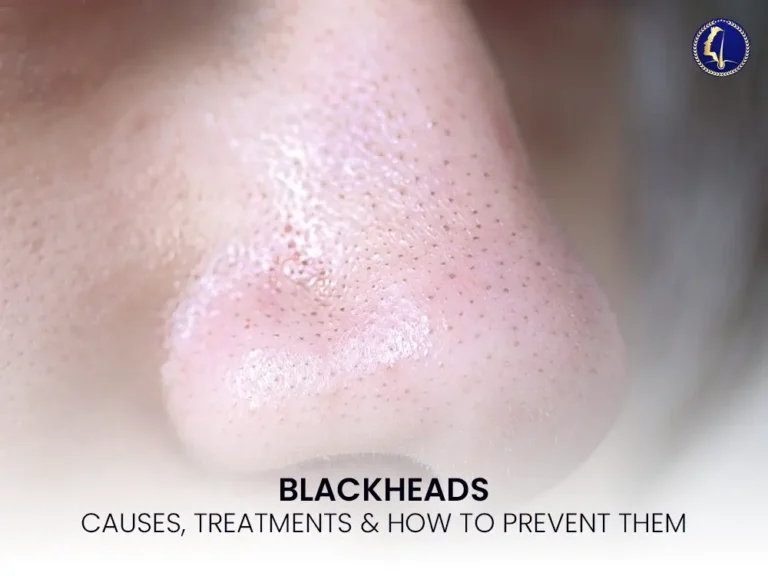
Blackheads are one of the most common forms of acne, affecting millions of people worldwide. While they are frequently associated with the teenage years, they can occur at any stage of adulthood. Unlike deeper, painful blemishes, blackheads sit right on the surface of the skin, making them highly visible and often frustrating to manage.
To clear your skin effectively, it helps to understand the underlying biology of these spots and how to treat them without causing damage or scarring.
What Are Blackheads?
In dermatological terms, a blackhead is known as an open comedo (or open comedones when speaking of duplicates). They are a specific type of non-inflammatory acne vulgaris that develops within the hair follicle.
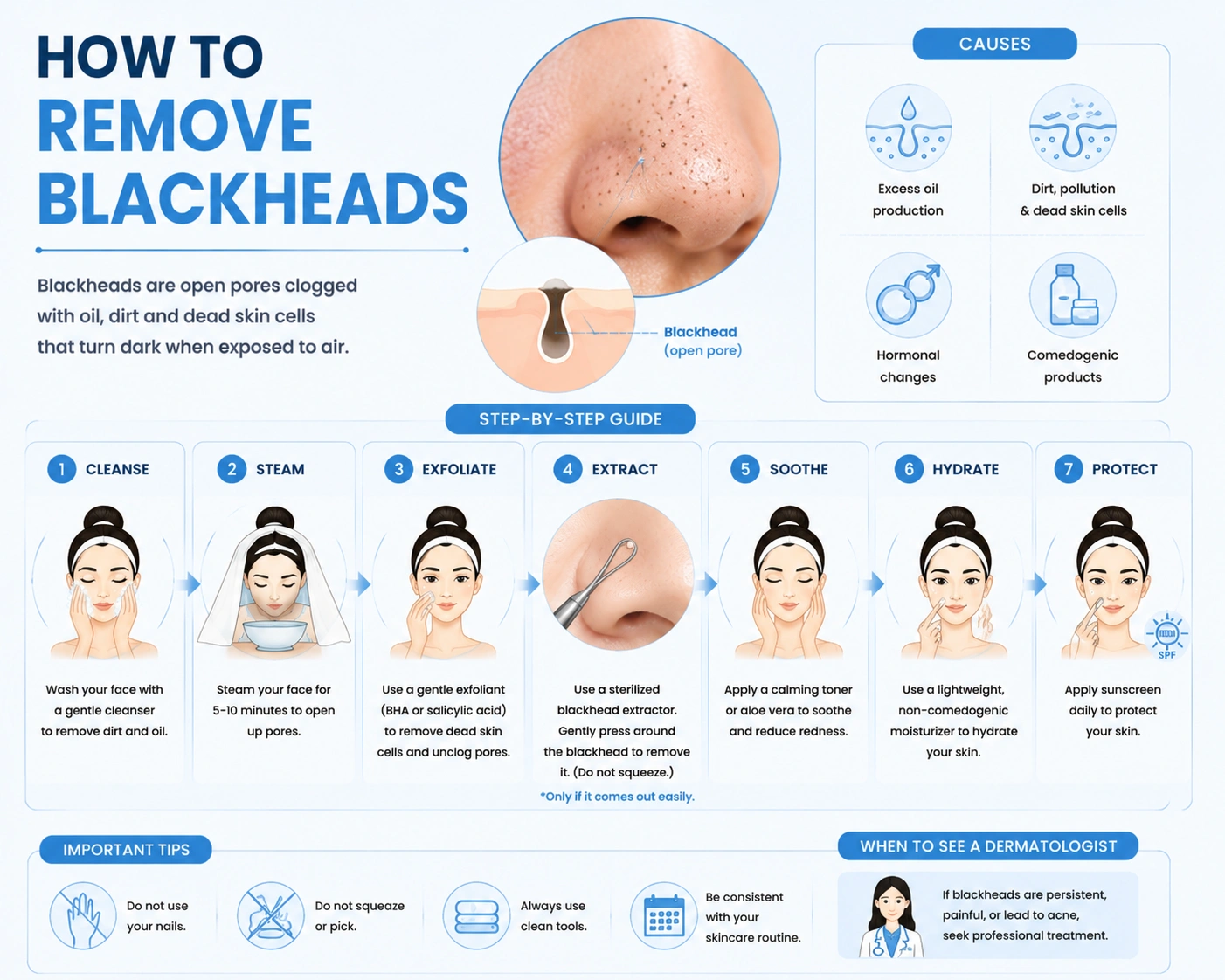
A blackhead forms when a pore becomes clogged with a mixture of dead skin cells and natural skin oil, known as sebum. Because the top of the pore remains open to the air, oxygen reacts with the trapped material. This chemical reaction is called oxidation, and it turns the exposed debris dark brown or black. A common misconception is that blackheads are caused by dirt; in reality, the dark color is simply oxidized oil and skin pigment.
What Causes Blackheads?
Blackheads occur due to a combination of internal biological shifts and external habits. Several factors can accelerate how quickly your pores become congested.
Excess Sebum Production
Your skin relies on sebaceous glands to produce sebum, which keeps the skin hydrated and protects the skin barrier. However, hormonal fluctuations—specifically an increase in androgens (male hormones present in both men and women)—can cause these glands to go into overdrive. This frequently happens during puberty, menstruation, pregnancy, or high-stress periods.
Accumulation of Dead Skin Cells
The epidermis constantly sheds dead skin cells to make room for new ones. Sometimes, a process called cellular buildup or hyperkeratinization occurs, where these dead cells do not shed properly. Instead, they stick together, mix with the excess sebum, and form a dense plug within the pore.
External Contributors and Lifestyle Factors
While internal factors drive oil production, everyday habits can worsen pore blockages:
Comedogenic Products: Heavy makeup, thick moisturizers, and greasy sunscreens can physically block pores.
Friction and Sweat: Wearing tight hats, headbands, or leaving sweat on the skin after a workout can trap debris.
Humidity and Pollution: High humidity increases oil production, while airborne pollutants can settle into open pores.
Common Areas Where Blackheads Appear
Because blackheads rely on oil production, they naturally appear in areas with the highest density of sebaceous glands.
The Nose and T-Zone
The forehead, nose, and chin collectively make up the T-zone. This area naturally contains more active oil glands than the rest of the face, making the nose the most common hotspot for stubborn blackheads.
The Cheeks and Jawline
Blackheads on the cheeks and jawline are often linked to external contact, such as resting your face on your hands, friction from cell phones, or using heavy cosmetic products.
Body Acne: Back and Chest
The upper back, shoulders, and chest are also highly prone to open comedones. Sweat retention from exercise and friction from clothing frequently contribute to body breakouts.
Blackheads vs. Whiteheads: Understanding the Difference
Both blackheads and whiteheads belong to the comedonal acne family, meaning they both stem from clogged pores. However, their structural difference changes how they look and how they are treated.
| Feature | Blackheads (Open Comedones) | Whiteheads (Closed Comedones) |
| Pore Structure | Open at the skin’s surface. | Completely closed by a layer of skin cells. |
| Appearance | Flat, dark brown or black specks. | Raised, flesh-colored or white bumps. |
| Oxidation | High; exposure to air turns the plug dark. | None; the trapped contents are sealed away from oxygen. |
| Inflammation | Low risk of inflammation unless squeezed. | Higher risk of turning into a red, inflamed pimple. |
How to Treat and Remove Blackheads Safely
Clearing open comedones requires active ingredients that can break down trapped oil and regulate skin cell shedding.
Salicylic Acid (BHA)
Salicylic acid is a beta-hydroxy acid, which means it is oil-soluble. Unlike alpha-hydroxy acids (AHAs) that work only on the skin surface, salicylic acid can dive deep inside the hair follicle. It dissolves the sticky sebum and dead cells, effectively clearing the blockage from the inside out.
Topical Retinoids
Retinoids, which are derivatives of Vitamin A (such as over-the-counter adapalene or prescription tretinoin), are highly effective for long-term clarity. They speed up cellular turnover, ensuring that dead skin cells shed efficiently rather than accumulating inside your pores.
Professional Extraction
If you have deeply rooted blackheads, a licensed dermatologist or aesthetician can perform professional extractions using specialized sterile tools. This safely removes the plug without tearing the surrounding skin tissue.
Ingredients and Habits to Avoid
When trying to clear blackheads quickly, it is easy to resort to methods that cause more harm than good.
Avoid Manual Squeezing: Using your fingernails to pop or squeeze blackheads can tear the skin, introduce new bacteria, and lead to permanent scarring or hyperpigmentation.
Skip Aggressive Physical Scrubs: Harsh facial scrubs containing large particles (like crushed walnut shells or apricot pits) create micro-tears in the skin barrier. This causes inflammation and can trigger your skin to produce even more oil.
Limit Pore Strips: While adhesive pore strips offer instant gratification by pulling out the top layer of a blackhead, they do not cure the underlying issue. Frequent use can irritate the skin and permanently stretch out the pore opening.
How to Prevent Blackheads
Prevention focuses on keeping oil production balanced and ensuring dead skin cells do not pile up.
Switch to Non-Comedogenic Skincare: Look for moisturizers, makeup, and sunscreens explicitly labeled “non-comedogenic,” “oil-free,” or “won’t clog pores.”
Cleanse Daily with a Gentle Cleanser: Wash your face twice per day with a water-soluble, sulfate-free cleanser to remove surface oils, daily grime, and pollution.
Incorporate a Weekly Clay Mask: Kaolin or bentonite clay masks can help draw out surface oils and temporarily mattify the skin without drying it out completely.
Keep Your Pillowcases Clean: Change your pillowcases at least once a week to prevent transferred oils and dead skin from rubbing back onto your face overnight.
Conclusion
Blackheads are a non-inflammatory type of acne caused when sebum and dead skin cells form a plug inside an open hair follicle, turning dark through the natural process of oxidation. While they can be stubborn, they are entirely manageable. The most successful approach relies on patience and chemical exfoliation rather than force. By incorporating oil-soluble ingredients like salicylic acid, utilizing retinoids to regulate skin cell turnover, and maintaining a consistent, non-clogging skincare regimen, you can successfully minimize blackheads and maintain a smoother, clearer complexion.
Frequently Asked Questions
1. Does washing my face more often get rid of blackheads?
No. Over-washing or scrubbing your face can dry out your skin, which signals your sebaceous glands to produce even more sebum, potentially worsening the blockages. Stick to cleansing twice a day.
2. Can drinking more water clear up blackheads?
While staying hydrated is vital for overall health and skin elasticity, drinking water cannot directly dissolve the oil and dead skin cell plugs that form blackheads inside your pores.
3. Do pores permanently close once a blackhead is removed?
Pores do not have muscles, so they cannot open or close. However, when a blackhead is removed, the stretched-out pore will naturally shrink back to its normal size over time if the skin remains clean and elastic.
4. Why do my blackheads keep coming back in the exact same spot?
Blackheads recur in the same spots because those specific sebaceous glands are highly active, or the pore lining has been stretched out from past squeezing, making it easier for debris to collect there again.
5. What is the difference between a blackhead and a sebaceous filament?
Blackheads are a blockage of dead skin and oil that forms a hard plug. Sebaceous filaments are normal, tube-like structures that help guide oil to the skin’s surface; they appear as tiny, flat, light-gray dots and do not need to be extracted.