

Dead skin refers to the accumulation of old, non-living keratinocytes on the surface of the epidermis that haven’t been shed. While the body naturally loses about 30,000 to 40,000 cells per minute, a buildup occurs when the desquamation process slows down, leading to a dull, rough, and uneven complexion.
What is Dead Skin?
Dead skin is the outermost layer of the epidermis, known as the stratum corneum, consisting of hardened cells called corneocytes.
In a healthy cycle, these cells are pushed to the surface as new cells form underneath, eventually flaking off to reveal fresh, vibrant tissue.
Problems arise when these dead cells “glue” together rather than shedding, creating a barrier that traps oil, debris, and bacteria.
This buildup is a common concern in humid climates, where sweat and sebum can make the natural shedding process less efficient.
Skin cell turnover explained
Skin cell turnover is the continuous biological process where skin cells travel from the deepest layer of the epidermis to the surface.
For a healthy adult, this cycle typically takes about 28 to 40 days, though it slows down significantly as we age.
By the time we reach our 50s, this turnover rate can extend to nearly 60 or 80 days, often requiring external help to maintain glow.
Ensuring an efficient turnover rate is key to maintaining the skin barrier function and preventing the appearance of premature aging.
Dead skin vs dry skin vs flaky skin
Dead Skin: An accumulation of old cells that occurs naturally but can become excessive; it often makes the skin look “ashy” or grey.
Dry Skin: A skin type characterized by a lack of natural oils (sebum), which can make the surface feel tight and look parchment-like.
Flaky Skin: A visible symptom where dead skin cells peel away in larger clusters, often caused by extreme dehydration or inflammatory conditions.
While they are related, treating dead skin usually requires exfoliation, whereas dry skin requires lipid-rich emollients to restore moisture.
Signs of Dead Skin Build-Up
The most immediate sign is a loss of “radiance,” where the skin looks tired regardless of how much sleep or water you get.
You might notice that your serums or moisturizers no longer absorb well, essentially sitting on top of a “shield” of dead cells.
Texture becomes an issue; running your fingers over your face might feel like touching fine-grit sandpaper rather than smooth skin.
Dull and rough skin texture
When dead cells pile up unevenly, they scatter light rather than reflecting it, leading to a “flat” or dull appearance.
Rough patches are common around the nose, forehead, and chin, where cell accumulation and oil production are often highest.
This roughness can make foundation and makeup look “cakey” or emphasize fine lines that aren’t actually deep permanent wrinkles.
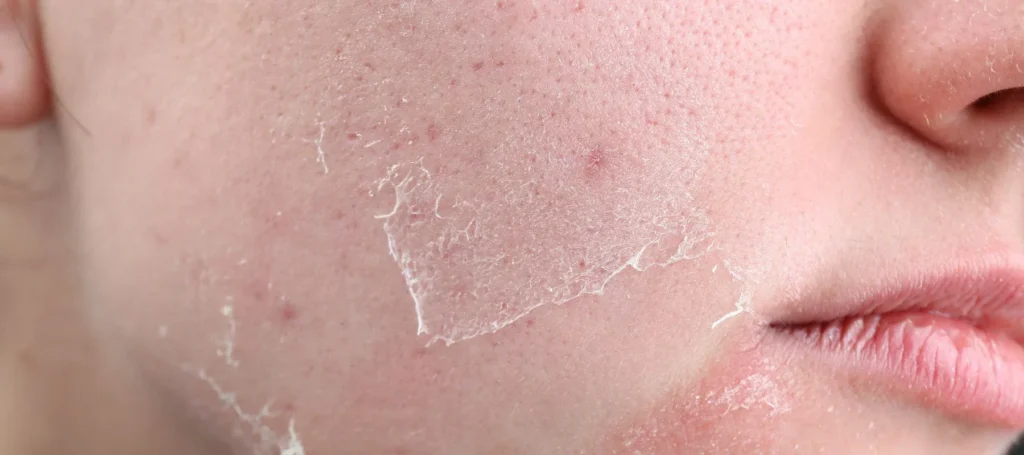
Flakiness and peeling skin
Visible peeling is a sign that the “glue” holding your skin cells together has become brittle or damaged by environmental factors.
In tropical regions, this often happens after prolonged exposure to air conditioning, which saps moisture and disrupts natural shedding enzymes.
Peeling can also follow mild UV damage, as the body tries to rapidly shed damaged cells to protect the layers underneath.
Clogged pores and uneven skin tone
Dead skin is a primary ingredient in comedones (blackheads and whiteheads); it mixes with sebum to plug the pore opening.
Accumulated cells can trap pigment, making dark spots or post-acne marks appear more prominent and take longer to fade.
This cycle of congestion often leads to localized breakouts in the T-zone because the skin cannot “breathe” properly.
Causes of Dead Skin Build-Up
Age is the biggest internal factor, as the natural “scaffold” of the skin weakens and cellular signals for shedding become muffled.
Hormonal fluctuations, particularly during puberty or menopause, can alter the stickiness of skin cells and sebum production.
According to Mayo Clinic’s dermatological guidelines, lifestyle choices like smoking or poor nutrition also stall the regeneration process.
Natural skin cycle and slow exfoliation
The body uses enzymes called proteases to dissolve the bonds between cells, but these enzymes require water to function effectively.
If your skin is chronically dehydrated, these enzymes go dormant, leaving dead skin stuck in place even when new cells are ready.
This results in a “bottleneck” where new cells are ready to surface but are blocked by the old, hardened layer.
Environmental factors (heat, humidity, pollution)
High humidity sounds hydrating, but extreme heat actually causes rapid transepidermal water loss (TEWL), drying out the surface.
Pollution particles from urban areas can stick to the skin’s oily surface, creating a “grime film” that traps dead cells.
UV radiation damages the DNA of skin cells, causing them to clump together abnormally rather than shedding individually and smoothly.
Poor skincare routine and dehydration
Using harsh, alkaline soaps can strip the “acid mantle,” which is essential for the natural chemical exfoliation process.
Dehydrated skin (skin lacking water, not oil) is the most common reason for stalled turnover in humid climates.
Failing to remove water-resistant sunscreens or heavy makeup properly can create a layer of debris that binds dead cells to the surface.
How to Remove Dead Skin Safely
The goal of exfoliation isn’t to “scrub” the skin raw, but to gently assist the natural shedding process without irritation.
Over-exfoliating can lead to a damaged barrier, causing redness, stinging, and increased sensitivity to everyday products.
It is generally recommended to start slow and observe how your skin reacts over a 24-hour period before increasing frequency.
Physical exfoliation methods
These involve using a tool or scrub to manually lift away cells, such as konjac sponges, muslin cloths, or soft sugar scrubs.
Be wary of “apricot scrubs” or products with jagged particles, as these can cause micro-tears in the delicate facial skin.
Physical methods are best for parts of the body with thicker skin, like elbows and knees, but require a very light touch on the face.
Chemical exfoliation (AHA, BHA, enzymes)
Alpha Hydroxy Acids (AHAs): Like Glycolic or Lactic acid, these are water-soluble and work on the skin’s surface to brighten.
Beta Hydroxy Acids (BHAs): Specifically Salicylic acid, which is oil-soluble and penetrates deep into pores to clear out debris.
Fruit Enzymes: Derived from papaya or pineapple, these provide a gentle form of exfoliation by “eating” only dead protein bonds.
Using Salicylic acid products is especially helpful for those dealing with the oily, congested conditions common in warm climates.
Frequency of exfoliation for healthy skin
For most people, exfoliating 2 to 3 times a week is the “sweet spot” for maintaining a glow without causing inflammation.
Sensitive skin types should limit exfoliation to once a week, preferably using gentle enzymes or PHA (Polyhydroxy Acids).
If you are using retinoids or prescription acne creams, you may need to reduce exfoliation frequency to avoid compromising the skin barrier.
Professional Dead Skin Removal Treatments
Professional treatments are performed by licensed practitioners and provide deeper results than at-home products can achieve.
In many regions, these treatments are regulated to ensure safety and medical-grade hygiene standards are met.
They are ideal for addressing deep-seated congestion, fine lines, acne scarring, or significant sun damage that topical creams can’t reach.
Facial exfoliation treatments
Professional facials often combine steam, extractions, and high-grade exfoliants to completely reset the skin surface.
Hydra-dermabrasion is extremely popular as it uses a vacuum-like tip to remove dead skin while simultaneously infusing hydrating serums.
These sessions usually take 45 to 90 minutes and offer immediate visible results with zero downtime for the patient.
Chemical peels
Chemical peels involve applying a higher concentration of acids than what is safely available in over-the-counter bottles.
Superficial Peels: These target only the epidermis for a quick “refresh” and generally have very little visible peeling.
Medium-Depth Peels: Use TCA (Trichloroacetic Acid) to improve texture and tone, though they require a few days of recovery.
Research shows that professional chemical peels can also stimulate collagen production in the deeper layers of the skin.
Microdermabrasion treatments
This is a mechanical exfoliation procedure that uses a diamond-tipped wand to “sand” the skin and remove the thickened outer layer.
It is highly effective for reducing the look of enlarged pores and smoothing out minor acne scars or pits.
Treatments are generally painless and can be performed every 4 weeks to maintain a smooth, even skin texture.
Dead Skin Removal at Home
Home care is about consistency; a gentle daily or bi-weekly routine is much safer than one aggressive monthly treatment.
Always perform a patch test on your neck or inner arm before applying a new exfoliant to your entire face to check for reactions.
Remember that “more is not better”—using multiple heavy exfoliants at once can lead to painful chemical burns.
Safe exfoliating skincare products
Look for “leave-on” toners containing 2% BHA or 5% AHA, as these provide controlled, even exfoliation throughout the day.
Wash-off cleansers with exfoliating acids are a great “entry-level” option for those with sensitive skin to prevent irritation.
PHAs (like Gluconolactone) are the newest generation of acids that exfoliate while also acting as humectants to pull in moisture.
Natural exfoliation methods
A simple honey and oatmeal mask can provide mild physical and enzymatic exfoliation while soothing the skin surface.
Plain yogurt contains natural lactic acid, which can help brighten the skin if left on for 10 minutes as a mask.
Rice bran powder is a traditional secret for softening skin without the harshness of nut-based scrubs.
Common mistakes to avoid
Over-scrubbing: Using too much pressure with a brush or scrub can lead to broken capillaries and chronic inflammation.
Skipping Moisturizer: Exfoliation exposes “baby” cells that are vulnerable; you must seal them with a protective cream immediately.
Ignoring the Sun: Freshly exfoliated skin is highly photosensitive; failing to wear sunscreen will lead to faster sun damage.
Best Skincare Routine for Preventing Dead Skin
Prevention is about supporting the natural biological clock of your skin so it doesn’t need “saving” every month from buildup.
A balanced routine focuses on the “Holy Trinity” of skincare: Cleanse, Hydrate, and Protect.
Consistency in your daily routine is the most effective way to ensure dead cells shed naturally and on time.
Proper cleansing and hydration
Double cleansing (using an oil cleanser followed by a water-based one) is the best way to remove the “glue” of sebum and pollution.
Use a pH-balanced cleanser to ensure the skin’s natural shedding enzymes (which thrive at a specific acidity) stay active.
Incorporate a hydrating toner or essence with glycerin or hyaluronic acid to keep the stratum corneum flexible and healthy.
Moisturizing to support skin barrier
A healthy skin barrier prevents the “dry-dead-skin” cycle by keeping water locked in where it belongs.
Look for moisturizers containing ceramides, fatty acids, and cholesterol, which mimic the natural lipids in your skin structure.
Even oily skin types need a lightweight moisturizer to signal the skin to stop overproducing sebum in response to dryness.
Sunscreen and environmental protection
UV rays are a major cause of “stalled” skin turnover; use a broad-spectrum SPF 50+ every single day without fail.
Antioxidant serums (like Vitamin C) help neutralize the free radicals from pollution that damage and age skin cells.
Reapplying sunscreen when outdoors is essential for maintaining the health of those newly revealed, fresh skin cells.
Frequently Asked Questions About Dead Skin
How often should you exfoliate?
For most skin types, 2 to 3 times per week is ideal. If you have very oily skin, you might tolerate every other day, whereas sensitive or dry skin should stick to once a week. Always listen to your skin—if it feels tight or looks red, take a break.
Can dead skin cause acne or breakouts?
Absolutely. Dead skin cells are one of the primary ingredients of a pimple. When they mix with excess sebum, they form a plug that traps bacteria inside the pore, leading to inflammation and acne. Regular exfoliation is a key preventative measure.
What is the safest exfoliation method for sensitive skin?
The safest methods are enzymatic exfoliants (like those from papaya) or Polyhydroxy Acids (PHAs). These have larger molecular sizes, meaning they don’t penetrate as deeply or aggressively as traditional AHAs, providing a glow without the sting.
Why does my skin look dull even after washing?
Washing only removes surface dirt and oil, but it doesn’t always break the bonds of dead skin cells. If your skin looks dull, it’s likely because the dead cells are still “stuck” there, scattering light instead of reflecting it beautifully.
Can I use a body scrub on my face?
No, you should never use a body scrub on your face. The skin on your face is much thinner and more delicate than the skin on your legs or back. Body scrubs often contain large, abrasive particles that can cause micro-tears and permanent damage.