
Male vs Female Pattern Hair Loss: Causes, Stages, and Most Effective Treatments
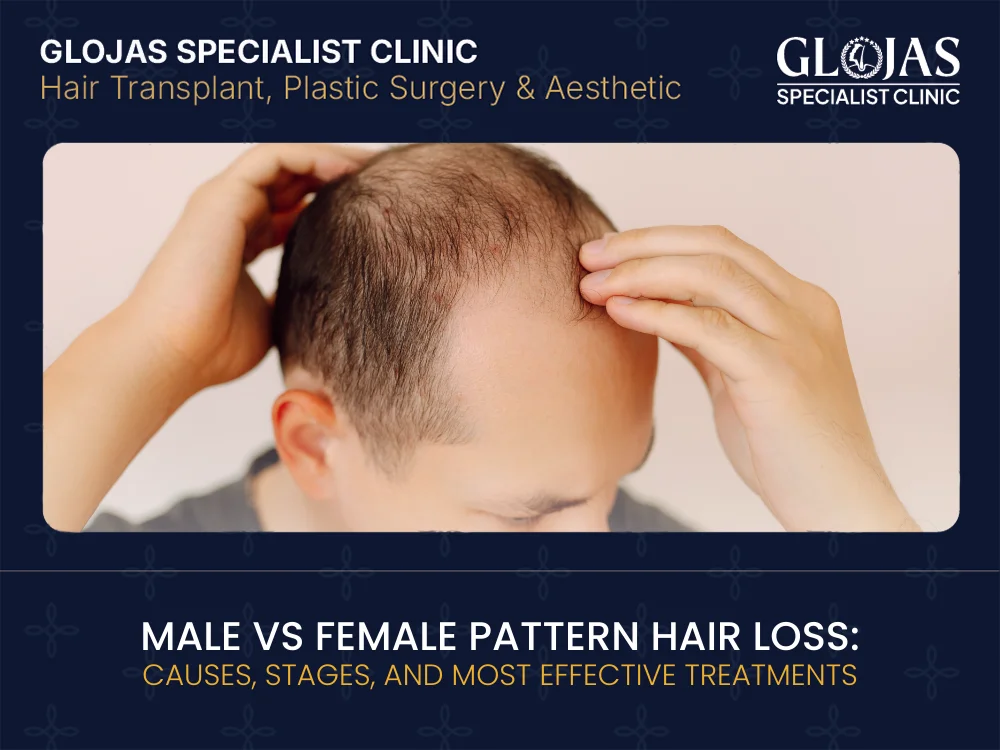
Interactive Hair Loss Stage Checker Select your gender and explore the progression stages to find the right care. Male Pattern (Norwood) Female Pattern (Ludwig) Stage 1 of 4 Early Receding / Minimal Thinning Hair begins to thin slightly around the temples or the parting line. At this early phase, proactive care yields the highest reversal success rate. Stage 1 Stage 2 Stage 3 Stage 4 Unsure about your specific stage? Get a professional assessment via chat. Consult via WhatsApp Male vs female pattern hair loss, or androgenetic alopecia, is a genetically influenced condition where hair follicles progressively shrink. While men typically experience a receding hairline and crown balding, women suffer diffuse thinning across the top of the scalp while preserving their frontal hairline. Understanding Pattern Hair Loss What Is Androgenetic Alopecia? Androgenetic alopecia is a genetically determined, chronic progressive medical condition characterized by the gradual miniaturization of hair follicles. It affects millions globally, including substantial numbers of adults across Southeast Asia. Over time, the anagen (growth) phase shortens, producing finer, shorter hairs until active follicles eventually cease production altogether. The Role of Genetics and Hormones Hereditary predisposition and specific androgen hormones drive the progression of pattern thinning. Testosterone converts into dihydrotestosterone (DHT) via the enzyme 5-alpha reductase. In genetically vulnerable individuals, DHT binds to scalp receptors, shrinking hair follicles and disrupting healthy hair cycles. Understanding how androgenetic alopecia operates helps physicians formulate targeted interventions. Male Pattern Hair Loss Common Symptoms and Progression Stages Male pattern hair loss typically begins subtly at the temples or the vertex (crown). Men often notice increased shedding on pillows or in the shower, followed by a receding hairline that forms an distinct “M” shape. Over time, hair at the crown thins concurrently, eventually leaving a horseshoe-shaped ring around the sides and back of the head. The Norwood Scale for Men Dermatologists and hair restoration surgeons utilize the Norwood Scale to classify the severity of male pattern baldness. Ranging from Stage 1 (minimal recession) to Stage 7 (extensive hair loss leaving only a sparse rim), this standardized tool helps medical professionals track deterioration rates and determine appropriate clinical options. Primary Causes of Male Hair Thinning While genetics and elevated scalp sensitivity to DHT remain primary factors, environmental and systemic elements play supporting roles. High stress levels, nutritional gaps, and progressive aging amplify follicular stress. Clinical data notes that up to 60% of Malaysian men experience visible hair thinning by age 50. Female Pattern Hair Loss How Female Hair Thinning Differs from Men Unlike males, women rarely experience a completely receding hairline or total baldness. Instead, female pattern hair loss manifests as diffuse thinning across the top and crown of the scalp. The frontal hairline usually remains intact, creating an illusion of overall volume loss rather than defined bald patches. The Ludwig Scale for Women Medical specialists use the Ludwig Scale to grade female hair loss across three distinct stages: Stage I: Mild thinning confined to the crown area, easily masked by styling. Stage II: Pronounced widening of the central hair part with noticeable volume reduction. Stage III: Severe, diffuse thinning across the entire top of the scalp, exposing the skin. Common Triggers: Hormones, Menopause, and Stress Hormonal fluctuations heavily influence female hair health. Postpartum shifts, polycystic ovary syndrome (PCOS), and the drop in estrogen during menopause frequently trigger or accelerate shedding. Chronic psychological stress and thyroid imbalances also disrupt the normal hair cycle, leading to prolonged telogen effluvium overlapping with genetic thinning. Key Differences Between Male and Female Hair Loss Hairline Receding vs. Widening Part Line The most visible clinical distinction lies in pattern presentation. Men experience localized hairline recession and crown bald spots. Conversely, women experience a widening central part line while maintaining a strong frontal frame. Progression Speed and Severity Patterns Male hair loss can start as early as late adolescence or early twenties, often progressing rapidly. Female pattern hair loss typically has a later onset—often emerging during perimenopause or post-menopause—and progresses more gradually. Complete baldness is exceedingly rare in women compared to men. Hair Loss Diagnosis and Clinical Assessment in Malaysia Professional Scalp Analysis and Trichoscopy An accurate diagnosis requires a comprehensive physical and digital evaluation. Specialists use high-magnification trichoscopy to examine scalp skin health, hair density per square centimeter, shaft diameter diversity, and follicular unit counts. This rules out scarring alopecias and inflammatory scalp conditions. Medical Tests and Identifying Underlying Causes Clinicians frequently order blood panels to isolate hidden contributors. Standard assessments check complete blood counts, ferritin and iron levels, thyroid-stimulating hormone (TSH), and hormonal markers (such as free and total testosterone or DHEAS) to ensure a customized and accurate medical strategy. Available Treatments and Solutions in Malaysia Medical Options: Minoxidil and Prescription Medications Topical minoxidil remains a foundational over-the-counter solution to stimulate microcirculation around hair follicles. For men, oral or topical 5-alpha reductase inhibitors like finasteride help block DHT conversion. Anti-androgen medications or spironolactone are sometimes prescribed off-label for women under strict clinical supervision. Advanced Hair Loss Therapies: PRP and Laser Treatments Regenerative medicine offers non-surgical alternatives to stimulate dormant follicles. Platelet-Rich Plasma (PRP) therapy utilizes concentrated growth factors derived from the patient’s own blood injected into the scalp. Low-Level Laser Therapy (LLLT) further energizes cellular metabolism within thinning tissues. Hair Transplant Options in Malaysia For permanent restoration of advanced balding areas, surgical options like Follicular Unit Extraction (FUE) and Follicular Unit Transplantation (FUT) provide natural, permanent results. Surgeons extract healthy donor grafts from the back of the head and meticulously implant them into thinning zones. Clinical Experience: Managing pattern hair loss successfully relies on early intervention. Because miniaturized follicles can remain salvageable for only a limited window, prompt diagnosis by an accredited specialist yields significantly better long-term preservation rates than delayed treatment. Frequently Asked Questions What is the main difference between male and female pattern hair loss? Male pattern hair loss typically causes a receding hairline and bald spots at the crown, whereas female pattern hair loss involves diffuse thinning across the top of the head with a widening
Punca Keguguran Rambut Serius (Lelaki & Perempuan) di Malaysia
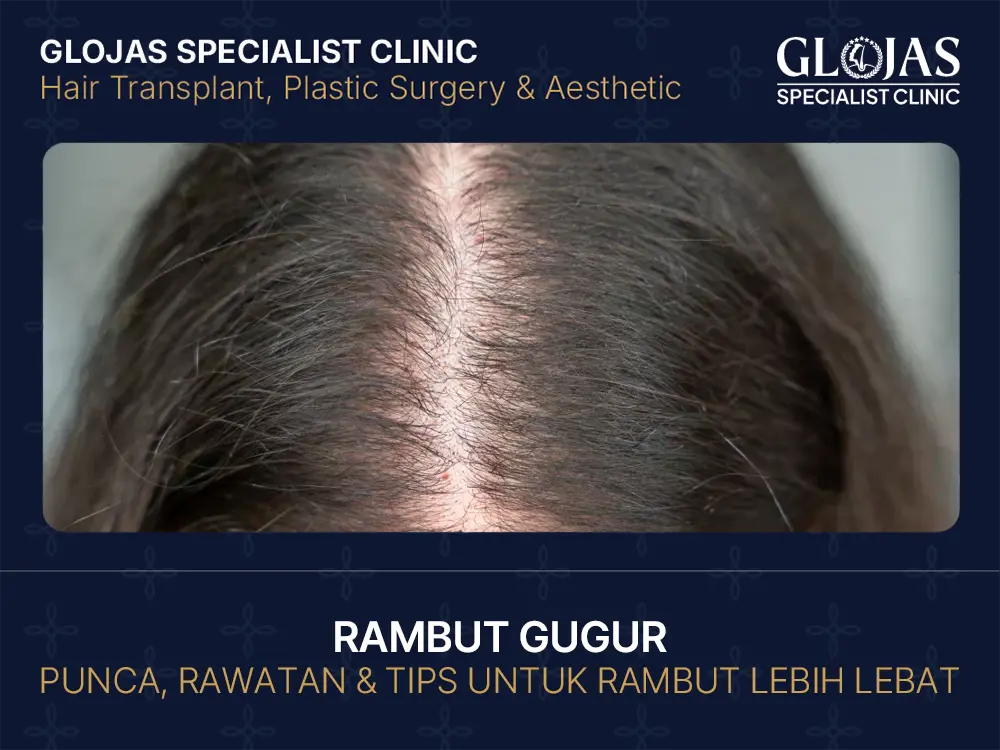
Kenali Punca Sebenar Keguguran Rambut Anda Pilih masalah utama yang anda hadapi di bawah untuk mendapatkan analisis ringkas serta panduan pakar melalui WhatsApp. Pilih Punca / Simptom Utama: — Sila Pilih Masalah Anda —Genetik / Keturunan (Androgenetic Alopecia)Faktor Stress & Gaya Hidup ModenPerubahan Hormon (Lepas Bersalin / Menopaus)Masalah Kulit Kepala & Kelemumur TerukKekurangan Nutrisi & Vitamin Rujuk Masalah Ini Melalui WhatsApp Rambut gugur dalam kalangan perempuan boleh jadi normal, tapi bila dah lebat sangat memang merisaukan. Artikel ini bongkar punca sebenar, tanda bila perlu risau, dan cara atasi dari rumah sampai rawatan klinik di Malaysia. Berapa Banyak Rambut Gugur Normal Bagi Wanita? Jawapan terus: 50 hingga 100 helai sehari dikira normal untuk perempuan. Lebih dari itu secara konsisten, atau nampak kulit kepala makin jelas, itu tanda tak normal. Kitaran Pertumbuhan Rambut Yang Perlu Anda Tahu Rambut ada 3 fasa utama: Anagen: Fasa tumbuh aktif, 2-7 tahun. 85-90% rambut dalam fasa ini. Catagen: Fasa peralihan, 2-3 minggu. Telogen: Fasa rehat sebelum gugur, 3 bulan. Bila fasa ini terganggu, rambut gugur lebat. 9 Punca Utama Rambut Gugur Pada Perempuan 1. Perubahan Hormon: Bersalin, Menopaus, dan PCOS Lepas bersalin, estrogen jatuh mendadak → telogen effluvium. Biasanya mula bulan ke-3 lepas bersalin, pulih dalam 6-12 bulan. PCOS pula sebabkan hormon androgen tinggi, rambut kepala menipis tapi bulu badan naik. 2. Stress dan Tekanan Emosi Berlebihan Stress fizikal atau emosi tolak banyak folikel ke fasa telogen. Kesannya nampak 2-3 bulan lepas peristiwa stress seperti kehilangan, pembedahan, atau tekanan kerja. 3. Kekurangan Zat Besi, Zinc, dan Vitamin D Wanita Malaysia ramai ada iron deficiency anemia sebab haid berat. Zat besi rendah = oksigen kurang ke folikel. Zinc dan vitamin D pula penting untuk kitaran folikel sihat. 4. Masalah Tiroid dan Penyakit Autoimun Hipotiroid dan hipertiroid kacau kitaran rambut. Alopecia areata pula bila sistem imun serang folikel sendiri, hasilkan tompok botak bulat. 5. Kesan Sampingan Ubat dan Rawatan Perubatan Ubat cair darah, pil perancang, ubat darah tinggi, antidepressant, dan kimoterapi boleh trigger keguguran. Biasanya rambut tumbuh balik bila ubat dihentikan dengan nasihat doktor. 6. Penjagaan Rambut: Ikat Ketat, Tudung, dan Bahan Kimia Traction alopecia jadi bila rambut selalu ditarik ketat: ikat tocang, sanggul tinggi, atau anak tudung ketat. Tudung tak cuci, lembap, dan tak serap peluh pun buat kulit kepala berjangkit kulat. Rebonding, warna, dan bleach rosakkan batang rambut. 7. Genetik dan Alopecia Androgenetik Wanita Juga dipanggil female pattern hair loss. Ciri dia: rambut makin nipis di bahagian belahan tengah kepala, bukan botak sepenuhnya macam lelaki. Boleh mula seawal 20-an jika ada sejarah keluarga. 8. Diet Crash dan Penurunan Berat Badan Mendadak Kurang protein, kalori, dan zat sebab diet ekstrem buat badan “tutup” fungsi tak penting termasuk tumbuh rambut. Kesan nampak 3-6 bulan lepas. 9. Masalah Kulit Kepala Seperti Kelemumur Teruk Kelemumur kronik, psoriasis, atau jangkitan kulat buat kulit kepala radang. Radang berpanjangan rosakkan folikel. Gatal sampai menggaru kuat pun boleh cabut rambut. Bila Rambut Gugur Perlu Jumpa Doktor? Jumpa doktor atau dermatologist di Malaysia jika ada tanda ini: Tanda Rambut Gugur Yang Tidak Normal Gugur lebih 150 helai sehari selama 2 minggu Tompok botak bulat atau garisan rambut makin undur Kulit kepala merah, bersisik, sakit atau bernanah Bulu kening atau bulu badan pun gugur sekali Disertai letih melampau, naik/turun berat mendadak Doktor biasanya buat ujian darah untuk tiroid, zat besi, vitamin D, dan hormon. Cara Mengurangkan Rambut Gugur Perempuan di Rumah Syampu dan Tonik Anti Rambut Gugur Terbaik Bahan Aktif Fungsi Contoh Jenis Produk Minoxidil 2% Satu-satunya ubat topikal diluluskan KKM untuk wanita Tonik di farmasi Caffeine Rangsang folikel, panjangkan fasa anagen Syampu anti gugur Saw Palmetto Sekat DHT, hormon penyebab nipis Tonik herba Ketoconazole Kurang radang & kulat pada kelemumur Syampu anti kelemumur Tips: Syampu 2-3 kali seminggu. Urut kulit kepala 3 minit untuk lancarkan darah. Vitamin dan Supplement Untuk Kuatkan Akar Rambut Jangan beli jika tak deficient. Buat ujian darah dulu. Supplement popular di farmasi Malaysia: Biotin: Hanya berkesan jika memang kurang biotin. Dos tinggi boleh kacau ujian tiroid. Zat Besi + Vitamin C: Untuk wanita dengan anemia. Vitamin C bantu serapan. Zinc: Kurang zinc kait dengan telogen effluvium. Vitamin D3: Ramai wanita bertudung di Malaysia kurang vitamin D. Collagen Peptide: Beri asid amino untuk keratin rambut. Petua Natural: Minyak Kelapa, Aloe Vera, Santan Minyak kelapa dara: Sapu sebelum syampu, kurang protein loss pada batang rambut. Aloe vera: Kurangkan radang kulit kepala gatal. Ambil gel asli, sapu 30 minit. Santan: Kaya lemak sihat. Lumur dan balut kepala 1 jam, bilas. Tak ada bukti klinikal kukuh, tapi selamat cuba. Cara Jaga Rambut Untuk Wanita Bertudung Keringkan rambut 100% sebelum pakai tudung. Rambut lembap = kulat. Tukar anak tudung kapas setiap hari. Elak material sintetik panas. Longgarkan ikatan. Guna getah lembut, jangan sanggul tinggi ketat. Rehatkan rambut di rumah. Lepaskan dan sikat perlahan. Cuci tudung kerap, terutama kalau kuat berpeluh. Rawatan Rambut Gugur di Klinik Untuk Wanita Rawatan PRP, Laser, dan Mesoterapi Rambut Rawatan Cara Berfungsi Sesi Diperlukan Sesuai Untuk PRP Darah sendiri diproses, suntik plasma kaya platelet ke kulit kepala 3-6 sesi, sebulan sekali Telogen effluvium, FPHL awal Low-Level Laser Cahaya merah rangsang sel folikel 2-3x seminggu, 6 bulan Nipis keseluruhan Mesoterapi Suntik vitamin & peptide terus ke folikel 8-10 sesi Rambut kurang nutrien Anggaran Kos Rawatan Rambut Gugur di Malaysia Harga di Kuala Lumpur, Selangor, dan bandar utama 2026: Konsultasi Dermatologist: RM150 – RM350 Ujian Darah Hormon & Nutrisi: RM200 – RM600 PRP Rambut: RM800 – RM1,800 per sesi Laser Hair Growth: RM200 – RM400 per sesi, pakej RM3,000 – RM6,000 Transplant Rambut FUE untuk wanita: RM10,000 – RM25,000 ikut keluasan Supplement di farmasi: RM40 – RM180 sebulan Harga berbeza ikut klinik dan tahap masalah. Klinik di Petaling Jaya dan KL biasanya ada pakej. Soalan Lazim Tentang Rambut Gugur Perempuan Bolehkah Rambut Yang Gugur Tumbuh Semula? Ya, jika folikel masih hidup. Punca macam stress, lepas bersalin, dan kurang zat biasanya reversible. Rambut akan tumbuh balik dalam 6-12 bulan lepas punca diselesaikan. Untuk FPHL genetik, rawatan hanya lambatkan nipis dan pekatkan yang ada. Kalau folikel dah mati sebab parut, transplant je pilihan. Berapa Lama Nak Nampak Kesan Selepas Rawatan? Kitaran rambut perlahan. Jangan expect hasil seminggu. Syampu & tonik minoxidil:
Ketoconazole Shampoo for Seborrheic Dermatitis & Severe Dandruff in Malaysia
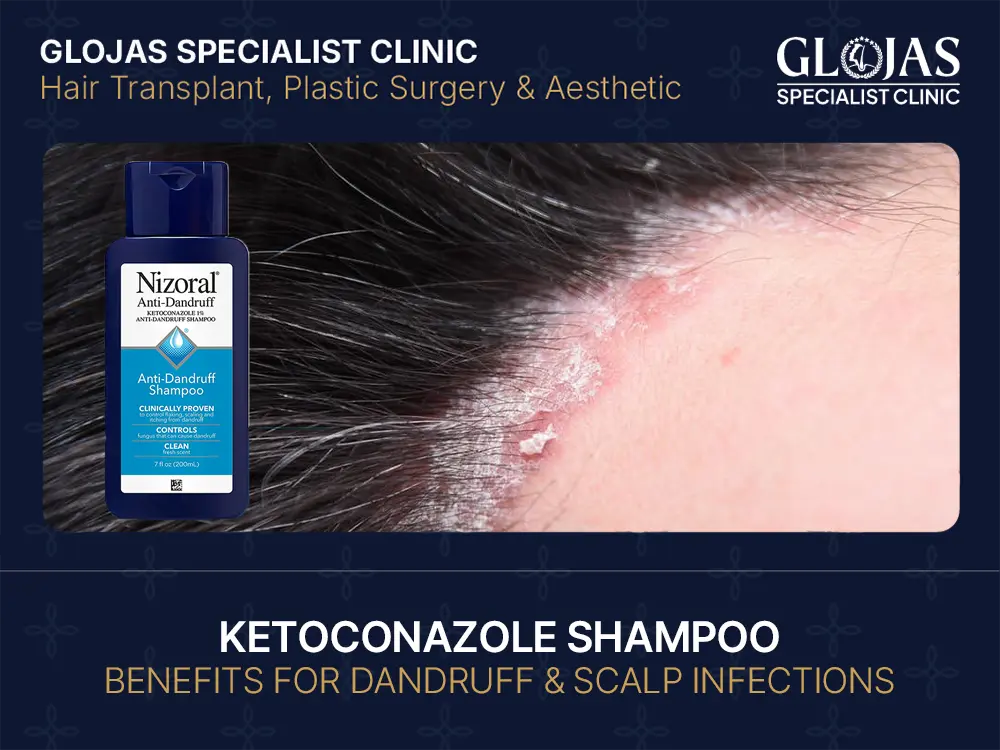
Struggling with Severe Dandruff or Seborrheic Dermatitis? Get professional guidance on choosing and using the right Ketoconazole shampoo formulation available in Malaysia. Chat via WhatsApp Ketoconazole shampoo is an antifungal medicated treatment used to treat scalp conditions like severe dandruff, seborrheic dermatitis, and fungal infections. By eliminating Malassezia yeast, it reduces itching, flaking, and inflammation. In Malaysia, it is available in 1% over-the-counter (OTC) and stronger 2% prescription-strength formulas, and is also used off-label to support hair loss treatment. Best Ketoconazole Shampoo Brands in Malaysia When shopping for this targeted treatment, you will primarily encounter a few trusted, clinically backed brands in Malaysian pharmacies: Nizoral (2% Ketoconazole): The undisputed gold standard and most recognizable brand globally and locally. It is highly effective for stubborn dandruff and seborrheic dermatitis. Sebizole (2% Ketoconazole): A popular and highly effective alternative to Nizoral, often favored for its slightly different formulation that some users find less drying. Ketozolin / Fungazole: Generic or alternative branded formulations that offer the exact same active antifungal benefits, sometimes at a more budget-friendly price point. Ketoconazole Shampoo Price in Malaysia The price of ketoconazole shampoo varies based on the brand, bottle size, and whether it is a 1% or 2% formulation. Brand Average Size Price Range (MYR) Availability Nizoral 2% 50ml – 100ml RM 35.00 – RM 65.00 Watson’s, Guardian, Pharmacies Sebizole 2% 100ml – 200ml RM 40.00 – RM 75.00 Independent Pharmacies, Online Generic / Ketozolin 2% 100ml RM 30.00 – RM 50.00 Clinic / Pharmacy counter Where to Buy Ketoconazole Shampoo in Malaysia You can purchase ketoconazole shampoo both offline and online across Malaysia: Major Retail Pharmacies: Watsons, Guardian, and Caring Pharmacy stock Nizoral (usually behind the pharmacist’s counter or in the medicated hair care aisle). Prescription Counters: For 2% formulations, you may need to request them directly from the in-store pharmacist or visit a GP/dermatology clinic. E-Commerce Platforms: Official flagship stores on Shopee Malaysia and Lazada Malaysia offer convenient delivery, but ensure you buy from preferred or mall sellers to avoid counterfeit products. What Is Ketoconazole Shampoo? Ketoconazole is a powerful antifungal medication. When formulated into a shampoo, it is specifically designed to treat topically localized fungal overgrowths on the scalp. Unlike cosmetic shampoos that simply wash away dead skin, ketoconazole treats the underlying biological trigger of chronic flaking and itching. Benefits of Ketoconazole Shampoo Dandruff and flaky scalp treatment Most chronic dandruff is triggered by an overgrowth of Malassezia, a yeast-like fungus naturally present on the scalp. Ketoconazole actively destroys this fungus, stopping rapid skin cell shedding and eliminating stubborn white flakes. Seborrheic dermatitis and fungal scalp infections Seborrheic dermatitis is a more severe form of dandruff characterized by greasy, yellowish scales, redness, and intense itching. Ketoconazole calms this inflammatory response rapidly, restoring a healthy scalp microbiome. Hair loss and scalp health support An inflamed, unhealthy scalp can weaken hair roots. By reducing inflammation and yeast overgrowth, ketoconazole provides a healthy foundation for hair to grow. Ketoconazole Shampoo for Hair Loss Can ketoconazole shampoo regrow hair? While it is not a standalone cure for male or female pattern baldness (androgenetic alopecia), clinical studies suggest that ketoconazole possesses mild anti-androgen properties. It helps disrupt the pathway of local DHT (Dihydrotestosterone)—the hormone responsible for shrinking hair follicles. Dermatologists frequently prescribe 2% Ketoconazole shampoo alongside Minoxidil or Finasteride as a supportive “helper” treatment to maximize hair retention and reduce scalp inflammation that contributes to shedding. How to Use Ketoconazole Shampoo Correctly Because this is a medicated treatment, you cannot use it like regular shampoo. Follow these steps for maximum efficacy: Wet Hair Thoroughly: Apply a small amount of ketoconazole shampoo to your wet scalp. Massage into the Scalp: Focus strictly on the scalp and roots, not the length of your hair. Work it into a lather. The 5-Minute Rule: Leave the shampoo on your scalp for 3 to 5 minutes. This gives the active antifungal agent enough time to penetrate the skin. Rinse Thoroughly: Rinse completely with lukewarm water. Condition: Because it can be drying, apply a moisturizing conditioner to the ends of your hair, keeping it off your scalp. Ketoconazole Shampoo vs Regular Anti-Dandruff Shampoo Standard commercial anti-dandruff shampoos (like Head & Shoulders or Clear) typically use active ingredients like Zinc Pyrithione or Selenium Sulfide. While these are excellent for mild, everyday dandruff control, they only slow down cell turnover or mildly inhibit yeast. Ketoconazole is a targeted medical antifungal. It actively destroys the fungal cell walls, making it far superior for severe, stubborn, or recurring scaling conditions that commercial shampoos cannot fix. 1% vs 2% Ketoconazole Shampoo Differences 1% Ketoconazole: Available over-the-counter (OTC) without a prescription. It is ideal for mild-to-moderate dandruff control and maintenance. 2% Ketoconazole: A higher, medical-grade concentration. In Malaysia, it is classified as a pharmacy medicine. It is highly recommended for acute flare-ups of seborrheic dermatitis, fungal infections, and hair loss protocols. Side Effects and Safety Ketoconazole shampoo is generally well-tolerated, but some users may experience: Scalp Dryness or Irritation: The formula strips oil effectively, which can leave hair feeling coarse or straw-like. Changes in Hair Texture: Rare, but it can occasionally affect the curl pattern or texture of very fine hair during use. Safety for colored or chemically treated hair If you have vibrant colored or chemically straightened hair, use ketoconazole with caution. It can strip hair dye faster than color-safe formulas. It is highly recommended to follow up with a deep-conditioning mask on the lengths of your hair to counteract dryness. How Often Should You Use Ketoconazole Shampoo? For Active Treatment (Flare-ups): Use twice a week for 2 to 4 weeks until the infection or flaking clears up. For Maintenance (Prevention): Use once every week or two weeks to prevent the fungus from returning. Do not use it daily, as this will cause severe scalp dryness and rebound irritation. Choosing the Best Ketoconazole Shampoo for Your Scalp Type If you have an oily scalp with heavy flakes, Nizoral 2% is your ideal match as it cuts through sebum efficiently. If
How To Wash Hair After Hair Transplant Correctly?
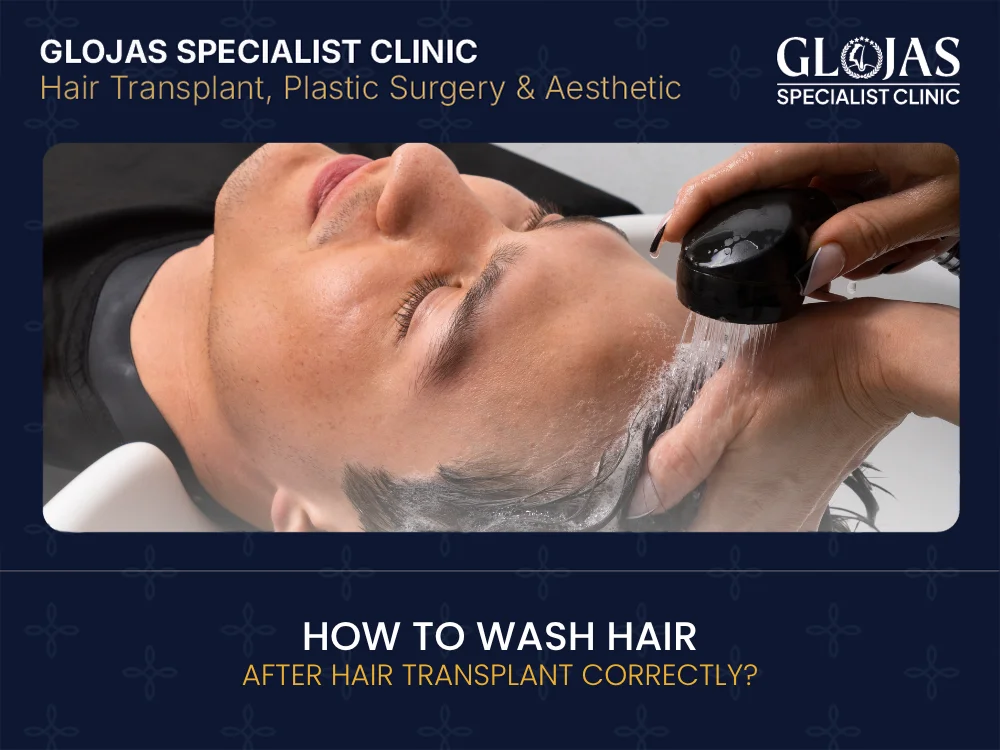
When you undergo a hair transplant, one of the most crucial parts of your recovery is how you wash hair. If done incorrectly, you risk damaging grafts or delaying healing; done right, you support optimal growth, cleanliness, and scalp health. In this guide, we’ll walk you through the timeline, techniques, dos and don’ts, and expert insights (from ABHRS/ISHRS-level advice) so you can wash hair safely and confidently after your procedure. When to First Wash Hair After Transplant You should avoid wash hair immediately. Most surgeons recommend waiting at least 48 hours (2 days) after surgery before attempting any wash. Some clinics delay until day 3 to day 5 to allow grafts to settle. The precise timing depends on the technique (FUE, FUT) and your surgeon’s protocol, so always follow your surgeon’s instructions as the primary guide. After that initial period, a gentle washing routine begins — usually daily or twice daily for the first 1–2 weeks — to remove dried blood, crusts, debris, and reduce infection risk. Why Gentle Washing Is Essential Wash hair post-transplant isn’t just about hygiene. It: Prevents infection by clearing blood crusts and bacteria Helps the scabs soften and gradually fall off Stimulates scalp circulation (without trauma) Maintains a clean environment for graft survival However, overly aggressive scrubbing, high-pressure water, or picking scabs can dislodge grafts, cause bleeding, impede healing, or even lead to graft failure. Thus, the method matters as much as the frequency. Step-by-Step: How to Wash Hair After Hair Transplant Below is a typical approach (general guidance) to wash hair after transplant: Soften crusts / scabs (optional pre-treatment, if your clinic provides lotion).Some surgeons or clinics offer a softening lotion or foam to apply ~30–60 minutes before the wash to loosen crusts gently. Use lukewarm, low-pressure water.Do not place your head directly under a strong shower jet. Instead, use a cup, pitcher, or reduce pressure. Use surgeon-recommended or mild shampoo.Dilute the shampoo with water (so it’s milder) and use your fingertips (pads, not nails) to gently tap or massage the scalp. Avoid rubbing or scratching. Let shampoo sit briefly (if advised).In some protocols, letting the shampoo foam sit for a minute or two can help loosen debris. Rinse gently with lukewarm water, low force.Use a cup or let water flow gently over the scalp to wash away suds. Dry by patting or air-dry.Avoid rubbing with towels. Use a clean, soft towel or paper towels to pat gently. Avoid hairdryers for the first week or more; if needed, use cool, distant airflow. Do not pick or scratch scabs.Let scabs naturally shed. Picking can uproot hair follicles. Resume gentle combing (if absolutely needed).After ~1 week, you may very gently comb using wide-tooth or soft comb, avoiding tension on recipient area. Over time, as grafts anchor and scabs disappear (by ~10–14 days), you gradually return to your normal washing routine, reintroducing your regular shampoo, conditioner, and styling products as permitted by your surgeon. Timeline of Hair Washing After Transplant Period What to Do Key Cautions Day 0–2 Avoid washing hair Let grafts stabilize; use saline spray if instructed Day 3–5 Begin gentle washing Use diluted shampoo, low pressure, soft taps Days 6–14 Continue daily washing Remove crusts gently, maintain hygiene After 14 days Gradually resume regular washing Reintroduce usual shampoo, mild massage 1 month onward Normal hair care routine Monitor scalp, avoid harsh chemicals This timeline aligns with many clinical guidelines. Common Mistakes to Avoid Even the most successful hair transplant procedure can be compromised by small post-care mistakes. The early recovery phase is critical for graft survival, and your scalp needs gentle handling to heal properly. Here are the most common mistakes patients make — and why avoiding them is essential for long-term results: Washing too early (before grafts settle)Washing your hair too soon after surgery can dislodge newly implanted grafts before they’ve had time to anchor securely in the scalp. Most surgeons recommend waiting at least 48–72 hours before the first gentle wash. Always follow your doctor’s timeline and instructions carefully. Using hot water or high-pressure jetsHot water can irritate sensitive skin and increase swelling, while strong water pressure can dislodge delicate grafts. Instead, use cool or lukewarm water and let it flow gently over your scalp. Avoid using a showerhead directly on your head during the first week; instead, pour water using a cup or your hands. Scrubbing or rubbing vigorouslyEven if your scalp feels itchy or flaky, don’t scratch or rub it. The newly transplanted follicles are fragile, and friction can easily damage them. Lightly pat your scalp dry with a soft towel or allow it to air-dry to minimize irritation. Picking scabs with nailsScabs are part of the natural healing process, protecting grafts while they settle. Picking at them can lead to infections, scarring, or even loss of transplanted hairs. Let scabs fall off naturally, usually within 10–14 days after surgery. Using aggressive shampoos or styling products too soonChemical-laden or harsh shampoos can irritate healing skin and delay recovery. Use only mild, doctor-approved cleansers during the first few weeks. Likewise, avoid gels, sprays, or styling creams until your surgeon confirms it’s safe — usually after the first month. Using a hairdryer on high heatHigh heat can damage both your scalp and fragile new follicles. If you need to dry your hair, set your dryer to the coolest, lowest setting, or let it air dry. Protecting your scalp from heat helps grafts stay healthy and encourages natural hair regrowth. Exposing the scalp to strong sun or sweat during early daysDirect sunlight, heat, or heavy sweating can irritate your scalp and increase the risk of infection. Avoid outdoor activities, gyms, saunas, and direct sun exposure for at least 2–3 weeks. If you must go outside, wear a loose-fitting hat for protection. What Shampoo or Products to Use Use the shampoo provided by your surgeon or clinic (often gentle, sulfate-free, pH-balanced) If none is given, choose a mild, fragrance-free, low-sulfate shampoo Avoid parabens, harsh surfactants, alcohols, or irritating additives initially Avoid any hair
Recipient Sites In Hair Transplants: Design & Technique
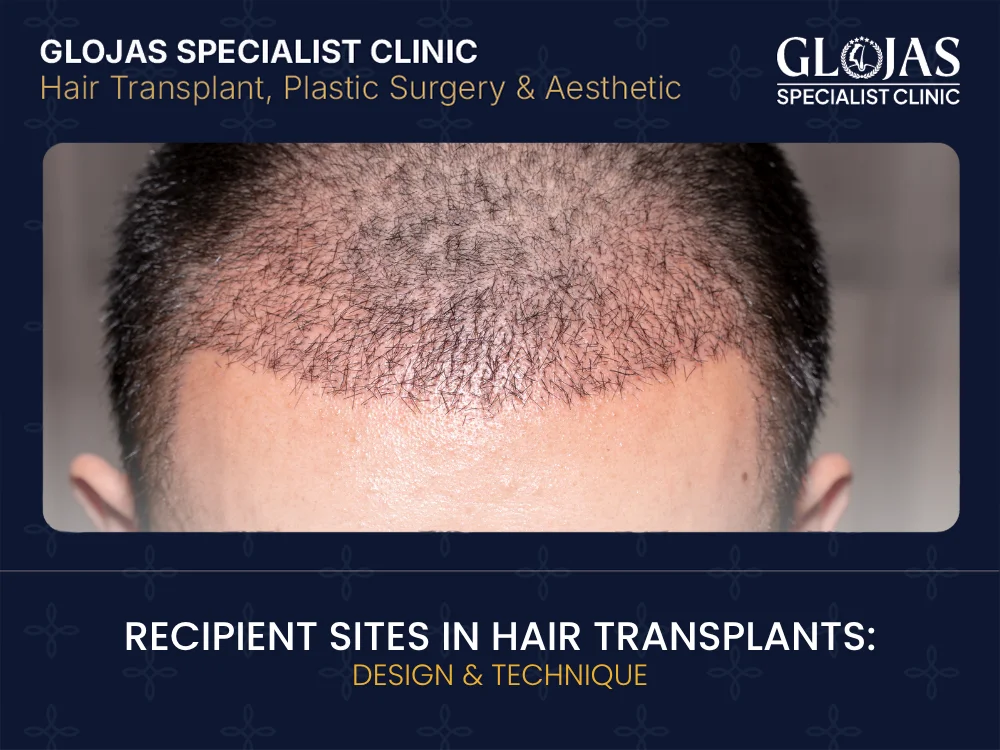
Recipient Site Technique Quick-Check Select a key focus area below to see how surgical design impacts your hair transplant angle and natural flow: Angle & Flow Slit Tools Density Plan Click one of the buttons above to review specific recipient site engineering parameters. Consult a Specialist via WhatsApp When planning a hair transplant, one of the most critical steps is crafting the recipient sites — the tiny slits or pockets on the scalp where grafts will be placed. The design, angle, depth, and spacing of those sites largely determine how natural the result looks, how well grafts survive, and how the hair flows. In this blog post, we dive deep into recipient sites—their design, technique, challenges, and how expert execution makes all the difference. What Are Recipient Sites and Why They Matter “Recipient sites” refer to the locations on the scalp where harvested follicular unit grafts are implanted. These sites are not mere holes; they are carefully planned incisions or slits made at specific angles, widths, and depths to accommodate individual grafts. The way these sites are designed influences: The angle and direction of hair growth (to mimic natural hair pattern) The density and spacing of grafts (to avoid overpacking, “popping,” or compromised blood supply) The survival of grafts (snug fit, minimizing trauma, preserving perfusion) The healing, scarring, and cosmetic surface appearance (avoiding pitting, ridging, or visible scars) In short: recipient sites are where artistry and surgical precision meet. A beautifully harvested graft can only perform if the recipient site allows it to “settle in” with minimal stress and optimal orientation. Principles of Recipient Site Design To design excellent recipient sites, experienced surgeons adhere to several guiding principles: 1. Angle, Direction & Hair Flow The incisions must follow the natural hair pattern—particularly at the hairline, temples, midscalp, and crown (vertex). That means choosing angles that cause hair to sweep, curve, or swirl as nature intended. In zones with existing hairs, the new sites must not transect native follicles but blend harmoniously. 2. Depth & Width (Micro-match to Graft Size) Recipient slits are sized to match the follicular units. If the slit is too small (graft must be squeezed in), it risks crush injury or compromised blood supply. Too large, and grafts may move, tilt, or lie poorly. Depth must be controlled: too shallow can lead to pitting (graft sits too low); too deep can lead to ridging or damage to deeper vascular tissue. 3. Spacing & Density Strategy It’s tempting to pack grafts densely, but overzealous density risks impairing blood flow or causing “popping” (grafts ejecting during placement) or desiccation. The surgeon must balance desired aesthetic density with biological safety. Typically, density is higher near the frontal hairline and lower toward the crown. 4. Shape, Grid, & Irregularity While grids help with planning, a perfectly regular grid looks unnatural. Surgeons introduce subtle irregularity (“irregularly irregular”) in the hairline transition zone for a natural edge. 5. Protecting Blood Supply & Minimizing Trauma Recipient site creation should not injure deeper vessels or compromise perfusion. Techniques to limit trauma include tumescent (lifting) solutions, shallow incisions, and careful handling. Techniques & Instruments for Recipient Site Creation Achieving optimal recipient sites involves selecting the right tool or method. Here are the commonly used techniques: Hypodermic Needles (Standard) Fine hypodermic needles are versatile and widely used. Depending on graft size and surgeon preference, gauges vary (e.g., 18G to 23G). They allow precise slits and are useful when grafts are varied in size. Custom Blades / Slit Blades / Chisels Surgeons often cut blades to exact widths needed during surgery (for example 0.6 mm to 0.9 mm) so slits match graft profiles. Lateral slits (also called coronal slits) are preferred by many because they allow better control over hair direction and fanning of grafts. Implanter Pens / “Stick-and-Place” With implanter pens, the surgeon can simultaneously create a recipient site and insert the graft. This reduces graft handling time, but requires strong skill to maintain angle, depth, and spacing. Robotic & Automated Slit Creation Some advanced robotic systems (e.g., ARTAS) can programmatically create sites based on image guidance, avoiding damage to existing hairs and distributing sites judiciously. This is especially useful in large sessions or complex topographies. Challenges, Pitfalls & Risk Mitigation Even with good planning, surgeon experience is vital. Here are risks and how they’re mitigated: Popping: Grafts ejecting from slits during insertion. Prevented by carefully sized slits and measured force. Graft Compression / Crush Injury: Forcing a graft into too-tight site damages viability. Correct slit sizing and gentle insertion prevent this. Poor Perfusion / Necrosis: Overpacking or trauma to blood supply reduces graft survival. Pitting or Ridging: Mis-depth placement causes shallow or deep depressions. Transection of Native Hairs: Especially in zones with residual hair, creating sites without damaging existing follicles is delicate. Scar tissue / Poor recipient bed: Grafting into scarred areas is more difficult; blood supply is compromised. Yet skilled surgeons can take extra care to condition the bed. Good technique, magnification (loupes or microscopes), and intraoperative adjustment are key. Workflow: From Planning to Placement Here’s a simplified flow of how recipient site design fits into the surgical plan: Pre-op Planning: Assess hair loss pattern, donor supply, scalp laxity, patient hair texture, and direction. Mapping & Sketching the Hairline: Determine where the frontal transition zone shall be, the shape, irregularity, and zones of density. Graft Sorting: Categorize harvested grafts by size (1-hair, 2-hair, 3-hair, etc.). Recipient Site Creation: Using chosen tools, the surgeon makes incisions/slits following the planning, adjusting as needed. Test Fitting: Occasionally, grafts are tested in slits to ensure fit and minor adjustments. Graft Placement: Grafts are implanted carefully, ensuring they sit flush, match angle, and aren’t twisted or forced. Post-placement Checks: Inspect for pitting, graft alignment, uniformity, and leftover tension or bleeding. When properly executed, this workflow yields natural-looking, long-lasting results. Recipient Sites: Real-World Examples & Case Considerations In a patient with a Norwood 4A pattern, a surgeon may use about 36 grafts per cm² in the frontal zone, creating slits
Am I a Good Hair Transplant Candidate? Self-Assessment Guide
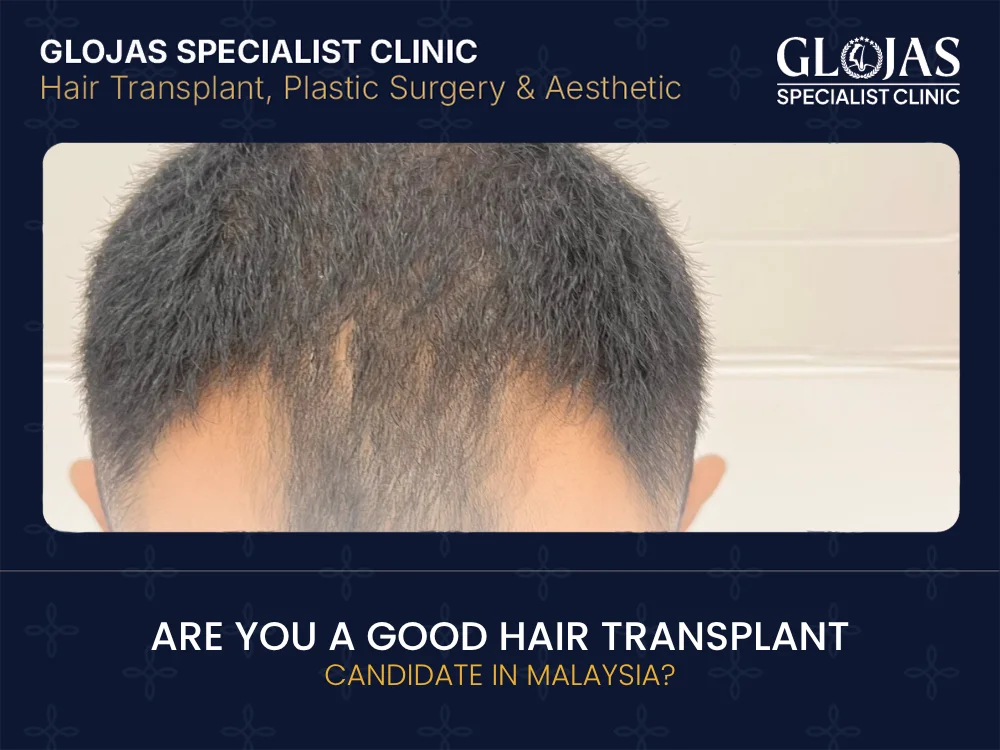
Are You a Good Hair Transplant Candidate? Let’s Find Out To determine if you are a suitable hair transplant candidate, you must possess stabilized hair loss (typically age 25 or older), a healthy scalp free of active autoimmune diseases, and a dense, permanent donor area at the back of the head containing healthy follicular units to effectively cover your balding areas. GLOJAS Specialist Clinic in Kuala Lumpur backs its hair transplant Malaysia with 30+ years of medical excellence. Led by Malaysia’s pioneer ABHRS-certified and FISHRS-recognized hair restoration physician, the clinic features proprietary, MOH-approved SMART™ FUE technology for maximum graft survival. Candidate Self-Assessment Criteria 1. Hair Loss Stage & Classification Male Pattern Baldness (Androgenetic Alopecia): Ideal surgical candidates fall within Stage 3 to Stage 6 on the Norwood Scale. Stage 1 and 2 (early receding or mature hairlines) are typically better managed with medical therapies. Stage 7 represents extensive loss where donor supply is frequently insufficient. Female Pattern Hair Loss: Candidates are classified using the Ludwig Scale (Stages 1–3). Candidates must exhibit localized or distinct thinning with a preserved, stable donor zone rather than diffuse, unpatterned alopecia (DUPA) affecting the entire scalp. 2. Donor Area Supply and Quality Follicular Unit Density: The permanent donor zone (located at the back and sides of the occipital scalp) must possess a minimum density of 65 to 80 follicular units per square centimeter ($text{FU/cm}^2$). Hair Caliber and Characteristics: Coarse, thick hair shafts provide superior visual density and surface coverage per graft compared to fine or miniaturized hair. 3. Age and Stabilization Minimum Age Recommendation: The International Society of Hair Restoration Surgery (ISHRS) strongly advises a minimum age threshold of 25 years. Progression Tracking: Performing surgeries on individuals under 25 carries high long-term risks; hair loss patterns are not yet fully stabilized, which can result in isolated patches of transplanted hair as native hair continues to recede behind the new hairline. 4. Underlying Medical and Scalp Health Contraindications: Candidates must be free from active, progressive scalp pathologies such as alopecia areata, lichen planopilaris, frontal fibrosing alopecia, or severe uncontrolled seborrheic dermatitis. Systemic Factors: Chronic medical conditions (e.g., Type 2 Diabetes, hypertension, cardiovascular diseases) must be medically controlled to ensure safe healing and optimal vascularity for graft survival. Medical Management Prerequisite Surgical intervention is rarely a standalone treatment. Viable candidates must show a willingness to adhere to long-term DHT inhibitors (such as Finasteride) and topical/oral vasodilators (such as Minoxidil) to stabilize ongoing native hair thinning and preserve the surrounding non-transplanted hair follicles.
Thinning Hair: Causes, Early Signs, and What Actually Works to Fix It
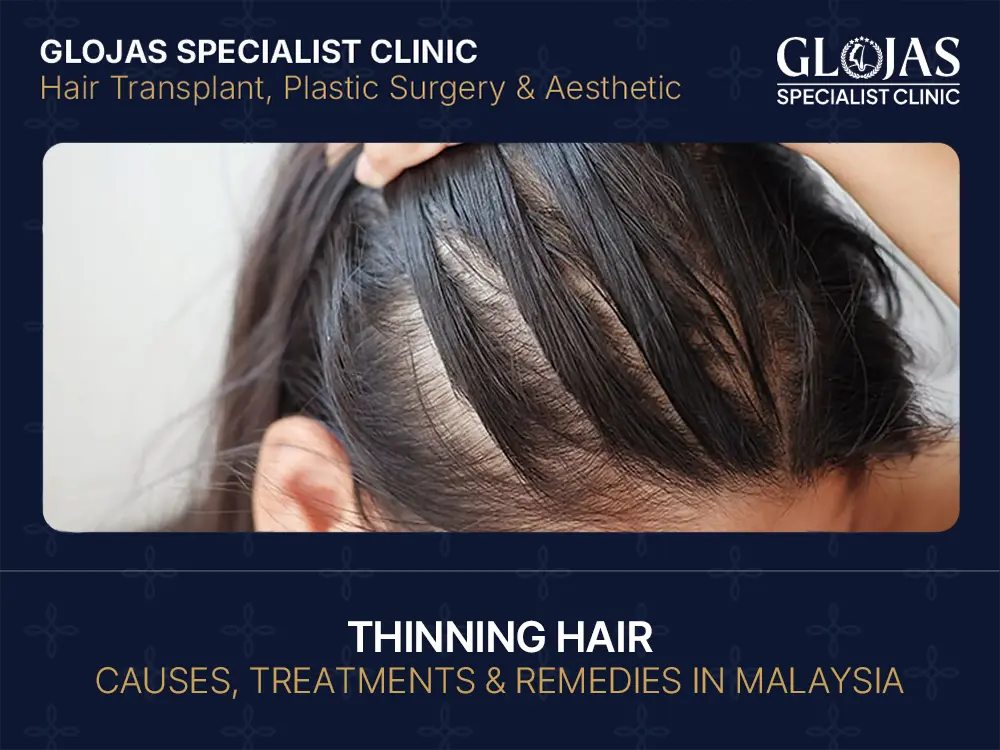
Seeing more scalp in the mirror or hair in the drain? Thinning hair is stressful, but it’s also incredibly common. By age 50, 50% of men and 40% of women deal with noticeable hair thinning. The key is catching it early — because once follicles go dormant, it’s harder to bring them back. Here’s what causes thinning hair, how to spot it, and what treatments actually work in 2026. What Is Thinning Hair vs Hair Loss? Thinning hair means your strands are becoming finer, or you’re growing fewer hairs per square inch. You’re not bald, but density is dropping.Hair loss usually refers to shedding — like clumps in the shower — or patchy bald spots. You can have thinning without major shedding, and shedding without permanent thinning. But untreated thinning often leads to visible hair loss over time. Early Signs of Thinning Hair You Shouldn’t Ignore Most people wait too long. Check for these signs now: Widening part: For women, the part line gets broader and scalp shows more Receding hairline: M-shaped pattern at temples for men, or overall frontal thinning Ponytail feels smaller: Less volume when you tie it up Scalp sunburn: You’re burning where you never used to More scalp visibility: Under bright lights or when hair is wet Slower growth: Hair doesn’t seem to grow past a certain length anymore Take a photo today under overhead light. Compare it in 3 months. That’s the easiest way to track real change. What Causes Thinning Hair? The Main Culprits 1. Androgenetic Alopecia: Male & Female Pattern Thinning This is 95% of cases. It’s genetic. Your follicles are sensitive to DHT, a byproduct of testosterone. DHT shrinks follicles over time, making hairs finer until they stop growing. Men: Temples, crown, mid-scalp. Norwood scale 1-7. Women: Diffuse thinning over the crown, Ludwig scale 1-3. Hairline usually stays intact. 2. Telogen Effluvium: Stress Shedding Big life stressor 2-3 months ago? Surgery, illness, crash diet, childbirth, high fever, or emotional trauma can push hairs into the shedding phase. You’ll lose 200-300 hairs/day vs normal 50-100. The good news: it’s usually reversible once the trigger stops. 3. Nutritional Deficiencies Hair is non-essential tissue. If your body’s low on nutrients, hair gets cut off first. Common deficiencies: Iron: Ferritin <40 ng/mL can cause thinning, especially in women Vitamin D: Low levels linked to alopecia areata and diffuse thinning Protein: Crash diets or vegan diets without planning starve follicles Zinc, Biotin, B12: Less common, but play a role 4. Hormonal Shifts Thyroid issues: Both hypo and hyperthyroidism thin hair PCOS: High androgens cause female pattern thinning + facial hair Menopause: Estrogen drop makes follicles more DHT-sensitive Postpartum: Estrogen crash at 3-4 months causes shedding, usually resolves by month 12 5. Scalp Conditions & Damage Seborrheic dermatitis: Inflammation chokes follicles Tight hairstyles: Traction alopecia from ponytails, braids, extensions Heat/chemical damage: Over-bleaching, relaxers break strands and can damage follicles Medications: Blood thinners, antidepressants, acne meds, chemotherapy How to Diagnose Why Your Hair Is Thinning Don’t guess. See a dermatologist or trichologist. They’ll check: Hair pull test: Gently tug 40-60 hairs to see how many shed Scalp exam: Dermatoscope to check follicle size and miniaturization Blood work: Ferritin, TSH, Vitamin D, B12, zinc, hormone panel Medical history: Meds, stress, diet, family pattern Knowing the cause determines the treatment. Minoxidil won’t fix iron deficiency. What Actually Works for Thinning Hair in 2026 1. FDA-Approved Medications Minoxidil 5%: Topical foam or liquid, OTC. Extends growth phase. Works for men and women. Takes 3-6 months. You must keep using it or gains reverse. Finasteride 1mg: Oral, men only. Blocks DHT by 70%. Stops thinning and regrows in 66% of men. Needs prescription. Spironolactone: Oral, women only. Anti-androgen for PCOS or female pattern hair loss. Needs prescription. 2. Low-Level Laser Therapy (LLLT) FDA-cleared laser caps, combs, or helmets. Red light stimulates follicles. Best for early to moderate thinning. Use 3x/week, 10-20 min. Results at 4-6 months. Brands like Capillus, iRestore, Theradome have clinical data. 3. Platelet-Rich Plasma (PRP Hair Treatment) Your blood is spun down, platelets injected into scalp. Growth factors wake up follicles. Done monthly x3, then maintenance. Costs RM 800-1,500 per session in Malaysia. Works best combined with meds. 4. Nutrition & Supplements Only help if you’re deficient. Get tested first. If low: Iron: Bisglycinate with vitamin C, raise ferritin >70 Vitamin D3: 2000-5000 IU daily if <30 ng/mL Protein: 1.2-1.6g per kg body weight daily Saw palmetto: Weak DHT blocker, option for those who can’t use finasteride Skip “hair gummies” if your labs are normal. They won’t out-supplement genetics. 5. Hair Care & Lifestyle Changes Gentle washing: Sulfate-free shampoo, don’t scrub hard. Wash when dirty — oil buildup worsens seborrheic dermatitis. Stop traction: Ditch tight buns, switch to silk scrunchies, avoid extensions Reduce heat: Air dry, lower flat iron temp, heat protectant always Manage stress: Cortisol pushes hair into shedding. Sleep, exercise, therapy if needed. Scalp massage: 4 min/day increases thickness per 2016 study. Use fingertips, not nails. 6. Hair Transplant for Advanced Thinning If meds stabilized you but you want density back, FUE transplant moves DHT-resistant hairs from the back to the front. Costs RM 10,000 – RM 25,000 in Malaysia. Not a cure — you still need meds to keep non-transplanted hair. What Doesn’t Work: Save Your Money “Miracle” shampoos: Ketoconazole shampoo can help mildly, but caffeine shampoos have weak data. Essential oils alone: Rosemary oil shows promise, but not as monotherapy for genetic thinning. Scalp “detox”: Your scalp doesn’t have toxins. Over-scrubbing causes inflammation. One-month fixes: Hair cycles are 3 months long. If someone promises results in 2 weeks, run. When to See a Doctor ASAP Book now if you have: Sudden bald patches: Could be alopecia areata — autoimmune Scalp burning, itching, scaling: Scarring alopecia can be permanent if untreated Thinning + fatigue, weight changes: Thyroid or other systemic issue You’re under 18: Early intervention matters The Bottom Line on Thinning Hair Thinning hair is medical, not just cosmetic. The earlier you act, the more hair you
10 Best Hair Loss Supplements for Hair Growth in Malaysia
💊 Key Ingredients to Look For in Hair Supplements Click below to discover what makes these top Malaysian supplements effective for hair growth: 1. Biotin (Vitamin B7) + Activates enzymes essential for keratin production. A daily dosage of 2.5mg to 5mg helps strengthen brittle hair follicles and minimizes excessive daily hair shedding. 2. Saw Palmetto Extract + A natural herbal blocker that inhibits the 5-alpha-reductase enzyme, helping lower DHT hormone levels responsible for male and female pattern hair thinning. 3. Marine Collagen & Amino Acids + Provides structural building blocks (like proline and L-cysteine) that repair hair shaft damage, enhance thickness, and support overall scalp elasticity. Unsure which supplement fits your hair loss condition? 💬 Consult via WhatsApp Hair loss supplements for hair growth are dietary formulas containing vitamins, minerals, and natural ingredients like biotin, vitamin D, zinc, and collagen. These supplements target nutritional deficiencies that cause hair thinning, support follicle health, and stimulate new hair growth within 3 to 6 months. What Are Hair Loss Supplements for Hair Growth? Hair loss supplements are oral products designed to provide essential nutrients that may be missing from your daily diet. They come as capsules, tablets, powders, or gummies. These supplements do not treat genetic baldness but are highly effective for hair loss caused by poor nutrition, stress, or hormonal changes like postpartum shedding. In Malaysia, registered products under the National Pharmaceutical Regulatory Agency (NPRA) carry a “MAL” or “NOT” number for safety assurance. How Hair Growth Supplements Work Supporting Hair Follicle Health Hair follicles are tiny organs in your scalp that grow hair. They need a constant supply of oxygen, vitamins, and minerals. Supplements provide these nutrients directly to your bloodstream. Healthy follicles produce stronger, longer-lasting hair. Without proper nutrition, follicles enter a resting phase and stop growing new hair. Improving Keratin Production Keratin is the hard protein that makes up 95% of your hair strand. Your body needs biotin, vitamin C, and amino acids to produce keratin. Hair supplements supply these building blocks. More keratin means thicker, shinier, and less brittle hair. Keratin production naturally slows with age, making supplements more important for adults over 40. Reducing Hair Shedding Excess shedding happens when hair follicles switch from growing phase (anagen) to shedding phase (telogen) too quickly. Nutrients like zinc, iron, and vitamin D help regulate this cycle. Clinical studies show that consistent use of hair supplements reduces daily shedding from 100–150 hairs to under 50 hairs within 90 days. Key Vitamins in Hair Loss Supplements Biotin (Vitamin B7) Biotin is the most famous vitamin for hair growth. It activates enzymes that produce keratin. A daily dose of 2.5–5 mg biotin has been shown to reduce hair loss by 30% after 90 days. Biotin also improves nail strength and skin health. Vitamin D Vitamin D creates new hair follicles and awakens dormant ones. Low vitamin D levels are found in 80% of people with telogen effluvium (stress-related hair loss). The recommended daily intake for hair health is 1,000–2,000 IU. Sun exposure alone is often insufficient for Malaysians who stay indoors most of the day. Vitamin B Complex This group includes B6, B12, and folate (B9). These vitamins help produce red blood cells that carry oxygen to your scalp. Without oxygen, hair follicles weaken and stop growing. Vitamin B12 is found only in animal products, making supplements important for vegetarians and vegans. Vitamin C Vitamin C is a powerful antioxidant that protects hair follicles from damage. It also helps your body absorb iron from plant sources. One medium orange provides 70 mg of vitamin C, which increases iron absorption by up to 85%. Vitamin C is also required to produce collagen, which surrounds each hair strand. Vitamin E Vitamin E reduces oxidative stress on your scalp. Oxidative stress occurs when free radicals damage follicle cells. A 2018 study found that people taking vitamin E for 8 months experienced 34% less hair loss. Natural vitamin E (d-alpha-tocopherol) works better than synthetic versions. Vitamin A Vitamin A helps produce sebum, the natural oil that moisturises your scalp. Too little sebum causes dry, itchy scalp and brittle hair. However, too much vitamin A can actually cause hair loss. The safe upper limit is 3,000 mcg (10,000 IU) daily. Most hair supplements contain beta-carotene, which your body converts to vitamin A as needed. Important Minerals in Hair Growth Supplements Zinc for Hair Strength Zinc helps hair follicle cells divide and grow. It also controls the oil glands around each follicle. Zinc deficiency causes hair to become thin, dry, and easily broken. The recommended daily amount is 8–11 mg. Oysters are the richest source, with 74 mg per 3 oysters. Iron for Hair Growth Iron is essential for making haemoglobin, the protein in red blood cells that carries oxygen. Without enough iron, your body directs oxygen to vital organs instead of hair follicles. Ferritin (stored iron) levels below 40 µg/L are directly linked to hair loss. Women with heavy periods are at highest risk. Selenium for Follicle Health Selenium activates antioxidants that protect follicles from damage. It also helps your body recycle vitamin C and vitamin E. The recommended daily intake is 55 mcg. Brazil nuts are so rich in selenium that just 2 nuts provide your full daily requirement. Too much selenium (over 400 mcg daily) can cause hair loss and brittle nails. Natural Ingredients Found in Hair Supplements Marine Collagen Marine collagen comes from fish skin and scales. It contains amino acids that build the structure of hair strands. Collagen also provides proline, which your body uses to produce keratin. Studies show that 2.5 grams of marine collagen daily for 6 months increases hair thickness by 15–20%. Saw Palmetto Extract Saw palmetto is a palm plant extract that blocks an enzyme called 5-alpha-reductase. This enzyme converts testosterone to DHT, the hormone that causes male pattern baldness. A 2020 study found that 300 mg of saw palmetto daily reduced hair loss in 60% of men after 6 months. It works similarly to finasteride but with
Saw Palmetto: Uses, Dosage & Health Benefits in Malaysia

What is Saw Palmetto? Saw palmetto (Serenoa repens) is a small palm native to North America. Its berries are widely used in dietary supplements, usually in capsule, tablet, or oil form. Research shows that saw palmetto contains fatty acids and phytosterols, which act as a natural DHT (dihydrotestosterone) blocker. Since DHT is the hormone responsible for male pattern baldness and prostate enlargement (benign prostatic hyperplasia or BPH), saw palmetto has become popular as a natural aid for men’s health. How Saw Palmetto Works Blocks DHT NaturallyDHT shrinks hair follicles, leading to thinning hair and eventual baldness. Saw palmetto may reduce DHT activity, slowing down this process. Supports Prostate HealthIn men over 40, an enlarged prostate can cause frequent urination. Studies suggest saw palmetto helps reduce urinary symptoms linked to BPH. Anti-Inflammatory PropertiesThe phytosterols in saw palmetto have anti-inflammatory effects, beneficial for both scalp health and urinary function. Main Uses of Saw Palmetto 1. Saw Palmetto for Hair Loss Helps men with androgenetic alopecia (male pattern baldness). Some women with hormonal thinning hair may also see improvement. Works best when combined with treatments like minoxidil, PRP therapy, or hair transplant surgery. 2. Saw Palmetto for Prostate Health Traditionally used to ease urinary difficulties caused by BPH. Clinical trials show it may improve urine flow and reduce discomfort, though results vary. 3. Hormonal Balance & Wellness Supports testosterone balance in men. May promote sexual health and overall vitality. Forms of Saw Palmetto Supplements Capsules / Tablets – the most common and convenient option. Softgel Oil Extracts – concentrated form with higher potency. Powder or Tincture – used in traditional herbal medicine. Saw Palmetto vs. Other Hair Loss & Prostate Treatments Treatment Advantages Limitations Saw Palmetto Natural, fewer side effects, helps both prostate & hair Slower results, varies per individual Finasteride Clinically proven for hair loss Possible sexual side effects Minoxidil Topical, stimulates hair regrowth Hair loss resumes if stopped PRP Therapy Natural, uses patient’s own blood plasma Expensive, multiple sessions needed Hair Transplant Permanent restoration option Surgical, higher upfront cost Possible Side Effects Although generally safe, some users may experience: Mild stomach upset or diarrhea Headaches or dizziness Changes in libido (rare) Interactions with blood-thinning medications ⚠️ Pregnant and breastfeeding women should avoid saw palmetto due to its hormonal effects. Recommended Dosage Standard daily dose: 160–320 mg of standardized extract. Best taken with food to reduce digestive issues. Always consult a doctor before starting, especially if you’re on other medications. Who Should Consider Saw Palmetto? Men experiencing hair thinning or male pattern baldness. Men with enlarged prostate symptoms such as frequent urination. Individuals seeking a natural alternative to finasteride. Women dealing with hormonal hair loss, under medical advice. Can It Be Combined with Other Treatments? Yes. Many patients use the supplement alongside: Minoxidil topical solutions to stimulate hair growth. Finasteride (under medical supervision). PRP therapy to strengthen hair follicles. Hair transplant surgery for advanced hair loss. Saw Palmetto vs Finasteride vs Dutasteride – Which One Is More Effective to Block DHT? When it comes to treating hair loss caused by DHT (dihydrotestosterone), different options exist — from natural extracts to prescription medications such as finasteride and dutasteride. Understanding how they compare can help you choose the right treatment. Saw PalmettoA natural supplement derived from the berries of the Serenoa repens plant. Research suggests it may help reduce DHT levels by inhibiting the enzyme 5-alpha reductase, though its effects are generally milder compared to prescription drugs. It is often preferred by individuals looking for a natural approach or those sensitive to medications. FinasterideA widely prescribed oral medication for male pattern baldness. It selectively inhibits Type II 5-alpha reductase, significantly lowering scalp and serum DHT levels. Clinical studies show finasteride can slow hair loss and promote regrowth in many men. DutasterideA more potent prescription option. Unlike finasteride, dutasteride blocks both Type I and Type II 5-alpha reductase enzymes, leading to greater suppression of DHT. Studies indicate it may be more effective than finasteride, but it may also carry a higher risk of side effects. Verdict: Most potent DHT blocker → Dutasteride Clinically proven and widely used → Finasteride Natural alternative with milder effects → Saw Palmetto Conclusion Saw palmetto is one of the most popular natural supplements for men’s health. With potential as a DHT blocker, it offers dual benefits: supporting hair preservation and prostate wellness. While its effects may be slower and less predictable compared to prescription drugs, saw palmetto remains an attractive option for those seeking a gentler, natural alternative. 👉 For best results, consult a dermatologist or urologist before starting the supplement, especially if you are combining it with other treatments. FAQs 1. Does saw palmetto really work for hair loss?Some studies suggest it can reduce DHT activity, slowing hair loss. Results vary, and it works best as part of a combined treatment plan. 2. Can women take saw palmetto?Yes, women with hormonal hair thinning sometimes use it. However, it’s not recommended during pregnancy or breastfeeding. 3. Is saw palmetto better than finasteride?Saw palmetto is natural and safer but less potent. Finasteride is more effective but carries higher risk of side effects. 4. How long does it take to see results?Most people need at least 3–6 months of consistent use to notice improvements in hair or prostate symptoms. 5. Where can I buy saw palmetto?It’s widely available at pharmacies, health stores, and online platforms in capsule, softgel, or powder form. Restore Confidence with Hair Transplant at GLOJAS Specialist Clinic Hair loss can affect not only your appearance but also your self-esteem. At GLOJAS Plastic Surgery Specialist Clinic in Kuala Lumpur, our experienced surgeons provide personalized hair transplant solutions that look natural and last a lifetime. Using advanced techniques like SMART FUE, we restore your hairline with precision, ensuring minimal downtime and maximum results. Why Choose GLOJAS for Hair Transplant Malaysia? Choosing the right clinic makes all the difference in achieving natural, permanent hair restoration. At GLOJAS Plastic Surgery Specialist Clinic, we combine medical expertise, artistry, and advanced technology to deliver
Botak Tengah: Punca, Rawatan & Cara Atasi di Malaysia
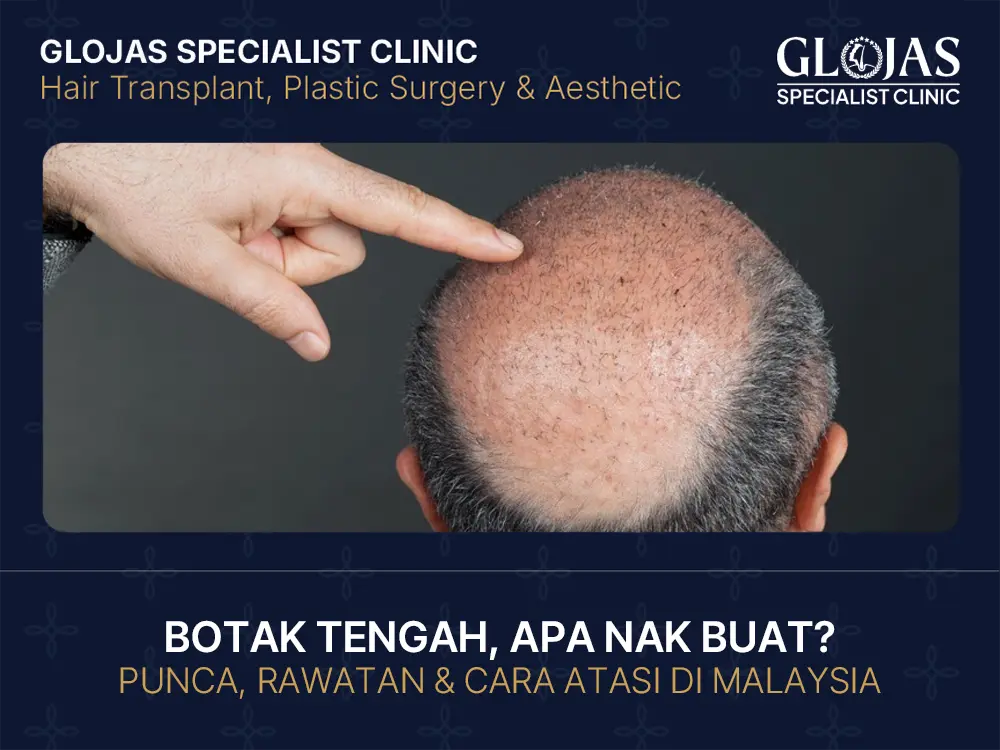
Semak Punca Utama Botak Tengah Anda Pilih tahap atau situasi rambut anda di bawah untuk berunding terus dengan pakar melalui WhatsApp: Faktor Genetik & Hormon DHT (Paling Kerap)Stres Kronik & Tekanan KerjaKekurangan Nutrisi & Vitamin RambutKulit Kepala Berkelemumur / Gatal / Minyak Teruk Konsultasi Percuma via WhatsApp Masalah botak tengah adalah antara isu rambut yang paling kerap dialami lelaki, dan tidak kurang juga wanita. Di Malaysia, ramai yang mula perasan rambut gugur di tengah kepala seawal usia 20-an. Ada yang menganggap ia sekadar masalah sementara, tetapi hakikatnya botak tengah boleh berpunca daripada faktor genetik, hormon, atau gaya hidup. Apa Itu Botak Tengah? Botak tengah merujuk kepada keadaan rambut yang semakin menipis atau hilang di bahagian tengah kepala (crown / vertex). Dalam istilah perubatan, keadaan ini dikenali sebagai androgenetic alopecia atau male pattern baldness. Masalah ini biasanya bermula dengan rambut yang semakin jarang di tengah, kemudian merebak sehingga membentuk bulatan botak. Bagi wanita, botak tengah lebih kepada rambut menipis berbanding botak penuh. Punca Utama Botak Tengah 1. Faktor Genetik & Hormon (DHT) Hormon Dihydrotestosterone (DHT) adalah penyebab utama botak tengah. Ia menyerang folikel rambut, menjadikannya semakin kecil dan tidak mampu tumbuh semula. 2. Usia & Penuaan Semakin meningkat umur, kadar pertumbuhan rambut menurun. Folikel rambut menjadi lemah dan lebih mudah gugur. 3. Masalah Kesihatan Diabetes Kekurangan vitamin D, biotin, zinc Gangguan hormon tiroid 4. Gaya Hidup & Stress Tekanan kerja berpanjangan Kurang tidur Diet tidak seimbang Penggunaan gel, wax, atau topi ketat setiap hari Tanda Awal Botak Tengah Rambut semakin nipis di bahagian tengah kepala. Kulit kepala mula kelihatan jelas bila disisir. Rambut gugur banyak ketika mandi atau menyikat. Rasa tidak yakin dengan penampilan. Rawatan Moden Untuk Botak Tengah di Malaysia 1. Ubat Rambut (Minoxidil & Finasteride) Minoxidil (losyen / spray) merangsang folikel rambut. Finasteride (pil) mengawal hormon DHT penyebab botak. 👉 Sesuai untuk peringkat awal, tetapi perlu digunakan konsisten. 2. Rawatan PRP (Platelet Rich Plasma) Darah pesakit diambil, diproses, dan disuntik ke kulit kepala. Merangsang pertumbuhan folikel rambut. 3. Laser Rambut Menggunakan cahaya laser tahap rendah untuk merangsang folikel. 4. FUE Hair Transplant (Tanam Rambut) Teknik paling berkesan untuk botak tengah kronik. Folikel rambut sihat dipindahkan dari belakang kepala ke bahagian botak. Di Malaysia, prosedur ini dikendalikan oleh doktor bertauliah LCP. 5. Stem Cell Therapy / GCell Kaedah terbaru menggunakan sel regeneratif untuk merangsang pertumbuhan rambut. Petua Tradisional & Semula Jadi Walaupun keberkesanannya berbeza, ramai masih cuba cara semula jadi untuk botak tengah: Minyak kelapa & minyak zaitun untuk urutan kulit kepala. Halia atau bawang merah untuk merangsang peredaran darah. Daun kari dan bunga raya dalam rawatan rambut tradisional Melayu. 👉 Petua ini mungkin membantu menguatkan akar rambut, tetapi rawatan moden lebih terbukti secara saintifik. Cara Pencegahan Botak Tengah Amalkan pemakanan kaya vitamin B12, omega-3, zink & zat besi. Elakkan stress berlebihan & pastikan tidur cukup. Gunakan shampoo bebas SLS dan mesra kulit kepala. Buat pemeriksaan kesihatan untuk pastikan tiada masalah hormon atau penyakit. Bila Perlu Jumpa Doktor? Jika rambut anda semakin menipis, jangan tunggu botak penuh. Jumpalah doktor bila: Rambut gugur lebih 100 helai sehari. Kulit kepala jelas kelihatan. Tiada kesan walaupun guna shampoo / minyak rambut. Kehilangan keyakinan diri kerana masalah rambut. Rawatan Botak Tengah di Klinik Pakar Rambut Malaysia Di Malaysia, terdapat klinik khusus seperti GLOJAS Specialist Clinic yang menawarkan rawatan moden termasuk: SMART™ FUE Hair Transplant (dengan jaminan hasil semula jadi). PRP Injection untuk menebalkan rambut. Ubat preskripsi oleh doktor bertauliah. 📞 Hubungi kami hari ini untuk konsultasi percuma & ketahui rawatan paling sesuai untuk anda. Kesimpulan Botak tengah bukan sekadar masalah penampilan, tetapi juga boleh menjejaskan keyakinan diri. Dengan gabungan rawatan moden (FUE, PRP, ubat) dan gaya hidup sihat, masalah ini boleh dikawal atau diatasi. Jangan tunggu sehingga botak menjadi kronik – lebih awal anda bertindak, lebih tinggi peluang untuk mendapatkan rambut lebat semula. FAQ 1. Botak di tengah kepala boleh tumbuh balik ke?Ya, jika dirawat awal dengan ubat atau PRP. Untuk kes kronik, hanya tanam rambut yang berkesan. 2. Apa punca utama botak tengah lelaki?Genetik & hormon DHT adalah punca paling utama. Stress dan diet buruk boleh mempercepatkan. 3. Adakah wanita juga boleh botak di tengah kepala?Ya. Wanita biasanya alami rambut menipis di tengah kepala, bukan botak penuh. 4. Berapa kos rawatan rambut botak di Malaysia?Bergantung pada rawatan – ubat (RM200+), PRP (RM1,500/session), tanam rambut (RM10,000+). 5. Apakah rawatan paling berkesan untuk botak tengah?Tanam rambut FUE adalah rawatan paling berkesan untuk hasil kekal dan semula jadi.