
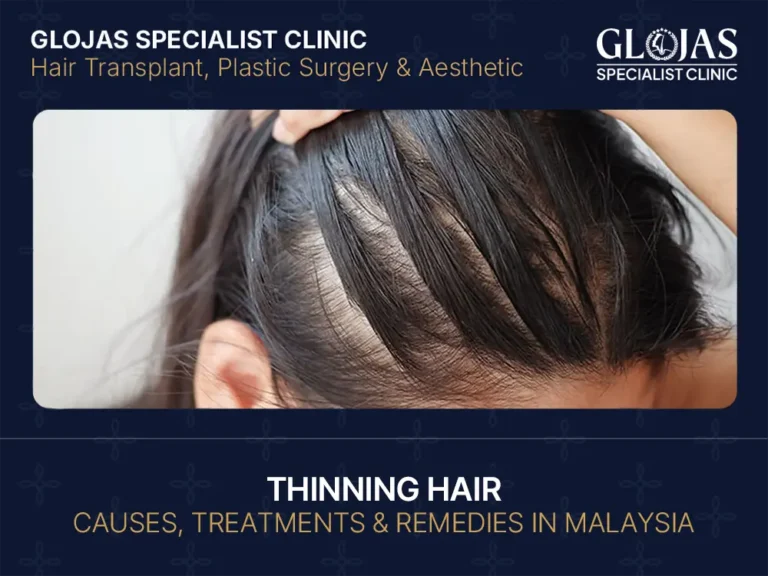
Seeing more scalp in the mirror or hair in the drain? Thinning hair is stressful, but it’s also incredibly common. By age 50, 50% of men and 40% of women deal with noticeable hair thinning. The key is catching it early — because once follicles go dormant, it’s harder to bring them back. Here’s what causes thinning hair, how to spot it, and what treatments actually work in 2026.
What Is Thinning Hair vs Hair Loss?
Thinning hair means your strands are becoming finer, or you’re growing fewer hairs per square inch. You’re not bald, but density is dropping.
Hair loss usually refers to shedding — like clumps in the shower — or patchy bald spots.
You can have thinning without major shedding, and shedding without permanent thinning. But untreated thinning often leads to visible hair loss over time.
Early Signs of Thinning Hair You Shouldn’t Ignore
Most people wait too long. Check for these signs now:
- Widening part: For women, the part line gets broader and scalp shows more
- Receding hairline: M-shaped pattern at temples for men, or overall frontal thinning
- Ponytail feels smaller: Less volume when you tie it up
- Scalp sunburn: You’re burning where you never used to
- More scalp visibility: Under bright lights or when hair is wet
- Slower growth: Hair doesn’t seem to grow past a certain length anymore
Take a photo today under overhead light. Compare it in 3 months. That’s the easiest way to track real change.
What Causes Thinning Hair? The Main Culprits
1. Androgenetic Alopecia: Male & Female Pattern Thinning
This is 95% of cases. It’s genetic. Your follicles are sensitive to DHT, a byproduct of testosterone. DHT shrinks follicles over time, making hairs finer until they stop growing.
- Men: Temples, crown, mid-scalp. Norwood scale 1-7.
- Women: Diffuse thinning over the crown, Ludwig scale 1-3. Hairline usually stays intact.
2. Telogen Effluvium: Stress Shedding
Big life stressor 2-3 months ago? Surgery, illness, crash diet, childbirth, high fever, or emotional trauma can push hairs into the shedding phase. You’ll lose 200-300 hairs/day vs normal 50-100. The good news: it’s usually reversible once the trigger stops.
3. Nutritional Deficiencies
Hair is non-essential tissue. If your body’s low on nutrients, hair gets cut off first. Common deficiencies:
- Iron: Ferritin <40 ng/mL can cause thinning, especially in women
- Vitamin D: Low levels linked to alopecia areata and diffuse thinning
- Protein: Crash diets or vegan diets without planning starve follicles
- Zinc, Biotin, B12: Less common, but play a role
4. Hormonal Shifts
- Thyroid issues: Both hypo and hyperthyroidism thin hair
- PCOS: High androgens cause female pattern thinning + facial hair
- Menopause: Estrogen drop makes follicles more DHT-sensitive
- Postpartum: Estrogen crash at 3-4 months causes shedding, usually resolves by month 12
5. Scalp Conditions & Damage
- Seborrheic dermatitis: Inflammation chokes follicles
- Tight hairstyles: Traction alopecia from ponytails, braids, extensions
- Heat/chemical damage: Over-bleaching, relaxers break strands and can damage follicles
- Medications: Blood thinners, antidepressants, acne meds, chemotherapy
How to Diagnose Why Your Hair Is Thinning
Don’t guess. See a dermatologist or trichologist. They’ll check:
- Hair pull test: Gently tug 40-60 hairs to see how many shed
- Scalp exam: Dermatoscope to check follicle size and miniaturization
- Blood work: Ferritin, TSH, Vitamin D, B12, zinc, hormone panel
- Medical history: Meds, stress, diet, family pattern
Knowing the cause determines the treatment. Minoxidil won’t fix iron deficiency.
What Actually Works for Thinning Hair in 2026
1. FDA-Approved Medications
- Minoxidil 5%: Topical foam or liquid, OTC. Extends growth phase. Works for men and women. Takes 3-6 months. You must keep using it or gains reverse.
- Finasteride 1mg: Oral, men only. Blocks DHT by 70%. Stops thinning and regrows in 66% of men. Needs prescription.
- Spironolactone: Oral, women only. Anti-androgen for PCOS or female pattern hair loss. Needs prescription.
2. Low-Level Laser Therapy (LLLT)
FDA-cleared laser caps, combs, or helmets. Red light stimulates follicles. Best for early to moderate thinning. Use 3x/week, 10-20 min. Results at 4-6 months. Brands like Capillus, iRestore, Theradome have clinical data.
3. Platelet-Rich Plasma (PRP Hair Treatment)
Your blood is spun down, platelets injected into scalp. Growth factors wake up follicles. Done monthly x3, then maintenance. Costs RM 800-1,500 per session in Malaysia. Works best combined with meds.
4. Nutrition & Supplements
Only help if you’re deficient. Get tested first. If low:
- Iron: Bisglycinate with vitamin C, raise ferritin >70
- Vitamin D3: 2000-5000 IU daily if <30 ng/mL
- Protein: 1.2-1.6g per kg body weight daily
- Saw palmetto: Weak DHT blocker, option for those who can’t use finasteride
Skip “hair gummies” if your labs are normal. They won’t out-supplement genetics.
5. Hair Care & Lifestyle Changes
- Gentle washing: Sulfate-free shampoo, don’t scrub hard. Wash when dirty — oil buildup worsens seborrheic dermatitis.
- Stop traction: Ditch tight buns, switch to silk scrunchies, avoid extensions
- Reduce heat: Air dry, lower flat iron temp, heat protectant always
- Manage stress: Cortisol pushes hair into shedding. Sleep, exercise, therapy if needed.
- Scalp massage: 4 min/day increases thickness per 2016 study. Use fingertips, not nails.
6. Hair Transplant for Advanced Thinning
If meds stabilized you but you want density back, FUE transplant moves DHT-resistant hairs from the back to the front. Costs RM 10,000 – RM 25,000 in Malaysia. Not a cure — you still need meds to keep non-transplanted hair.
What Doesn’t Work: Save Your Money
- “Miracle” shampoos: Ketoconazole shampoo can help mildly, but caffeine shampoos have weak data.
- Essential oils alone: Rosemary oil shows promise, but not as monotherapy for genetic thinning.
- Scalp “detox”: Your scalp doesn’t have toxins. Over-scrubbing causes inflammation.
- One-month fixes: Hair cycles are 3 months long. If someone promises results in 2 weeks, run.
When to See a Doctor ASAP
Book now if you have:
- Sudden bald patches: Could be alopecia areata — autoimmune
- Scalp burning, itching, scaling: Scarring alopecia can be permanent if untreated
- Thinning + fatigue, weight changes: Thyroid or other systemic issue
- You’re under 18: Early intervention matters
The Bottom Line on Thinning Hair
Thinning hair is medical, not just cosmetic. The earlier you act, the more hair you keep.
- Figure out the cause: Genetics, stress, deficiency, hormones?
- Start proven treatment: Minoxidil + DHT blocker + LLLT is the gold standard for pattern thinning.
- Fix triggers: Iron, thyroid, stress, traction.
- Be patient: You’ll shed first for 2-8 weeks as weak hairs fall. Real regrowth shows at month 4-6.
You can’t control your genes, but you can control how early you treat them. If you’re seeing scalp where you didn’t before, today is the best day to start.