
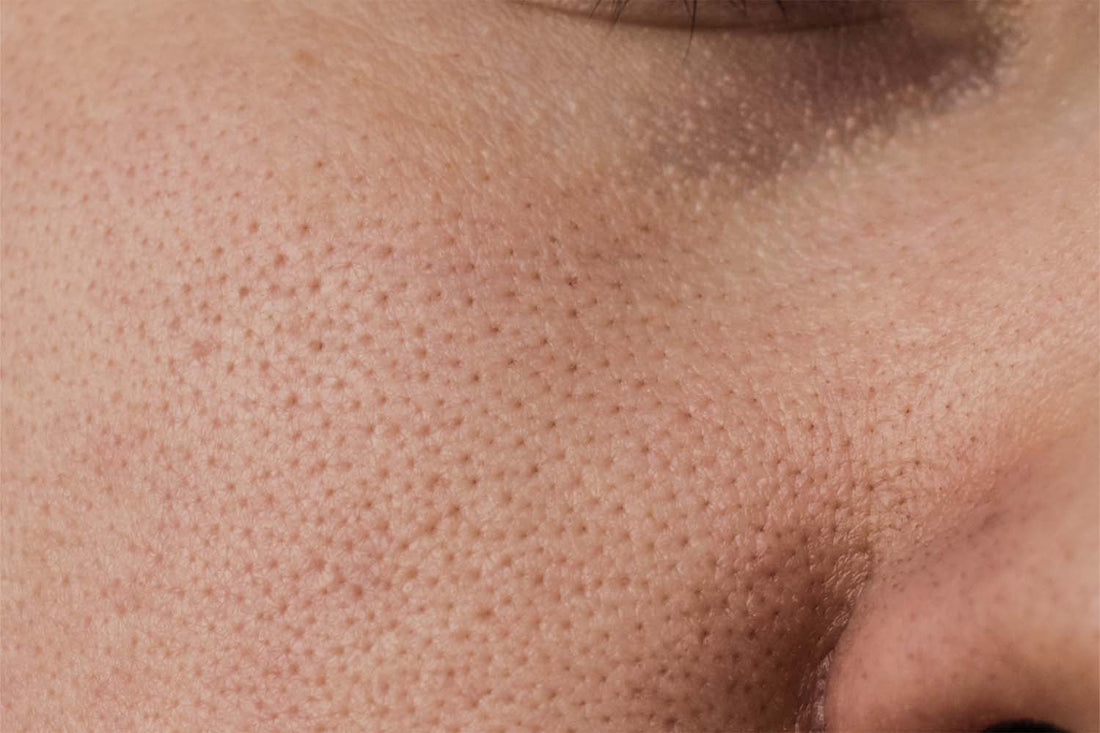
Clogged pores are small openings in the skin that become obstructed by a mixture of excess sebum, dead skin cells, and environmental pollutants. This buildup prevents the natural flow of oil, leading to visible skin concerns like blackheads, whiteheads, and inflammatory acne, often requiring targeted exfoliation or professional extraction.
What Are Clogged Pores?
Clogged pores, clinically referred to as comedones, are the result of the pilosebaceous unit becoming blocked by a “plug” of keratin and oxidized lipids.
In Malaysia’s tropical climate, high ambient temperatures increase the fluidity of sebum, while humidity prevents efficient evaporation of sweat, leading to a higher incidence of congestion.
Pores do not possess sphincters to “open” or “close”; however, their diameter can appear enlarged when the internal follicular wall is stretched by accumulated debris.
Maintaining a clear pore structure is vital for skin health, as chronic obstruction can lead to permanent structural changes and “ice pick” scarring over time.
How Clogged Pores Form
The process begins with follicular hyperkeratosis, where skin cells inside the pore shed too quickly and clump together.
Androgens stimulate the sebaceous glands to produce an excess of wax esters and squalene, which acts as a biological “glue” for these dead cells.
Once the pore is sealed, an anaerobic environment is created, allowing Cutibacterium acnes to proliferate and trigger the body’s inflammatory response.
Environmental particulate matter (PM2.5), prevalent in Malaysian urban centers, can physically settle into these oil-rich openings, further compacting the blockage.
Causes of Clogged Pores
Excess Oil (Sebum) Production
Hyperactive sebaceous glands are often driven by genetic predispositions or hormonal shifts, such as increased dihydrotestosterone (DHT) levels.
Dietary factors, specifically high-glycemic index foods common in local Malaysian diets, can spike insulin levels and subsequently trigger oil production.
Using overly aggressive, high-pH soaps can damage the acid mantle, causing a “rebound effect” where the skin overproduces oil to compensate for the dryness.
Dead Skin Cell Buildup
The natural cell turnover cycle slows with age and environmental stress, leading to a layer of “sticky” keratinocytes on the surface.
When these cells fail to desquamate (fall off), they tumble into the pore opening, creating a physical dam.
This buildup not only causes clogs but also creates a dull, sallow complexion by preventing light from reflecting evenly off the skin surface.
Comedogenic Products
Many heavy sunscreens or “whitening” creams contain occlusive ingredients like isopropyl myristate or certain algae extracts that physically seal pores.
It is critical to utilize non-comedogenic formulations that have been rigorously tested to ensure they do not promote comedone formation.
Even “natural” oils, such as coconut or marula oil, have high comedogenic ratings and can be disastrous for those with acne-prone skin.
Humidity and Pollution in Malaysia
The tropical Malaysian environment creates a “greenhouse effect” on the skin, where sweat mixes with sebum to create a thick, pore-clogging film.
Studies show that pollution and skin health are closely linked; airborne toxins induce oxidative stress that thickens sebum.
The combination of UV radiation and humidity oxidizes the squalene in our oil, making it more comedogenic and irritating to the pore lining.
Types of Clogged Pores
Whiteheads (Closed Comedones)
A whitehead is a pore that is completely obstructed and covered by a microscopic layer of skin, preventing the debris from being exposed to air.
These appear as small, flesh-colored or white bumps that feel hard to the touch and are often localized on the chin and forehead.
Because they are “closed,” they are more likely to transform into inflamed papules or pustules if the internal pressure increases.
Blackheads (Open Comedones)
Blackheads occur when the pore remains open to the surface, allowing the trapped mixture of oil and keratin to oxidize upon contact with oxygen.
The dark color is a result of oxidized melanin and lipids, not dirt, which is a common misconception that leads to over-scrubbing.
They are technically considered “non-inflammatory” acne, but they can significantly expand pore size if left untreated for long periods.
How to Get Rid of Clogged Pores
Salicylic Acid (BHA)
As a lipophilic (oil-loving) hydroxy acid, Salicylic Acid is uniquely capable of traveling into the pore to dissolve the intercellular cement holding the clog together.
It possesses anti-inflammatory properties that soothe the pore lining, reducing the visible redness associated with congestion.
For best results in the Malaysian heat, a leave-on 2% BHA liquid is often more effective than a wash-off cleanser.
Chemical Exfoliation (AHA/PHA)
Alpha Hydroxy Acids (like Glycolic or Lactic acid) work by melting the bonds between surface skin cells, ensuring the “exit” of the pore remains unobstructed.
Polyhydroxy Acids (PHAs) are larger molecules that offer a slower, gentler exfoliation ideal for those with a compromised skin barrier or eczema.
Chemical exfoliation is superior to physical scrubs, as it provides an even result without causing micro-tears in the skin.
Retinoids (Retinol)
Retinoids are the “gold standard” for pore management because they communicate with skin cells to normalize the shedding process inside the follicle.
By preventing the cells from clumping in the first place, retinoids stop the formation of microcomedones before they become visible.
Prescription-strength retinoids like Adapalene are highly effective for persistent congestion but require a gradual “acclimation” period to avoid irritation.
Proper Cleansing Routine
Double cleansing (using a cleansing balm followed by a water-based gel) is essential for removing the tenacious mix of sweat and SPF common in Malaysia.
Ensure your second cleanser is pH-balanced (around 5.5) to keep the skin’s protective barrier resilient against bacterial invasion.
Focusing your cleansing efforts on the “T-Zone” for 60 seconds ensures that the highest concentration of oil glands receives the most attention.
Professional Treatments for Clogged Pores in Malaysia
Hydrafacial (Deep Cleansing Facial)
This patented four-step process uses “Vortex-Fusion” technology to simultaneously exfoliate, peel, and vacuum out impurities while infusing potent antioxidants.
It is a non-invasive “hydro-dermabrasion” that is significantly safer and more effective than traditional steam-and-squeeze facials.
The immediate removal of “gunk” seen in the waste canister provides visual proof of the treatment’s deep-cleansing capabilities.
Chemical Peels
Professional chemical peels use high concentrations of acids to induce a deep exfoliation that at-home products cannot achieve.
Salicylic acid peels (20-30%) are particularly effective for “degreasing” oily skin and clearing deep-seated comedones.
In Malaysia, these treatments must be administered by a LCP-certified aesthetic physician to ensure the safety of the skin’s pigment, especially in darker skin tones.
Carbon Laser Peel
Also known as a “China Doll Peel,” this treatment involves applying a layer of carbon paste that binds to oil and contaminants inside the pores.
The laser energy “shatters” the carbon particles, taking the dead skin and oil with it while simultaneously stimulating collagen to tighten the pore walls.
It is one of the most effective ways to reduce sebaceous gland activity in high-humidity environments.
Manual Extraction
When performed by a skilled medical aesthetician, manual extraction uses sterile tools to apply precise pressure to release “stuck” comedones.
This prevents the follicle from rupturing internally, which is the primary cause of post-inflammatory hyperpigmentation (dark spots).
Professional extraction is a clinical skill that safely clears the path for topical treatments to work more efficiently.
Skincare Routine for Clogged Pores
Daily Routine (Morning & Night)
Morning: Use a gentle cleanser, followed by a BHA liquid to control oil throughout the day, a lightweight moisturizer, and a broad-spectrum SPF 50.
Evening: Perform a thorough double cleanse to remove urban pollution, apply a retinoid or targeted serum, and use a barrier-repair cream to maintain hydration.
Consistency: Skipping even one night of cleansing in a tropical climate can lead to immediate congestion due to the accumulation of oxidized oils.
Weekly Exfoliation
Incorporate a Kaolin or Bentonite clay mask once a week to draw out deep-seated toxins and absorb excess surface sebum.
Avoid using physical face scrubs with jagged particles (like walnut shells), as these can cause inflammation that actually leads to more clogging.
Consider a “skincare fast” once a week where you only cleanse and moisturize to allow the skin’s natural lipid barrier to recalibrate.
How to Prevent Clogged Pores
Use Non-Comedogenic Skincare
Always verify that your “heavy-duty” products, like night creams and sunscreens, are labeled as non-comedogenic or non-acnegenic.
Look for ingredients like Niacinamide, which helps regulate oil production and reduces the visibility of pores over time.
Avoid Heavy Makeup Residue
Silicones in primers and foundations can trap sweat and bacteria against the skin, especially during outdoor activities in Malaysia.
Use “breathable” mineral-based makeups if you are prone to congestion, and always clean your application tools every 3 to 5 days.
Removing makeup immediately upon returning home allows the skin to re-equilibrate its natural gas exchange.
Maintain Consistent Skin Care Routine
The most effective prevention is a boring, consistent routine that prioritizes gentle, daily maintenance over sporadic, aggressive treatments.
Monitor your skin’s behavior during the “haze” season or monsoon months, as your hydration needs and oil levels will shift significantly.
Educating yourself through trusted dermatological resources will help you avoid “viral” skincare trends that may not be suitable for your specific skin type.
FAQs About Clogged Pores
What removes clogged pores fastest?
A combination of professional manual extraction and a medical-grade chemical peel provides the most immediate clearance. For at-home care, a leave-on 2% BHA (Salicylic Acid) can show a significant reduction in visible clogs within 7 to 10 days of consistent use.
Do clogged pores cause acne?
Yes, a clogged pore (comedone) is the clinical precursor to all acne. Once the pore is blocked, it creates an oxygen-free environment where acne-causing bacteria thrive, eventually leading to inflammation, pus, and the formation of a pimple.
How often should you exfoliate clogged pores?
In Malaysia’s humid climate, most people with oily or combination skin should exfoliate 2 to 3 times per week. Over-exfoliation can strip the skin, leading to a “tight” feeling that actually triggers the skin to produce more oil as a defense mechanism.
Are clogged pores permanent?
The pore itself is a permanent anatomical feature, but the clog is temporary. However, if pores are chronically clogged for years, the surrounding collagen can weaken, leading to “distended pores” that appear permanently larger even when they are clean.
Which treatment is best for clogged pores in Malaysia?
For local residents, the Carbon Laser Peel is often considered the best “all-in-one” treatment because it addresses oil production, removes deep clogs, and tightens pores in a single session.
For those seeking expert medical intervention, Glojas Specialist Clinic offers specialist-led consultations to identify the root cause of persistent skin congestion.