
Physical Sunscreen vs Chemical: Which Is Better for You in Malaysia?
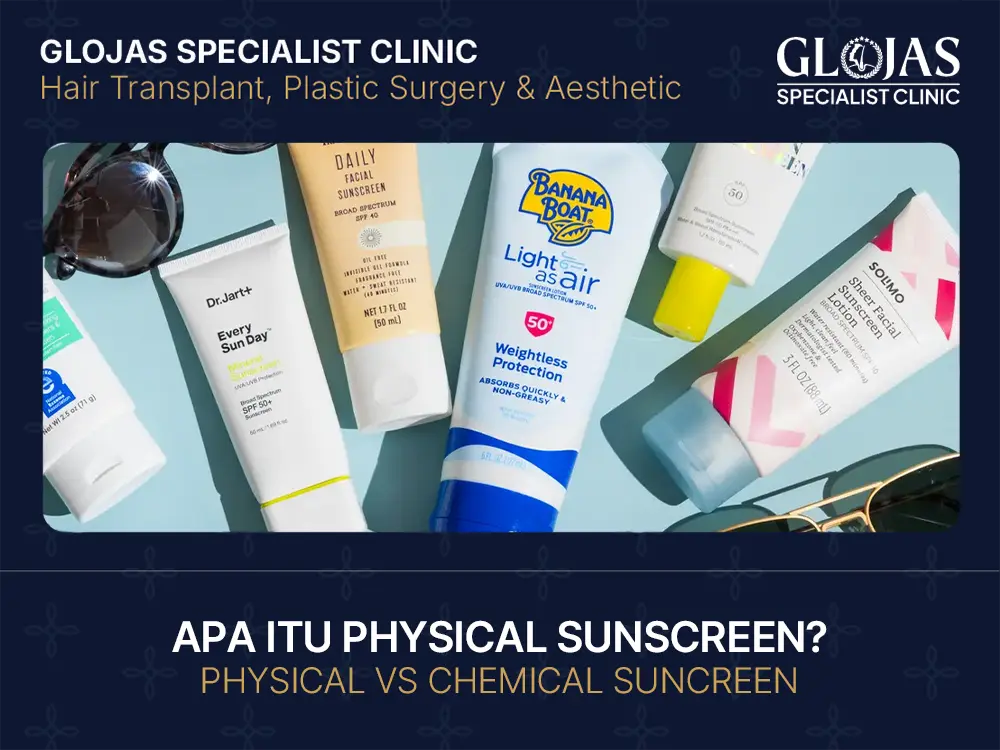
Navigating the sweltering Malaysian sun requires a solid defense strategy. Whether you’re strolling through Bukit Bintang or lounging in Langkawi, picking the right SPF is vital. Let’s break down the physical sunscreen vs chemical sunscreen debate to keep your skin protected and radiant in our tropical humidity. What Is Physical Sunscreen (Mineral Sunscreen)? How Physical Sunscreen Works (Reflects UV Rays) Physical sunscreens act as a literal shield. Often called mineral sunscreens, they sit on top of the skin’s surface. They primarily work by reflecting and scattering UV radiation away from your body, much like a mirror reflects light, providing an immediate physical barrier against solar damage. Common Active Ingredients (Zinc Oxide, Titanium Dioxide) The heavy lifters here are Zinc Oxide and Titanium Dioxide. These naturally occurring minerals are recognized as GRASE (Generally Recognized as Safe and Effective) by health authorities. They offer broad-spectrum protection, meaning they defend against both aging UVA and burning UVB rays. Texture & Finish (Thicker, May Leave White Cast) Because they sit on the surface, mineral formulas are traditionally thicker. They are famous (or infamous) for leaving a “white cast,” which can look chalky on deeper Malaysian skin tones. However, modern micronized versions have significantly improved the blendability of these chalky textures. What Is Chemical Sunscreen? How Chemical Sunscreen Works (Absorbs & Converts UV to Heat) Chemical sunscreens function like a sponge. Once applied, they penetrate the top layer of the skin. They absorb UV rays, convert them into a small amount of heat through a chemical reaction, and then release that heat from the body, preventing the radiation from damaging your cells. Common Active Ingredients (Avobenzone, Octinoxate, Oxybenzone) You’ll often find ingredients like Avobenzone, Octocrylene, and Oxybenzone on the label. These organic compounds are expertly engineered to filter specific UV wavelengths. Many dermatological organizations emphasize that these filters are highly effective for daily wear due to their superior “wearability.” Texture & Finish (Lightweight, Invisible on Skin) The biggest perk of chemical filters is their elegant, “invisible” finish. They are generally runny, lightweight, and dry down without any residue. This makes them a favorite for layering under makeup or for those who hate the heavy feeling of traditional creams in our 90% humidity. Key Differences Between Physical & Chemical Sunscreen Feature Physical Sunscreen Chemical Sunscreen Mechanism Reflects UV like a mirror Absorbs UV like a sponge Speed Works instantly upon application Needs 15–20 minutes to “set” Visibility Likely white cast Transparent/Invisible Irritation Low (Great for sensitive skin) Moderate (May sting eyes) Protection Mechanism (Reflect vs Absorb) The fundamental difference lies in how they handle light. Physical blockers provide a mechanical barrier, while chemical blockers rely on molecular reactions. For those with heat-activated conditions like rosacea, physical sunscreens are often preferred as they don’t trap heat within the skin. Immediate vs Delayed Effectiveness Timing is everything. You can apply physical sunscreen and step straight into the sun. Chemical formulas, however, require about 20 minutes to fully bond with the skin and become effective. If you’re in a rush to catch the LRT, mineral might be your best bet! White Cast vs Transparent Application Chemical sunscreens win the aesthetic battle for many. They leave no trace, regardless of your skin tone. Physical sunscreens, while safer for reactive skin, require more effort to rub in and can sometimes leave a ghostly purple or white hue on Fitzpatrick Skin Types IV-VI. Duration of Protection on Skin Physical sunscreen lasts as long as it stays on your skin, but it’s easily rubbed off by sweat or towels. Chemical sunscreen is absorbed deeper, but its filters “use themselves up” as they neutralize UV rays, necessitating reapplication every two hours during direct exposure. Which Sunscreen Is Better for Malaysian Weather? Physical Sunscreen in Humidity In Malaysia’s intense humidity, physical sunscreen can sometimes feel “suffocating” or heavy. Because it sits on top of the skin, it may mix with sweat and create a greasy film. However, it is less likely to sting your eyes if you start perspiring heavily during a hike. Chemical Sunscreen in Humidity Chemical sunscreens are generally more comfortable for local daily wear. Their watery, gel-like textures allow the skin to breathe. However, because they convert UV to heat, some users find they feel slightly “warmer” on the face during a blistering afternoon in Kuala Lumpur. Sweat & Water Resistance Comparison For swimming or outdoor sports, check for “Water Resistant” labels. Many sport-specific chemical sunscreens are formulated to adhere better during vigorous activity, whereas mineral versions can streak white lines down your face when you start sweating profusely. Which Sunscreen Suits Different Skin Types in Malaysia? For Oily & Acne-Prone Skin Oily skin types usually prefer chemical sunscreens with a matte finish. They won’t clog pores (non-comedogenic). However, if chemical filters cause breakouts, a “zinc-only” physical sunscreen can actually help soothe inflammation due to the antimicrobial properties of zinc oxide. For Dry & Dehydrated Skin Both types work, but look for added hydrators like Hyaluronic Acid. Chemical sunscreens often come in milky lotions that feel more moisturizing, while some physical sunscreens can be slightly drying. Always apply a good moisturizer before your SPF if you have dry patches. For Sensitive & Reactive Skin Physical sunscreen is the undisputed king here. Chemical filters like oxybenzone can occasionally cause “allergic contact dermatitis” in sensitive individuals. Mineral formulas are inert and rarely cause a reaction, making them perfect for children and those with eczema or skin allergies. For Melasma & Hyperpigmentation-Prone Skin For those battling dark spots, physical sunscreen is often superior. It blocks a wider range of light, including visible light, which is known to worsen melasma. Using a mineral tint provides an extra layer of iron oxide protection against pigment-triggering rays. Physical vs Chemical Sunscreen for Darker Skin Tones Why Physical Sunscreen Leaves White Cast The large particles of Zinc and Titanium are naturally white. On darker skin tones common in Malaysia, these particles scatter light in a way that creates a blue or ashy tint. This is purely an aesthetic
Ketuat: Punca, Jenis dan Cara Hilangkan dengan Selamat

Panduan Interaktif: Cara Selamat Hilangkan Ketuat Klik pada setiap langkah di bawah untuk mengetahui kaedah keselamatan yang betul dan disyorkan: 1. Jangan Gunting atau Cungkil 2. Gunakan Rawatan Farmasi (OTC) 3. Dapatkan Rawatan Pakar Kulit Amaran Keras: Jangan sekali-kali mencungkil, memotong, atau membakar ketuat sendiri di rumah menggunakan pisau atau jarum. Tindakan ini boleh menyebabkan jangkitan kuman yang teruk dan meninggalkan parut kekal. Produk Asid Salisilik: Anda boleh mendapatkan ubat sapu mengandungi asid salisilik di farmasi berhampiran. Sapu secara konsisten mengikut arahan pada produk untuk menipiskan lapisan ketuat secara perlahan-lahan. Rawatan Klinikal: Jika ketuat degil, merebak, atau berada di kawasan sensitif (seperti muka), kaedah seperti Cryotherapy (pembekuan) atau buang dengan laser oleh doktor adalah cara paling selamat. Ada persoalan atau ingin temujanji buang ketuat? 💬 WhatsApp Kami Sekarang Ketuat adalah ketumbuhan kecil pada kulit yang disebabkan oleh jangkitan virus Human Papillomavirus (HPV). Ia mempunyai tekstur kasar, sering kelihatan seperti kubis bunga, dan boleh muncul di mana-mana bahagian badan. Ketuat bersifat berjangkit melalui sentuhan langsung atau perkongsian barang peribadi dengan individu yang dijangkiti. Definisi ketuat Ketuat merupakan lebihan daging atau bonjolan kecil yang tumbuh pada lapisan epidermis kulit akibat tindak balas terhadap virus. Secara saintifiknya, virus HPV merangsang pertumbuhan sel keratin yang berlebihan sehingga membentuk tekstur keras dan kasar pada permukaan kulit. Masalah kulit ini sangat lazim dalam kalangan kanak-kanak dan remaja, namun orang dewasa dengan sistem imun yang lemah juga berisiko tinggi. Walaupun secara amnya tidak berbahaya, ketuat boleh menyebabkan rasa tidak selesa, gatal, atau sakit jika tumbuh di kawasan yang menerima tekanan. Jenis-jenis ketuat (biasa, plantar, rata, genital) Ketuat Biasa (Common Warts): Biasanya tumbuh di jari, tangan, dan sekitar kuku dengan rupa berbonggol dan titik hitam kecil (salur darah pecah). Ketuat Plantar: Muncul di tapak kaki dan cenderung tumbuh ke dalam disebabkan tekanan berat badan, menjadikan berjalan terasa seperti terpijak batu kecil. Ketuat Rata (Flat Warts): Berbentuk lebih kecil, licin, dan rata; sering muncul dalam jumlah yang banyak di muka, lengan, atau paha. Ketuat Genital: Tergolong dalam kategori jangkitan kelamin (STI) yang memerlukan pemantauan rapi oleh Kementerian Kesihatan Malaysia (KKM) kerana perkaitannya dengan risiko kanser serviks. Punca Ketuat Terjadi Punca utama ketuat adalah pendedahan kepada virus HPV yang mempunyai lebih daripada 150 varian berbeza. Virus ini memasuki tubuh melalui luka kecil, calar, atau rekahan pada kulit yang mungkin tidak kelihatan dengan mata kasar. Individu yang sering menggigit kuku atau mempunyai kulit kering lebih mudah mendapat jangkitan kerana halangan kulit (skin barrier) mereka terganggu. Jangkitan virus Human Papillomavirus (HPV) HPV menjangkiti sel-sel kulit di lapisan paling atas, menyebabkan pertumbuhan sel menjadi tidak terkawal dan membentuk bonjolan. Strain virus yang menyebabkan ketuat pada tangan dan kaki biasanya berbeza daripada strain yang menyebabkan ketuat di bahagian sulit. Sistem imun badan biasanya memerlukan masa untuk mengenali virus ini, sebab itulah ketuat boleh mengambil masa beberapa bulan untuk muncul selepas jangkitan awal. Sentuhan kulit dan permukaan tercemar Ketuat merebak melalui sentuhan kulit ke kulit (skin-to-skin contact) dengan individu yang sudah mempunyai ketuat aktif. Virus HPV juga boleh bertahan di atas permukaan lembap seperti tuala, alat pemotong kuku, atau lantai bilik mandi yang dikongsi. Tabiat memicit atau menggaru ketuat sedia ada boleh menyebabkan virus merebak ke bahagian badan sendiri yang lain, proses yang dikenali sebagai autoinokulasi. Faktor risiko di Malaysia (lembap, tempat awam) Iklim tropika Malaysia yang panas dan lembap sangat ideal untuk virus HPV bertahan lebih lama di luar tubuh manusia. Tempat awam seperti gimnasium, kolam renang, dan bilik persalinan merupakan kawasan berisiko tinggi di mana virus mudah berpindah kepada individu yang berkaki ayam. Menurut portal MyHealth KKM, mengekalkan kulit yang sentiasa basah atau terendam air dalam tempoh lama meningkatkan risiko penembusan virus ke dalam kulit. Tanda-Tanda Ketuat Bonjolan yang timbul biasanya tidak berwarna (mengikut warna kulit) tetapi kadangkala kelihatan kelabu, keperangan, atau putih. Kebanyakan ketuat tidak menyebabkan kesakitan melainkan ia berada di kawasan yang kerap bergesel atau di tapak kaki. Bentuk dan tekstur ketuat Ketuat mempunyai permukaan yang kasar, bersisik, dan kadangkala kelihatan seperti mempunyai “biji hitam” di tengahnya. Titik hitam tersebut sebenarnya adalah kapilari darah yang telah membeku untuk membekalkan nutrien kepada ketuat tersebut. Teksturnya berbeza dengan kutil (skin tag) yang biasanya lembut dan tergantung pada tangkai kecil. Lokasi biasa pada tangan dan kaki Pada tangan, ketuat kerap ditemui di celah jari dan kawasan sekitar kuku (periungual warts) yang sering terdedah kepada kecederaan kecil. Di kaki, ketuat plantar sering berkumpul di bahagian tumit atau “ball of the foot” di mana tekanan paling banyak berlaku semasa berdiri. Kadangkala, beberapa ketuat plantar boleh bergabung membentuk satu kelompok besar yang dikenali sebagai ketuat mozek (mosaic warts). Perbezaan ketuat dengan masalah kulit lain Ketuat vs Mata Ikan (Corns): Mata ikan biasanya mempunyai teras keras di tengah dan disebabkan oleh geseran mekanikal, manakala ketuat mempunyai titik darah beku (black dots). Ketuat vs Kanser Kulit: Ketuat biasanya tumbuh perlahan, namun jika bonjolan tersebut berubah warna dengan cepat atau berdarah, pakar dermatologi menasihatkan pemeriksaan segera bagi menolak kemungkinan melanoma. Ketuat vs Moluskum Kontagiosum: Moluskum biasanya mempunyai lesung (dimple) di tengah dan tekstur yang lebih licin berbanding ketuat HPV yang kasar. Cara Hilangkan Ketuat Matlamat rawatan adalah untuk memusnahkan sel kulit yang dijangkiti virus atau merangsang sistem imun untuk melawan jangkitan tersebut. Kebanyakan rawatan memerlukan masa yang lama dan konsistensi kerana virus HPV sangat degil untuk dihapuskan sepenuhnya. Rawatan ketuat di rumah Penggunaan batu apung (pumice stone) atau kikir kuku boleh membantu mengikis lapisan kulit mati pada permukaan ketuat sebelum ubat disapu. Kaedah “Duct Tape” juga popular, di mana ketuat ditutup dengan pita pelekat selama 6 hari untuk melembutkan kulit sebelum dikikis, namun keberkesanannya adalah berbeza-beza. Ubat sapu farmasi untuk ketuat Kebanyakan ubat farmasi tanpa preskripsi (OTC) mengandungi Asid Salisilik yang berfungsi melarutkan protein keratin dalam ketuat. Asid ini bertindak secara perlahan-lahan membakar lapisan demi lapisan ketuat sehingga ia tanggal sepenuhnya. Terdapat juga produk cryotherapy versi rumah yang menggunakan campuran dimethyl ether dan propana untuk membekukan ketuat, walaupun ia tidak sekuat rawatan di klinik. Rawatan semula jadi (home remedies) Cuka epal (Apple Cider Vinegar) sering digunakan sebagai asid semula jadi untuk melepuhkan tisu ketuat, namun ia boleh menyebabkan iritasi
Jerawat: Punca Tumbuh & Cara Hilangkan Parut Jerawat Dengan Cepat
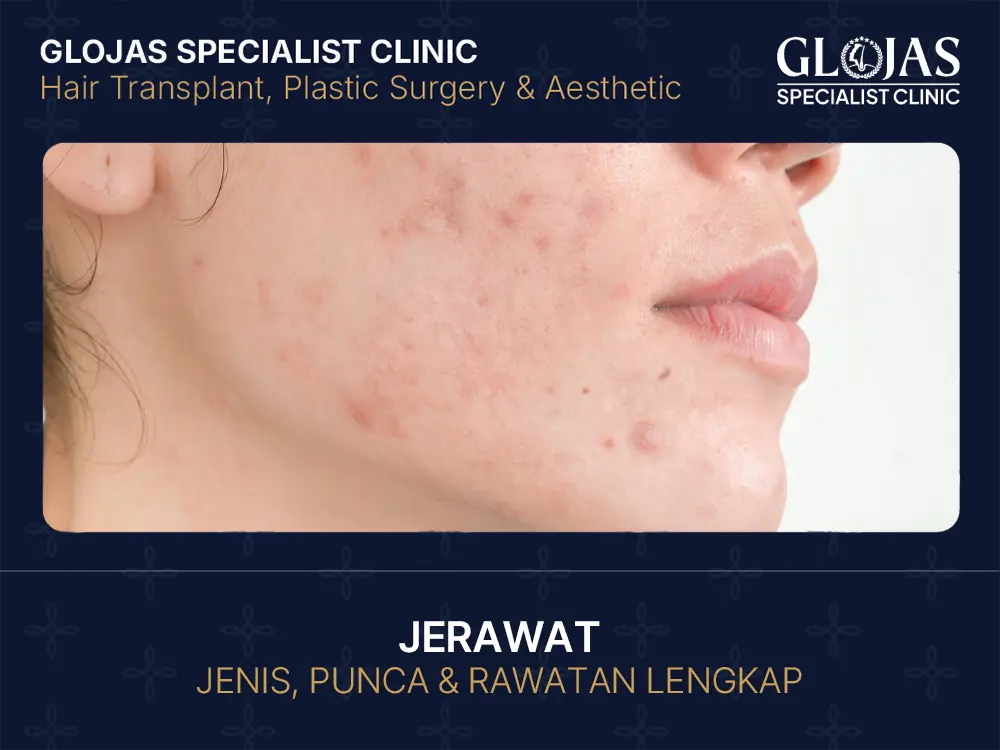
Jerawat ialah masalah kulit apabila pori tersumbat oleh minyak berlebihan, sel kulit mati, dan bakteria. Hormon, stres, dan diet boleh mencetuskan keradangan. Jenis biasa termasuk whitehead, blackhead, papula, dan cystic. Rawatan merangkumi pencuci muka, benzoyl peroxide, asid salisilik, retinoid, dan prosedur klinik jika teruk. Apa Itu Jerawat Definisi: Penyakit keradangan kronik unit pilosebasea dengan 4 punca: sebum berlebihan, hiperkeratinisasi folikel, bakteria C. acnes, radang. Jenis utama: Whitehead, blackhead, papula, pustula, nodul, cystic. Faktor pencetus: Hormon androgen, genetik, stres, produk komedogenik, diet glisemik tinggi, susu lembu. Lokasi biasa: Muka, dada, belakang, bahu. Zon T paling kerap. Rawatan Jerawat Paling Berkesan Rawatan Jenis Jerawat Keberkesanan Nota Penting Benzoyl Peroxide 2.5-5% Ringan ke sederhana 50-70% kurang lesi Bunuh bakteria. Mula dengan dos rendah elak iritasi Retinoid Topikal Komedo, radang ringan 40-60% cegah tersumbat Adapalene OTC. Guna malam. Wajib sunscreen siang Antibiotik Topikal Radang sederhana 60-75% kurang radang Gabung dengan BP untuk elak rintangan Antibiotik Oral Sederhana ke teruk 65-80% respon 3 bulan Maksimum 3-6 bulan. Gabung dengan topikal Isotretinoin Oral Teruk, cystic, berparut 85-95% sembuh kekal Pantau darah, kehamilan. Preskripsi doktor Pil Perancang Hormon Wanita hormon 50-70% stabil sebum COCP dengan anti-androgen. Kesan 3-6 bulan Rawatan gabungan > tunggal. Protokol biasa: BP pagi + retinoid malam untuk kes ringan-sederhana. Rawatan Klinik Estetik Untuk Jerawat Rawatan Fungsi Utama Sesuai Untuk Kos Anggaran Kekerapan Chemical Peel Eksfoliasi asid kawal minyak Komedo, parut hitam RM150-RM450/sesi 4-6 sesi, jarak 2-4 minggu Laser Carbon Kecilkan pori, bunuh bakteria Jerawat aktif berminyak RM250-RM600/sesi 3-5 sesi, sebulan sekali IPL Acne Kurang radang, bunuh C.acnes Papula, pustula radang RM200-RM500/sesi 4-6 sesi, jarak 2 minggu Microneedling RF Rawat parut jerawat, kawal sebum Parut lekuk, pori besar RM400-RM1200/sesi 3-4 sesi, jarak 4-6 minggu HydraFacial Deep cleanse, ekstrak komedo Blackhead, whitehead RM180-RM350/sesi Sebulan sekali Suntikan Steroid Kecutkan jerawat batu cepat Nodul, cystic besar RM50-RM150/lesi Sekali, kesan 24-48 jam Kombinasi klinik + ubat topikal = hasil 30-50% lebih cepat. Mesti dibuat oleh doktor bertauliah. Cara Cegah Jerawat Harian Pencuci muka: 2x sehari dengan pencuci pH rendah, non-comedogenic. Elak scrub kasar. Moisturizer: Guna gel berasaskan air. Kulit kering cetus lebih minyak. Sunscreen: SPF 30+ non-comedogenic setiap hari. UV burukkan parut & radang. Jangan picit: Tingkatkan risiko parut, hiperpigmentasi, jangkitan dalam. Tukar sarung bantal: 2-3x seminggu. Bersihkan skrin telefon. Elak sentuh muka. Mitos vs Fakta Jerawat Mitos: Jerawat sebab kotor atau tak cuci muka. Fakta: Cuci berlebihan rosakkan barrier kulit. Punca utama hormon & genetik. Mitos: Coklat & makanan berminyak punca utama. Fakta: Kajian kukuh kaitkan indeks glisemik tinggi & produk tenusu, bukan semua makanan berminyak. Mitos: Ubat gigi boleh kecutkan jerawat. Fakta: Bahan dalam ubat gigi iritasi kulit. Guna rawatan spot BP atau sulfur. Soalan Lazim Tentang Jerawat 1. Berapa lama jerawat ambil masa untuk sembuh? Rawatan topikal: 6-12 minggu baru nampak perubahan. Rawatan klinik: 1-3 sesi nampak kurang radang. Konsisten kunci utama. 2. Rawatan klinik estetik mana paling cepat untuk jerawat batu? Suntikan steroid intralesi. Kecut 70-80% dalam 24-48 jam. Sesuai untuk 1-2 biji jerawat besar sebelum majlis. 3. Boleh buat laser kalau muka masih ada jerawat aktif? Boleh. Laser Carbon & IPL direka untuk jerawat aktif. Elak laser resurfacing agresif seperti CO2 bila radang teruk. 4. Berapa kos total rawatan jerawat di klinik estetik? Pakej asas 6 bulan: RM1200-RM3500 bergantung jenis rawatan. Chemical peel paling murah, microneedling RF paling mahal. 5. Lepas rawatan klinik, jerawat boleh naik balik tak? Ya jika punca hormon/diet tak kawal. Maintenance penting: skincare betul + topikal + sesi klinik 2-3 bulan sekali. View this post on Instagram A post shared by Glojas Specialist | Plastic Surgery, Hair Transplant, Aesthetic (@glojasaesthetic)
10 Best Facial Treatment for Glowing Skin in Kuala Lumpur, Malaysia
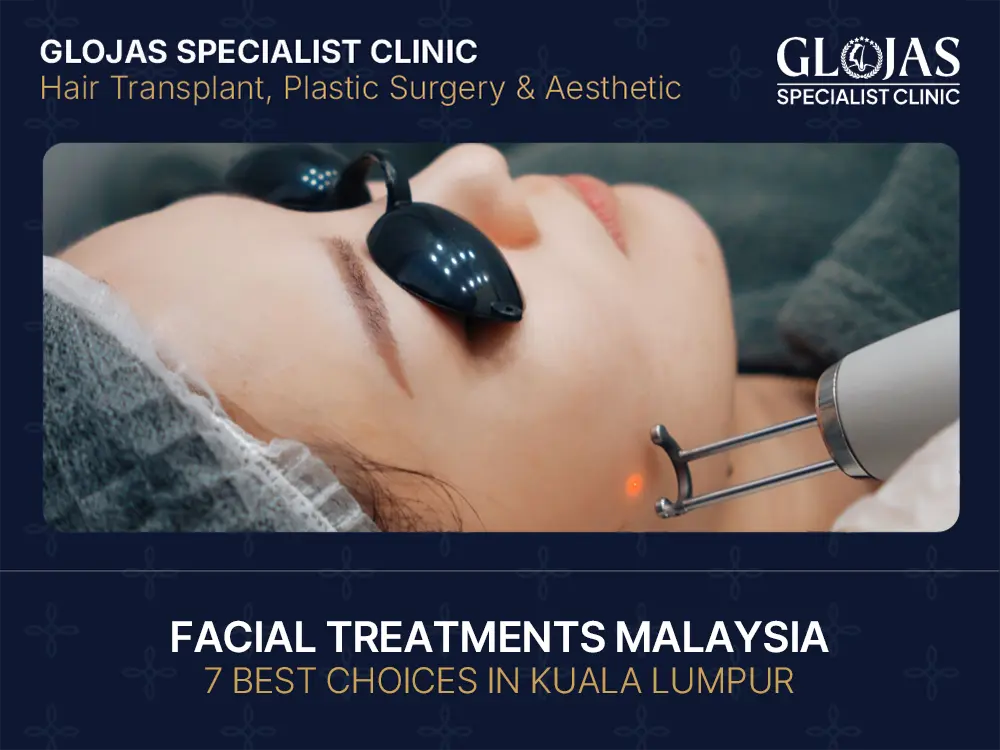
Getting a facial treatment in Kuala Lumpur is more than just a pampering session; it’s a vital part of maintaining skin health in our humid, tropical climate. Whether you’re battling “maskne” or sun damage, professional help can transform your complexion. Let’s dive into the world of Malaysian aesthetics. GLOJAS Specialist Clinic in Kuala Lumpur and Selangor offers advanced facial treatments and skin aesthetic treatments to improve skin texture, hydration, and overall radiance. What Is a Facial Treatment? (Basic Definition & Purpose) A facial treatment is a multi-step professional skin procedure designed to cleanse, exfoliate, and nourish the face. Unlike daily washing, it involves specialized tools and high-concentration actives to promote a clear, well-hydrated complexion and a more youthful appearance. Deep Cleansing Beyond Regular Skincare Professional facials reach deeper than your bathroom sink. Aestheticians use professional-grade cleansers and steam to soften sebum. This process removes deep-seated grime and pollutants—common in urban areas like Kuala Lumpur—that your standard double-cleansing routine might miss. Professional Extractions for Clogged Pores Extractions involve the manual or mechanical removal of comedones (blackheads and whiteheads). When done by a trained professional, it clears the “plugs” from your pores without causing the scarring or PIH (Post-Inflammatory Hyperpigmentation) that often results from “DIY” squeezing at home. Customised Treatments for Different Skin Concerns No two faces are the same. A professional facial allows an expert to analyze your skin type—be it oily, dry, or combination—and tailor the products used. This ensures your skin receives exactly what it needs, whether it’s calming inflammation or boosting collagen production. Common Types of Facial Treatments Available in Malaysia Malaysia’s beauty market is diverse, ranging from traditional techniques to cutting-edge medical technology. Understanding these popular options helps you book the right appointment for your skin goals. Classic Deep Cleansing Facial The “bread and butter” of beauty salons, this focuses on steaming, exfoliation, and a relaxing mask. It’s perfect for maintenance and relaxation. Most neighborhood spas offer this as an entry-level service to refresh the skin and improve overall texture. Hydrafacial (Hydrodermabrasion) A Hydrafacial uses a patented vortex-fusion delivery system to exfoliate, extract, and hydrate. It’s a Malaysian favorite because it provides “instant glow” with zero downtime. It’s particularly effective at sucking out gunk from pores while infusing skin with hyaluronic acid. Chemical Peel Facial (AHA/BHA/TCA) This treatment uses acids to dissolve the top layer of dead skin. Depending on the strength, it can treat everything from fine lines to deep acne scars. In Malaysia, chemical peels are strictly regulated, with higher concentrations requiring a LCP-certified medical doctor. Oxygen Facial Highly popular for brides-to-be, this involves spraying highly concentrated oxygen molecules and vitamins into the epidermis. It plumps the skin and gives an immediate brightening effect. It’s a gentle, non-invasive way to revive tired-looking skin before a big event. Acne & Extraction Facial Designed for congested and blemish-prone skin, this facial prioritizes thorough extractions and high-frequency therapy to kill bacteria. It often includes a clay mask to absorb excess sebum—a necessity for many Malaysians dealing with the effects of high humidity on oil production. Brightening & Vitamin C Facial Targeting dullness and dark spots caused by the harsh Malaysian sun, these facials use potent antioxidants. Vitamin C helps inhibit melanin production and neutralizes free radicals. It’s an essential treatment for those looking to achieve the “glass skin” look while fighting UV damage. Which Facial Treatment Suits Your Skin Concern? Choosing a facial is about matching the technology to your specific problem. Using the wrong treatment can sometimes trigger sensitivity or breakouts, so target your main concern first. For Clogged Pores & Blackheads – Deep Cleansing or Hydrafacial If your skin feels “bumpy,” a Hydrafacial is the gold standard. It uses a vacuum-like tip to clear congestion painlessly. Alternatively, a classic deep cleansing facial with manual extractions works well for those with stubborn, deep-seated blackheads on the nose and chin. For Dull Skin & Hyperpigmentation – Brightening or Chemical Peel Dullness often stems from dead skin buildup. A Chemical Peel accelerates cell turnover, revealing fresher skin. Brightening facials with Alpha Arbutin or Niacinamide are also excellent for safely fading sunspots and evening out the skin tone over time. For Acne-Prone Skin – Acne Extraction Facial Active acne requires a careful touch. Professional extraction facials use sterile tools to clear blockages, followed by soothing LED Blue Light therapy. This kills P. acnes bacteria and reduces redness, preventing the acne from spreading or turning into cystic lesions. For Dry or Sensitive Skin – Hydrating or Oxygen Facial Avoid harsh peels if your skin is flaky or reactive. Instead, opt for a Hydrating Facial that uses ceramides and lipids to repair the skin barrier. Oxygen facials provide a cooling sensation that calms redness while drenching the skin in moisture. Clinic Facial vs Home Facial: Key Differences While DIY kits are popular on Shopee, they rarely match professional results. The difference lies in the tools, safety, and potency of the products used during the session. Strength of Products & Active Ingredients Clinics and spas use “professional use only” products. These have higher concentrations of active ingredients like Retinol or Glycolic Acid. At-home products are formulated with lower percentages to prevent accidents, meaning they take much longer to show visible results. Extraction Technique (Manual vs Machine) Aestheticians are trained in the “angle of hair growth” to remove clogs without tearing the skin. Machines like ultrasonic skin scrubbers also provide a level of precision that fingers cannot. Proper technique ensures the entire “plug” is removed, preventing the pore from reinfecting. Hygiene & Safety Standards Professional settings follow strict sterilization protocols. Tools are often autoclaved or single-use. In Malaysia, clinics under the Ministry of Health (KKM) must adhere to rigorous medical standards, significantly reducing the risk of cross-contamination or skin infections compared to home environments. Price Comparison (RM50 – RM500+) Home facials are budget-friendly, often costing under RM30 per session. Neighborhood salons charge RM50–RM120. However, premium clinic treatments (RM350+) reflect the cost of advanced machinery, medical-grade products, and the expertise of certified staff who
Dead Skin: Causes, Types, and How to Remove It Safely at Home
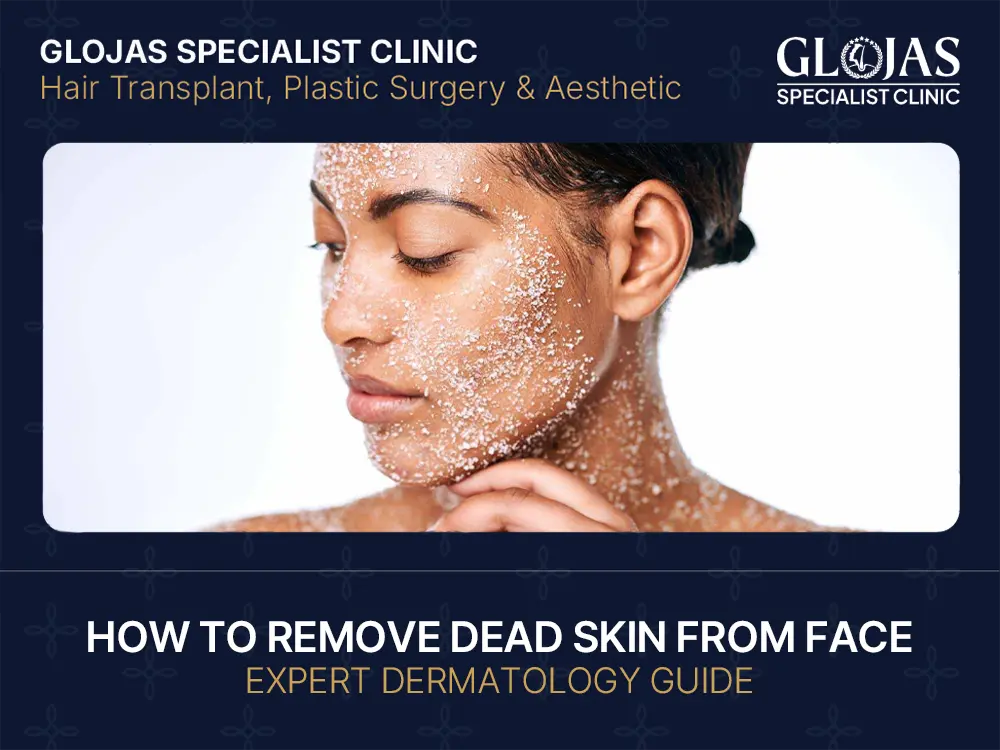
Quick Skin Assessment: What type of dead skin buildup are you experiencing? Click an option below to find out the safest way to treat it at home: 1. Flaky, dry patches with mild tightness 2. Rough texture and dull complexion 3. Thickened skin buildup or hardened heels Gentle Hydration & Mild Chemical Exfoliation Your skin needs gentle care. Avoid harsh scrubs which can tear dry skin. Opt for lactic acid or a hydrating cleanser with ceramides. Enzymatic or AHA Exfoliation A gentle chemical exfoliant containing glycolic acid or fruit enzymes 1-2 times a week will help dissolve dead surface cells safely. Softening & Controlled Mechanical Exfoliation Soak the area to soften the keratin buildup before using a pumice stone or urea-based cream. Never peel thick skin forcibly. 💬 Chat with a Skincare Expert on WhatsApp Dead skin refers to the accumulation of old, non-living keratinocytes on the surface of the epidermis that haven’t been shed. While the body naturally loses about 30,000 to 40,000 cells per minute, a buildup occurs when the desquamation process slows down, leading to a dull, rough, and uneven complexion. What is Dead Skin? Dead skin is the outermost layer of the epidermis, known as the stratum corneum, consisting of hardened cells called corneocytes. In a healthy cycle, these cells are pushed to the surface as new cells form underneath, eventually flaking off to reveal fresh, vibrant tissue. Problems arise when these dead cells “glue” together rather than shedding, creating a barrier that traps oil, debris, and bacteria. This buildup is a common concern in humid climates, where sweat and sebum can make the natural shedding process less efficient. Skin cell turnover explained Skin cell turnover is the continuous biological process where skin cells travel from the deepest layer of the epidermis to the surface. For a healthy adult, this cycle typically takes about 28 to 40 days, though it slows down significantly as we age. By the time we reach our 50s, this turnover rate can extend to nearly 60 or 80 days, often requiring external help to maintain glow. Ensuring an efficient turnover rate is key to maintaining the skin barrier function and preventing the appearance of premature aging. Dead skin vs dry skin vs flaky skin Dead Skin: An accumulation of old cells that occurs naturally but can become excessive; it often makes the skin look “ashy” or grey. Dry Skin: A skin type characterized by a lack of natural oils (sebum), which can make the surface feel tight and look parchment-like. Flaky Skin: A visible symptom where dead skin cells peel away in larger clusters, often caused by extreme dehydration or inflammatory conditions. While they are related, treating dead skin usually requires exfoliation, whereas dry skin requires lipid-rich emollients to restore moisture. Signs of Dead Skin Build-Up The most immediate sign is a loss of “radiance,” where the skin looks tired regardless of how much sleep or water you get. You might notice that your serums or moisturizers no longer absorb well, essentially sitting on top of a “shield” of dead cells. Texture becomes an issue; running your fingers over your face might feel like touching fine-grit sandpaper rather than smooth skin. Dull and rough skin texture When dead cells pile up unevenly, they scatter light rather than reflecting it, leading to a “flat” or dull appearance. Rough patches are common around the nose, forehead, and chin, where cell accumulation and oil production are often highest. This roughness can make foundation and makeup look “cakey” or emphasize fine lines that aren’t actually deep permanent wrinkles. Flakiness and peeling skin Visible peeling is a sign that the “glue” holding your skin cells together has become brittle or damaged by environmental factors. In tropical regions, this often happens after prolonged exposure to air conditioning, which saps moisture and disrupts natural shedding enzymes. Peeling can also follow mild UV damage, as the body tries to rapidly shed damaged cells to protect the layers underneath. Clogged pores and uneven skin tone Dead skin is a primary ingredient in comedones (blackheads and whiteheads); it mixes with sebum to plug the pore opening. Accumulated cells can trap pigment, making dark spots or post-acne marks appear more prominent and take longer to fade. This cycle of congestion often leads to localized breakouts in the T-zone because the skin cannot “breathe” properly. Causes of Dead Skin Build-Up Age is the biggest internal factor, as the natural “scaffold” of the skin weakens and cellular signals for shedding become muffled. Hormonal fluctuations, particularly during puberty or menopause, can alter the stickiness of skin cells and sebum production. According to Mayo Clinic’s dermatological guidelines, lifestyle choices like smoking or poor nutrition also stall the regeneration process. Natural skin cycle and slow exfoliation The body uses enzymes called proteases to dissolve the bonds between cells, but these enzymes require water to function effectively. If your skin is chronically dehydrated, these enzymes go dormant, leaving dead skin stuck in place even when new cells are ready. This results in a “bottleneck” where new cells are ready to surface but are blocked by the old, hardened layer. Environmental factors (heat, humidity, pollution) High humidity sounds hydrating, but extreme heat actually causes rapid transepidermal water loss (TEWL), drying out the surface. Pollution particles from urban areas can stick to the skin’s oily surface, creating a “grime film” that traps dead cells. UV radiation damages the DNA of skin cells, causing them to clump together abnormally rather than shedding individually and smoothly. Poor skincare routine and dehydration Using harsh, alkaline soaps can strip the “acid mantle,” which is essential for the natural chemical exfoliation process. Dehydrated skin (skin lacking water, not oil) is the most common reason for stalled turnover in humid climates. Failing to remove water-resistant sunscreens or heavy makeup properly can create a layer of debris that binds dead cells to the surface. How to Remove Dead Skin Safely The goal of exfoliation isn’t to “scrub” the skin raw, but to gently assist the natural
Milia Removal: Causes, Treatment Options & Prevention in Malaysia
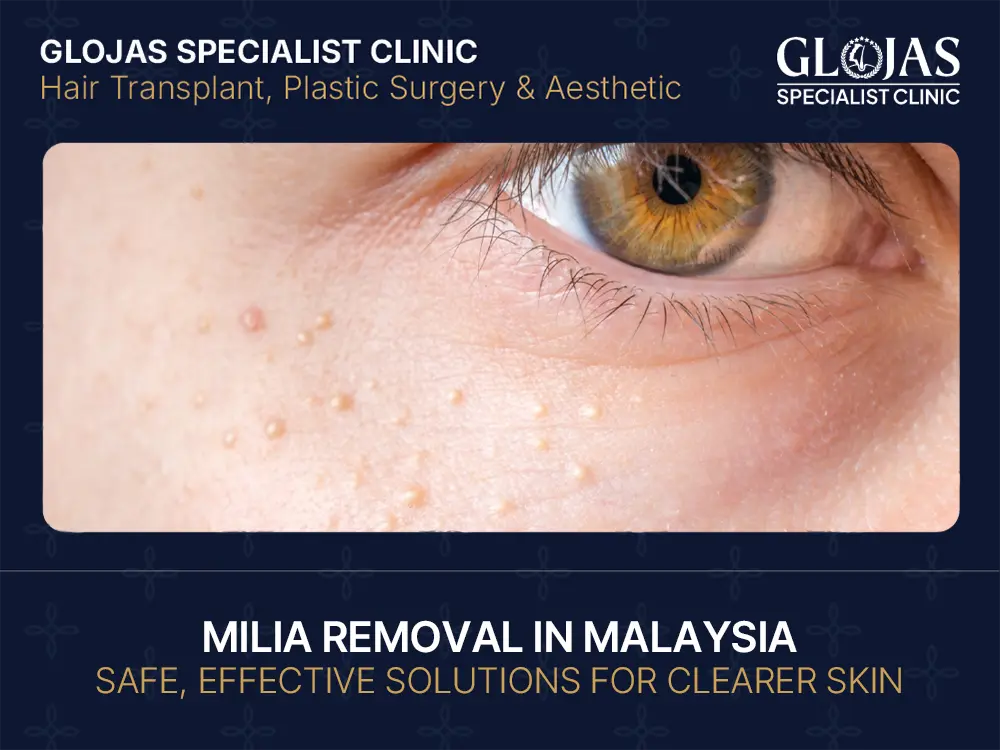
Interactive Guide: Professional Milia Treatments Click through the options below to see how dermatologists and aesthetic clinics in Malaysia safely remove milia seeds. Sterile Extraction Laser Ablation Chemical Peels Needle Extraction (Cautery / Comedone Extractor) Performed by a trained professional using a sterile needle or lancet to create a tiny opening, followed by gentle pressure to extract the trapped keratin cyst cleanly. Best for: Isolated or stubborn milia seeds around the eyes and cheeks. Laser Resurfacing / Ablation A precision laser targets the cyst, vaporizing the trapped skin cells cleanly without requiring deep manual extraction or incisions. Best for: Multiple milia or patients prone to scarring from manual extraction. Chemical Peels & Topical Retinoids In-clinic medical-grade peels (like salicylic or glycolic acid) accelerate skin cell turnover, naturally shedding the superficial layers hiding the milia over time. Best for: Prevention and mild, widespread milia distribution. Unsure which removal method fits your skin condition? Chat on WhatsApp (+60122700122) Milia removal is a professional skincare procedure used to eliminate small, white, keratin-filled cysts that appear on the skin’s surface. Common in Malaysia due to humid weather and heavy product use, these “milk spots” require sterile extraction or laser therapy, as they lack an opening for manual squeezing. What Is Milia? Definition of Milia Milia are tiny bumps, pearly-white or yellowish bumps that typically form around the eyes, cheeks, and nose. Unlike common acne, these are actually small cysts filled with keratin, a protein found in skin and hair. They are technically harmless but can be quite stubborn because they sit just under the top layer of the skin. In the local Malaysian beauty industry, they are often referred to as “oil seeds,” though they aren’t actually caused by oil. Milia vs Whiteheads and Other Skin Bumps Whiteheads are pores clogged with sebum and bacteria that can eventually be squeezed or “popped” once the head softens. Milia are encapsulated cysts with no opening, making them impossible to squeeze like a standard pimple. Syringomas are another common bump in Malaysia, but these are flesh-colored and rooted deeper in the sweat ducts. It is crucial to distinguish them because using acne medication on milia won’t usually work; they require professional skin analysis to identify correctly. Causes of Milia Keratin Trapped Under the Skin Milia develop when dead skin cells don’t slough off properly and become trapped in a tiny pocket. This buildup hardens into a small, round bead that remains visible through the translucent upper layer of the skin. Inefficient skin cell turnover is the primary biological reason these bumps persist for months or even years. Skincare and Cosmetic Products In Malaysia, the use of heavy, occlusive night creams or rich eye serums often contributes to milia formation. Products containing thick oils or petroleum can “seal” the skin, preventing natural exfoliation in delicate areas. Long-wear makeup and certain sunscreens that are difficult to wash off can also lead to trapped debris. Sun Damage and Skin Damage Research suggests that chronic sun exposure can thicken the skin’s surface, making it harder for cells to escape. Blistering, rashes, or abrasive skin treatments (like aggressive physical scrubs) can trigger “secondary” milia during the healing process. The American Society for Dermatologic Surgery notes that skin trauma is a frequent precursor to localized milia outbreaks. Types of Milia Primary Milia These are the most common type and appear spontaneously on otherwise healthy skin. They are typically found on the faces of both infants (baby milia) and adults. In adults, they are often linked to a lack of regular exfoliation or the use of comedogenic skincare. Secondary Milia These occur after the skin has been damaged by something like a burn, a blister, or a laser procedure. They develop as the skin’s structure heals and inadvertently traps keratin in the newly formed tissue. Certain medications, including long-term use of topical steroid creams, have also been linked to secondary milia. Milia Removal Treatment in Malaysia Professional Extraction Treatment This is the most common method used in aesthetic clinics across Kuala Lumpur and Selangor. A trained professional uses a sterile lancet to create a microscopic opening in the skin. The keratin plug is then gently removed using a specialized tool called a comedone extractor. Laser Treatment for Milia CO2 Laser or Electrocautery is often used for milia that are very close to the eyes or in difficult-to-reach spots. The laser precisely vaporizes the top layer of the cyst, allowing the keratin to be expelled or absorbed. According to Healthline, laser treatments are efficient for clearing large clusters of bumps in a single session. Chemical Peels for Milia Removal Professional-grade peels using Salicylic or Glycolic acid can help thin the skin over time. By accelerating cell turnover, these peels eventually allow the milia to reach the surface and fall out naturally. In Malaysia, mild chemical peels are often recommended as a preventative measure for those prone to “oil seeds.” Milia Removal Procedure Step-by-Step Extraction Process Cleansing: The skin is thoroughly sanitized to prevent infection. Softening: A warm compress or steam may be used to make the skin more pliable. Incising: A tiny, painless prick is made with a single-use sterile needle. Removal: The aesthetician applies light pressure to pop out the “pearl” of keratin. Pain Level and Recovery The procedure is generally rated a 2/10 on the pain scale—it feels like a quick, tiny pinch. There is usually no downtime, though you might see small red spots for 24 to 48 hours. Dermatologists advise against DIY extraction, as it can lead to permanent scarring or infection. Results After Milia Removal Immediate Skin Improvement Once the keratin is removed, the bump disappears instantly, leaving the skin surface smooth. The tiny “entry point” usually heals completely within a few days without leaving a mark. Patients often notice that their makeup sits much flatter and smoother after a session. Risk of Recurrence While an extracted milium won’t return to the same spot, new ones can form nearby if your habits don’t change. Statistics show that individuals with
Microdermabrasion: Benefits, Cost, Procedure & Results in Malaysia
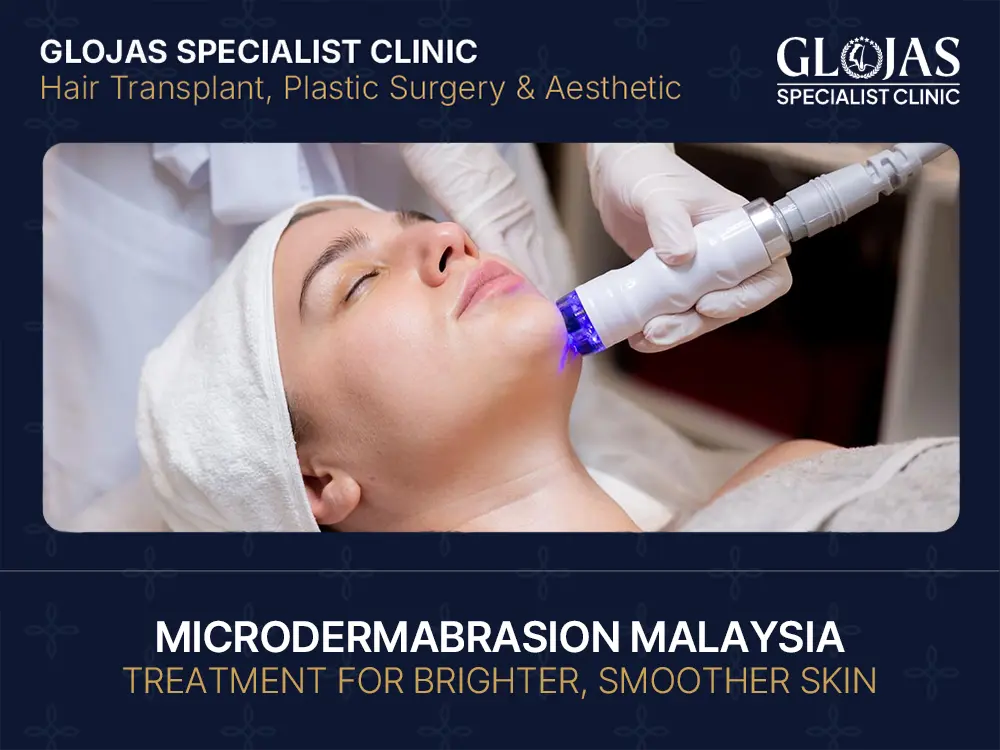
Microdermabrasion is a non-invasive skin exfoliation treatment that removes dead skin cells from the outer layer of the skin using fine crystals or a diamond tip device. It helps improve skin texture, reduce dullness, and minimize the appearance of fine lines, mild acne scars, and uneven tone, resulting in smoother, brighter-looking skin. What Is Microdermabrasion? Microdermabrasion is a non-invasive skin treatment that gently removes the outer layer of dead skin cells using a specialized device. It smooths skin texture, evens tone, and brightens your complexion with minimal downtime and no needles . How Microdermabrasion Works The treatment works through three main actions on your skin : Exfoliation – Removes dead cells and debris from the skin’s surface Circulation boost – Suction increases blood flow and delivers nutrients to treated areas Faster cell renewal – Encourages your skin to produce healthier, fresher cells Unlike lasers or chemical peels, microdermabrasion does not reach the deeper layers of your skin. This keeps risks low while still delivering visible improvements. Studies show repeated treatments improve skin roughness, clarity, and natural glow . Benefits of Microdermabrasion Regular microdermabrasion sessions offer multiple benefits for your skin : Smooths rough skin texture Brightens dull complexions Reduces the appearance of fine lines Minimizes enlarged pores and blackheads Helps with mild acne and post-acne marks Improves absorption of your skincare products Creates a softer, more radiant look Results are noticeable after multiple sessions. A single session gives an immediate subtle glow, but full benefits develop over several treatments. GLOJAS Specialist Clinic Insight In our clinical experience, patients are often surprised by how quickly they see results from microdermabrasion. The immediate glow after just one session makes it a popular choice before weddings, holidays, or special events. However, we always remind patients that while one session gives a temporary brightening effect, the real transformation happens with a full course of 4 to 6 sessions. The most common feedback we hear is about how smoothly makeup applies afterward and how much better their serums absorb into the skin . Who Is a Good Candidate for Microdermabrasion? Microdermabrasion works well for many skin types and concerns. Good candidates typically have: Dull or rough skin texture Mild acne or clogged pores Early signs of aging like fine lines Uneven skin tone or texture Enlarged pores You should avoid or delay treatment if you have : Active rosacea or eczema flare-ups Open wounds, cold sores, or skin infections Recent use of isotretinoin (Accutane) within the past 6 months Severe inflammatory acne A compromised skin barrier A professional skin assessment before your first treatment is always recommended. This ensures the procedure is right for your specific skin condition . Skin Concerns Microdermabrasion Can Treat Dull Skin Microdermabrasion provides deep cleansing by removing dead skin cells, dust, and excess sebum that cause dullness. As the top layer is removed, the suction creates micro-tears that boost collagen production, improving moisture and creating a brighter complexion . Acne Scars The treatment works for depressed acne scars that lie flat against the epidermis. It removes dead skin cells that clog pores and reduces excess oil. Multiple sessions help soften the appearance of mild scarring over time . Fine Lines & Wrinkles As skin ages, collagen production decreases, leading to wrinkles and fine lines. Microdermabrasion removes the stratum corneum (outer layer), revealing younger, healthier skin cells underneath. With regular sessions, fine lines become noticeably softer . Uneven Skin Tone Pigmentation occurs when skin produces too much melanin, forming dark patches. Microdermabrasion gently removes the epidermis layer, and multiple sessions help fade uneven pigmentation for a more balanced skin tone . Enlarged Pores Pores can shrink significantly with microdermabrasion. The treatment deep-cleans dead skin cells, dust, and excess sebum that fill and stretch pores. Once cleared, your skin’s natural elasticity allows pores to return to their original size . Types of Microdermabrasion Treatments Crystal Microdermabrasion This method sprays tiny crystals onto the skin to exfoliate the surface. It provides stronger exfoliation, making it suitable for thicker or oilier skin types. The crystals and dead skin are then vacuumed away. There is a rare risk of crystal inhalation, which is why many clinics have moved away from this method . Diamond-Tip Microdermabrasion A diamond-coated wand is used to gently exfoliate the skin. This method is more precise and gentler than crystal systems. It is safe for sensitive areas like around the eyes and lips. Most clinics in Malaysia now prefer diamond-tip devices for better safety and control . Hydradermabrasion This advanced method combines exfoliation with simultaneous serum infusion. It is ideal for dry skin, barrier repair, and regular maintenance treatments. The hydration component makes it more comfortable for sensitive skin types . Treatment Type Method Best For Safety Level Crystal Sprayed crystals Thick, oily skin Moderate (inhalation risk) Diamond-Tip Diamond-coated wand All skin types, sensitive areas High (precise control) Hydradermabrasion Exfoliation + serum Dry skin, barrier repair High (plus hydration) Microdermabrasion Procedure Step-by-Step The entire treatment typically takes 30 to 45 minutes . Step 1: Skin cleansingYour face is thoroughly cleansed to remove makeup, oil, and dirt. This prepares your skin for even exfoliation. Step 2: TreatmentYour clinician guides the handpiece across your skin. For diamond-tip systems, the wand polishes the skin while vacuuming away dead cells. For crystal systems, a stream of crystals is sprayed while suction removes used crystals and debris. Step 3: SensationYou will feel a mild scratching or suction sensation. Most patients find it comfortable and painless. Step 4: Post-care applicationA soothing moisturizer and sunscreen are applied to protect your freshly exfoliated skin. Step 5: Immediate resultsYour skin appears brighter and smoother immediately after treatment. You can return to daily activities with no downtime . Does Microdermabrasion Hurt? No. Most patients feel only mild scratching or suction during the procedure. It is considered painless and non-invasive, making it suitable even for those with sensitive skin . Some areas may feel more sensitive than others, such as around the nose or mouth. However, the treatment does not require needles or anesthesia and is generally very well tolerated . Recovery and Downtime Recovery Timeline Microdermabrasion has minimal to no downtime. Immediately
Cara Penjagaan Kulit Muka dengan Turutan Skincare yang Betul Oleh Doktor Pakar
✨ Semakan Urutan Skincare Pakar Pilih jenis kulit anda untuk lihat asas urutan yang disyorkan oleh doktor pakar: Kulit Normal / Kering Kulit Berminyak / Berjerawat Ada masalah kulit yang lebih kritikal? Dapatkan nasihat terus dari pakar kami. 💬 Hubungi Doktor Pakar Sekarang Kulit muka yang sihat, cerah dan berseri bukan lagi sekadar impian. Dengan penjagaan kulit muka yang betul, anda boleh mencegah jerawat, liang pori tersumbat, kulit kusam, dan tanda-tanda penuaan — walaupun tinggal di iklim panas dan lembap seperti Malaysia. Dalam artikel ini, kami akan membincangkan rutin penjagaan kulit muka, produk yang sesuai, dan tips klinikal yang diiktiraf pakar. Apa Itu Penjagaan Kulit Muka? Penjagaan kulit muka merujuk kepada rutin harian dan produk yang digunakan untuk menjaga kesihatan kulit wajah. Ia melibatkan langkah membersih, melembap, merawat, dan melindungi kulit daripada sinaran UV, pencemaran, dan penuaan pramatang. Penjagaan kulit muka bukan hanya untuk wanita – lelaki juga memerlukan rutin khas bagi kulit mereka yang lebih tebal dan cenderung berminyak. Kenapa Penjagaan Kulit Muka Penting? Mencegah masalah kulit seperti jerawat, whiteheads, blackheads dan iritasi. Memperbaiki tekstur kulit – menjadikan kulit lebih licin dan lembut. Melambatkan proses penuaan – kurangkan kedutan, garis halus dan pigmentasi. Meningkatkan keyakinan diri – kulit sihat memberikan aura positif. Mengekalkan kelembapan dan keseimbangan minyak di permukaan kulit. Langkah Asas Penjagaan Kulit Muka Harian 1. Cuci Muka (Cleanser)Gunakan pencuci muka yang sesuai dengan jenis kulit anda — berminyak, kering atau kombinasi. Elakkan sabun mandi yang boleh mengganggu pH kulit muka. 2. TonerToner membantu menyeimbangkan pH dan menyediakan kulit untuk menyerap serum atau krim. 3. Serum (Rawatan Khusus)Gunakan serum yang mengandungi bahan aktif seperti niacinamide, hyaluronic acid atau vitamin C bergantung kepada masalah kulit anda. 4. Pelembap (Moisturizer)Walaupun anda mempunyai kulit berminyak, pelembap tetap penting untuk mengelakkan dehidrasi. 5. Pelindung Matahari (Sunscreen)Sinar UV adalah punca utama pigmentasi dan penuaan kulit. Gunakan sunscreen sekurang-kurangnya SPF 30 setiap hari, walaupun ketika di rumah. Penjagaan Kulit Muka Mengikut Jenis Kulit Jenis Kulit Cadangan Berminyak Produk bebas minyak, pencuci berasaskan gel, clay mask seminggu sekali Kering Pencuci lembut tanpa buih, pelembap berasaskan ceramide, elak alkohol Sensitif Elak pewangi, gunakan produk minimalis, uji patch sebelum sapuan Kombinasi Rawat zon-T berminyak dengan toner, pelembap ringan untuk pipi Rawatan Profesional Untuk Penjagaan Kulit Muka Jika anda mengalami kulit kusam, jerawat berulang atau whiteheads degil, berikut ialah rawatan klinikal yang disyorkan: Hydrafacial – Membersih pori secara mendalam dan melembap dalam satu sesi. Chemical Peels – Tanggalkan sel kulit mati, cerahkan kulit dan rawat pigmentasi. Laser Carbon Peel – Sesuai untuk kulit berminyak dan liang pori besar. Microneedling + PRP – Merangsang kolagen, kurangkan parut dan garis halus. Di klinik estetik bertauliah seperti GLOJAS, setiap rawatan dimulakan dengan analisis kulit profesional. Tips Penjagaan Kulit Muka Secara Semulajadi Minum air secukupnya (8 gelas sehari) untuk kelembapan semula jadi. Gunakan masker semula jadi seperti madu dan yogurt (seminggu sekali). Amalkan diet tinggi antioksidan – sayur hijau, beri dan teh hijau. Tidur mencukupi untuk regenerasi sel kulit pada waktu malam. Elakkan menyentuh muka kerap, terutamanya dengan tangan tidak bersih. Soalan Lazim (FAQ) Tentang Penjagaan Kulit Muka 1. Berapa kali sehari perlu cuci muka?Dua kali sehari — pagi dan malam. Jika terlalu kerap, kulit boleh jadi kering dan teriritasi. 2. Adakah lelaki juga perlu penjagaan kulit muka?Ya. Lelaki mempunyai pori lebih besar dan kulit lebih tebal, jadi rutin penjagaan sangat penting. 3. Bila masa terbaik untuk mula jaga kulit?Seboleh-bolehnya seawal usia remaja (13 tahun ke atas). Lebih awal, lebih mudah mencegah masalah. 4. Boleh ke guna produk banyak jenama dalam satu rutin?Pilih produk yang tidak bertindak balas negatif antara satu sama lain. Jangan campur terlalu banyak bahan aktif tanpa nasihat pakar. 5. Berapa lama untuk lihat hasil penjagaan kulit muka?Biasanya 4 hingga 6 minggu untuk nampak perubahan ketara, bergantung pada konsistensi dan produk yang digunakan. Penjagaan Kulit Muka Terbaik di Malaysia – GLOJAS Specialist Clinic Di GLOJAS, doktor estetik bertauliah akan bantu anda membina rutin penjagaan kulit muka yang disesuaikan berdasarkan analisis kulit sebenar. Sama ada anda ingin merawat jerawat, pigmentasi, liang pori besar atau kulit kusam, kami sedia membantu dengan rawatan terkini, selamat dan berkesan. View this post on Instagram A post shared by Glojas Specialist | Plastic Surgery, Hair Transplant, Aesthetic (@glojasaesthetic)
Medlite Laser Malaysia: Effective Solution for Pigmentation, Melasma, and Dull Skin
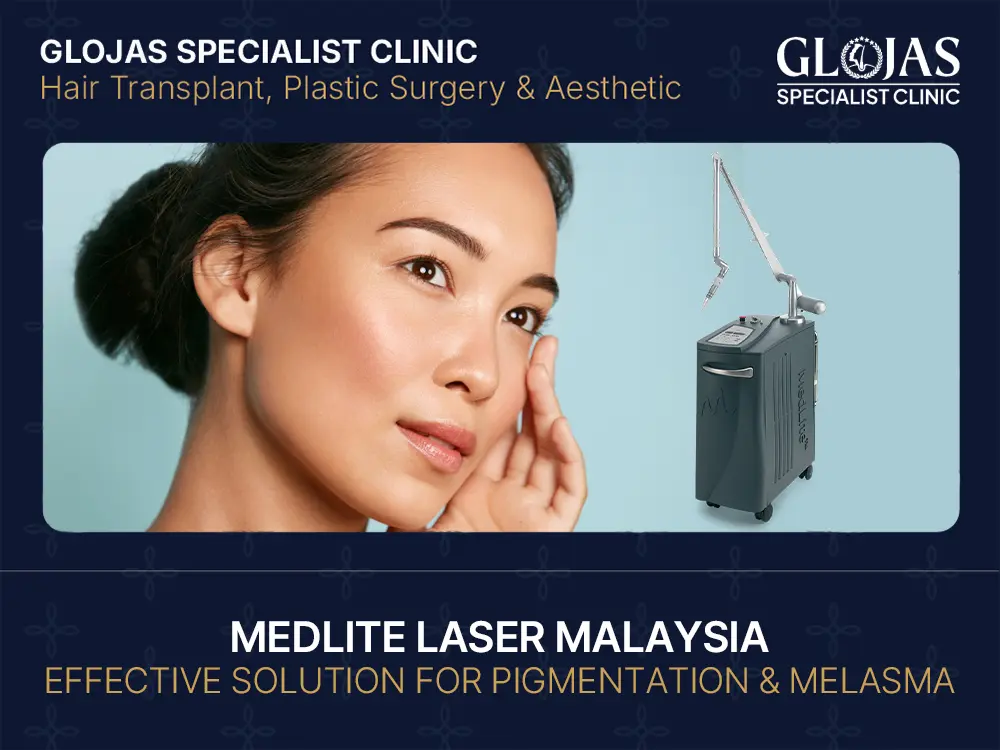
Medlite Laser Malaysia Curious About Your Skin Recovery Timeline? Select your primary skin concern below to see expected results and session estimates. Melasma Sun & Age Spots Dull Skin & Pores Deep Melasma Management 6 – 10 Sessions Medlite Q-switched Nd:YAG laser safely targets deep dermal melanin without triggering heat-based inflammation, gradually breaking down stubborn pigment clusters. Expected Timeline: Noticeable lightening usually begins after 3 to 4 sessions, spaced 2 to 4 weeks apart. 💬 Consult Doctor via WhatsApp What Is Medlite Laser? Medlite Laser is a type of Q-switched Nd:YAG laser widely used in aesthetic dermatology for treating pigmentation, melasma, acne scars, and uneven skin tone. It is non-ablative, which means it does not damage the top layer of the skin, making it safe for all skin types—especially Asian skin, which is more prone to hyperpigmentation after laser treatments. Unlike ablative lasers that remove skin layers, Medlite Laser delivers energy in ultra-short pulses to break down pigmentation without generating excess heat or causing prolonged redness. How Does Medlite Laser Work? Medlite Laser works by delivering nanosecond pulses of high-energy light that target melanin (pigment) in the skin. The light energy breaks down the pigment into microscopic particles, which are naturally eliminated by the body’s lymphatic system. This laser also stimulates collagen production, making it effective for both pigmentation and skin rejuvenation. Because it delivers energy gently and precisely, the treatment does not cause significant discomfort or downtime. What Skin Conditions Can Medlite Laser Treat? Medlite Laser is suitable for a wide range of pigmentation and skin clarity concerns: Melasma One of the most effective laser treatments for melasma, Medlite targets deep dermal pigment without worsening inflammation or triggering post-inflammatory hyperpigmentation. Age Spots and Sun Spots Medlite helps fade brown spots caused by sun damage or aging, restoring a more even skin tone. Acne Scars and Post-Inflammatory Hyperpigmentation By stimulating collagen and dispersing pigment, Medlite improves the appearance of scars and dark marks left by acne. Dull Skin and Enlarged Pores The treatment enhances skin brightness and texture by gently resurfacing the skin over a series of sessions. What to Expect During and After Treatment Each session typically lasts 15–20 minutes. The treatment is relatively painless; most patients describe the sensation as a mild snapping or tingling on the skin. A cooling gel or fan may be used to increase comfort. After the session: Mild redness may occur but usually fades within a few hours No downtime; normal activities can be resumed immediately Sunscreen is strongly recommended for the following days Makeup can be applied the same day How Many Sessions Are Needed? The number of sessions depends on the condition being treated and the severity of pigmentation. On average: Melasma: 6 to 10 sessions Sun damage or age spots: 4 to 6 sessions Acne marks and dullness: 3 to 5 sessions Treatments are typically spaced 2 to 4 weeks apart. Once desired results are achieved, maintenance sessions every 2–3 months may be advised. Medlite Laser vs Other Laser Treatments Feature Medlite Laser Pico Laser CO2 Laser Technology Q-switched Nd:YAG Picosecond Ablative Pain Level Minimal Minimal High Downtime None None 5–7 days Ideal Skin Types All All Fair skin only Target Conditions Pigmentation, melasma, dull skin Pigmentation, tattoo removal Wrinkles, scars Medlite is especially favored in Asian countries due to its safety profile for darker skin tones. Is Medlite Laser Right for You? Medlite Laser is suitable for men and women experiencing: Persistent melasma or pigmentation Acne-related discoloration Uneven skin tone or dull complexion Enlarged pores and mild skin laxity However, it is not recommended for individuals with active skin infections, recent sunburn, or certain medical conditions. Pregnant or breastfeeding women should consult a qualified doctor before undergoing any laser treatment. FAQs: Medlite Laser Malaysia 1. Is Medlite Laser painful? No, Medlite Laser is a gentle procedure. Most patients experience only mild tingling or snapping sensations during the session. No anesthesia is required. 2. How long does it take to see results from Medlite Laser? Results are gradual. Many patients notice clearer, brighter skin after 3–4 sessions, with significant improvement after a full course of 6–10 treatments. 3. Is Medlite Laser safe for dark skin? Yes, it is one of the safest lasers for darker skin tones. It uses low heat and short pulses to minimize the risk of post-inflammatory hyperpigmentation. 4. How much does Medlite Laser treatment cost in Malaysia? Prices typically range from RM 300 to RM 800 per session, depending on the clinic, area treated, and condition severity. 5. Can Medlite Laser be combined with other treatments? Yes, it is often paired with chemical peels, facials, or skincare routines for enhanced results. Always consult a certified aesthetic physician for a personalized treatment plan. Ready to Restore Radiant, Even-Toned Skin? Book a personalized consultation with our LCP-certified doctors at GLOJAS Specialist Clinic and find out if Medlite Laser is right for you. View this post on Instagram A post shared by Glojas Specialist | Plastic Surgery, Hair Transplant, Aesthetic (@glojasaesthetic)
Rea Oxy Treatment in Malaysia – Oxygen Facial for Brighter, Healthier Skin
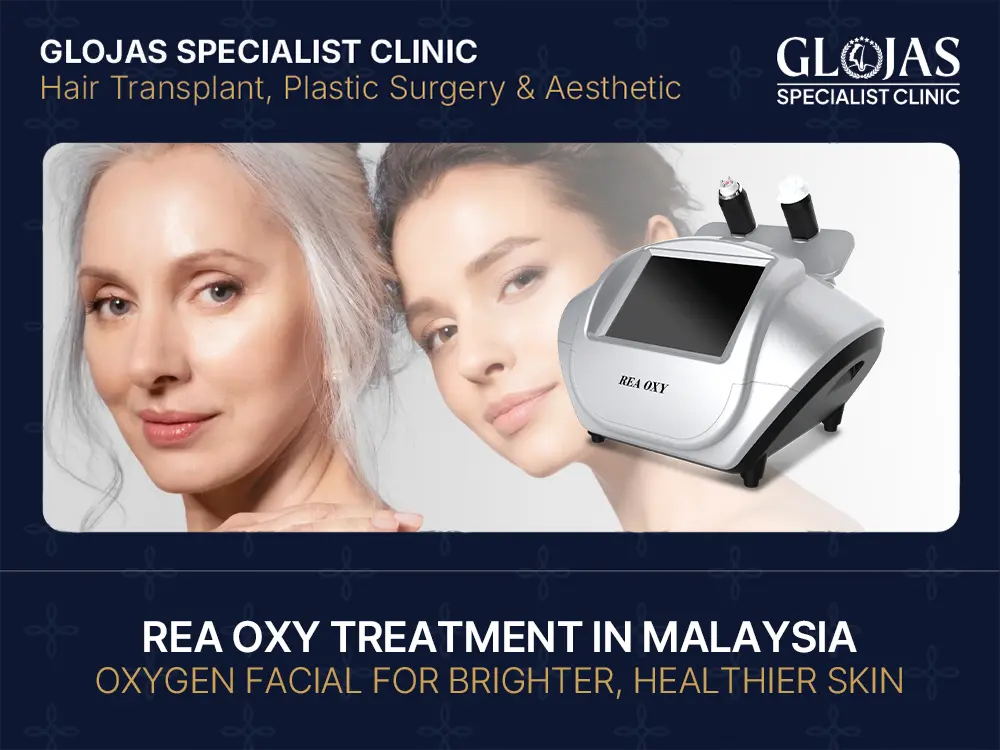
What is Rea Oxy Treatment? Rea Oxy Treatment is an advanced oxygen-infusion facial designed to deliver hydration, nutrients, and revitalization deep into the skin. The aesthetic treatment uses a device that sprays high-pressure oxygen along with customized active serums directly into the epidermis. Unlike typical facials, Rea Oxy does not involve suction, scrubbing, or abrasive chemicals. It is completely non-invasive and painless. This oxygen-based facial originated from Korea and is growing in popularity across Malaysia, especially among individuals who want to improve skin radiance, texture, and hydration in a gentle way. It’s suitable as a standalone glow-up treatment or as part of a longer-term skincare plan. Who Should Consider Rea Oxy Facial? Rea Oxy is ideal for: Individuals with dull, uneven skin tone Those experiencing dehydration, especially from air-conditioned environments Acne-prone skin that requires soothing treatment People with sensitive skin who cannot tolerate harsh procedures Brides, professionals, or anyone preparing for an event or photoshoot It is also highly recommended for people who want to maintain their skin health without downtime or discomfort. As it doesn’t involve extractions or needles, it is safe for most skin types, including reactive or compromised skin. Key Benefits of Rea Oxy Treatment Immediate Radiance Many patients report brighter and fresher skin right after their first session. This is why it’s commonly chosen before major events or important meetings. Advanced Hydration Delivery Unlike applying serums on the surface, Rea Oxy allows hydration to penetrate deeper through oxygen jet infusion, increasing skin plumpness and smoothness. Soothing and Calming This treatment is excellent for calming down inflammation, redness, and minor breakouts. It enhances circulation and supports healing. Safe and Non-Invasive Rea Oxy uses no needles, heat, or abrasion, making it completely safe for weekly or bi-weekly use even on sensitive skin. What Happens During the Treatment? Each session lasts between 45 to 60 minutes and includes: Cleansing and gentle exfoliation to prepare the skin Application of oxygen jet combined with nutrient serums (e.g., hyaluronic acid, peptides, antioxidants) A cooling and calming gel mask to lock in hydration Optional LED light therapy to enhance cellular repair The treatment is painless and relaxing. You can apply makeup afterward or return to work immediately, making it ideal for lunch break appointments. Treatment Frequency and Aftercare Before And After Results To maintain results and support long-term skin renewal, you may repeat Rea Oxy treatments every 2 to 4 weeks. Clients with specific goals such as improving texture, dullness, or post-travel skin fatigue may opt for weekly sessions over a short period. There’s no post-treatment redness or irritation. However, it is recommended to use gentle skincare and sunscreen for the following 24–48 hours to preserve results. FAQs About Rea Oxy Treatment 1. Is Rea Oxy Treatment safe for sensitive skin? Yes, Rea Oxy is ideal for sensitive skin. It does not use suction, acids, or mechanical exfoliation. It soothes and strengthens the skin barrier. 2. How much does Rea Oxy Treatment cost in Malaysia? The average cost ranges from RM250 to RM500 per session, depending on the clinic, therapist experience, and whether additional LED or ampoules are included. 3. Can I combine Rea Oxy with other facial treatments? Yes. Many clinics offer Rea Oxy as a recovery facial after laser or microneedling treatments. Just allow 3–5 days for the skin to heal before proceeding. 4. How does Rea Oxy compare to Hydrafacial? While Hydrafacial involves suction-based exfoliation and serum infusion, Rea Oxy is gentler and better for dehydrated or reactive skin. It focuses more on deep hydration and oxygenation. 5. Are the results long-lasting? Results such as glow and smoothness are visible immediately but will fade over time without maintenance. Long-term skin improvement requires regular treatments and a proper skincare routine. View this post on Instagram A post shared by Glojas Specialist | Plastic Surgery, Hair Transplant, Aesthetic (@glojasaesthetic)