
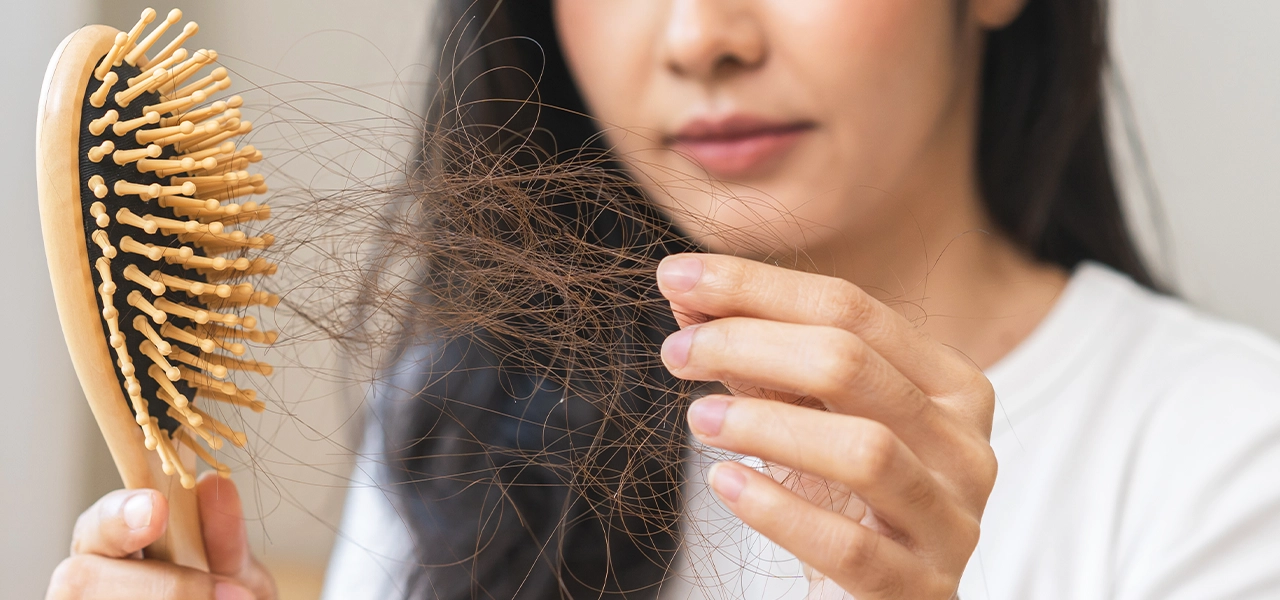
Waking up to a pillow covered in hair can feel like a personal betrayal. If you’ve noticed your scalp becoming a bit too visible lately, you’re not alone—especially here in Malaysia, where humidity, nutritional gaps, and urban stress often mask the real culprit: your endocrine system. Whether it’s thinning at the crown or a widening part, understanding the “why” behind the shed is the first step to getting your mane back on track.
GLOJAS Specialist Clinic offers world-class hormonal hair loss treatment, combining expert endocrinology insights with advanced follicular restoration to help Malaysians regain thick, healthy hair effectively.
Understanding Hormonal Hair Loss
What Is Hormonal Hair Loss?
At its core, hormonal hair loss (often medically classified as androgenetic alopecia) occurs when your endocrine system sends conflicting signals to your scalp. It isn’t just about hair “falling out” in the traditional sense; it’s a process of follicular miniaturization. Over time, your hair follicles shrink, producing shorter, thinner, and more brittle strands until they eventually stop producing terminal hair altogether.
How Hormones Affect the Hair Growth Cycle
Your hair doesn’t grow all at once; it moves through a complex biological rhythm. To understand the disruption, we have to look at the three main phases:
Anagen (Growth): Lasts 2–7 years.
Catagen (Transition): A short 2-week burst where the follicle shrinks.
Telogen (Resting): A 3-month phase before the hair sheds.
Hormonal shifts—specifically an increase in dihydrotestosterone (DHT)—prematurely terminate the Anagen phase. According to the American Academy of Dermatology, most people normally lose 50 to 100 hairs a day, but a hormonal imbalance can skyrocket that number while simultaneously preventing new growth from starting.
Differences Between Male and Female Hormonal Hair Loss
The experience is rarely gender-neutral. Men typically face a “receding” pattern, often starting at the temples or the vertex. Women, however, usually experience diffuse thinning across the entire top of the scalp. While the biological mechanisms overlap—both involve androgen sensitivity—the psychological impact and specific life-stage triggers, such as menopause or postpartum recovery, create distinct treatment needs for women compared to the classic male pattern baldness.
Common Causes of Hormonal Hair Loss
Androgenetic Alopecia (DHT-Related Hair Loss)
Dihydrotestosterone (DHT) is the primary antagonist in the story of hair loss. This potent androgen is a byproduct of testosterone. When it binds to receptors in the scalp, it effectively “starves” the hair follicle of nutrients. It remains the leading cause of permanent hair thinning globally.
Thyroid Imbalances (Hyperthyroidism & Hypothyroidism)
Your thyroid gland is the master regulator of your body’s metabolism, including the regeneration of hair cells. When your thyroid is overactive (hyper) or underactive (hypo), it disrupts the production of ATP and protein synthesis required for hair. Research from the British Thyroid Foundation notes that severe or prolonged thyroid issues can lead to uniform thinning across the entire scalp rather than localized patches.
PCOS and Hormonal Imbalance in Women
Polycystic Ovary Syndrome (PCOS) creates a state of hyperandrogenism in women. This leads to a frustrating paradox: hirsutism (excess hair growth on the face or body) combined with female pattern hair loss on the scalp. This is driven by elevated levels of free testosterone that the body cannot properly regulate.
Testosterone Imbalance in Men
It is a common myth that only “high” testosterone causes baldness. In reality, it is the efficiency of the 5-alpha reductase enzyme (which converts testosterone to DHT) and the sensitivity of your androgen receptors that dictate your hair’s fate. However, significant fluctuations in free testosterone can disrupt the hair follicle signaling pathways responsible for maintaining a healthy growth cycle.
Symptoms and Early Warning Signs
Receding Hairline and Crown Thinning in Men
The classic “M” shape at the temples or a thinning patch at the vertex (the “monk’s spot”) are the hallmark signs for men. If you notice your forehead looking “higher” in photos or your hair feels softer and less manageable, these are early indicators of follicular miniaturization.
Diffuse Thinning and Widening Part in Women
Women rarely go completely bald. Instead, the first sign is usually a widening part line or a ponytail that feels significantly lighter. This diffuse thinning means the density of hair per square centimeter is dropping, making the scalp more visible under bright lights or when wet.
Excessive Shedding vs. Pattern Hair Loss
It is vital to distinguish between Telogen Effluvium and permanent pattern loss. Telogen Effluvium is a temporary “shock to the system” (often from high fever, rapid weight loss, or extreme stress) that causes mass shedding. If the shedding persists for more than six months without regrowth, it has likely transitioned into a chronic hormonal issue.
Diagnosis of Hormonal Hair Loss
Hormone Blood Tests (Thyroid, DHT, Estrogen, Testosterone)
A clinical diagnosis starts with your blood. Doctors typically order a full endocrine panel, including TSH (Thyroid Stimulating Hormone), Serum Ferritin (iron stores), Total and Free Testosterone, and DHEAS. These markers help determine if the hair loss is a symptom of an internal systemic issue.
Scalp Examination and Hair Analysis
A specialist might perform a “pull test” or use a trichoscope. This tool allows them to see if your follicles are producing multiple hairs (healthy) or if they are single, fine, and vellus-like (miniaturized), which confirms hormonal thinning.
When to See a Dermatologist or Endocrinologist
If your hair loss is accompanied by sudden weight changes, irregular menstrual cycles, adult acne, or scalp inflammation, it’s time to seek professional help. You should consult a board-certified dermatologist or an endocrinologist to ensure you aren’t ignoring an underlying metabolic disorder.
Treatment Options for Hormonal Hair Loss
FDA-Approved Treatments (Minoxidil, Finasteride)
Minoxidil: A topical vasodilator that widens blood vessels to deliver more oxygen and nutrients to the follicle.
Finasteride: An oral prescription for men that inhibits the 5-alpha reductase enzyme, effectively lowering DHT levels in the scalp.
Hormone Therapy for Women
For women dealing with PCOS or menopause, topical or oral Spironolactone is often used as an anti-androgen. Additionally, Hormone Replacement Therapy (HRT) can help stabilize estrogen and progesterone levels, which act as natural protectants for the hair.
Treating Underlying Hormonal Imbalances
Sometimes, the hair is just the messenger. If a thyroid disorder is the root cause, hair growth usually resumes once the patient is stabilized on medications like Levothyroxine. The Mayo Clinic emphasizes that treating the underlying medical condition is essential for reversing hair thinning effectively.
Natural and Supportive Therapies
While medications do the heavy lifting, supportive care can help. This includes:
Scalp Microneedling: To stimulate collagen and topical absorption.
Low-Level Laser Therapy (LLLT): To trigger cellular activity in dormant follicles.
Nourishment: Ensuring adequate intake of Biotin, Zinc, and Vitamin D3.
FAQs About Hormonal Hair Loss
Is hormonal hair loss reversible?
Yes, in many cases! If you intervene while the follicle is still active, you can reverse miniaturization. However, once a follicle has stopped producing hair for several years and has “scarred over,” medical regrowth becomes much more difficult.
How long does treatment take to show results?
Hair grows at an average rate of only 1cm per month. Consequently, most clinical treatments require 3 to 6 months of consistent use before you notice a change in density. The Cleveland Clinic notes that consistency is the most critical factor in determining the success of any hair regrowth regimen.
Can hormonal hair loss occur at a young age?
Unfortunately, yes. Due to genetic predispositions and modern environmental triggers, it is increasingly common for individuals in their late teens or early 20s to show signs of androgenetic alopecia. Early detection is the best way to preserve your existing hair.