
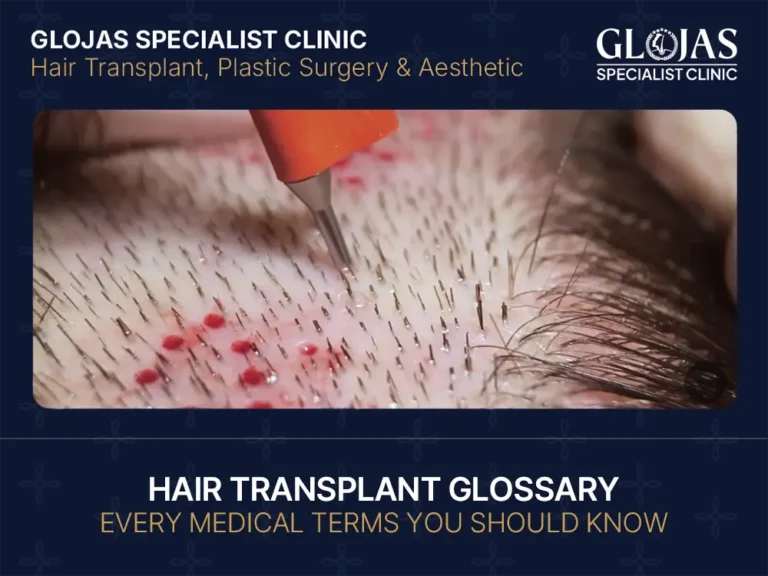
This hair transplant glossary breaks down the essential terms used in hair restoration—from grafts and follicular units to donor areas, FUE, FUT, and the biological mechanisms behind hair loss like DHT-driven miniaturization. It’s designed to help patients and clinicians speak the same language, set realistic expectations, and plan hair restoration with confidence.
Core Anatomy & Hair-Loss Basics
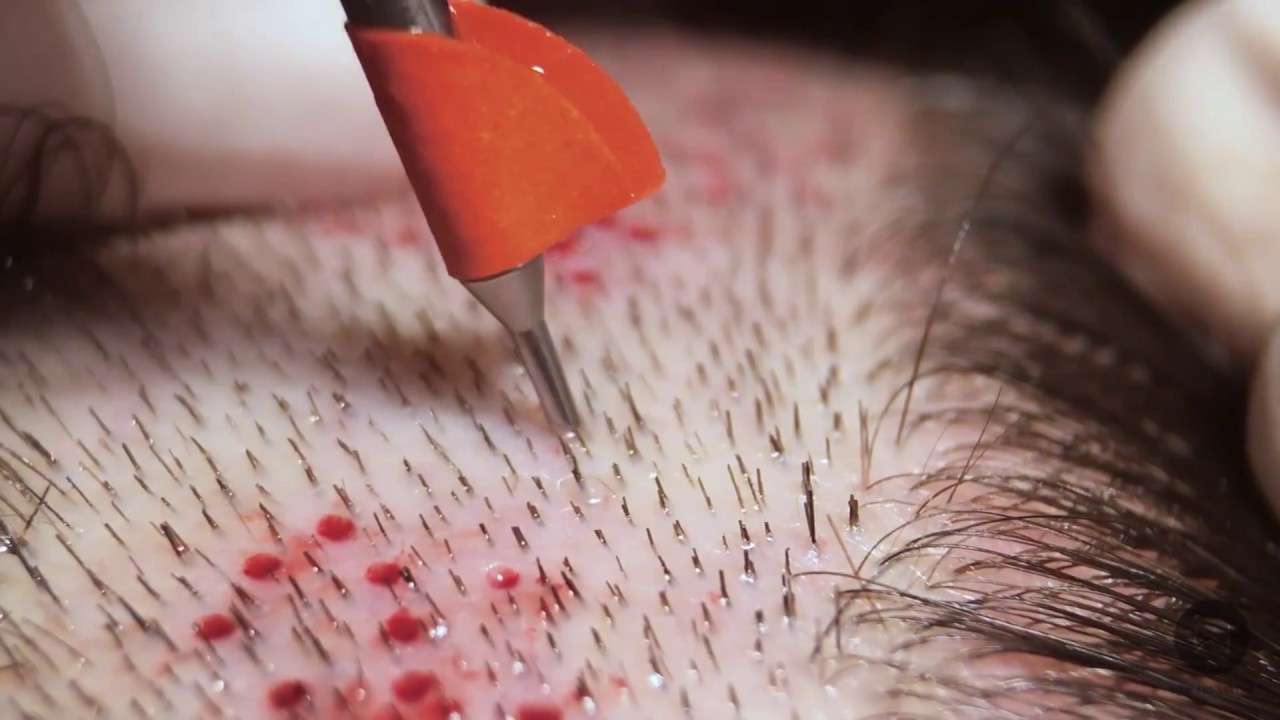
Hair Follicle & Follicular Unit (FU)
A hair follicle is the tiny skin structure that produces each strand of hair. On the scalp, these follicles naturally group together in small clusters called follicular units. Each unit usually contains one to four thick “terminal” hairs, sometimes a fine vellus hair, and supporting structures like glands, nerves, and micro-blood vessels. These units are the foundation of modern hair transplantation.
Hair Shaft, Hair Root & Dermal Papilla
The hair shaft is the visible strand you see above the skin. Beneath the surface lies the hair root, which sits inside the follicle. At the base is the dermal papilla—the “control center” that provides nutrients and signals that regulate hair growth.
Hair-Growth Cycle (Anagen, Telogen & More)
Hair grows in repeating cycles. The anagen phase is the active growth stage and can last several years. When hair falls out while still in this phase—such as after certain medications or chemotherapy—it’s called anagen effluvium. Understanding the cycle helps explain shedding patterns and regrowth expectations.
Miniaturization & Hormonal Hair Thinning
In genetic hair loss (male or female pattern thinning), the hormone DHT gradually shrinks vulnerable follicles. Over time, hairs become thinner, shorter, and lighter until they disappear. This process is known as miniaturization and is one of the main reasons people pursue hair restoration.
Hair Transplant Fundamentals
Hair Transplant
A hair transplant relocates healthy follicles from a DHT-resistant donor zone to areas of thinning or baldness. When done correctly, these transplanted hairs continue to grow naturally in their new location.
Donor Area (Safe Donor Zone)
The donor area is usually the back and sides of the scalp, where hair is genetically stronger and more resistant to hormonal loss. Because these follicles retain their resilience after being moved, they are considered “safe” for long-term restoration.
Recipient Area
This is the site where grafts are implanted—typically the hairline, crown, or any region affected by thinning or balding. Proper planning ensures the transplanted hair grows at the correct angle and density for a natural result.
Harvesting Methods & Surgical Techniques
Follicular Unit Excision (FUE)
FUE involves removing follicular units one by one using a tiny circular punch. It is a minimally invasive method that avoids a linear scar and often provides a faster recovery. Patients appreciate the flexibility: surgeons can extract from broader areas, including beard or body hair when needed.
However, FUE may yield fewer grafts in a single session, so large cases sometimes require multiple procedures.
Follicular Unit Transplantation (FUT) — The Strip Method
In FUT, a narrow strip of hair-bearing skin is taken from the donor area. Under magnification, this strip is divided into individual follicular units for transplantation. FUT is ideal for patients who need a large number of grafts in one session.
The trade-off is a thin linear scar—usually easy to conceal with normal hair length.
Grafts & Older Techniques
Grafts
A graft is a small piece of tissue that contains one or more follicular units destined for transplantation. Modern techniques aim to keep these units intact to maximize survival and ensure natural-looking regrowth.
Mini-Grafts, Micro-Grafts & Hair Plugs
Earlier methods used larger grafts or uneven groupings of follicles, sometimes producing a “pluggy” look. These approaches have largely been replaced by refined follicular-unit techniques that offer far more natural density and direction.
Multi-Unit Grafts
Some practices combine multiple follicular units into a single graft to increase density in certain areas. This can be effective—but must be balanced carefully to avoid unnatural fullness or patterns.
Additional Concepts Every Patient Should Know
Donor Dominance
One of the central principles of hair transplantation is that transplanted follicles keep the characteristics of their original location. Because donor-zone hairs are resistant to DHT, they typically remain permanent after being moved.
Recipient Influence
Although donor hairs retain their genetic traits, local factors in the recipient site—like blood supply, skin quality, and angle of placement—can affect growth and final appearance. Skilled surgical planning helps optimize these factors.
Scalp Laxity & Donor Capacity
For FUT procedures, the scalp needs enough looseness (laxity) to safely remove a strip without creating tension during closure. Donor capacity, or the total available grafts, is also crucial for long-term planning.
Hair Economics (Donor Hair Conservation)
Because donor hair is limited, surgeons must think long-term. Prioritizing areas like the hairline first and approaching the crown strategically helps ensure natural balance and reserves grafts for future needs.
Miniaturization vs. Permanent Loss
Miniaturizing follicles can sometimes be stabilized with medical treatments. Fully lost follicles, however, cannot regenerate—making transplantation the only way to restore density in those areas.
Why Understanding Hair Transplant Glossary Terms Matters
Knowing the language of hair restoration gives patients real control over their treatment decisions. It opens clearer conversations with surgeons, builds realistic expectations, and helps everyone—from first-time patients to experienced clinicians—work together toward safe, natural, long-lasting results.
Frequently Asked Questions – Hair Transplant Glossary
Q: What’s the difference between a “hair transplant” and “graft extraction”?
A hair transplant is the full procedure, from planning to implantation. Graft extraction is only one step—removing follicles for use in the transplant, typically by FUE or FUT.
Q: Is transplanted hair permanent?
In most cases, yes. Because donor hairs are naturally resistant to DHT, they usually continue growing for life. However, factors like surgical technique, healing, and overall scalp health influence long-term success.
Q: Will a hair transplant stop future thinning?
No. Transplants replace lost hair but do not prevent new hair loss. Many patients continue medical therapy or plan future sessions as part of a long-term strategy.
Q: What are the pros and cons of FUE vs. FUT?
FUE: tiny scars, quick recovery, flexible donor options—but fewer grafts per session.
FUT: large graft yield and efficient sessions—but leaves a linear scar and requires adequate scalp laxity.
Q: Why is it important to keep follicular units intact?
Intact units grow more predictably and create natural density, angle, and texture. Breaking or mixing them can reduce survival and cause unnatural patterns.
Q: Can body hair be used if the scalp donor area is limited?
Yes, particularly beard or chest hair. However, body hair has different texture and growth cycles, so results may vary and require careful planning.
Conclusion
Understanding the key terms behind hair transplantation—how follicles behave, how grafts are harvested, and what influences long-term results—empowers patients and improves communication with their surgical team. This glossary provides a foundation for safer decisions, more personalized planning, and a smoother journey toward natural-looking restoration.