
Choosing the right skincare and makeup products can feel like a guessing game, especially if you have acne-prone, oily, or sensitive skin. You might buy a luxury foundation or a viral moisturizer labeled “dermatologist-tested,” only to experience breakouts, whiteheads, or blackheads a few days later.
This happens because many cosmetics contain hidden comedogenic ingredients—substances notorious for blocking hair follicles and trapping oil. A pore clogging ingredient checker is a digital tool that decodes cosmetic ingredient lists, helping you filter out problematic formulations before they touch your skin.
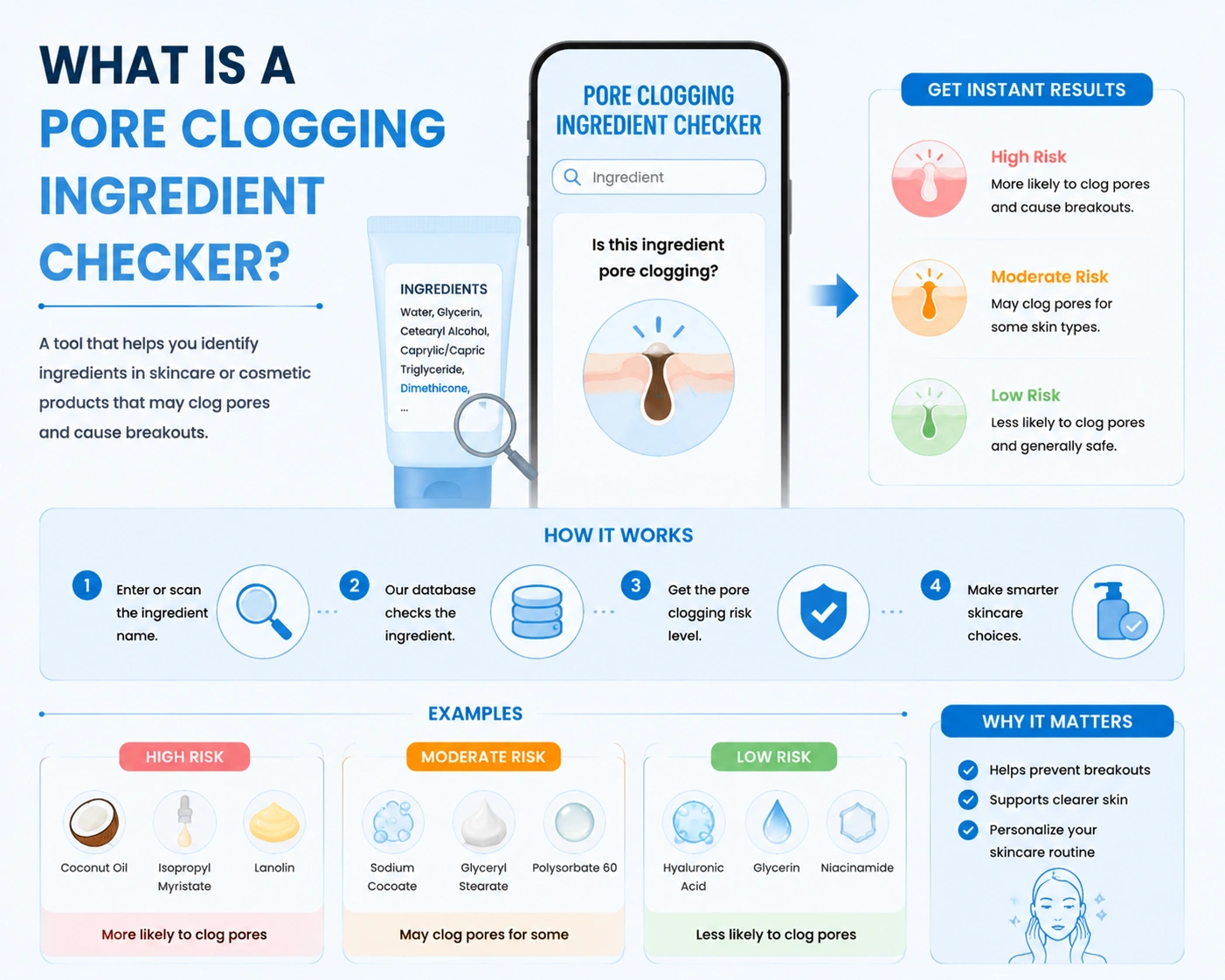
What Is a Pore Clogging Ingredient Checker?
A pore clogging ingredient checker is an online software or mobile application that analyzes the International Nomenclature of Cosmetic Ingredients (INCI) list of any beauty product. By cross-referencing a product’s formulation with established dermatological databases, the tool flags specific oils, waxes, emollients, and thickeners known to cause breakouts.
Instead of manually researching dozens of complex chemical names on a bottle, you can simply copy and paste the ingredient text into the checker. The tool instantly categorizes ingredients based on their likelihood to cause a comedo (the medical term for a clogged pore, such as a whitehead or blackhead).
Understanding the Comedogenic Scale
To understand how an ingredient checker works, you need to understand the comedogenic scale. Dermatologists and cosmetic scientists rate ingredients on a standardized spectrum from 0 to 5 based on how likely they are to obstruct pores.
Rating 0: Non-comedogenic; completely safe for acne-prone skin (e.g., Water, Argan Oil).
Rating 1: Very low chance of clogging pores (e.g., Aloe Vera, Glycerin).
Rating 2: Moderately low chance; safe for most skin types but may affect highly sensitive individuals (e.g., Almond Oil, Jojoba Oil).
Rating 3: Moderate risk; likely to cause breakouts in individuals with oily or combination skin (e.g., Avocado Oil, Sesame Oil).
Rating 4: High risk; frequently triggers acne and congestion (e.g., Coconut Oil, Cocoa Butter).
Rating 5: Extremely high risk; almost guaranteed to clog pores for anyone prone to acne (e.g., Isopropyl Myristate, Sodium Lauryl Sulfate).
Common Pore-Clogging Ingredients to Flag
While a digital checker automates the process, it is highly beneficial to recognize the most common culprits when skimming labels at the beauty counter.
Heavy Natural Oils and Butters
Many plant-derived ingredients are deeply nourishing for dry body skin but disastrous for facial skin.
Coconut Oil (Cocos Nucifera Oil): Rated a 4 on the scale; highly occlusive and locks in dead skin cells.
Cocoa Butter (Theobroma Cacao Seed Butter): A thick lipid that creates a heavy barrier, trapping sebum inside the hair follicle.
Synthetic Emollients and Esters
These are added to cosmetics to give them a smooth, silky texture or to help products glide across the skin.
Isopropyl Myristate: Known to accelerate cellular buildup and trigger rapid comedone formation.
Isopropyl Palmitate: A synthetic thickener that frequently causes breakouts along the jawline and cheeks.
Certain Thickeners and Algae Extracts
Some natural extracts or thickening agents used to give creams their luxurious texture are surprisingly comedogenic.
Algae Extract / Carrageenan: Often found in clean beauty or anti-aging lines, these marine ingredients score very high on the comedogenic scale.
Sodium Laureth Sulfate (SLES): A harsh surfactant that can strip the skin barrier, leading to irritation and subsequent oil overproduction.
How to Check Products with an Ingredient Checker
Using a digital pore checker efficiently involves a few straightforward steps to ensure you get accurate results.
1. Locate the Full Ingredient List (INCI)
Do not rely on the marketing claims on the front of the bottle, such as “oil-free” or “clean.” Turn the product over to locate the actual chemical breakdown, or find the product page online to copy the text.
2. Copy and Paste into the Tool
Ensure you copy the text exactly as written, including commas. Paste the text block into the analyzer bar of your preferred skincare checker tool.
3. Review the Flagged Ingredients
The tool will highlight problematic items. Pay close attention to any ingredients rated 3, 4, or 5. If these high-risk ingredients appear in the first five to seven positions on the list, the product features a high concentration of that substance and is highly likely to trigger acne.
The Limitations of Comedogenic Checkers
While ingredient checkers are incredibly helpful resources, they are not completely infallible. It is important to keep a few nuances in mind:
Formulation Concentration Matters: The comedogenic scale tests ingredients at 100% concentration. However, if a high-risk ingredient is listed at the very bottom of a product label (meaning it makes up less than 1% of the formula), it might not cause any skin issues for you.
Individual Skin Chemistry: Everyone’s skin barrier, sebum composition, and pore size are unique. An ingredient that triggers acne for one person might cause zero issues for someone else.
Product Synergy: How ingredients interact dynamically within a laboratory formula can change their physical properties. A product containing a minor amount of a comedogenic oil mixed with water-soluble humectants might turn out to be completely lightweight.
Conclusion
A pore clogging ingredient checker is an invaluable tool for taking control of your skincare journey and eliminating the trial-and-error that leads to breakouts. By understanding how the comedogenic scale works and using digital analyzers to flag heavy oils, synthetic esters, and hidden thickeners, you can protect your skin barrier and prevent stubborn comedones. Treat the checker as an expert filtering guide, but always listen to your unique skin responses to build the perfect, non-congesting beauty routine.
Frequently Asked Questions
1. Does a “non-comedogenic” label guarantee a product won’t clog pores?
No. The term “non-comedogenic” is not strictly regulated by the FDA. A brand can print it on a bottle without verifying the entire formula, making an ingredient checker necessary to double-check the claim.
2. Can hair care products clog facial pores?
Yes. Shampoos, conditioners, and styling creams often contain heavy oils or silicones. When you rinse your hair, these products run down your face, forehead, and back, frequently causing breakouts called acne cosmetica.
3. Are all silicones pore-clogging?
Not necessarily. Most modern silicones, like dimethicone, have a unique molecular structure that allows the skin to breathe while forming a protective layer. However, they can trap other heavy ingredients underneath them if the skin isn’t cleansed properly.
4. Which skin types benefit most from an ingredient checker?
Oily, combination, and acne-prone skin types benefit immensely. Individuals dealing with chronic whiteheads, blackheads, or hormonal acne should always check their cosmetics to avoid worsening their skin congestion.
5. What should I do if my favorite product has a flagged ingredient?
If you have used the product for weeks without experiencing breakouts, irritation, or bumps, your skin can likely tolerate it. If you are experiencing unexplained congestion, stop using it for two weeks to see if your skin clears.