
Dealing with a retreating forehead? You aren’t alone. In Malaysia, a receding hairline is one of the most common aesthetic concerns for men and women alike. Whether it’s genetics or the tropical heat, understanding why your hair is moving backward is the first step toward reclaiming your look.
GLOJAS Specialist Clinic provides advanced receding hairline treatment, combining expert techniques and personalized care to restore a natural hairline, boost confidence, and deliver lasting, visible results for patients in Malaysia.
What Is a Receding Hairline?
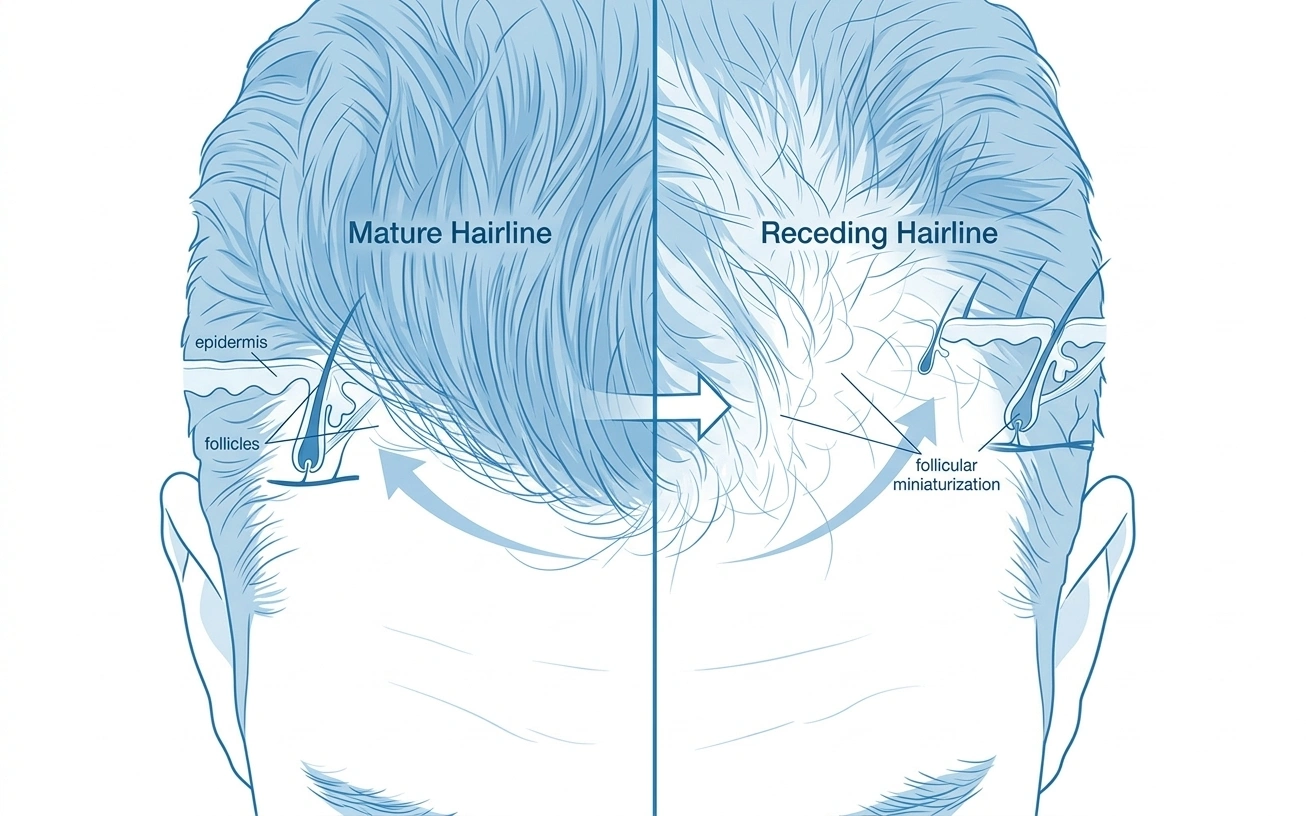
A receding hairline occurs when hair begins to thin and stop growing at the temples and forehead. It often starts above the brow and moves upward, creating a more prominent forehead. In Malaysia, many notice this change in their mid-20s as adult hormones stabilize and genetic patterns emerge.
Definition and Early Signs
The early signs are subtle: a slightly higher forehead, thinning hair around the temples, or an “M-shape” forming at the front. You might notice “baby hairs” that never grow long or a change in how your hair sits when styled. These are indicators that follicles are miniaturizing.
Receding Hairline vs. Mature Hairline vs. Balding
A mature hairline is a natural shift of about 1cm to 2cm above the juvenile brow line and isn’t necessarily a sign of balding. However, if the recession continues beyond the “corners” of the forehead, it’s likely male pattern baldness. Balding involves thinning at the crown simultaneously.
Norwood Scale Explained for Malaysian Men
The Norwood Scale classifies hair loss from Stage 1 (no loss) to Stage 7 (severe). Most Malaysian men seeking treatment fall between Stage 2 and Stage 4, where the temple recession is distinct but still reversible or treatable through various medical interventions.
Causes of Receding Hairline in Malaysia
Living in Southeast Asia presents unique challenges for hair health. Beyond simple genetics, our environment and lifestyle play significant roles in how quickly our hairlines retreat. Identifying the specific trigger is crucial for selecting the right treatment path in our local context.
Genetic and Hormonal Factors (Androgenetic Alopecia)
About 50% of Malaysian men experience androgenetic alopecia by age 50. This is primarily caused by Dihydrotestosterone (DHT), a hormone that shrinks follicles. If your father or grandfather had a “high forehead,” your DNA likely carries the instructions for a receding hairline.
High Humidity and Scalp Microbiome
Malaysia’s 80% average humidity encourages fungal growth and excessive sebum. This can lead to seborrheic dermatitis, which inflames the scalp. Chronic inflammation disrupts the hair growth cycle, potentially accelerating recession at the temples where the skin is often more sensitive to environmental stressors.
Chronic Stress and Urban Lifestyle in Malaysia
The “hustle culture” in Kuala Lumpur often leads to Telogen Effluvium, where stress pushes hair into a resting phase. High cortisol levels restrict blood flow to the scalp. When combined with poor air quality in urban centers, the hairline is often the first area to show signs of distress.
Nutritional Deficiencies Common in Malaysians
Many Malaysians suffer from low Vitamin D and Iron levels, despite our sunny weather. A diet high in processed “mamak” food may lack the zinc and protein required for keratin production. These deficiencies weaken the hair shaft, making the frontal hairline appear sparse and brittle.
Harsh Hair Practices (Sanggul, Headscarves, Chemical Treatments)
Traction Alopecia is common in Malaysia due to tight “sanggul” buns or headscarves (tudung) worn too tightly. Frequent chemical rebonding or bleaching also damages the cuticle. Constant tension on the frontal follicles literally pulls them out, leading to a permanent recession of the hairline over several years.
Early Symptoms and Self-Assessment
Don’t wait until you see a “shiny” forehead to take action. Early detection is the “golden rule” of hair restoration. By monitoring your hairline monthly, you can catch miniaturization before the follicles become permanently dormant and incapable of producing new strands.
How to Check for Temporal Recession
Use the “four-finger” rule: place your hand above your eyebrows; if there is more than a four-finger gap to your hairline, you may be receding. Check the “corners” of your forehead in a mirror. If the hair there is finer than the hair at the back, recession has started.
Shedding Patterns Specific to Receding Hairline
Look for “miniaturized” hairs—short, thin, and translucent strands—on your pillow or in the sink. Unlike normal shedding where hairs are thick and long, a receding hairline drops weak hairs that have been “choked” by DHT. This specific pattern indicates the growth cycle is shortening.
When to See a Trichologist in Malaysia
If you lose more than 100 strands per day consistently, it’s time for a professional scalp analysis. In Malaysia, a certified trichologist can use a digital scope to check for “empty” follicles and determine if your hair loss is scarring or non-scarring before it progresses too far.
Receding Hairline Treatments Available in Malaysia
Malaysia is a hub for advanced hair restoration, offering everything from pharmaceutical solutions to high-tech cell therapies. The 2026 landscape features more personalized “cocktail” treatments that combine multiple modalities to target both the hormonal and environmental causes of hair loss.
Topical Solutions (Minoxidil, Procapil, Redensyl)
Minoxidil (5% concentration) remains the gold standard in Malaysia. Newer alternatives like Redensyl and Procapil are gaining popularity because they offer similar results with less scalp irritation. These serums work by increasing blood flow to the temples, “feeding” the hungry follicles to encourage thicker growth.
Oral Medications (Finasteride, Dutasteride)
Available via prescription at Malaysian clinics, Finasteride blocks the conversion of testosterone to DHT. Studies show it can stop hair loss in 90% of men. Dutasteride is a stronger alternative often prescribed locally when Finasteride isn’t sufficient to halt a rapidly retreating hairline.
PRP (Platelet-Rich Plasma) Therapy
PRP involves injecting your own concentrated growth factors into the hairline. In Malaysia, this “vampire” treatment is popular for its natural approach. By using your blood’s healing properties, it repairs damaged follicles. Most patients require 3 to 4 sessions to see a visible increase in density.
Low-Level Laser Therapy (LLLT)
LLLT uses medical-grade lasers to stimulate cellular activity. Many Malaysian clinics offer “laser caps” or in-clinic hoods. This painless light therapy increases ATP production in the follicles. It’s an excellent “at-home” maintenance option for those who want to support their clinical treatments without daily chemical applications.
Mesotherapy and Scalp Microneedling
Microneedling creates tiny “micro-channels” in the scalp, which triggers the body’s healing response and improves the absorption of hair growth serums. When combined with Mesotherapy (injecting vitamins and peptides), it provides a powerful punch of nutrients directly to the root of the receding area.
Hair Transplant for Receding Hairline (FUE vs. FUT)
For permanent restoration, FUE (Follicular Unit Extraction) is the preferred method in Malaysia. It involves moving individual follicles from the back to the front with no linear scarring. It’s ideal for redesigning a natural-looking hairline that can withstand our humid climate and active lifestyles.
Best Clinics for Receding Hairline in Malaysia
Choosing the right clinic is a balance of expertise, technology, and cost. Malaysia’s private healthcare sector is world-class, but you should always look for clinics that hold a Letter of Credentialing and Privileging (LCP) from the Ministry of Health for aesthetic procedures.
Top Hair Transplant Centres in Kuala Lumpur
KL hosts several award-winning centers like Glojas Specialist, Premier Clinic, and DHI Malaysia. These clinics specialize in “High Density” transplants tailored to Asian hair, which tends to be thicker and darker, requiring precise graft placement for a natural, undetectable finish at the hairline.
Trusted Dermatology Clinics in Penang, Johor Bahru, and Selangor
In Penang, Klinik Dr. Ko is a staple, while Selangor residents often visit Ko Hair Restoration. These clinics offer medical-grade scalp treatments that go beyond basic salon care. They provide holistic plans that include blood tests to check for the underlying hormonal causes of your recession.
Patient Reviews, Doctor Credentials, and Before-After Photos
Always check for ISHR (International Society of Hair Restoration Surgery) membership. Trustworthy Malaysian clinics will show you high-resolution “before and after” photos of actual local patients. Read Google reviews specifically looking for mentions of long-term follow-up care, which is vital for maintaining a newly restored hairline.
Cost of Receding Hairline Treatment in Malaysia (2026)
Pricing in Malaysia remains competitive compared to Singapore or Australia. While costs have risen slightly with inflation in 2026, the value for “medical tourism” remains high. Budgeting for hair restoration should include both the initial treatment and the long-term maintenance required to keep results.
Price Range for Medications and Topical Products (MYR)
Minoxidil (Monthly): RM 80 – RM 150
Finasteride (Monthly): RM 120 – RM 200
Premium Serums (Redensyl): RM 180 – RM 350
Many pharmacies like Watson’s or Guardian carry basic versions, while clinics provide higher-strength compounded formulas for better efficacy.
PRP and Laser Therapy Costs per Session
PRP treatments in KL typically cost between RM 800 and RM 1,800 per session. LLLT sessions are usually cheaper, ranging from RM 200 to RM 500. Most clinics offer “package deals” (e.g., buy 5, get 1 free) which significantly lowers the cost for those committed to a full regime.
Hair Transplant Cost per Graft and Total Estimate
The average cost per graft in Malaysia is RM 6 to RM 12. A typical hairline restoration (Norwood 2-3) requires 1,500 to 2,500 grafts, bringing the total investment to between RM 9,000 and RM 25,000. This often includes post-op care and a one-year follow-up.
Insurance and Payment Plans
Most Malaysian health insurance does not cover hair transplants as they are considered “cosmetic.” However, many top clinics offer 0% interest installment plans through major banks like Maybank or CIMB. This makes advanced treatments like FUE more accessible to the average urban professional.
How to Prevent a Receding Hairline from Worsening
Prevention is always cheaper than a transplant. If you catch recession early, lifestyle changes and a dedicated scalp routine can stall the process for decades. Consistency is the secret ingredient; you cannot fix a hairline with “on-and-off” effort in our harsh environment.
Daily Scalp Care Routine for Malaysian Climate
Wash your hair daily to remove sweat and DHT-laden sebum. Use lukewarm water; hot water strips natural oils and weakens the root. Massage your scalp for 2 minutes during washing to stimulate blood flow. Ensure your scalp is completely dry before wearing a hat or tudung.
Best Shampoos and Serums for Receding Hairline
Look for shampoos containing Ketoconazole, which has mild anti-DHT properties. Serums with Caffeine or Biotin are excellent for strengthening the frontal hairs. Avoid “2-in-1” shampoos that leave heavy silicone residues, as these can clog follicles and worsen inflammation on a sensitive Malaysian scalp.
Diet and Supplements (Biotin, Zinc, Vitamin D)
Eat more fatty fish (salmon/mackerel) for Omega-3s and local greens like “Sawi” for iron. A Biotin (5000mcg) and Zinc supplement can help if your diet is lacking. In Malaysia, ensure you get at least 15 minutes of sun or take a Vitamin D3 supplement to support follicle cycling.
Stress Management and Sleep Hygiene
Aim for 7-8 hours of sleep. Lack of sleep increases oxidative stress, which ages your follicles prematurely. Practice “Deep Breathing” or Yoga to manage KL’s fast-paced stress. Lowering your systemic inflammation through better lifestyle choices directly impacts the longevity of your hairline.
Natural and Home Remedies for Receding Hairline
Many Malaysians turn to “Petua” or traditional remedies first. While nature offers many benefits, it’s important to distinguish between anecdotal “old wives’ tales” and remedies backed by some level of scientific evidence for hair health and scalp maintenance.
Coconut Oil, Aloe Vera, and Onion Juice – Evidence?
Coconut oil is great for hair strength but doesn’t block DHT. Onion juice contains sulfur, which may help with circulation, but the evidence for regrowing a hairline is weak. Aloe vera is fantastic for calming scalp inflammation, making it a good “support” remedy rather than a primary cure.
Herbal Treatments Popular in Malaysia (Habbatus Sauda, Rosemary)
Rosemary Oil has shown efficacy comparable to 2% Minoxidil in some clinical trials. Habbatus Sauda (Black Seed Oil) is rich in antioxidants that protect the scalp. These are culturally beloved in Malaysia and can be integrated into a holistic routine to improve overall scalp health.
What Works and What to Avoid
Avoid: Putting raw ginger or garlic on the scalp, which can cause chemical burns.
Works: Scalp massages with diluted Rosemary oil and maintaining a clean, fungal-free scalp. Natural remedies are best for improving hair quality, while medical treatments are necessary for reversing genetic recession.
Receding Hairline in Different Demographics (Malaysia)
Hair loss doesn’t look the same for everyone. Different ethnic backgrounds and genders in Malaysia experience hairline changes in distinct ways, requiring tailored approaches to diagnosis and treatment to achieve the best results for their specific hair biology.
Receding Hairline in Young Malaysian Men (20s–30s)
Early-onset baldness is rising in Malaysia, often due to high-sugar diets and sedentary urban lifestyles. For men in their 20s, doctors usually suggest stabilizing loss with medication before considering surgery. Starting too early with a transplant can lead to an unnatural “island” of hair as native hair continues to recede.
Receding Hairline in Women (Frontal Fibrosing Alopecia)
Women in Malaysia often face Frontal Fibrosing Alopecia, where the hairline recedes and eyebrows thin. This is an inflammatory condition, not just genetic balding. It requires dermatological intervention with corticosteroids to stop the scarring process, as standard “men’s” hair loss products may not work.
Ethnic Differences (Malay, Chinese, Indian) in Hairline Patterns
| Ethnic Group | Typical Pattern | Statistics/Notes |
| Malay | Frontal thinning & Traction | Often linked to tight headwear/buns. |
| Chinese | Late-onset, Diffuse | Lower rates of baldness but thinner hair shafts. |
| Indian | Early Temporal Recession | High density but higher sensitivity to DHT. |
| Studies show Chinese men have the lowest incidence of alopecia (approx 20%), while Indian men show patterns closer to Caucasians (approx 45% by age 50). |
Frequently Asked Questions (FAQ) – Receding Hairline Malaysia
Can a Receding Hairline Grow Back Naturally?
If the follicle is just “sleeping” (miniaturized), it can grow back with Minoxidil or PRP. However, if the area is completely smooth and shiny, the follicle is likely dead, and natural regrowth is impossible without a hair transplant.
Is Receding Hairline Reversible Without Transplant?
In early stages (Norwood 1-2), it is reversible through DHT blockers and topical serums. Once you reach Stage 4, clinical intervention like FUE is usually the only way to achieve a “full” look again. Consistency with medication is key for non-surgical success.
Does Wearing a Cap or Sanggul Daily Cause Receding Hairline?
Yes, this is called Traction Alopecia. Constant pulling on the hair roots causes inflammation and eventually kills the follicle. If you must wear a cap or tudung, ensure it is loose and made of breathable material like cotton or silk.
Which Malaysian Brand Hair Products Are Safe for Receding Hairline?
Look for reputable brands like Sugarbunnies, Faith Fleur, or specialized clinical brands found in pharmacies. Ensure they are KKM (Kementerian Kesihatan Malaysia) approved. Avoid “rebranded” OEM products that don’t list their active ingredients clearly on the label.
How Long Until I See Results from Treatment?
Hair grows at about 1cm per month. Most treatments like Minoxidil or PRP take 3 to 6 months to show visible improvement. For a hair transplant, you will see the final “natural” results after 12 to 18 months once the new hairs mature.