
What is Alopecia Areata? Patchy Hair Loss and Recovery Options
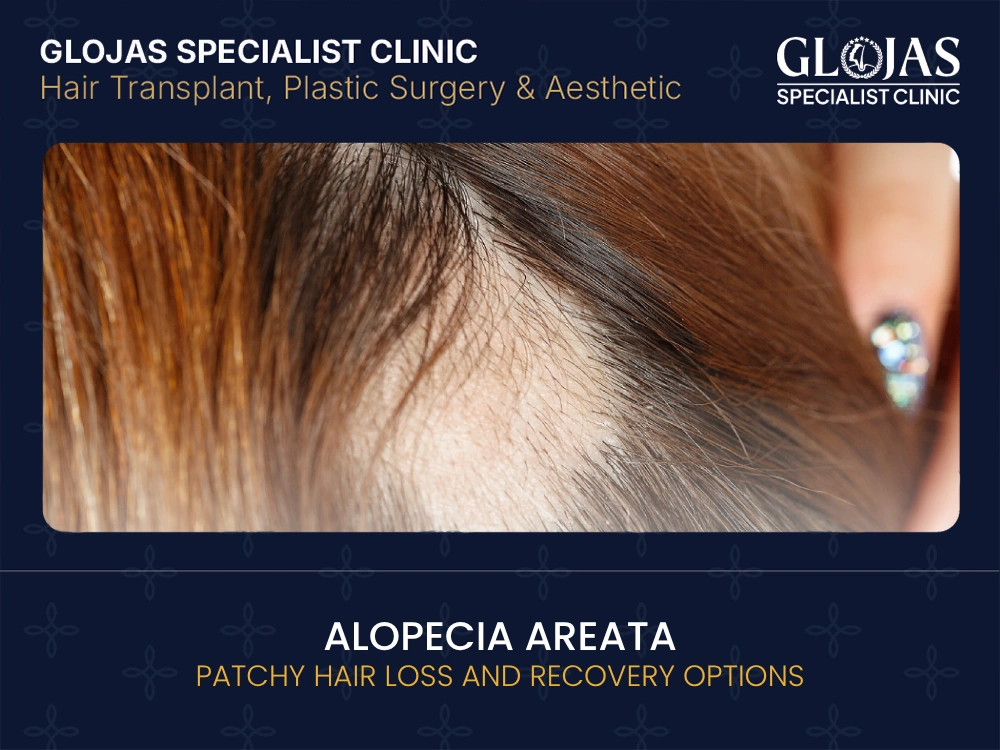
Alopecia Areata Patch Severity Assessment Select your patch pattern configuration to estimate your category and explore custom recovery routes. How many patches or what is the extent? Single Small Coin-Sized PatchMultiple Distinct Hair Loss PatchesComplete Scalp Hair Loss (Alopecia Totalis)Complete Body & Scalp Hair Loss (Universalis) How long has the patch been present? Less than 3 months (Recent onset)More than 3 months to 1 yearMore than 1 year (Persistent/Chronic) Estimated Category & Recovery Path Single Small Patch (Localized Type) – High recovery potential Consult About Alopecia Recovery via WhatsApp Alopecia areata is a chronic autoimmune condition where the body’s immune system mistakenly attacks hair follicles, causing rapid hair loss. It typically results in smooth, round or oval bald patches on the scalp, face, or body, with spontaneous regrowth possible. Understanding Alopecia Areata Alopecia areata affects approximately 2% of the global population across all genders and age groups, though it frequently manifests during childhood or early adulthood. Unlike standard pattern baldness, this inflammatory process targets anagen-phase hair roots, disrupting normal hair production without permanently destroying the follicle itself. What Causes Patchy Hair Loss The primary driver of patchy hair loss is immune-mediated dysfunction, where white blood cells mistakenly target melanocytes or structural components within hair bulbs. Key factors include: Genetic Predisposition: Individuals with a family history of autoimmune disorders face a higher statistical risk. Autoimmune Triggers: Associations with thyroid diseases, vitiligo, and atopic dermatitis are well-documented. Environmental and Psychological Stress: Severe physical illness, emotional trauma, or acute stress events can trigger or exacerbate sudden flare-ups. Signs and Symptoms of Alopecia Areata Recognizing the early dermatological markers of this condition helps ensure prompt intervention. Common clinical signs include: Sudden Coin-Sized Patches: Smooth, sharply demarcated round or oval areas of hair loss on the scalp. Exclamation Mark Hairs: Short, broken hairs that taper near the base, commonly seen at the edges of active expansion zones. Nail Changes: Pitting, fine splitting, or sandpaper-like roughness across fingernails and toenails. Advanced Manifestations: Progression to Alopecia Totalis (complete scalp hair loss) or Alopecia Universalis (total body hair loss). Clinical Insight: In specialist dermatology practice, microscopic evaluation (trichoscopy) often reveals characteristic yellow dots and black dots within the follicular openings, confirming active disease progression before initiating targeted immunomodulatory therapies. Treatment and Recovery Options in Malaysia Managing hair restoration requires a structured medical strategy tailored to the extent of follicular involvement and patient health profiles. Medical Treatments and Dermatologist Options Professional medical management aims to halt immune attacks and stimulate local regrowth. Standard interventions deployed by clinical dermatologists include: Intralesional Corticosteroid Injections: Administered directly into localized bald patches on a monthly basis to suppress regional inflammation. Topical Immunotherapy: Applying chemical sensitizers like diphenylcyclopropenone (DPCP) to induce a controlled allergic contact dermatitis that alters immune responses. Systemic Therapies: Oral corticosteroids, methotrexate, or targeted JAK inhibitors prescribed for rapidly progressive or severe multi-patch presentations. Topical Solutions and Procedures Complementary non-surgical options support follicle rehabilitation and scalp wellness: Minoxidil Solutions: Available in 2% or 5% topical formulations to lengthen the anagen growth phase. Platelet-Rich Plasma (PRP): Concentrated autologous growth factors injected into the scalp to optimize the microenvironment for cellular repair. Finding Care in Malaysia Navigating recovery effectively relies on recognizing when to seek expert medical evaluation and maintaining consistent home-care protocols. When to See a Dermatologist You should consult a qualified medical professional if you notice rapid, unexplained hair shedding, expanding circular patches, or concurrent nail pitting. Early diagnosis at specialized establishments like GLOJAS Specialist Clinic ensures accurate grading of your condition and access to advanced, safe restoration pathways supervised by medical experts. Managing Alopecia Areata Daily Living with a fluctuating hair loss condition involves practical lifestyle adjustments: Scalp Protection: Apply broad-spectrum sunscreen and wear hats or UV-protective scarves to shield exposed skin from solar radiation. Stress Regulation: Incorporate mindfulness, yoga, or consistent physical exercise to help regulate systemic inflammatory triggers. Gentle Hair Care: Use hypoallergenic, sulfate-free shampoos and avoid tight hairstyles that place traction stress on fragile hair roots. Frequently Asked Questions Can alopecia areata be cured permanently? There is currently no definitive universal cure, but spontaneous recovery or full hair regrowth occurs in over 60% of localized cases within one year of treatment. However, recurrence or future relapses remain common. Is alopecia areata contagious? No, alopecia areata is strictly a non-contagious autoimmune and inflammatory condition, meaning it cannot be transmitted through direct contact, sharing items, or environmental exposure. What is the primary difference between alopecia areata and male pattern baldness? Alopecia areata is an autoimmune disease causing patchy, sudden hair loss, whereas male pattern baldness (androgenetic alopecia) is a progressive, hormone- and genetics-driven receding hairline and crown thinning process. Can children develop alopecia areata? Yes, the condition can manifest at any age, and it is frequently diagnosed first during childhood or adolescence, requiring specialized pediatric dermatological care. When should I book a clinical consultation for hair loss? You should schedule a professional assessment as soon as you observe persistent shedding or circular bald spots. Consult the experts at GLOJAS Specialist Clinic for a personalized evaluation and tailored recovery plan.
How Much Does a PRP Hair Treatment Cost in Malaysia
PRP Hair Treatment Cost Estimator Select your preferred clinic tier and session package to check estimated pricing in Malaysia. Clinic Type & Technology: Aesthetic Clinic (Standard Centrifuge)Hair Specialist Clinic (Advanced)Dermatologist / Medical Center Treatment Plan Option: Full Protocol Package (3 Sessions)Single Trial Session (Ala Carte) Estimated Cost Range RM 3,300 – RM 4,000 (3 Sessions) Enquire About PRP Cost via WhatsApp PRP Hair Treatment Cost in Malaysia PRP hair treatment cost in Malaysia ranges RM800 to RM1500 per session. Full protocol of 3 sessions costs RM2400 to RM4000. Prices depend on clinic, centrifuge type, and doctor expertise. PRP Hair Treatment Cost in Malaysia by Clinic Type Clinic Type Cost Per Session 3 Sessions Package What’s Included Aesthetic Clinic RM800-RM1000 RM2400-RM2800 Basic PRP, single-spin centrifuge Hair Specialist Clinic RM1200-RM1500 RM3300-RM4000 Double-spin PRP, dermatoscopy Hospital/Dermatologist RM1500-RM2000 RM4000-RM5500 Medical grade, combined with meds Premium Centers RM1800-RM2500 RM5000-RM7000 PRF, microneedling, LED add-ons Factors Affecting PRP Hair Treatment Cost in Malaysia Centrifuge system: Double-spin yields higher platelet count, costs 20-30% more Add-ons: Microneedling +RM200, PRF +RM300, mesotherapy +RM400 per session Doctor vs therapist: Specialist injection costs more than nurse-administered Location: KL/JB/Penang 15-25% higher than smaller cities Package size: 3-6 session packages give 10-20% discount vs single session PRP Hair Treatment Cost in Malaysia vs Other Treatments Treatment Cost Per Year Permanence Best For PRP Hair Treatment RM2400-RM4000 12-18 months Early thinning, maintenance Finasteride + Minoxidil RM600-RM1200 Ongoing use Stabilize loss, diffuse thinning Hair Transplant FUE RM8000-RM25000 once Permanent Bald spots, Norwood 3+ LLLT Cap RM3000-RM6000 device Ongoing use Mild thinning, adjunctive Hidden Costs of PRP Hair Treatment in Malaysia Item Cost Range Frequency Note Consultation RM0-RM200 First visit Often waived with package Blood Test CBC RM60-RM120 Once Required by reputable clinics Maintenance Session RM800-RM1500 Every 6-12 months Needed to keep results Topical Meds RM100-RM300/month Optional Boosts PRP outcome Key fact: PRP is not covered by insurance in Malaysia as it is cosmetic. Total 2-year cost for initial + maintenance = RM4000-RM7000. Cheaper than transplant but ongoing. PRP Hair Treatment Cost in Malaysia FAQs How much is PRP hair treatment in KL? PRP hair treatment cost in KL averages RM1200-RM1500 per session at hair clinics. 3-session packages run RM3300-RM4000. Premium centers with PRF or add-ons charge RM1800-RM2500 per session. Is PRP hair treatment cheaper than hair transplant? Yes. PRP hair treatment cost in Malaysia is RM2400-RM4000 for a full course. Hair transplant starts RM8000 and goes to RM25000+. PRP needs yearly maintenance. Transplant is one-time cost. Why is PRP hair treatment cost different between clinics? PRP hair treatment cost in Malaysia varies by centrifuge type, platelet concentration, and injector qualification. Double-spin PRP and doctor-led injection cost more but yield better growth factors than basic systems. Does PRP hair treatment cost include consultation? Most clinics include free consultation if you take a package. Standalone consultation costs RM50-RM200. Blood test CBC costs RM60-RM120 extra and is mandatory at reputable clinics for safety. How many PRP sessions do I need to pay for? Standard PRP hair treatment cost covers 3 sessions spaced 4-6 weeks apart. This is the minimum for results. After that, pay for maintenance 1-2 sessions yearly at RM800-RM1500 each.
Hair Transplant Side Effects & Risks: Failed Graft, Infection, Overharvesting
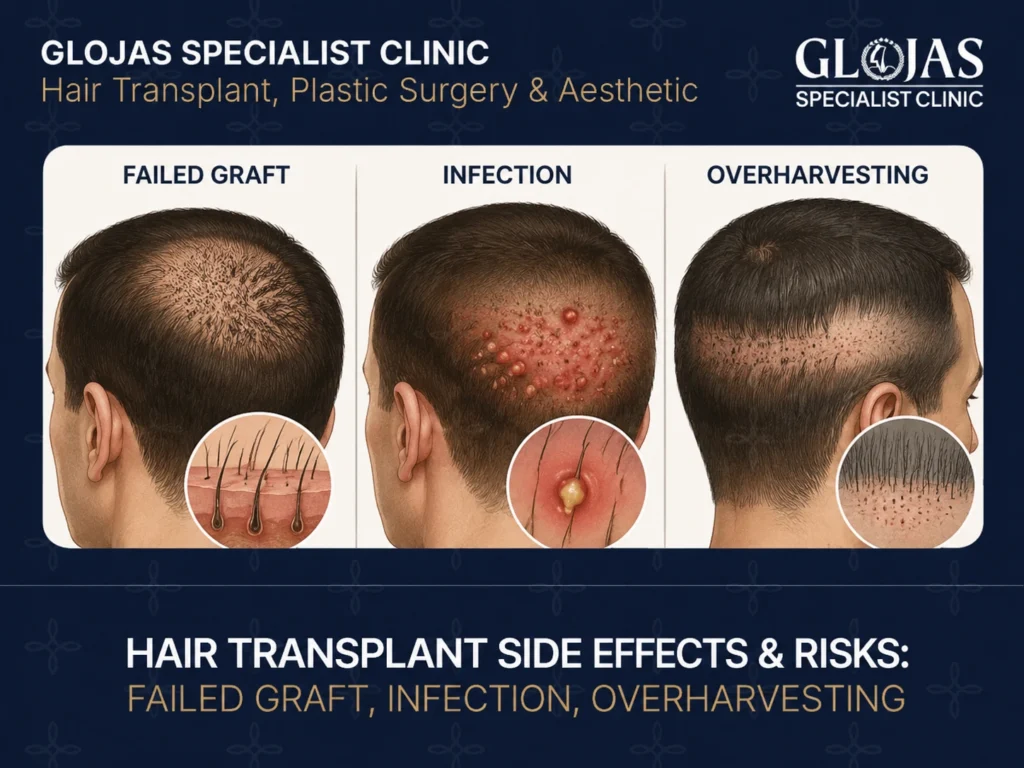
Risk Focus: Overharvesting & Failed Grafts Aggressive extraction from the donor area can lead to visible patchiness, moth-eaten thinning, and shock loss. If you are experiencing poor graft survival or donor site depletion from a previous procedure, professional evaluation is critical. Consult Specialist on WhatsApp Hair transplant Malaysia is popular, but it’s not risk-free. Failed grafts, infections, and overharvesting can ruin results and donor area permanently. Understanding these 3 major risks helps you choose a qualified surgeon and set realistic expectations. Here’s what every patient in Malaysia should know before booking. Failed Graft After Hair Transplant: Causes and Warning Signs What is graft failure? When transplanted follicles don’t survive or grow. You’ll see poor density, patchy growth, or no hair after 12 months. Common causes: Poor graft handling: Excessive time outside the body, dehydration, or trauma during implantation kills follicles Ischemia: Follicles are more tolerant of ischemia than hair bulbs, but prolonged out-of-body time reduces survival Technical errors: Punch design, follicular unit density, and ischemia time influence complications Patient factors: Smoking, diabetes, poor scalp blood supply, or not following post-op care Warning signs by 1 month: Excessive shedding beyond normal shock loss, no growth at 4–6 months, visible empty spots where grafts were placed. Shedding of implanted hairs typically occurs after several days and may take several months to regrow, but total absence of regrowth signals failure. Hair Transplant Infection: Symptoms, Risks, and Treatment in Malaysia How common? Localized infections can occur in both recipient and donor areas. The incidence of serious infections is rare <1%, due to the scalp’s strong blood flow. However, two large series reported infection rates up to 11%. Why infections happen: Poor hygiene, excessive crust formation, or preexisting medical risk factors. A high-tension closure at the donor site leading to circulatory compromise can increase risk. Nonadherence to aseptic norms or lowered patient resistance also contribute. Symptoms: Papulo-pustules, fluctuance, erythema, tenderness, pus or yellowish discharge, foul smell, fever, redness, bleeding, unpleasant taste in the mouth. Septicemia has been reported after hair transplant. Treatment in Malaysia: Application of appropriate antibiotics after sensitivity testing. Open wounds are maintained using a moist dressing protocol and allowed to heal via secondary intention. Secondary scar revisions can be performed later. Mupirocin ointment and chlorhexidine shampoo pre-op lower risk. Prevention: Wash hair per surgeon’s instructions, follow aftercare, and attend follow-ups. Difficulty sticking to hygiene recommendations increases infection risk. Overharvesting in Hair Transplants: Damage, Donor Depletion, and Repair Options What is overharvesting? Removing too much hair from the donor site, usually in FUE. It’s a donor area complication that affects clinical outcomes. Damage caused: Donor depletion: Visible thinning, see-through patches, or “moth-eaten” look. Overharvesting can lead to permanent damage in the donor area, including hair loss Scarring: Hypopigmentation, hypertrophic scarring, and epithelial cysts in donor area No future surgeries: You burn your donor supply. Operating on patients with extensive hair loss with minimal donor hair creates unfavorable results Repair options: Limited. SMP, body hair transplant to donor, or accepting the loss. Prevention is key — choose surgeons who plan long-term donor management, not just max grafts in one session. Hair Transplant Side Effects: Scarring and Shock Loss Linked to Failed Grafts Scarring: FUT leaves a linear scar; FUE leaves dot scars. Hypertrophic scarring/keloid formation occurs in up to 15.1% after FUT. Poor technique or high-tension closure worsens it. Shock loss (effluvium): Temporary shedding of native hair around donor or recipient site. Occurs in up to 4.1% donor and 6.5% recipient. It’s usually transient, with new hairs appearing after 3–6 months. But excessive shock loss can mimic graft failure if the area doesn’t recover. Link to failed grafts: Trauma, poor angulation, or ischemia during implantation can cause both graft death and shock loss in surrounding hair. Recipient site necrosis is rare but devastating, compromising graft survival. How Infection and Overharvesting Increase Hair Transplant Risks These two complications compound other risks: Infection → Necrosis → Graft failure: Early-onset recipient-site necrosis complicated by Pseudomonas aeruginosa infection can cause irreversible tissue loss. Infected grafts die. Overharvesting → Poor growth → Visible scarring: Aggressive FUE leaves the donor area damaged and reduces graft quality. Development of complications is influenced by punch design, graft handling, and follicular unit density. Both reduce future options: Once infected or overharvested, you may not qualify for repair surgery. The overall significant life-threatening complications were zero, but minor complications’ percentage was 0.10% in one 2896-patient study. 5 FAQs 1. What are the signs of a failed hair transplant graft? Signs include no hair growth after 6–12 months, excessive shedding without regrowth, patchy/pore-like empty spots, and scalp that looks the same as pre-op. Shedding is normal for several days, but new hairs should appear after 3–6 months. Partial loss of implanted hair was seen in some cases. 2. How common are infections after hair transplants in Malaysia? Serious infections are rare <1%, but some studies report up to 11%. Scalp infections are very rare because of strong blood flow. Risk increases with poor hygiene, crusting, or medical risk factors. 3. Can overharvesting permanently damage the donor area? Yes. Overharvesting can lead to permanent damage in the donor area, including hair loss. It causes visible thinning, scarring, and depletes grafts for future surgeries. This is a known FUE complication. 4. What causes graft failure after a hair transplant? Major causes: prolonged ischemia time, trauma during extraction/implantation, dehydration of grafts, poor patient healing, smoking, infection, and technical errors like punch design or graft handling. Medical history and examination issues increase complications. 5. How do you treat an infected hair transplant? See a doctor immediately. Treatment includes antibiotics after sensitivity testing, moist dressing for open wounds, and allowing healing by secondary intention. Shampooing twice daily, warm compresses, and exfoliation may help. Never self-treat pus, fever, or spreading redness. Key takeaway for Malaysia: Choose MOH-registered clinics with board-certified plastic surgeons. Serious complications are rare in experienced hands, but failed grafts, infection, and overharvesting are devastating when they happen. Detailed counselling, medical history, and proper examination minimize complaints and complications.
Hair Transplant Recovery Timeline: Month-by-Month & Growth Results
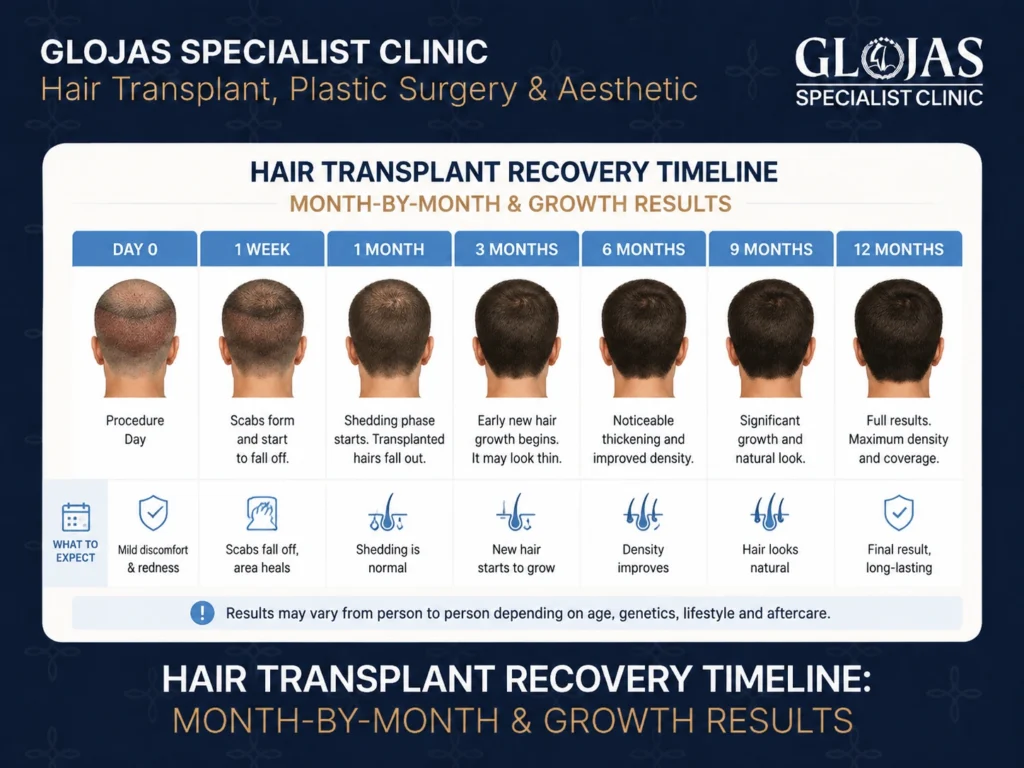
Hair Transplant Recovery Timeline Months 1-2 Month 3-4 Month 6 Month 12+ Phase: Shedding & Healing Months 1 to 2: The Shock Loss Stage During the first couple of weeks, tiny crusts form around the transplanted grafts and naturally fall off. Around week 3 to 4, you will likely experience “shock loss,” where the newly transplanted hairs shed. Do not panic—this is a completely normal part of the cycle, leaving the hair roots safely embedded beneath the scalp. What to expect: Redness fades, minor itching subsides, and your scalp returns to its normal appearance while entering a resting phase. Phase: Early Growth Months 3 to 4: Awakening & New Hair Buds This is where the excitement begins! The hair follicles wake up from their resting phase and start pushing out new hairs. Initially, these early hairs might look fine, thin, or slightly curly—this is entirely normal as the hair shaft strengthens over time. What to expect: Visible baby hairs sprouting across the recipient area. Density is still low, but growth progress becomes steady. Phase: Noticeable Transformation Month 6: Halfway Milestone By month six, roughly 50% to 60% of your final growth results will be visible. The hair starts looking significantly thicker, longer, and more mature. You can finally style, cut, or groom your hair normally. What to expect: Noticeable change in coverage, improved density, and boosted confidence as the sparse areas fill out. Phase: Final Results Month 12 to 18: Full Maturity The finish line! By the end of the first year (and up to 18 months for the crown area), your hair transplant reaches full maturity. The texture, density, and thickness settle into their permanent state. What to expect: Maximum density, natural hairline integration, and permanent results that can be treated just like natural hair. Have questions about your specific hair recovery stage or want a consultation? Chat via WhatsApp (+60 12-270 0122) Hair transplant recovery timeline: Day 1-7 scabs form, week 2-4 scabs fall and shock loss starts, month 1-3 dormant phase, month 3-4 new growth begins, month 6 see 50-60% result, month 12 final density. FUE heals faster than FUT. Full results take 12-18 months. Day 1 to Day 7 Hair Transplant Recovery Day 1-3: Scalp Tightness & Initial Healing The scalp feels tight during these first few days. Small red dots appear where grafts were placed, and the donor area will feel sore. It is important to sleep with your head elevated at a 45-degree angle to reduce swelling. Some forehead swelling may begin to appear by day 3. Day 4-7: Scab Formation & Itching Tiny scabs form around each graft, and itching starts as the healing process begins. Light redness is completely normal. For FUE patients, the dot scars begin closing up. For FUT patients, stitches or staples will still be in place. Do not touch, scratch, or wash the area yet unless your clinic explicitly instructs you to do so. Week 2 to Week 4 Hair Transplant Healing Week 2: Initial Washing & Returning to Work Most of the swelling is gone by this point, and you can begin to gently wash your hair. Donor area pain becomes minimal. FUE patients can typically return to non-strenuous work after 5–7 days, while FUT patients need about 10–14 days. Week 3-4: The Shock Loss Phase Shock loss begins during this window, meaning the transplanted hairs will start to shed. This is a normal and temporary part of the process—the follicles themselves stay safely under the skin. Your scalp will look similar to how it did pre-transplant, and numbness in the recipient area is common. When Do Scabs Fall Off After Hair Transplant Scabs usually dry and fall off between day 7 and day 14. Do not pick at them. Gentle washing after day 5 helps loosen them up naturally. By the end of week 2, the recipient area should be clean. If scabs remain after day 14, contact your surgeon, as forcing scabs off can accidentally dislodge the grafts. Hair Transplant Growth Results Month-by-Month Month 1: The Dormant Phase Month 1 is considered the dormant phase. About 70–90% of the transplanted hairs shed due to shock loss, which can make the scalp look patchy. This is expected as the follicles are resting. The donor area is fully healed for FUE, and the FUT scar starts to fade. There is no visible new growth yet, and while redness may persist, it will continue to fade. Month 3: Early Growth & Textural Changes Early growth starts here, with roughly 10–20% of new hairs breaking through the skin. These new hairs are thin, wispy, and may look curly. Ingrown hairs or pimples can appear; you can use a warm compress to help soothe them. You will still look relatively bald, but progress has officially begun. Most patients in Malaysia can resume gym activities, swimming, and wear hats normally by this point. Month 6: The Turning Point This month brings a major visible change. You can expect to see 50–60% of your final result. The hair gets thicker and darker, and overall coverage improves—especially along the hairline and crown. You can now style and cut your hair, and friends will start noticing the difference. FUE and FUT timelines converge at this stage. If you had 3000+ grafts, the density will look decent but is not full yet. Month 12: Final Growth Results By month 12, about 80–90% of the final result is visible. The hair reaches its normal texture and length, and the hairline fully matures. The crown fills in last and may need until month 15–18 to finish. Final density is officially assessed between 12–18 months. You can now dye, perm, and treat it exactly like your natural hair. Most clinics in Malaysia perform their final review at the 12-month mark. Hair Transplant Recovery Stages Explained Shock Loss Phase After Hair Transplant Shock loss starts between weeks 2–4 and lasts until month 2. Both transplanted and sometimes native hairs shed because the follicles enter the telogen (resting) phase
Dutasteride vs Finasteride for Hair Loss: Key Differences Explained
Hair loss affects millions of men in Malaysia. Two medications stand out as medically proven treatments: Finasteride and Dutasteride. Both belong to the same drug class — 5-alpha-reductase inhibitors — but they differ significantly in potency, duration of action, side effect profiles, and regulatory approval status. What Are Dutasteride And Finasteride? How 5-Alpha Reductase Inhibitors Work Both Finasteride and Dutasteride belong to a class of drugs called 5-alpha-reductase inhibitors. These medications block the enzyme responsible for converting the male hormone testosterone into dihydrotestosterone (DHT) . DHT is the primary hormone that shrinks hair follicles in men with genetic hair loss (androgenetic alopecia) and also stimulates prostate growth in benign prostatic hyperplasia (BPH). DHT Blocking Mechanism Comparison The key difference between these two drugs lies in which type of 5-alpha-reductase enzyme they block. Enzyme Type Finasteride Dutasteride Type I (skin, liver, scalp) ❌ Does NOT block ✅ Blocks Type II (prostate, hair follicles) ✅ Blocks ✅ Blocks Type III ❌ Does NOT block ✅ Blocks Finasteride selectively inhibits only Type II 5-alpha-reductase. Dutasteride inhibits both Type I and Type II enzymes, making it a more potent and broader-spectrum DHT blocker. Key Differences Between Dutasteride Vs Finasteride DHT Suppression Levels (70% vs 90%) Medication DHT Reduction Enzyme Inhibition Finasteride (1mg daily) Approximately 70% Type II only Dutasteride (0.5mg daily) Approximately 90% Type I + Type II Dutasteride suppresses DHT to a much greater extent — approximately 90% compared to Finasteride’s 70%. This makes Dutasteride more potent, but also potentially increases the risk and severity of side effects. Half-Life Duration (Hours vs Weeks) Medication Half-Life Time to Leave System Finasteride 6–8 hours A few days Dutasteride 4–5 weeks 3–6 months Half-life is the time it takes for half of the drug to be eliminated from your body. Dutasteride has an extremely long half-life of 4 to 5 weeks, meaning it stays in your system for months after stopping. Finasteride leaves your body within a few days. This has important implications for side effects persistence and pregnancy planning. FDA Approval Status For Hair Loss Medication FDA Approved For Hair Loss? Malaysia Status Finasteride 1mg ✅ YES (Propecia) DCA-approved for hair loss Dutasteride 0.5mg ❌ NO (only for BPH) Off-label use for hair loss Important: Dutasteride is NOT approved by the FDA or Malaysia’s Drug Control Authority (DCA) for treating male pattern hair loss. It is only approved for benign prostatic hyperplasia (BPH) at 0.5mg daily. Any use of Dutasteride for hair loss is considered off-label. Dutasteride vs Finasteride Effectiveness Comparison For Hair Loss Finasteride Results Timeline Timeframe Expected Results 3–6 months Reduced hair shedding 6–12 months Visible improvement in hair thickness 1–2 years Maximum regrowth 5+ years 90% maintain or improve hair Finasteride stops hair loss or improves density in approximately 80-90% of men after 5 years of continuous use. Dutasteride Results Timeline Timeframe Expected Results 3–6 months Reduced shedding (similar to Finasteride) 6–12 months Greater hair count increase vs Finasteride 1–2 years Superior regrowth in clinical studies Which Is More Effective For Androgenetic Alopecia? Dutasteride is more effective than Finasteride for male pattern hair loss based on multiple clinical studies. Key evidence: A 6-month study (n=416) showed Dutasteride 0.5mg produced significantly greater hair count increases compared to Finasteride 1mg and placebo. At 24 weeks, Dutasteride showed superior efficacy in vertex (crown) and frontal (hairline) regions. Dutasteride increased hair counts by approximately 12% vs Finasteride’s 8% in some trials. Conclusion for hair loss: Dutasteride works better, but it is off-label and carries higher side effect risks. Dutasteride vs Finasteride Effectiveness Comparison For BPH (Prostate Health) Prostate Volume Reduction Medication Prostate Volume Reduction Finasteride 5mg 20–25% reduction over 6–12 months Dutasteride 0.5mg 25–30% reduction over 6–12 months Both medications are approved for BPH at higher doses (Finasteride 5mg, Dutasteride 0.5mg). Dutasteride is slightly more effective at reducing prostate size. Urinary Symptom Improvement Medication Improvement in AUA Symptom Score Finasteride 5mg 3–4 point improvement Dutasteride 0.5mg 4–5 point improvement Both medications significantly improve urinary flow rate and reduce symptoms like frequent urination, weak stream, and nocturia (waking at night to urinate). Dutasteride vs Finasteride Side Effects Comparison Sexual Side Effects (Impotence, Low Libido) Side Effect Finasteride (1mg) Dutasteride (0.5mg) Decreased libido 1–4% 3–5% Erectile dysfunction 2–4% 4–6% Reduced semen volume < 2% 3–5% Ejaculation disorders < 2% 2–4% Dutasteride has a slightly higher incidence of sexual side effects compared to Finasteride, likely due to its more complete DHT suppression (90% vs 70%). Psychiatric Side Effects (Depression, Suicidal Thoughts) Side Effect Finasteride Dutasteride Depression Rare (reported) Less studied Suicidal ideation Identified risk (NPRA 2025) Limited data Anxiety Rare Limited data NPRA Malaysia Adverse Reaction Reports The National Pharmaceutical Regulatory Agency (NPRA) Malaysia has received: 164 reports involving 240 adverse events for Finasteride-containing products 14 reports of sexual dysfunction with Finasteride No reports of suicidal ideation or depression for Finasteride in Malaysia (as of September 2025) Limited data specifically for Dutasteride in Malaysian reporting systems Safety Comparison: Suicidal Ideation Risk EMA Findings On Finasteride The European Medicines Agency (EMA) has identified suicidal ideation as a potential adverse effect associated with both 1mg and 5mg oral formulations of Finasteride. A review identified 325 cases of suicidal ideation in the EudraVigilance database (312 involving Finasteride). Most cases occurred in patients treated for alopecia with Finasteride 1mg. Dutasteride And Psychiatric Risk Less data exists for Dutasteride regarding suicidal ideation. Because Dutasteride is not approved for hair loss, fewer psychiatric adverse event reports have been collected. However, as a more potent DHT blocker, some experts theorize it may carry similar or higher psychiatric risks. More research is needed. Malaysian NPRA Guidelines (2025) Based on international safety findings, NPRA Malaysia has issued guidance for Finasteride: Discontinue treatment and seek medical attention if you develop depressed mood, depression, or suicidal ideation Report any mood changes to your doctor immediately Discuss any history of psychiatric disorders before starting treatment Similar specific guidance for Dutasteride has not been issued by NPRA as of 2026. Dutasteride vs Finasteride Cost Comparison In Malaysia (2026) Finasteride 1mg Monthly Cost Brand / Type Price (RM) Duration Generic Finasteride 1mg RM 60 – RM 100 1 month Branded Propecia 1mg RM 180+ 1 month Dutasteride 0.5mg Monthly Cost Brand / Type Price (RM) Duration Generic Dutasteride (Avodart generic) RM 25 – RM 50 1 month (30 capsules) Branded Avodart 0.5mg RM 80 – RM 120 1
Hair Density: Meaning, Causes, Treatment & Improvement in Malaysia
Interactive Hair Density Self-Check Select your main scalp observation below to instantly understand your hair density status. 🔍 Scalp is easily visible without moving hair ⚖️ Moderate scalp visibility, standard ponytail thickness 🦁 Very thick hair, scalp hard to see, heavy volume 💬 Consult Specialist on WhatsApp Hair density is one of the most important factors influencing the appearance of thick, healthy hair. While many people associate hair fullness with the number of strands they have, hair density is a distinct characteristic that refers to the number of hair follicles growing within a specific area of the scalp. Individuals with normal hair density may still experience the appearance of thinning if hair shafts become finer or if hair loss occurs. What Is Hair Density? Hair density refers to the number of individual hair strands or hair follicles per square centimeter (hairs/cm²) of the scalp. It differs from hair thickness, which describes the diameter of each individual hair shaft. A person may have: High hair density with fine hair Low hair density with thick hair Normal hair density with medium-thickness hair Because both density and hair shaft diameter contribute to overall scalp coverage, they are evaluated together during a hair assessment. Hair Density vs Hair Thickness: What’s the Difference? Although these terms are often used interchangeably, they describe different characteristics of hair. Feature Hair Density Hair Thickness Definition Number of hairs per unit area Diameter of each hair strand Measurement Hairs/cm² Micrometers (µm) Determines Fullness of hair Volume and texture Changes with Hair Loss Yes May also decrease through miniaturization Someone with fine hair can still have high density, while someone with thick hair may have low density if fewer follicles are present. How Is Hair Density Measured? Hair density is measured using specialized diagnostic tools that allow clinicians to evaluate the number of hairs within a defined scalp area. Common methods include: Trichoscopy A dermatoscope or digital trichoscope magnifies the scalp, allowing visualization of hair follicles, hair shaft diameter, and follicular density. Phototrichogram High-resolution images are captured before and after trimming a small area of hair. Computer software calculates hair density, growth rate, and the proportion of hairs in different growth phases. Hair Count Per Square Centimeter Clinicians manually or digitally count hairs within a marked 1 cm² section of the scalp to determine density. Hair Transplant Consultation Assessment Hair restoration surgeons evaluate donor and recipient hair density to estimate graft availability and determine the number of follicular units required for optimal coverage. What Is Considered Normal Hair Density? Hair density varies depending on genetics, age, ethnicity, and scalp region. Average ranges include: Hair Density Approximate Hair Count High Density More than 180 hairs/cm² Normal Density 120–180 hairs/cm² Low Density Fewer than 120 hairs/cm² These values are approximate and may vary among individuals and populations. Top 3 Causes of Low Hair Density Genetic Hair Loss (Androgenetic Alopecia) The most common cause of reduced hair density is androgenetic alopecia, also known as male or female pattern hair loss. Hair follicles gradually shrink (miniaturize), producing finer and shorter hairs until some follicles stop producing visible hair. Telogen Effluvium Telogen effluvium is characterized by excessive shedding following physical or emotional stress, illness, surgery, childbirth, nutritional deficiencies, or certain medications. Although usually temporary, it can noticeably reduce hair density. Nutritional Deficiencies Inadequate intake or absorption of essential nutrients—including iron, vitamin D, zinc, protein, and vitamin B12—can impair normal hair growth and contribute to diffuse thinning. Other Factors That Affect Hair Density Several additional factors can influence hair density, including: Increasing age Hormonal changes Thyroid disorders Autoimmune diseases Scalp inflammation Certain medications Chronic stress Smoking Poor nutrition Excessive chemical treatments Tight hairstyles causing traction alopecia Signs of Reduced Hair Density Individuals with low hair density may notice: Increased scalp visibility Wider hair part Reduced ponytail thickness Decreased hair volume Difficulty styling hair Excessive daily hair shedding Progressive thinning over time Can Hair Density Be Increased? The answer depends on the underlying cause. Hair density can often improve if follicles remain alive but are producing thinner hairs. However, follicles that have been permanently destroyed or replaced by scar tissue cannot regenerate naturally. Early diagnosis and treatment generally provide the best opportunity to preserve existing hair density. Medical Treatments for Improving Hair Density Topical Minoxidil Minoxidil promotes hair growth by prolonging the growth phase (anagen) of the hair cycle and increasing follicle size. It is commonly recommended for androgenetic alopecia in both men and women. Oral Finasteride Finasteride is prescribed for eligible adult men with androgenetic alopecia. It reduces levels of dihydrotestosterone (DHT), slowing follicular miniaturization and helping maintain hair density. Dutasteride In selected patients, dutasteride may be prescribed off-label under specialist supervision. It inhibits additional forms of the enzyme responsible for DHT production and may offer greater efficacy than finasteride in some cases. Platelet-Rich Plasma (PRP) PRP hair therapy involves injecting concentrated platelets derived from the patient’s own blood into the scalp. Growth factors released by platelets may stimulate follicular activity in selected patients. Low-Level Laser Therapy (LLLT) Low-level laser devices may improve hair density by stimulating cellular activity within hair follicles. Results vary, and treatment requires consistent use. Is Hair Transplant Surgery Suitable for Low Hair Density? Hair transplantation may be appropriate for patients with stable pattern hair loss and adequate donor hair. The procedure redistributes healthy follicles from the donor area to thinning regions, improving scalp coverage and visual density. Surgical planning considers: Existing hair density Donor hair availability Hair shaft thickness Hair color contrast Curl pattern Long-term progression of hair loss Lifestyle Tips to Support Healthy Hair Density Although lifestyle changes cannot reverse genetic hair loss, they can support healthy hair growth by: Eating a balanced diet rich in protein, iron, and essential vitamins Managing chronic stress Avoiding smoking Limiting excessive heat styling Reducing harsh chemical treatments Treating underlying medical conditions promptly Following prescribed hair loss treatments consistently Recovery After Hair Density Treatments Recovery depends on the treatment selected. Topical medications: No downtime. PRP therapy: Mild tenderness for 24–48 hours. Hair transplant
The Norwood Scale: Stages of Male Pattern Baldness Explained (2026)
The Norwood Scale (also called the Norwood-Hamilton Scale) is the standard classification system used to measure the severity and pattern of male pattern baldness, ranging from Stage 1 (no visible loss) to Stage 7 (extensive baldness with only a horseshoe band of hair remaining). Doctors and hair transplant surgeons use it to assess hair loss progression, plan treatment, and estimate the number of grafts needed for a hair transplant. What Is the Norwood Scale? The Norwood Scale is a classification system that categorizes male pattern baldness (androgenetic alopecia) into distinct stages based on the pattern and extent of hair loss — from the hairline and temples through to the crown. It was developed by Dr. James Hamilton and later refined by Dr. O’Tar Norwood, which is why it’s sometimes called the Hamilton-Norwood Scale. It remains the most widely used reference tool among dermatologists and hair restoration surgeons for describing hair loss severity, tracking how it changes over time, and planning appropriate treatment. The 7 Stages of the Norwood Scale Stage 1 — No Significant Hair Loss The hairline is at or near its original, youthful position with no visible recession. This is the baseline stage before pattern hair loss begins. Stage 2 — Slight Hairline Recession Minor recession appears at the temples, sometimes called a “mature hairline.” This is considered a normal, non-balding change in hairline shape for many men and does not necessarily indicate progressive hair loss. Stage 3 — The Earliest Sign of True Balding Stage 3 marks the point most experts consider the true onset of male pattern baldness, with deeper recession at the temples forming an M, U, or V shape. A related sub-type, Stage 3 Vertex, involves early thinning at the crown alongside hairline recession. Stage 4 — Hairline and Crown Loss with a Retained Band The hairline recedes further and crown thinning becomes more pronounced, but a distinct band of hair across the top still separates the two balding areas. Stage 5 — The Band Narrows The strip of hair separating the front and crown balding areas becomes noticeably narrower and sparser, though the two areas remain separated. Stage 6 — The Band Disappears The bridge of hair connecting the front and crown is lost entirely, and the balding areas merge into one larger region across the top of the scalp. Stage 7 — Most Extensive Hair Loss The most advanced stage, leaving only a horseshoe-shaped band of hair around the sides and back of the head, with little to no hair remaining on top. Norwood Scale Chart Summary Stage Description Typical Hair Loss Extent 1 No visible hair loss 0% 2 Slight temple recession Minimal 3 Earliest true balding, M/U/V hairline Mild–moderate 3 Vertex Hairline recession + crown thinning Mild–moderate 4 Hairline + crown loss, band retained Moderate 5 Band narrows significantly Moderate–advanced 6 Band disappears, areas merge Advanced 7 Horseshoe pattern, most extensive Severe What Causes Progression Through the Norwood Stages? Male pattern baldness is primarily driven by genetics and DHT (dihydrotestosterone), a hormone that gradually shrinks genetically susceptible hair follicles at the hairline and crown over time. This is why hair loss typically follows a predictable pattern — the donor area at the back and sides remains largely resistant to DHT throughout life, which is also why it’s used as the donor source in hair transplants. Progression speed varies widely between individuals — some men stay at an early stage for decades, while others progress through several stages within just a few years. Which Treatments Fit Each Stage? Norwood Stage Common Approach 1–2 Often no treatment needed; monitoring or early preventive medication (e.g., minoxidil, finasteride) if progression is a concern 3–4 Medical therapy to slow progression; hair transplant becomes a realistic option for those wanting to restore density 5–6 Hair transplant is commonly considered, often combined with medical therapy to protect remaining native hair 7 Hair transplant is still possible but requires careful donor planning, since less donor hair is available relative to the area needing coverage A hair transplant surgeon will typically assess your Norwood stage alongside donor hair density to estimate how many grafts are needed and what result is realistically achievable. Frequently Asked Questions What is the Norwood Scale? The Norwood Scale, also called the Norwood-Hamilton Scale, is a classification system used to measure the stages and pattern of male pattern baldness, ranging from Stage 1 (no loss) to Stage 7 (extensive baldness). How many stages does the Norwood Scale have? The Norwood Scale has 7 main stages, with an additional “Type A” variant and a “Vertex” variant at Stage 3, used to describe hair loss patterns that don’t fit neatly into the standard categories. What Norwood stage is considered the start of true balding? Most experts consider Stage 3 the earliest point of true pattern baldness, as Stages 1 and 2 typically reflect a normal, non-progressive hairline maturation. Can you skip Norwood stages? Hair loss doesn’t always progress evenly through every stage — some men move faster through certain stages than others, and progression can also stop or slow significantly at any point. What Norwood stage needs a hair transplant? There’s no fixed stage requirement — a hair transplant can be considered from Stage 3 onward, depending on donor hair availability, the extent of loss, and personal goals. Higher stages generally require more grafts and more careful donor planning. Is the Norwood Scale only for men? Yes. The Norwood Scale specifically classifies male pattern baldness. Female pattern hair loss is assessed using a separate system called the Ludwig Scale, which reflects the more diffuse thinning pattern typically seen in women.
Best Scalp Care Treatment: Healthy Scalp & Hair Growth in Malaysia
Claim Your Scalp Trial Session Select your primary scalp concern below to lock in your exclusive rate via WhatsApp. Choose Your Main Concern: Hair Thinning & RegrowthDandruff & FlakingOily Scalp & ItchinessSensitive & Inflamed Scalp Book via WhatsApp Maintaining a healthy scalp is the secret to thick, lustrous hair. In Malaysia, where heat and humidity are constant, a professional scalp care treatment is more than a luxury; it is a necessity. This guide explores how to balance your scalp’s ecosystem for long-term hair health and comfort. What Is Scalp Care Treatment? A scalp care treatment is a targeted therapeutic process designed to cleanse, hydrate, and nourish the skin on your head. Unlike regular hair washing, these treatments focus on the follicles and skin health. They use specialized formulas to ensure the “soil” (your scalp) is healthy enough to grow “grass” (your hair). Purpose of Scalp Treatment for Scalp Health The primary goal is to maintain a balanced pH and clear debris. By removing dead skin and excess oil, the treatment prevents follicle clogging. According to research on scalp physiology, a clean scalp environment is essential for preventing premature hair shedding and promoting a faster hair growth cycle. Common Scalp Issues Treated in Malaysia The tropical climate in Malaysia often triggers specific concerns. High humidity levels increase sweat and sebum, leading to various forms of discomfort. Professional treatments address these issues by using medical-grade ingredients that go deeper than standard over-the-counter shampoos can reach. Dandruff and Flaky Scalp Dandruff is often caused by a fungus called Malassezia, which thrives in moist environments. It results in visible white or yellow flakes. Effective treatments utilize antifungal agents like zinc pyrithione or ketoconazole to eliminate the fungus while soothing the underlying inflammation of the skin. Oily Scalp and Sebum Build-Up Hyperactive sebaceous glands can leave hair looking greasy and flat. Excessive sebum can also trap pollutants, leading to a “heavy” feeling. Targeted treatments help regulate oil production, ensuring your hair stays fresh longer without stripping the essential moisture that protects the scalp’s natural barrier. Dry and Itchy Scalp Air conditioning and harsh chemicals can strip the scalp of its natural oils, causing intense itching. A hydrating scalp care treatment restores the lipid barrier. By using ingredients like hyaluronic acid or aloe vera, these therapies provide immediate relief from tightness and prevent scratching that can lead to infections. Scalp Sensitivity and Irritation Sensitive scalps react easily to pollution or low-quality hair dyes. This results in redness and stinging. Calming treatments often feature botanical extracts like chamomile or centella asiatica. These ingredients reduce vascular reactivity, making the scalp more resilient against the harsh environmental stressors found in urban Malaysian areas. Causes of Poor Scalp Health Understanding the “why” is the first step toward better hair. Poor scalp health is rarely due to a single factor. It is usually a combination of lifestyle choices, biological changes, and the external environment that disrupts the delicate balance of your scalp’s microbiome. Excess Oil and Product Buildup Frequent use of dry shampoos, waxes, and hairsprays can leave a stubborn film. If not removed properly, this buildup suffocates the follicles. This “congestion” prevents nutrients from reaching the hair root, which can eventually lead to hair thinning or even localized hair loss over time. Hormonal Changes and Stress Hormones like cortisol (the stress hormone) can trigger sudden oil spikes or inflammation. Many Malaysians find their scalp health worsens during high-stress periods at work. These internal shifts affect the blood flow to the scalp, starving hair follicles of oxygen and essential minerals needed for growth. Environmental Factors in Malaysia The average humidity in Malaysia is often above 80%. This constant moisture prevents sweat from evaporating, trapping heat against the skin. This “sauna effect” creates a breeding ground for bacteria. Additionally, UV exposure from the tropical sun can cause “scalp sunburn,” damaging the DNA of hair-producing cells. Best Scalp Care Treatment Options in Malaysia Malaysian salons and clinics offer a variety of therapies tailored to different needs. Most follow standards set by the National Pharmaceutical Regulatory Agency (NPRA) regarding ingredient safety. Choosing the right option depends on whether your goal is simple hygiene or solving a chronic medical issue. Deep Scalp Cleansing Treatment This is a deep-clean for your head. It uses ultrasonic tools or specialized vacuums to pull out deeply embedded dirt and oil. It is highly recommended for those who use styling products daily or live in highly polluted cities like Kuala Lumpur or George Town. Anti-Dandruff Scalp Treatment This therapy uses concentrated salicylic acid or coal tar to break down scales. It is often paired with blue light therapy to kill bacteria. This dual approach ensures that the flakes are gone immediately while the antifungal agents prevent them from returning in the next few weeks. Medical Scalp Detox Therapy Performed in specialized centers, this involves a “detox” using oxygen infusion. It flushes out toxins and improves blood circulation. It’s a premium scalp care treatment often sought by those experiencing the early stages of hair thinning, as it revitalizes dormant follicles. Exfoliating Scalp Treatment Think of this as a “facial” for your scalp. It uses physical or chemical exfoliants to peel away dead skin cells. This process is vital for people with dry scalp, as it allows hydrating serums to penetrate deeper, ensuring the skin remains supple and flake-free. Benefits of Scalp Care Treatment The rewards of regular scalp maintenance go beyond just looks. A healthy scalp feels light, comfortable, and provides a strong foundation for hair styling. By investing in these treatments, you are essentially performing “preventative maintenance” to avoid more expensive hair loss procedures in the future. Reduces Dandruff and Flaking Regular sessions keep the Malassezia fungus in check. This means no more embarrassing white flakes on your dark clothing. By keeping the skin’s surface smooth, you also reduce the urge to scratch, which prevents the micro-tears that often lead to more serious scalp infections. Balances Oil Production A balanced scalp isn’t too dry or too oily—it’s just right.
Low-Level Laser Light Therapy (LLLT): Healing, Skin & Hair Treatment
Low-Level Laser Light Therapy (LLLT): Benefits, Uses, and How It Works At GLOJAS Specialist Clinic, we have witnessed transformative results using Low-Level Laser Light Therapy (LLLT) for hair restoration and tissue healing. Our clinical experience shows that consistent, medical-grade light exposure significantly boosts cellular energy, helping patients regain confidence through non-invasive, pain-free biostimulation and advanced scalp health. What Is Low-Level Laser Light Therapy? Definition of Low-Level Laser Light Therapy (LLLT) Low-Level Laser Light Therapy (LLLT) is a non-invasive treatment that utilizes specific wavelengths of light to interact with tissue. Unlike surgical lasers, LLLT does not heat or cut skin. Instead, it triggers biological changes that accelerate the body’s natural healing processes and stimulate cellular repair efficiently. How LLLT Differs From Other Laser Treatments Most medical lasers use heat to ablate or vaporize tissue. LLLT is “cold,” meaning it operates at a low intensity. It focuses on photobiomodulation, providing energy to cells without causing thermal damage. This makes it an ideal option for sensitive areas like the scalp and face. Common Names (Cold Laser Therapy, Photobiomodulation) You may hear this technology called cold laser therapy, soft laser, or photobiomodulation (PBM). These terms all describe the same process: using light energy to stimulate a physiological response. In 2026, PBM is the preferred scientific term used by researchers and clinical practitioners worldwide. How Low-Level Laser Light Therapy Works The Science Behind Photobiomodulation LLLT works by emitting photons that penetrate the skin and are absorbed by chromophores in the mitochondria. This absorption increases the production of adenosine triphosphate (ATP), the “energy currency” of the cell. Enhanced ATP levels allow cells to function more effectively, leading to faster recovery and growth. Cellular Effects of Low-Level Laser Light When cells absorb this light, it triggers a cascade of biochemical events. It reduces oxidative stress and increases nitric oxide levels, which improves local blood circulation. According to the National Center for Biotechnology Information (NCBI), these cellular changes are fundamental in reducing inflammation and promoting long-term tissue regeneration. Wavelengths and Light Penetration Explained Wavelengths between 630nm and 850nm are most effective for clinical therapy. Red light (lower wavelengths) targets surface skin issues, while near-infrared light (higher wavelengths) penetrates deeper into muscles and bones. Choosing the correct wavelength is vital for ensuring the light reaches the intended target area. Benefits of Low-Level Laser Light Therapy Pain Relief and Inflammation Reduction LLLT is a powerhouse for managing chronic pain. It blocks pain-transmitting chemicals and stimulates the release of endorphins. By reducing pro-inflammatory cytokines, it helps patients suffering from joint stiffness or muscle aches find relief without the need for systemic medications or invasive surgical procedures. Tissue Repair and Wound Healing By boosting collagen production and fibroblast activity, LLLT speeds up the closing of wounds and reduces scar formation. It is frequently used in post-surgical recovery to enhance the body’s natural defense mechanisms, ensuring that skin and underlying tissues heal stronger and much faster than normal. Hair Growth Stimulation One of the most popular uses for Low-Level Laser Light Therapy (LLLT) is treating hair loss. It re-energizes weakened hair follicles and prolongs the growth phase of the hair cycle. This results in thicker, denser hair, making it a staple in modern non-surgical hair restoration protocols globally. Skin Rejuvenation and Anti-Aging Effects LLLT promotes a youthful glow by stimulating elastin and collagen synthesis. It smooths fine lines, improves skin texture, and reduces redness. Many dermatologists recommend it as a safe, secondary treatment to enhance the results of topical skincare routines and other professional aesthetic procedures like chemical peels. Conditions Treated With LLLT Condition Primary Benefit Treatment Frequency Androgenetic Alopecia Increased Hair Density 2-3 times per week Arthritis Reduced Joint Pain 1-2 times per week Sports Injuries Faster Muscle Recovery Daily or as needed Hair Loss (Androgenetic Alopecia) For those struggling with thinning hair, LLLT provides a drug-free alternative. The American Academy of Dermatology highlights that light therapy can be an effective adjunct for hereditary hair loss. It works best when follicles are still active but producing thin, miniaturized hairs that need a boost. Safety, Side Effects, and Risks Is Low-Level Laser Light Therapy Safe? Yes, LLLT is widely considered safe and has been FDA-cleared for various applications. Because it is non-ionizing and does not produce heat, there is no risk of DNA damage or burning. The World Association for photobiomodulation Therapy (WALT) provides extensive safety standards for clinical use. Possible Side Effects Side effects are extremely rare and usually mild. Some patients might experience temporary redness, a slight tingling sensation, or mild headaches if the treatment is applied to the scalp for too long. These effects typically dissipate within an hour after the session is completed without requiring any intervention. FAQs About LLLT How long does it take to see results? For hair growth, results typically appear after 12 to 24 weeks of consistent use. For pain relief, many patients feel a difference after just one to three sessions. However, the cumulative effect of LLLT means that the most significant benefits are seen with long-term, regular adherence. Can LLLT be used at home safely? Home devices like laser caps or handheld wands are safe if used according to manufacturer instructions. However, they often have lower power outputs than clinical machines. While convenient, home treatments usually require more frequent sessions to match the efficacy of a professional, medical-grade LLLT device found in clinics.
Hair Transplant Before and After: Real Malaysian Patient Results
Thinking about a hair transplant? It’s a marathon, not a sprint. While the transformation can be life-changing, knowing the timeline helps you stay patient. From the initial graft placement to that final “wow” moment in the mirror, here is what the journey actually looks like. GLOJAS Specialist Clinic offers the best hair transplant Malaysia provides, with ABHRS-certified surgeons and natural, permanent results. Trust your hair restoration to experts. Understanding Hair Transplant Results Over Time Hair growth following a transplant follows a biological cycle. You won’t leave the clinic with a full head of hair; instead, the follicles enter a resting phase before producing new strands. Understanding this hair growth cycle is crucial for managing your expectations during the first year. The First 2 Weeks: Scabbing, Redness, and Shedding Immediately after surgery, expect tiny scabs around the graft sites and mild swelling. By day 10, most scabs fall off. Don’t panic when the transplanted hairs shed around week two—this is “shock loss,” a normal part of the process as the follicles prepare for new growth. 3 to 6 Months: Early Growth and “Ugly Duckling” Phase This stage is often called the “ugly duckling” phase. Growth is patchy, thin, and fine. However, by month four, roughly 50% of the new hair begins to break through the surface. It’s the turning point where you finally start seeing the outline of your new hairline. 9 to 12 Months: Full Results and Density By the one-year mark, most patients see 90% to 100% of their final results. The hair shafts thicken, and the texture matures. According to the International Society of Hair Restoration Surgery (ISHRS), final maturation can sometimes take up to 18 months for crown procedures. Before and After Photos by Hair Loss Type Norwood Scale 3–4: Receding Hairline Results Patients at Norwood 3 or 4 usually focus on the frontal hairline and temples. Before photos show significant “M-shaped” recession. After photos typically feature a crisp, framed face. Usually, 1,500 to 2,500 grafts are sufficient to create a dense, youthful appearance in these zones. Norwood Scale 5–6: Crown and Top Restoration Advanced hair loss requires a strategic approach. Since donor hair is finite, surgeons prioritize the frontal view. Before and afters for Norwood 6 often show a “connected” look from front to back, though the crown may remain slightly thinner than the front to conserve grafts. Temple and Hairline Lowering Results Hairline lowering isn’t just for balding; it’s often used to correct a naturally high forehead. These results look dramatic because they change facial proportions. Success depends on the surgeon mimicking the natural exit angles of hair to ensure the new hairline doesn’t look “pluggy.” Key Factors That Influence Your Before and After Outcome Factor Impact on Result Donor Density High density allows for more grafts and better coverage. Hair Texture Curly or thick hair provides better “visual” coverage than fine hair. Scalp Laxity Important for FUT; determines how much skin can be harvested. Compliance Following post-op instructions prevents graft death. FUE vs. FUT: How the Method Changes Results Follicular Unit Extraction (FUE) leaves tiny dot scars, making it ideal for short haircuts. Follicular Unit Transplantation (FUT) involves a linear scar but often yields more viable grafts in a single session. Both methods produce identical “after” looks on the top of the head; only the donor area scarring differs. Graft Count and Density Expectations Density is measured in follicular units per square centimeter ($FU/cm^2$). While natural hair is roughly $60–100 FU/cm^2$, surgeons typically aim for $35–50 FU/cm^2$. This “illusion of density” is enough to provide full coverage without depleting your limited donor supply. Surgeon Skill and Natural Hairline Design A great “after” isn’t just about hair—it’s about art. Skilled surgeons use single-hair grafts for the very front row to create a soft, irregular transition. If the hairline is too straight or the grafts are too thick, the result looks artificial and “doll-like.” Preparing for a Hair Transplant (The “Before” Phase) Medications and Lifestyle Changes Before Surgery Stop taking blood thinners, aspirin, and Vitamin E a week before. You should also avoid alcohol and smoking, as nicotine constricts blood vessels, potentially hindering graft survival. Some surgeons recommend starting Minoxidil or Finasteride months prior to stabilize existing hair loss. Realistic Expectations and Consultation Goals A consultation should involve a scalp analysis using a trichoscope. Be wary of “mega-sessions” if your donor area is weak. Your goal is a lifetime result, not just a one-year fix. Discussing the “worst-case” future recession is a hallmark of an ethical surgeon. What the “After” Phase Really Looks Like Immediate Post-Op Care (Days 1–10) You’ll need to sleep at a $45^circ$ angle to reduce swelling. Use a saline spray to keep grafts hydrated and avoid touching the recipient area. The “after” phase starts with strict adherence to washing protocols to gently remove crusts without dislodging the delicate new bulbs. Managing Shock Loss and Temporary Thinning Shock loss occurs when native hair falls out due to the trauma of surgery. It’s temporary but can be startling. This usually resolves within 3 to 4 months as both the old and new hairs begin their growth phase simultaneously. Long-Term Maintenance (Finasteride, Minoxidil, PRP) A transplant doesn’t stop natural balding in non-transplanted areas. To maintain your “after” look, many doctors prescribe FDA-approved treatments like Finasteride. This prevents the “island” effect where hair continues to recede behind the permanent transplanted grafts. Red Flags and Unrealistic Before-and-After Claims Overly Enhanced or Misleading Photos Watch out for clinics using wet “before” photos and dry, styled “after” photos with hair fibers. Harsh lighting in the “before” and soft, warm lighting in the “after” is a common trick. Look for consistent angles and high-resolution images that show the scalp. Promises of Full Density in Under 6 Months Biology cannot be rushed. Any clinic promising a full mane in four months is ignoring the natural hair cycle. High-quality results take time. If a deal seems too good to be true, or the timeline seems too fast, it’s a major red