
How Does a Hair Transplant Procedure Actually Works?
If you’ve been spending more time staring at your receding hairline in the mirror than you’d like to admit, you aren’t alone. Hair loss is a common journey for many Malaysians, but thanks to modern technology, it doesn’t have to be a permanent one. Malaysia has become a hub for high-quality, affordable hair restoration.
In this guide, we’re breaking down exactly what happens during a hair transplant so you can walk into the clinic feeling like a pro.
Summary of Hair Transplant Procedure
Think of a hair transplant as “relocating” your assets. We take healthy, permanent hair follicles from the back or sides of your head (the donor area) and move them to the thinning spots (the recipient area). It’s a meticulous process, but the results are designed to last a lifetime.
Quick Overview of Hair Transplant Procedure’s Step
-
Preparation: Prepping the donor site.
-
Harvesting: Extracting the “seeds” (follicles).
-
Design: Mapping out your new look.
-
Implantation: Planting the follicles into the thinning areas.
-
Aftercare: Ensuring everything heals perfectly.
Typical Duration and What to Expect
Most procedures take between 4 to 8 hours, depending on how many grafts you need. You’ll be awake the whole time—usually catching up on Netflix or chatting with the medical team. While it is a surgery, the local anesthesia ensures you won’t feel a thing during the actual process.
Step 1: Donor Area Preparation
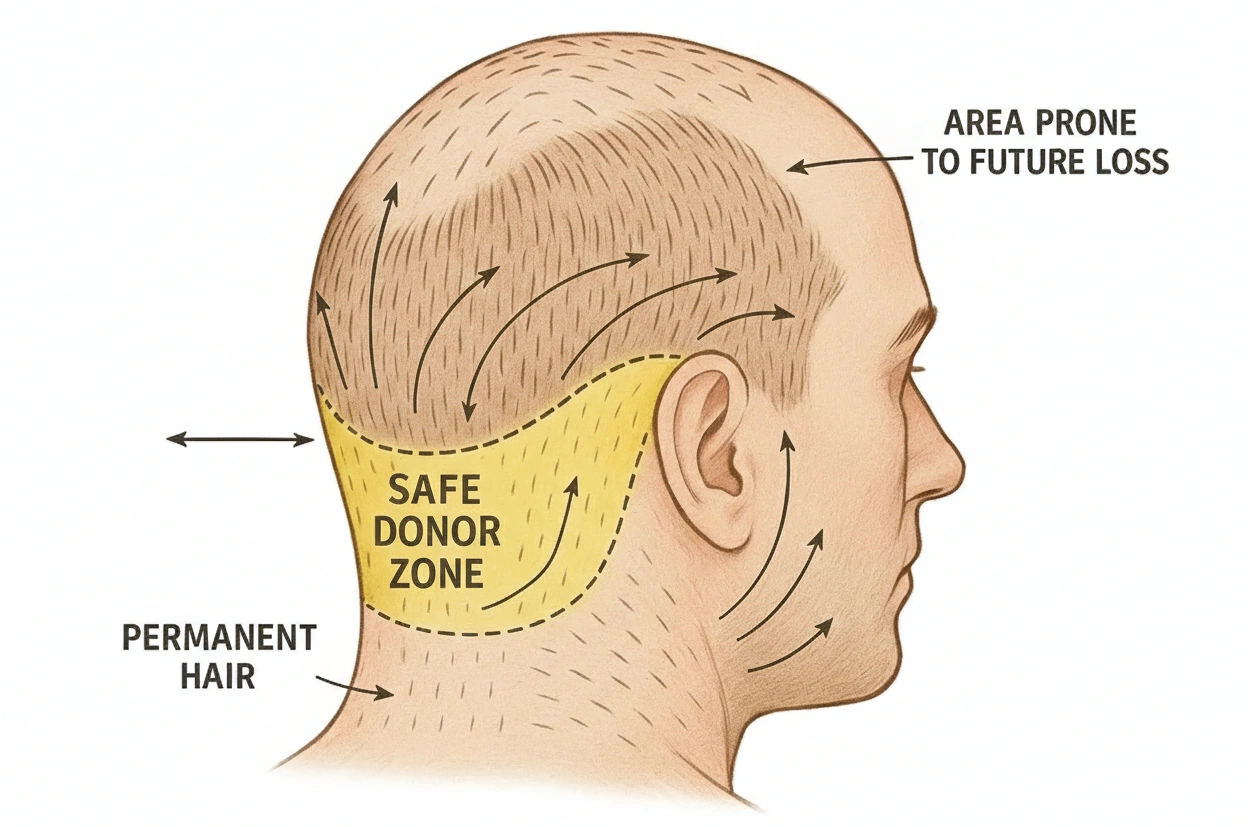
The journey begins at the back of your head. This area is genetically resistant to balding, making it the perfect “nursery” for new hair.
Cleaning and Numbing the Donor Area
First, the medical team thoroughly cleans the scalp to prevent infection. Then, they apply a local anesthetic. You might feel a tiny pinch from the needle, but within minutes, the area will be completely numb. According to the International Society of Hair Restoration Surgery, patient comfort is a top priority in modern clinics.
Marking the Donor Sites
The surgeon will then mark the specific zone where they’ll be taking the hair. This ensures they don’t over-harvest, keeping your donor area looking thick and natural even after the hair is moved.
Step 2: Harvesting Hair Follicles
This is where the magic (and the science) happens. There are two main ways to get those follicles out.
Follicular Unit Extraction (FUE) Method
FUE is the most popular choice in Malaysia. The surgeon uses a tiny “punch” tool to pluck individual hair follicles one by one. The best part? There’s no linear scarring, making it ideal if you like to keep your hair short.
Follicular Unit Transplantation (FUT) Method
Also known as the “strip method,” this involves removing a small strip of skin from the donor area. The follicles are then dissected under a microscope. While it leaves a thin scar, it’s often more efficient for patients needing a massive number of grafts in one session. You can learn more about the technical differences from the American Academy of Dermatology.
Step 3: Recipient Area Preparation
Now that we have the “seeds,” we need to prepare the “soil.”
Designing Hairline and Implant Sites
This is the artistic part. Your surgeon will draw your new hairline, taking into account your face shape and age. A good surgeon knows that a “straight line” looks fake; they aim for a slightly irregular, natural-looking hairline that blends seamlessly with your existing hair.
Local Anesthesia Application
Just like with the donor area, the recipient site gets numbed up. Once the “freeze” kicks in, you’re ready for the final stage.
Step 4: Implanting Hair Follicles
This step requires the precision of a jeweler.
Creating Recipient Site Channels
The surgeon creates tiny incisions (channels) in the thinning areas. The angle and depth of these channels are crucial because they determine the direction your new hair will grow. If they aren’t angled correctly, the hair won’t look natural.
Placing Hair Follicles with Precision
The extracted follicles are then carefully placed into these channels. The team ensures the density is consistent so you don’t end up with patchy spots. This stage often takes the longest because of the sheer level of detail involved.
Step 5: Immediate Post-Procedure Care
You’re done! But the next 48 hours are vital for the survival of those new grafts.
Cleaning and Dressing the Scalp
The staff will gently clean your scalp and apply a light dressing or ointment. Some clinics provide a specialized headband to help reduce forehead swelling, a common and temporary side effect mentioned by WebMD.
Instructions for First 24–48 Hours
You’ll receive a “survival kit” with saline sprays and specific washing instructions. The golden rule? Don’t touch or scratch the grafts. They need time to firmly anchor themselves into their new home. Most patients are back to light work within 2 to 3 days, though you’ll want to avoid heavy gym sessions for a couple of weeks, as recommended by the Mayo Clinic.
Conclusion
Getting a hair transplant in Malaysia is a straightforward, safe, and life-changing decision for many. By understanding the step-by-step process—from the initial numbing to the final placement—you can approach your procedure with confidence.