
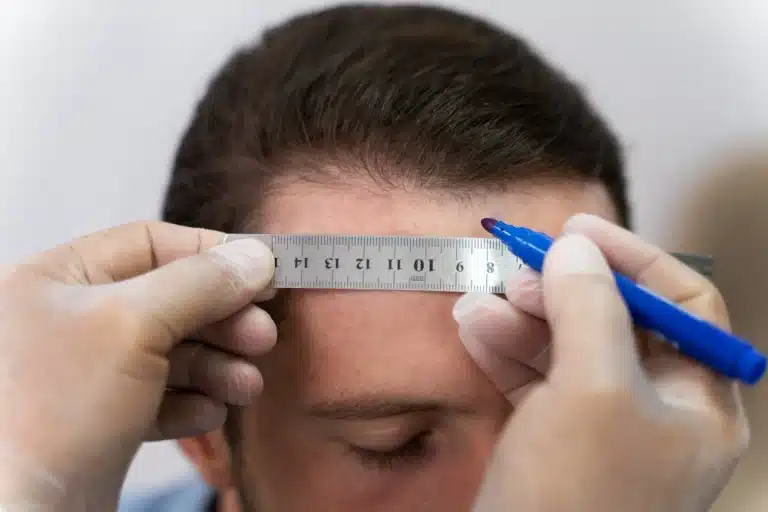
Frontal hair loss refers to the progressive thinning, recession, or shedding of hair along the front of the scalp and the temples. This condition directly changes the framing of the face, often resulting in a higher forehead or an uneven, receding hairline. It impacts both men and women across Malaysia, carrying significant social and psychological weight. Addressing it early helps preserve hair density before follicular units experience permanent dormancy.
Frontal Hair Loss Versus Receding Hairlines
While a receding hairline is a typical pattern of standard male pattern baldness, frontal hair loss can also encompass diffuse thinning or localized conditions like frontal fibrosing alopecia. A standard receding hairline usually follows symmetrical temple recession. In contrast, other forms of frontal thinning can present as a band-like recession or isolated loss behind an intact-looking marginal fringe, requiring distinct diagnostic approaches by a qualified hair restoration specialist.

Common Causes of Frontal Hair Loss in Malaysia
Androgenetic Alopecia and Genetic Factors
Androgenetic alopecia remains the leading driver of frontal hairline recession globally and locally. Inherited genetic sensitivity determines how individual hair follicles respond to circulating metabolites. If your family history includes early hair thinning, your follicles are genetically predisposed to a shortened growth cycle, leading to progressive miniaturization along the frontal zone.
Hormonal Influences and DHT Sensitivity
Dihydrotestosterone (DHT), a potent byproduct of testosterone, binds to androgen receptors in susceptible hair follicles. This hormonal action triggers follicular miniaturization, causing hairs to become finer, shorter, and eventually unable to break through the scalp surface. Both men and women experience this sensitivity, though female patterns often manifest as diffuse widening or frontal thinning rather than complete bald patches.
Traction Alopecia from Local Cultural and Lifestyle Hairstyles
Traction alopecia is frequently observed in Malaysia due to cultural grooming practices and professional styling habits. Pulling the hair back tightly into high ponytails, buns, braids, or religious head coverings can place chronic mechanical tension on the frontal hair roots. Over time, this constant pulling damages the follicles, leading to inflammation and permanent hair loss along the hairline.
Nutritional Deficiencies and Stress Triggers
Modern lifestyles, demanding work hours, and unbalanced diets contribute heavily to acute and chronic hair shedding. Deficiencies in essential micronutrients—such as iron, zinc, vitamin D, and essential proteins—starve the hair matrix of required building blocks. Coupled with high physical or emotional stress, these triggers push resting follicles prematurely into the telogen shedding phase.
Early Signs and Symptoms to Watch For
Visual Changes Along the Forehead and Temples
The earliest indicators of frontal hair loss include a gradual widening of the parting space at the front or subtle recession at the temples. You may notice that styling your hair requires more effort to cover exposed areas of the forehead. Monitoring these shifts monthly helps catch active shedding before extensive scalp visibility occurs.
Hair Texture Alterations and Miniaturization
Before hair falls out completely, it undergoes structural miniaturization. Hairs in the frontal zone may become noticeably finer, wiry, lighter in color, and shorter in length compared to the dense hair at the back of the head. This textural shift indicates that follicles are struggling under hormonal or inflammatory stress.
Professional Diagnosis in Malaysia
Scalp Analysis and Trichoscopy
Accurate management begins with a clinical evaluation using specialized diagnostic equipment like trichoscopy. Trichoscopy allows practitioners to magnify the scalp manifold, revealing microscopic patterns of follicular density, shaft diameter variability, perifollicular scaling, and the presence of empty follicular openings. This non-invasive imaging separates standard thinning from specialized scarring conditions.
Identifying Underlying Medical and Hormonal Conditions
A thorough medical history and targeted blood panels are essential components of an accurate workup. Practitioners check thyroid panels, iron storage (ferritin), and hormonal markers to rule out systemic contributors. Identifying systemic imbalances ensures that any prescribed topical or medical regimen targets the root internal cause rather than just treating surface symptoms.
Clinical Experience: Specialists observe that early intervention yields the highest preservation rates. Patients who combine diagnostic blood tests with localized regenerative protocols protect their remaining native hair density far more effectively than those who rely on over-the-counter surface oils alone.
Medical and Non-Surgical Treatment Options Available in Malaysia
Topical and Oral Medications
First-line medical interventions often include FDA-approved treatments like minoxidil and specific oral DHT blockers. Topical solutions stimulate microcirculation around the hair root, prolonging the active growth phase. For appropriate candidates, oral therapies help regulate internal hormonal drivers to halt further recession.
Platelet-Rich Plasma and Regenerative Scalp Therapies
Platelet-Rich Plasma (PRP) therapy utilizes concentrated growth factors derived from your own blood. When injected into the thinning frontal scalp, PRP stimulates dormant follicles, enhances local blood supply, and encourages cellular repair. It serves as an effective standalone therapy for early thinning or as a supportive adjunct after surgical procedures.
Low-Level Laser Therapy and Clinic-Based Procedures
Low-Level Laser Therapy (LLLT) uses cold laser diodes to deliver photon energy to the scalp tissue. This process, known as photobiomodulation, energizes cellular metabolism within the hair follicle and reduces localized micro-inflammation. Clinical sessions are painless and complement topical home care regimens seamlessly.
Surgical Hair Restoration Alternatives
Follicular Unit Extraction Hair Transplants in Malaysia
When frontal hair loss has progressed to permanent root dormancy, a Follicular Unit Extraction (FUE) hair transplant provides a permanent solution. Individual healthy grafts are harvested from the donor zone at the back of the head and meticulously implanted into the recipient frontal zone, restoring natural density and coverage.
Hairline Design Considerations for Malaysian Facial Features
Designing a natural-looking hairline requires artistic precision, especially when catering to diverse Malaysian facial structures and ethnicity-specific aesthetic goals. Specialists carefully map out micro-irregularities, proper framing angles, and appropriate height proportions to ensure the restored hairline complements your natural facial symmetry without looking artificial.
Cost Estimates and Managing Expectations
Overview of Treatment Pricing In Malaysia
Treatment investments vary based on individual requirements, the extent of the recession, and the chosen modality. Non-surgical plans or laser packages are structured affordably, while surgical FUE procedures in Malaysia are typically calculated per graft, generally ranging from RM4.00 to RM15.00 per graft, with total packages spanning RM8,000 to RM30,000+ depending on complexity. This offers excellent value compared to Western healthcare markets.
| Treatment Type | Estimated Cost Range (RM) | Primary Goal |
| Topical & Medical Care | RM200 – RM600 / month | Slow shedding & stimulate roots |
| PRP Therapy Sessions | RM800 – RM2,500 / session | Revitalize miniaturized follicles |
| Surgical FUE Transplant | RM8,000 – RM30,000+ | Permanent structural restoration |
Timeline for Visible Results and Recovery
Hair restoration requires patience due to the natural biological growth cycle. Following a hair transplant, newly planted hairs typically shed within the first month before entering a resting phase. New, durable growth becomes visible around the 3 to 4-month mark, with final maturation, density, and natural styling capability settling between 9 to 12 months.
Frequently Asked Questions
What is the primary cause of frontal hair loss in men and women?
Frontal hair loss is primarily driven by a genetic sensitivity to dihydrotestosterone (DHT) which causes follicular miniaturization, though traction, stress, and nutritional deficits also play substantial contributing roles.
Can frontal hair loss grow back naturally without medical intervention?
If the hair follicles have undergone complete miniaturization or scarring, natural regrowth is rare. Early-stage shedding caused strictly by temporary stress or nutritional dips can sometimes reverse once the trigger is corrected.
How much does a frontal hair transplant cost in Malaysia?
Most hair restoration procedures in Malaysia range from RM8,000 to RM30,000 total, heavily dependent on the total graft count required to rebuild a dense, natural hairline.
Are non-surgical treatments effective for a receding hairline?
Non-surgical options such as PRP therapy, LLLT, and targeted topicals are very effective at slowing down active recession and thickening existing miniaturized hair if caught in the early stages.
How can I schedule a professional consultation in Malaysia?
To explore customized medical or surgical options tailored to your specific hairline pattern, we invite you to consult with the experts at GLOJAS Specialist Clinic.