

Liposuction has been performed worldwide for decades. It is one of the most common cosmetic procedures for removing stubborn fat. Still, many people ask the same important question: Is liposuction safe?
The short answer is yes—when done correctly, on the right patient, by a qualified doctor. Like any medical procedure, liposuction carries risks. Understanding these risks helps you make a confident and informed decision.
This guide explains liposuction safety, potential complications, risk factors, and how to reduce them, using clear, evidence-based information.
Is Liposuction Safe? What You Need to Know First
Liposuction safe outcomes depend on three key factors: patient selection, surgical technique, and provider experience. Modern liposuction techniques have significantly improved safety, recovery time, and results compared to earlier methods.
When performed by a trained and licensed surgeon in an accredited facility, liposuction is considered a low-risk cosmetic procedure for healthy individuals.
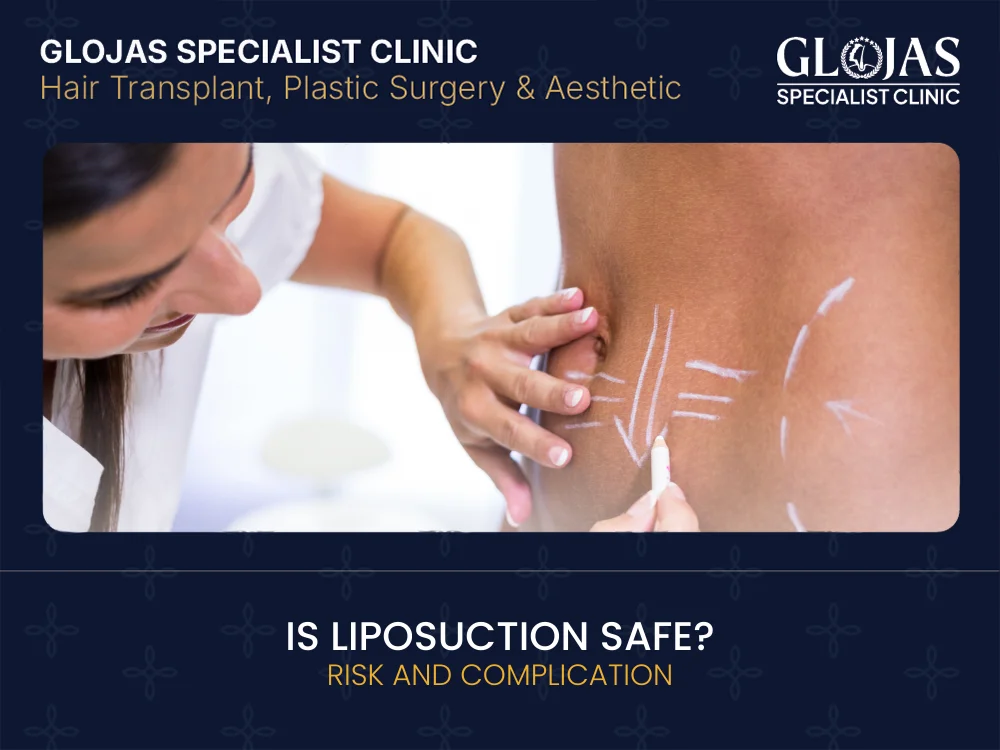
What Is Liposuction? A Brief Overview
Liposuction is a cosmetic surgical procedure that removes localized fat deposits that do not respond to diet or exercise.
How Liposuction Works
- Small incisions are made in the skin
- A cannula loosens fat cells
- Fat is suctioned out
- Body contours are reshaped
Common Types of Liposuction
- Tumescent liposuction
- Power-assisted liposuction (PAL)
- Ultrasound-assisted liposuction (UAL)
- Laser-assisted liposuction
All modern techniques focus on controlled fat removal and patient safety.
Why Liposuction Safety Has Improved Over Time
Liposuction today is much safer than it was decades ago due to:
- Advanced surgical tools
- Better anesthesia protocols
- Improved fluid management
- Stricter patient screening
- Accredited surgical facilities
According to global cosmetic surgery data, serious complications are rare when guidelines are followed.
Who Is a Safe Candidate for Liposuction?
Liposuction safety begins with proper patient selection. While the procedure is widely performed and generally safe, it is not suitable for everyone. The best outcomes—both medically and aesthetically—occur in patients who meet specific health and lifestyle criteria.
Ideal Candidates
You may be considered a safe candidate if you meet most of the following:
Good overall health
No active or uncontrolled medical conditions that could interfere with healing or anesthesia.Stable body weight
Ideally within 20–30% of your target weight, with weight stability for several months. Liposuction is a body-contouring procedure, not a weight-loss solution.No serious chronic illnesses
Conditions such as controlled hypertension or mild asthma may be acceptable, depending on medical clearance.Non-smoker or willing to stop smoking
Smoking increases the risk of poor wound healing, infection, and complications. Most surgeons require smoking cessation before and after surgery.Good skin elasticity
Firm, elastic skin helps the body adapt smoothly to new contours after fat removal.Realistic expectations
Understanding what liposuction can and cannot achieve is key to patient satisfaction.
Who May Not Be Suitable
Liposuction may be unsafe or ineffective for individuals with the following:
Severe obesity
Liposuction is not designed to treat obesity or replace long-term weight management.Poor skin elasticity
Significant skin laxity may result in sagging or uneven contours after fat removal.Uncontrolled diabetes
Increases risks of infection, delayed healing, and poor surgical outcomes.Heart or lung disease
These conditions raise anesthesia and surgical risks.Bleeding disorders or use of certain medications
Can increase the risk of excessive bleeding and complications.Weakened immune system or poor healing capacity
May compromise recovery and results.
Why Medical Evaluation Is Critical
A thorough pre-operative medical assessment is essential before liposuction. This typically includes:
Medical history review
Physical examination
Blood tests and, when needed, cardiac or imaging evaluations
Discussion of goals, risks, and expected outcomes
This evaluation ensures patient safety and helps the surgeon determine whether liposuction is appropriate—or if alternative treatments would be safer and more effective.
Is Liposuction Safe Under Local or General Anesthesia?
Both anesthesia types can be safe when properly administered.
Local Anesthesia
- Common for small areas
- Lower systemic risk
- Faster recovery
General Anesthesia
- Used for larger treatment areas
- Requires anesthesiology monitoring
- Safe in accredited facilities
The choice depends on treatment extent and patient health.
Common Liposuction Risks (Usually Mild and Temporary)
Most side effects are part of normal healing.
Expected Short-Term Effects
- Swelling
- Bruising
- Soreness
- Temporary numbness
- Fluid drainage
These symptoms usually resolve within weeks.
Potential Liposuction Complications (Less Common)
While uncommon, complications can occur.
Possible Complications
- Infection
- Seroma (fluid accumulation)
- Irregular contours
- Prolonged swelling
- Delayed healing
Proper technique and aftercare greatly reduce these risks.
Rare but Serious Liposuction Risks
Serious complications are rare but important to understand.
Rare Risks Include
- Blood clots
- Fat embolism
- Excessive fluid loss
- Organ injury
- Adverse anesthesia reaction
These risks increase when:
- Large fat volumes are removed
- Procedures are done in unlicensed facilities
- Surgery is performed by unqualified providers
This is why choosing a certified surgeon is critical.
How Much Fat Can Be Safely Removed?
Safety guidelines limit fat removal to prevent complications.
- Small-volume liposuction: very low risk
- Large-volume liposuction: higher risk, requires monitoring
- Many surgeons follow strict volume limits
Removing more fat does not mean better results. Safety always comes first.
Is Liposuction Safe for Different Body Areas?
Commonly Treated Areas
- Abdomen
- Thighs
- Arms
- Flanks
- Chin and neck
Each area has different safety considerations, but liposuction is generally safe when performed properly.
Post-Operative Care and Its Role in Safety
Post-operative care is a critical part of liposuction safety. Even when surgery is performed flawlessly, poor aftercare can increase the risk of complications and compromise final results. Following your surgeon’s instructions closely supports proper healing, reduces swelling, and helps achieve smooth, long-lasting outcomes.
Why Aftercare Matters
After liposuction, your body needs time to heal and adapt to the new contours. Proper aftercare helps to:
Minimize swelling and bruising
Reduce the risk of infection and fluid buildup
Support skin retraction and even contours
Speed up recovery and improve comfort
Neglecting post-operative care can delay healing and lead to avoidable complications.
Important Aftercare Steps
Wear compression garments
Compression garments help control swelling, prevent fluid accumulation, and support the skin as it adjusts. They are usually worn continuously for the first few weeks, then part-time as advised by your surgeon.
Attend all follow-up visits
Scheduled follow-ups allow your surgeon to monitor healing, remove stitches or drains if needed, and detect early signs of complications before they become serious.
Avoid strenuous activity initially
Heavy exercise, lifting, and intense physical activity should be avoided in the early recovery phase. Gentle walking is usually encouraged to promote circulation and reduce clot risk.
Maintain proper hydration and nutrition
Adequate fluid intake supports circulation and tissue repair. A balanced diet rich in protein, vitamins, and minerals helps the body heal more efficiently.
Watch for warning signs
Contact your surgeon immediately if you notice:
Increasing pain or swelling
Redness, warmth, or discharge from incision sites
Fever or chills
Sudden shortness of breath or chest pain
Early intervention can prevent serious complications.
How to Reduce Liposuction Risks
You can significantly improve safety by:
- Choosing a board-certified surgeon
- Selecting an accredited clinic or hospital
- Disclosing full medical history
- Following pre- and post-op instructions
- Avoiding smoking and alcohol
Patient cooperation plays a major role in outcomes.
Liposuction Safety vs. Non-Surgical Fat Reduction
When considering body contouring, many patients compare liposuction with non-surgical fat reduction treatments. From a safety perspective, both approaches can be safe—but only when used on the right candidates and performed or supervised by qualified professionals.
Liposuction: Safety Profile
Liposuction is a surgical procedure, which means it involves anesthesia, small incisions, and a recovery period. When performed by an experienced, board-certified surgeon in a properly equipped medical facility, liposuction has a strong safety record.
Key safety considerations:
Immediate fat removal with visible contour change
Higher upfront risk compared to non-invasive treatments due to surgery and anesthesia
Risks are minimized through proper patient selection, sterile technique, and post-operative care
Best suited for patients seeking significant and precise fat reduction
Because results are immediate, patients often achieve dramatic improvements with a single procedure.
Non-Surgical Fat Reduction: Safety Profile
Non-invasive treatments (such as fat-freezing or energy-based technologies) work by gradually destroying fat cells, which the body then eliminates naturally over time.
Key safety considerations:
No incisions or anesthesia
Lower short-term medical risk
Minimal to no downtime
Gradual fat reduction over weeks to months
Multiple sessions may be required for noticeable results
These treatments are generally best for patients with small, localized fat deposits who prefer a conservative approach.
Safety vs. Results: Key Differences
| Aspect | Liposuction | Non-Surgical Fat Reduction |
|---|---|---|
| Fat removal | Immediate | Gradual |
| Downtime | Moderate | Minimal |
| Medical risk | Higher upfront | Lower upfront |
| Result intensity | More dramatic | Subtle to moderate |
| Number of treatments | Usually one | Often multiple |
Which Is Safer?
Safety depends less on the procedure itself and more on:
Proper patient selection
Provider expertise
Treatment setting
Adherence to pre- and post-treatment instructions
Liposuction is safe for healthy, well-selected patients, while non-surgical fat reduction is safe for those seeking modest improvements without surgery.
Long-Term Safety and Results
Long-Term Outlook
- Removed fat cells do not return
- Weight gain can affect remaining fat cells
- Healthy lifestyle maintains results
Liposuction does not cause future health problems when done correctly.
Final Verdict: Is Liposuction Safe?
Yes, liposuction is safe for most healthy individuals when:
- Properly indicated
- Performed by an experienced professional
- Done in a licensed medical facility
- Supported by good aftercare
Understanding risks and choosing the right provider are the keys to safe, satisfying results.
Frequently Asked Questions (FAQs)
1. Is liposuction safe for everyone?
No. Patient health and medical history matter.
2. How risky is liposuction?
Risks are low when performed by qualified surgeons.
3. Is liposuction safer now than before?
Yes. Modern techniques have improved safety significantly.
4. Can liposuction cause serious complications?
Serious complications are rare but possible.
5. Is liposuction safe under general anesthesia?
Yes, when done in accredited facilities.
6. How long is recovery after liposuction?
Most patients recover within a few weeks.
7. Does liposuction damage organs?
Very rare when performed correctly.
8. Can fat come back after liposuction?
Removed fat does not return, but weight gain affects remaining fat.
9. Is liposuction safe for older patients?
Age matters less than overall health.
10. How can I make liposuction safer?
Choose a qualified surgeon and follow instructions carefully.