
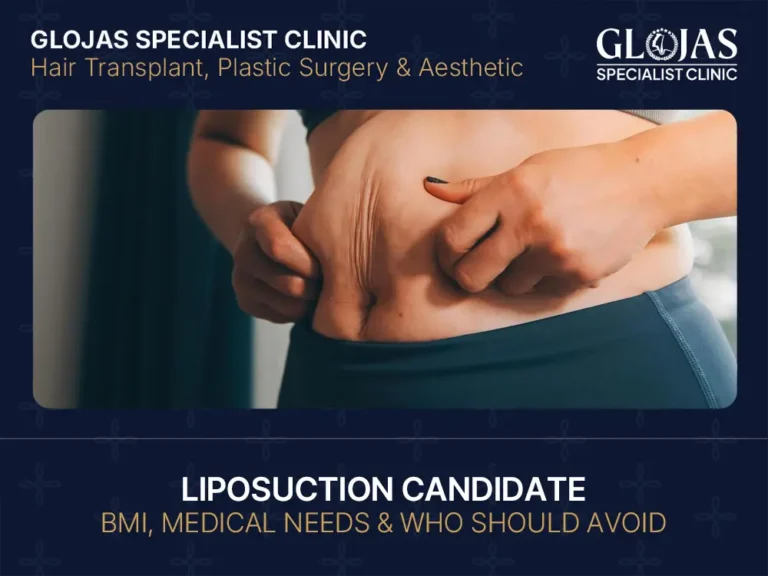

Liposuction targets stubborn, localized fat that doesn’t respond well to diet or exercise, helping refine body contours and improve proportions. It is not designed for weight loss or obesity treatment, and it cannot replace healthy lifestyle habits. The procedure works best for individuals already near their ideal weight who want to enhance specific areas.
At GLOJAS Specialist Clinic, every patient undergoes a thorough, medically guided assessment to confirm whether liposuction is appropriate and safe. Our team of experienced, credentialed specialists evaluates BMI, overall health, and individual risk factors, prioritizing evidence-based care and patient safety. Only candidates who meet clinical standards proceed with treatment.
Ideal Candidate Profile
BMI Guidelines
While each case is individualized, many board-certified plastic surgeons follow these general BMI criteria:
BMI under 25: Ideal candidates with the lowest surgical risk and most predictable contouring results.
BMI 25–29.9: Still suitable for liposuction if health is stable and weight is consistent.
BMI 30–34.9: Considered on a case-by-case basis due to higher anesthesia and postoperative risks.
BMI 35 and above: Usually not recommended because complication risks increase significantly, and non-surgical or medical weight-loss options may be safer.
Health and Physical Requirements
A strong candidate typically has:
Stable weight for 3–6 months
Overall good health without uncontrolled medical conditions
Skin with enough elasticity to retract smoothly after fat removal
Localized fat deposits rather than widespread excess fat
No nicotine use (or ability to stop for 4 weeks before and after surgery)
Lifestyle and Behavioral Readiness
Candidates who benefit most from liposuction:
Maintain balanced eating habits
Engage in regular physical activity
Can follow pre- and postoperative instructions
Understand that liposuction sculpts the body rather than lowers body weight
Medical Requirements Before Liposuction
1. Comprehensive Medical Evaluation
Before surgery, your surgeon will review:
Full medical and surgical history
BMI and body-fat distribution
Vital signs and cardiovascular health
Current medications and allergies
2. Laboratory Testing
Common pre-op tests include:
CBC: blood counts
CMP: kidney and liver function
Coagulation tests: bleeding/clotting profile
Pregnancy test: when appropriate
3. Medication and Supplement Adjustments
Certain medications and supplements may increase bleeding risk. Patients are often advised to pause:
Blood thinners (e.g., warfarin, apixaban)
NSAIDs
High-dose vitamin E
Herbal supplements such as ginkgo, ginseng, or St. John’s wort
4. Smoking and Nicotine Restrictions
Nicotine affects circulation and healing. Complete cessation for at least 4 weeks before and after surgery is recommended to reduce complications.
Who Should Avoid Liposuction
High BMI or Obesity
Liposuction is not intended for individuals with:
BMI 35 or higher: strongly discouraged
BMI 40 or higher: typically contraindicated
Higher BMI increases risks such as poor healing, anesthesia complications, and disappointing cosmetic outcomes.
Certain Medical Conditions
Liposuction may not be safe if you have:
Uncontrolled diabetes
Significant heart or lung disease
Bleeding or clotting disorders
Compromised immune function
Severe vein disease or circulation problems
Active Infections or Skin Issues
Any infection or inflammation in the treatment area must be resolved before surgery.
Unrealistic Cosmetic Expectations
Liposuction is not suitable for patients expecting it to:
Replace weight-loss programs
Remove very large fat volumes safely
Tighten loose skin without additional procedures
Pregnancy or Postpartum Period
Liposuction is not performed during pregnancy. New mothers are usually advised to wait 6–12 months to allow hormones and weight to stabilize.
Risks and Safety Considerations
Although liposuction is generally safe, especially in healthy candidates, possible complications include:
Fluid buildup (seroma)
Uneven fat removal or contour irregularities
Infection
Anesthesia-related issues
Blood clots
Asymmetry
Selecting a qualified, board-certified plastic surgeon and following proper pre- and postoperative guidelines significantly reduces these risks.
Expected Results and Limitations
What Liposuction Can Improve
Overall body contour and shape
Waistline definition
Balance between abdomen, flanks, thighs, arms, or chin
Fit and comfort of clothing
What Liposuction Cannot Do
Treat obesity
Replace medical weight-loss or bariatric surgery
Remove stretch marks
Correct significant skin laxity (skin tightening may be required)
Alternatives for Non-Candidates
For those who are not suitable for liposuction, effective alternatives include:
Medically supervised weight-management programs
Nutrition and lifestyle coaching
Prescription weight-loss medications (e.g., GLP-1 therapy like ozempic malaysia or mounjaro malaysia)
Non-invasive fat reduction (CoolSculpting®, radiofrequency)
Bariatric surgery for patients with severe obesity
FAQs
What is the safest BMI for liposuction?
A BMI below 30 generally offers the safest conditions and most predictable outcomes.
Can I get liposuction if I’m overweight but not obese?
Yes. Many patients with a BMI 25–29.9 are suitable if their health is stable and they have localized pockets of fat.
How much fat can safely be removed?
Most surgeons limit removal to up to 5 liters per session to minimize risk.
Does liposuction help with weight loss?
No. It reshapes the body, and any weight change is usually minimal.
Can liposuction remove visceral fat?
No. Liposuction targets subcutaneous fat only. Visceral fat requires lifestyle changes or medical weight-management.
Is liposuction safe for diabetics?
Possibly—only if diabetes is well controlled. Poor control increases infection and healing risks.
How long after childbirth can I have liposuction?
Most surgeons recommend waiting 6–12 months until weight and hormones stabilize.