
Selecting the perfect implant size is often the most stressful part of the journey. In Malaysia’s aesthetic scene, the trend has shifted from “as big as possible” to “proportional and natural.” Finding that “sweet spot” requires balancing your dream look with your body’s unique anatomy.
What Implant Size Really Means
In the surgical world, size isn’t measured in letters (A, B, C), but in volume.
CC vs Cup Size Explained
Breast implants are measured in Cubic Centimeters (CCs). While patients often say, “I want to be a C-cup,” cup sizes vary wildly between bra brands. Generally, 150cc to 200cc equates to roughly one cup size increase, but this depends entirely on your starting point and chest wall width.
Why Implant Size Selection Matters
Choosing the right size isn’t just about how you look in a bikini; it’s about your long-term comfort.
Proportion, Comfort, and Longevity
If an implant is too heavy for your tissue, it can lead to premature sagging or back pain. A well-proportioned size ensures your results look “part of you” and remain stable for a decade or more.
Body Factors That Determine Implant Size
Your surgeon will use your physical “envelope” to determine what volume your body can safely hold.
Frame, Height, and Chest Width
A 300cc implant looks very different on a petite 150cm woman than on someone 175cm tall. Your breast base width is the most critical measurement; the implant must fit within this “footprint” to avoid looking unnatural.
Existing Breast Tissue and Skin Elasticity
If you have very little natural tissue, a massive implant may look obvious or “bolted on.” Good skin elasticity is required to support heavier volumes; otherwise, the skin may stretch and thin over time. You can learn more about skin elasticity and aging to understand how it impacts surgical outcomes.
BMI and Weight Stability
Your current BMI affects how much natural fat covers the implant. Surgeons recommend being at a stable weight, as significant weight loss after surgery can change the way the implants look.
Personal Aesthetic Goals
Natural vs Full Appearance
Natural: Typically involves a moderate profile implant that mimics a teardrop slope.
Full/Glamour: Often utilizes high-profile implants to create more upper-pole fullness.
Lifestyle Considerations
Are you an avid marathon runner or a yoga enthusiast? Larger implants can feel heavy during high-impact sports. Many active women in Malaysia opt for moderate sizes to maintain their athletic lifestyle.
Implant Type and Profile
Profile and Projection
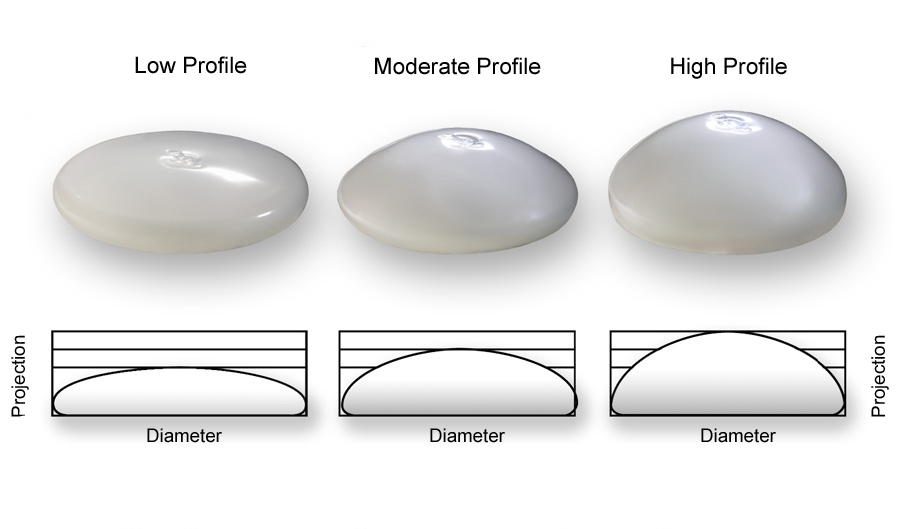
The “profile” refers to how far the implant sticks out from your chest.
Low Profile: Wide and flat.
High Profile: Narrower base but sticks out further (high projection).
Round vs Anatomical Implants
Round implants provide more fullness at the top, while anatomical (teardrop) implants mimic the natural breast shape. Most FDA-approved silicone implants come in both varieties to suit different body types.
Implant Placement Impact
Over vs Under the Muscle
Placing the implant under the muscle (submuscular) provides more coverage. This is common in Malaysia, as it can “hide” the edges of the implant, making the size choice look more natural. You can research the anatomical layers of the breast to better visualize where these implants sit.
How Surgeons Choose the Right Size
Measurements, Sizers, and 3D Imaging
Modern clinics in Kuala Lumpur often use 3D simulation software to show you a virtual “preview.” You may also try on “sizers”—silicone inserts placed inside a sports bra—to feel the weight and see the volume in a mirror.
Common Sizing Mistakes
Choosing Too Large or Too Small
“Goal envy” is real. Patients often pick a size based on a friend’s results. However, because every chest wall is different, 350cc might look huge on one person and moderate on another. Trust your surgeon’s measurements over a friend’s CC count.
CC to Cup Size Estimation Table
Note: These are estimates. Your actual result depends on your starting breast tissue and chest width.
| Current Cup | Goal Cup | Estimated Implant Volume (CC) | Look/Effect |
| A Cup | B Cup | 250cc – 300cc | Subtle, natural enhancement |
| A Cup | C Cup | 300cc – 350cc | Noticeable, classic “full” look |
| A Cup | D Cup | 370cc – 430cc | Significant volume increase |
| B Cup | C Cup | 250cc – 350cc | Balanced and proportional |
| B Cup | D Cup | 350cc – 400cc | Voluminous/curvier profile |
| C Cup | D Cup | 300cc – 350cc | Enhanced cleavage/fullness |
| C Cup | DD/E Cup | 450cc – 550cc | Dramatic transformation |
Safety and Medical Limits
Risks of Oversized Implants
Going too big can lead to tissue thinning, palpability (feeling the edges), or symmastia (where the implants meet in the middle). Staying within medical safety limits is vital for a complication-free recovery. The American Society of Plastic Surgeons offers extensive guides on why staying within your anatomical limits is crucial for safety.
FAQs on Implant Size
CC to Cup Size
As a rule of thumb, 175cc to 200cc is roughly one cup. If you are an A-cup and want to be a full C, you are likely looking at the 300cc to 350cc range.
Size Changes After Healing
Immediately after surgery, you will look larger due to swelling. As the implants “drop and fluff” over 3–6 months, the size will settle into a more natural, slightly smaller-looking volume. For those concerned about long-term health, checking the National Specialist Register ensures your surgeon is fully qualified to guide your sizing.