
Breast fillers are non-surgical injections that provide subtle, temporary volume, whereas breast augmentation is a surgical procedure using implants or fat transfer for long-lasting breast enhancement. Fillers are best for mild improvements, while augmentation offers predictable, durable results. Understanding safety, longevity, and suitability can help you make an informed decision.
The Right Comparison: Breast Fillers vs Breast Augmentation
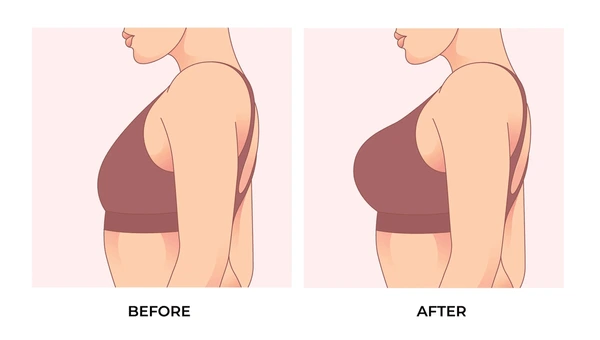
Over the years, breast enhancement has grown in popularity, but the two most requested treatments remain breast fillers and breast augmentation. While both aim to improve size and shape, they differ in technique, safety, results, and recovery. Choosing the right option requires accurate, evidence-based information—not just marketing claims.
This guide breaks down both options in clear, patient-friendly language and highlights critical considerations often missing in online resources.
1. Breast Fillers (Non-Surgical Enhancement)
Breast fillers involve injecting hyaluronic acid (HA) or autologous fat into the breast to provide mild volume and contouring. They appeal to patients seeking non-surgical enhancement, but their use in breast tissue requires caution due to safety and diagnostic considerations.
How Breast Fillers Work
HA gel or processed fat is gently injected into the breast tissue
Adds subtle volume and contour enhancement
Procedure takes 30–60 minutes
Local anaesthesia or numbing cream is usually applied
Benefits of Breast Fillers
Non-surgical, no incisions
No general anaesthesia required
No implants involved
Minimal downtime and no visible scars
Limitations & Safety Considerations
Breast fillers have important clinical limitations often underemphasized online:
Volume increase is limited (usually <1 cup size)
Temporary effects: HA lasts 6–12 months; fat may last 1–2 years with variable retention
Repeat treatments increase long-term cost
Can interfere with mammograms and ultrasound imaging
Risk of lumps, nodules, calcifications, or filler migration
May complicate future breast surgery or cancer screening
For these reasons, many board-certified surgeons, including those at GLOJAS Specialist Clinic, recommend fillers only for select patients who understand these limitations.
2. Breast Augmentation (Surgical Enhancement)
Breast augmentation, also called augmentation mammoplasty, is a surgical approach using implants or fat transfer to increase breast size and improve shape. It remains the gold standard for predictable, long-lasting enhancement.
A. Implant-Based Augmentation
Breast implants are FDA-approved medical devices with several types available:
Silicone Gel Implants: Soft, natural feel with minimal rippling
Saline Implants: Filled after placement; rupture is easily detectable
Highly Cohesive “Gummy Bear” Implants: Form-stable, maintain shape, reduced leakage risk
Incision Options:
Inframammary (under the breast, most predictable)
Periareolar (around the nipple)
Transaxillary (through the armpit, endoscopic)
Implant Placement:
Submuscular (under the chest muscle)
Subglandular (above the muscle)
Dual-plane (combines both, common for natural contour)
B. Fat Transfer Augmentation
This method uses your own body fat from areas like the abdomen, hips, or thighs.
Advantages:
Feels soft and natural
Adds the bonus of body contouring
No synthetic implants needed
Limitations:
Best for small to moderate size increases
Requires sufficient donor fat
Approximately 40–60% of transferred fat survives permanently
3. Comparing Fillers and Augmentation
| Feature | Breast Fillers | Breast Augmentation |
|---|---|---|
| Volume & Shape | Mild, subtle, temporary | Moderate to large, precise, long-lasting |
| Durability | 6–18 months (HA), up to 2 years (fat) | 10–20+ years (implants), permanent with fat transfer |
| Cost Over Time | Higher due to repeated sessions | More cost-effective long-term |
| Safety | Higher risk of lumps, imaging interference | Predictable surgical risk profile |
| Recovery | Minimal downtime | 1–2 weeks reduced activity |
| Suitability | Subtle change | Meaningful, reliable enhancement |
4. Breast Lift vs Breast Augmentation
Many patients confuse breast lifts and augmentation. Here’s the difference:
Breast Lift (Mastopexy): Corrects sagging or drooping and repositions nipples; does not add volume.
Breast Augmentation: Increases size and projection, restoring fullness.
When a lift is needed:
Nipples point downward
Breast tissue sits below the crease
Significant postpartum or weight-related sagging
Often, combining a lift + augmentation provides the most natural and aesthetically pleasing results, a technique regularly performed by GLOJAS Specialist Clinic surgeons.
5. Choosing a Facility: Medical Centre vs Clinic
The environment for breast procedures matters just as much as the procedure itself.
Medical Centres (e.g., GLOJAS Specialist Clinic)
Full surgical suites and hospital-grade sterilisation
On-site anaesthesiologists and emergency support
Multidisciplinary teams for complex cases
Aesthetic Clinics
Suitable for non-surgical treatments
Smaller teams and limited resources
Not ideal for procedures requiring general anaesthesia or advanced monitoring
Why a medical centre is preferred for surgery:
Highest safety protocols
Experienced surgical teams
Better management of complex anatomy or revisions
For implant or fat-transfer procedures, a licensed medical centre is the safest choice.
6. Which Option is Right for You?
Choose Breast Fillers if:
You want mild, temporary enhancement
You prefer a non-surgical approach
You accept repeat treatments and limitations
Choose Breast Augmentation if:
You want predictable, long-lasting results
You seek significant size or shape improvement
You prefer medically regulated treatment
You want the most cost-effective approach over time
At GLOJAS Specialist Clinic, augmentation is generally recommended for patients seeking stable, meaningful breast enhancement.
FAQ: Breast Fillers vs Breast Augmentation
1. Are fillers safe?
Yes, when performed by trained clinicians, but risks include migration, lumps, and imaging interference.
2. Can fillers affect mammograms?
Yes. Fillers can obscure imaging, potentially complicating cancer screening.
3. How long do fillers last?
HA lasts 6–12 months; fat injections last 1–2 years.
4. Are implants permanent?
Implants can last 10–20+ years but may need replacement if complications arise.
5. Does fat transfer last longer than fillers?
Yes. Stabilized fat is permanent, though not all injected fat survives.
6. Which has shorter downtime?
Breast fillers have minimal downtime; augmentation requires 1–2 weeks.
7. Which looks most natural?
Fat transfer provides the softest, most natural result, followed by silicone implants.