
Dealing with thinning edges? In Malaysia’s humid climate, tight hairstyles and heavy extensions are leading to a rise in traction alopecia. This guide explores how to identify, treat, and prevent this specific type of hair loss, ensuring your mane stays healthy and full in 2026.
What Is Traction Alopecia?
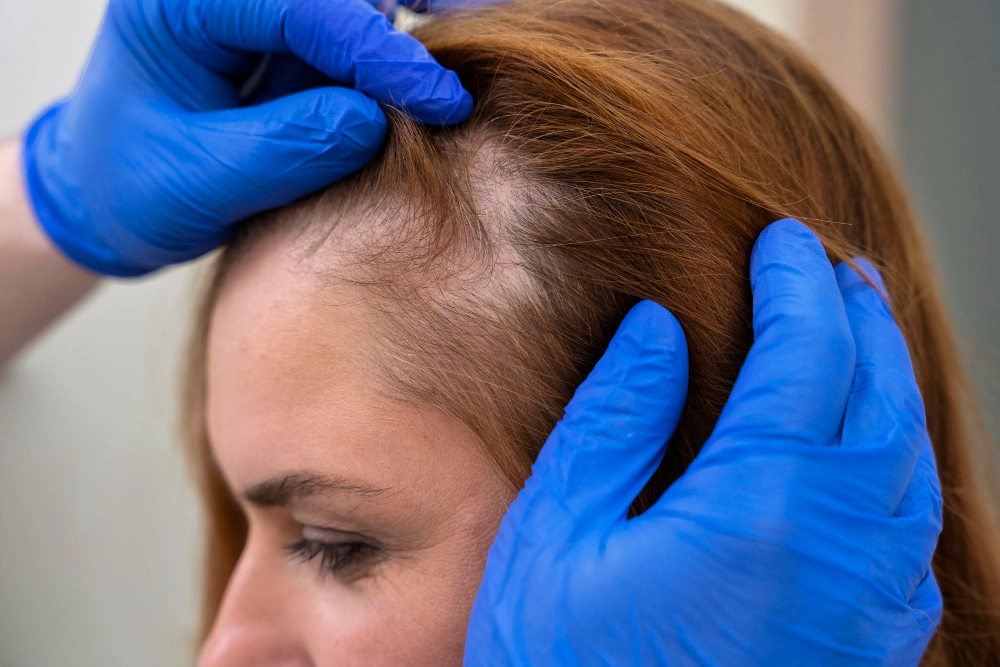
Definition and Mechanism
Traction alopecia is a form of hair loss caused by repeated, prolonged tension on the hair follicles. Unlike genetic balding, this is mechanical. Constant pulling damages the follicle, eventually leading to inflammation and, if left unaddressed, permanent scarring known as cicatricial alopecia.
Early Stage vs Advanced Stage
Initially, you may notice small bumps or redness around the hairline. This is the reversible stage. However, the British Association of Dermatologists notes that advanced stages result in smooth, shiny bald patches where follicles have completely miniaturized and ceased hair production.
Causes of Traction Alopecia
Tight Hairstyles That Cause Hair Loss
The primary culprit is any style that pulls hair tightly from the root. In Malaysia, this often includes tight buns for professional settings or traditional braids. High-tension styles physically lift the follicle, disrupting the natural hair growth cycle and causing premature shedding.
Prolonged Tension and Follicle Damage
It’s not just one tight ponytail; it’s the cumulative effect. Keeping hair under tension for weeks—such as with heavy weaves—causes “follicular dropouts.” Over time, the constant mechanical stress leads to folliculitis, which destroys the regenerative cells within the hair bulb.
Chemical Treatments Combined with Traction
Malaysian salons frequently offer chemical straightening or perms. When these chemicals weaken the hair shaft, and you then apply tight styling, the risk of “breakage-plus-traction” skyrockets. This double-hit makes the hair significantly more susceptible to permanent root damage and thinning.
Traction Alopecia Symptoms
Early Signs: Redness and Itching
Keep an eye out for “tenting,” where the skin is pulled up by the hair. Early symptoms include a localized folliculitis—redness, itching, or a burning sensation. These are warning signals that your scalp is under too much stress and needs immediate relief.
Intermediate Stage: Thinning and Bumps
As it progresses, you’ll see “fringe signs”—thinning hair along the perimeter of the hairline while the very edge remains. Small white or flesh-colored bumps (papules) often form around the follicles. This indicates the body is reacting to the chronic trauma of the pull.
Advanced Stage: Smooth Bald Patches
At this point, the inflammation has caused scarring. The scalp looks smooth and shiny because the follicular openings have closed. At this stage, hair cannot regrow naturally because the biological “machinery” for hair production has been replaced by fibrous scar tissue.
Hairline Recession Patterns
Traction alopecia typically follows a distinct pattern: recession at the temples, the forehead, or the nape of the neck. Unlike androgenetic alopecia, which thins the crown, traction loss is strictly limited to the areas where the mechanical tension was most intense.
Common Hairstyles That Cause Traction Alopecia
Tight Ponytails and Buns
Common among Malaysian athletes and professionals, the “slicked-back” look is a major risk. If your ponytail gives you a “mini-facelift,” it’s too tight. This constant pull at the temples is the fastest way to develop a receding hairline.
Braids and Cornrows
While culturally significant and stylish, tight braids—especially with added synthetic hair—apply immense weight to the roots. The Journal of the American Academy of Dermatology suggests that the heavy weight of extensions significantly increases the rate of hair follicle detachment.
Dreadlocks and Extensions
Dreadlocks are heavy, and as they grow, the weight increases. Similarly, “micro-link” extensions attach weight to tiny sections of hair. In Malaysia’s 2026 hair clinics, we see many cases where the sheer weight of these styles has caused widespread thinning.
Weaves and Hairpieces
Weaves sewn into tight cornrows are particularly damaging. They prevent the scalp from “breathing” and hide early warning signs like redness or bumps. Often, the damage is only discovered months later when the weave is removed, revealing significant patches of loss.
Traction Alopecia Diagnosis in Malaysia
Scalp Examination and Trichoscopy
A specialist dermatologist in Malaysia will use a trichoscope to view your scalp at 20x to 70x magnification. They look for “peripilous casts”—small tubes of keratin around the hair shaft—which are a diagnostic “smoking gun” for active traction.
Biopsy for Advanced Cases
If there’s doubt whether the loss is traction or an autoimmune issue like alopecia areata, a 4mm punch biopsy may be performed. This involves taking a tiny tissue sample to check for scarring under a microscope, helping determine if regrowth is still possible.
Dermatologists in KL, Penang, JB
Major hubs like Kuala Lumpur, Penang, and Johor Bahru host top-tier hair restoration clinics. These centers use standardized Ludwig or Hamilton-Norwood scales to categorize your loss and provide evidence-based treatment plans tailored to the local climate and hair types.
Traction Alopecia Treatments in Malaysia
Stopping the Cause Immediately
The most effective “treatment” is free: stop the tension. Transitioning to “low-manipulation” styles allows the follicles to recover. Malaysian experts recommend leaving hair down or in very loose braids for at least 3 to 6 months to see if natural recovery begins.
Topical Minoxidil
In Malaysia, 2% or 5% Minoxidil (often branded as Regaine) is a common over-the-counter solution. It increases blood flow to the follicles, providing the nutrients needed for repair. It works best in the early-to-intermediate stages before scarring has occurred.
Corticosteroid Injections
If your scalp is inflamed and bumpy, a dermatologist may inject triamcinolone directly into the affected area. This reduces the immune response and swelling around the follicle, preventing the progression into permanent scarring alopecia during the acute phase.
Platelet-Rich Plasma (PRP) Therapy
PRP hair treatment involves injecting your own concentrated growth factors back into the scalp. According to the International Society of Hair Restoration Surgery, PRP can “jumpstart” dormant follicles. In Malaysia, this is a popular middle-ground treatment for those seeing significant thinning but not yet bald.
Low-Level Laser Therapy (LLLT)
LLLT uses medical-grade lasers to stimulate cellular activity. Many KL clinics offer “laser caps” or in-office sessions. It is a painless, non-invasive way to strengthen weakened hair shafts and encourage the scalp to enter the anagen (growth) phase.
Hair Transplant for Scarred Areas
For permanent bald patches, a FUE (Follicular Unit Extraction) transplant is the gold standard. Healthy follicles are moved from the back of the head to the hairline. This is the only way to restore hair once the original follicles have scarred over.
Traction Alopecia Treatment Costs Malaysia 2026
PRP Session Pricing
In 2026, a single session of PRP in Malaysia typically ranges from RM600 to RM1,200. Most specialists recommend a “loading phase” of three sessions, spaced one month apart, to achieve the best density and follicle stimulation results.
Medication Costs
Generic 5% Minoxidil solutions cost roughly RM80 to RM150 per month. If your doctor prescribes specialized topical compounded creams or oral supplements, expect to spend between RM200 and RM400 monthly depending on the brand and pharmacy.
Hair Transplant for Scarred Areas
Hair transplant cost in Malaysia are competitive, usually charged per graft. For hairline restoration, prices in 2026 range from RM8,000 to RM20,000. While a significant investment, it remains a permanent one-time solution for those with irreversible scarring.
Traction Alopecia Prevention
Safe Hairstyling Practices
Prevention is key. Choose loose styles and use “ouchless” hair ties without metal joins. If you must wear a ponytail, keep it low and loose. Ensure you can slide a finger under any braid or headband comfortably without feeling skin tension.
Taking Breaks Between Styles
If you love braids or extensions, follow the “rule of halves.” Spend as much time with your hair natural as you do with the style. A six-week “rest” period between installations gives your follicles time to recover from the weight and pull.
Early Warning Signs
Check your hairline weekly. Look for “broken hairs” or a widening gap at the temples. If you feel pain or notice “pimple-like” bumps after getting your hair done, it is too tight. Take the style down immediately—no hairstyle is worth losing your hair permanently.
Traction Alopecia Prognosis
Can Traction Alopecia Grow Back?
Yes, if caught early! If the follicle is still intact and not replaced by scar tissue, hair will regrow once the tension is removed. Most people see significant improvement just by changing their styling habits and using supportive topicals.
Recovery Timeline
Patience is required. You might see “baby hairs” within 3 months, but full density often takes 6 to 12 months. Hair grows at a rate of roughly 1cm per month, so restoring a receded hairline is a gradual process.
When Damage Becomes Permanent
If the area has been bald and smooth for more than two years, the follicles have likely scarred over. In these cases, medical topicals will not work, and surgical options like transplants or cosmetic fixes like scalp micropigmentation are the only remaining choices.
FAQs on Traction Alopecia
Is traction alopecia reversible?
Yes, in its early stages. If you remove the source of tension before scarring occurs, the hair will naturally regrow. However, once the scalp becomes smooth and shiny (indicating scar tissue), the loss becomes permanent without surgical intervention.
How long does regrowth take?
Expect to wait at least 3 to 6 months to see new growth. Because the hair growth cycle is slow, it takes time for the “exhausted” follicles to transition back into the active growth (anagen) phase after the stress is removed.
Can you get a hair transplant?
Yes! Traction alopecia patients are often the best candidates for transplants because the “donor” hair at the back of the head is usually very healthy and unaffected by the mechanical tension that caused the hairline loss.
What hairstyles are safe?
Loose ponytails, hair down, or loose clips are safest. If braiding, ensure they are thick and loose at the root. Avoid using “edge control” gels that harden the hair, as this makes the hair shaft brittle and more likely to snap.
Book Traction Alopecia Consultation Malaysia
Don’t wait until your thinning becomes permanent. Early intervention can save your hairline and save you thousands in future surgery costs. Our network of Malaysian hair specialists is ready to help you restore your confidence.