
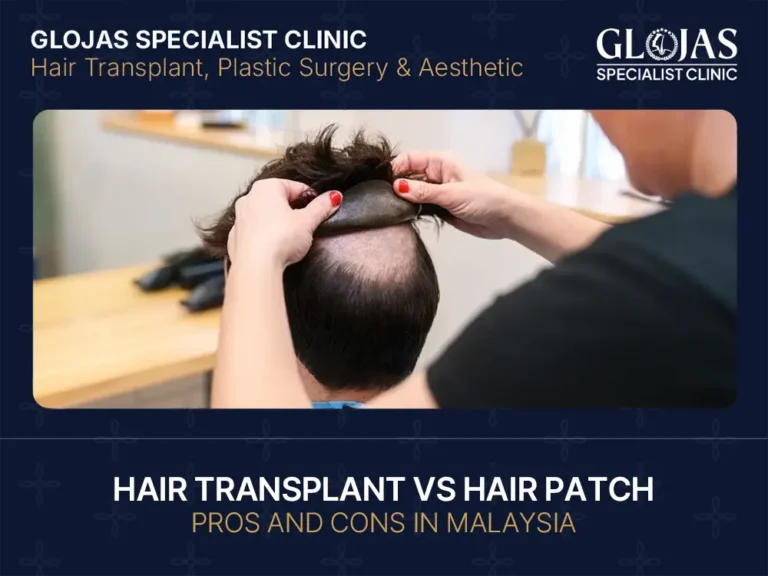
Hair Transplant vs Hair Patch: Pros and Cons in Malaysia
So, you’ve noticed your scalp is starting to reflect more light than it used to. It happens to the best of us! When it comes to reclaiming your hairline in Malaysia, the debate usually boils down to two heavy hitters: Hair Transplant vs Hair Patch. One involves a surgical seat in a clinic, and the other is a non-invasive “accessory” fix.
GLOJAS Specialist Clinic is a leading hair transplant clinic in Kuala Lumpur, Malaysia, offering advanced, natural-looking hair restoration with expert care and proven results.
Overview: Hair Transplant and Hair Patch
Before we dive into the nitty-gritty, let’s define the players. We aren’t just talking about “fake hair” vs. “real hair”—we’re talking about two completely different philosophies of hair restoration.
What Is a Hair Transplant?
A hair transplant is a minor surgical procedure where a doctor moves your own living hair follicles from a “donor site” (usually the back of your head) to the balding areas. It’s essentially a biological relocation project that results in hair that grows, sheds, and behaves exactly like your original mane.
What Is a Hair Patch or Wig?
A hair patch (often called a hair system or a high-end toupee) is a non-surgical prosthetic made of human or synthetic hair. It’s attached to your scalp using medical-grade adhesives or clips. It’s like a custom-made “patch” designed to blend seamlessly with your existing hair to cover bald spots.
Key Differences Between Hair Transplant and Hair Patch
The main divide is permanence vs. immediacy. A transplant is a long-term medical solution that takes months to show results. A hair patch is an instant cosmetic fix that requires regular maintenance but involves zero needles or recovery time.
Advantages of Hair Transplant Over Hair Patch
Permanent and Natural Hair Growth
The biggest win for a transplant? It’s your hair. Because it uses your own follicles, the texture, color, and growth direction are 100% natural. You can run your fingers through it without worrying about something shifting.
Low Maintenance Compared to Hair Patch
Once the healing is done, you treat it like normal hair. You wash it, cut it, and style it. You don’t need special adhesives or monthly “servicing” appointments at a salon.
Long-Term Cost Efficiency
While the upfront price tag in Malaysia is higher, a transplant is a one-time investment. If you calculate the cost of a hair patch over 10 years—including replacements and adhesive products—the transplant often ends up being the cheaper route.
Suitable for Malaysian Hair Types
Malaysian hair, often characterized by its specific hair follicle diameter and density, responds exceptionally well to modern FUE (Follicular Unit Extraction) techniques. Local surgeons are experts at tailoring the “exit angle” of the hair to match the typical growth patterns found in Asian scalps.
Advantages of Hair Patch Over Hair Transplant
Immediate Results Without Surgery
If you have a wedding or a big presentation next week, a hair patch is your best friend. You walk into a center with a bald spot and walk out an hour later with a full head of hair.
Non-Invasive and Painless
No local anesthesia, no incisions, and no “shock loss.” For those with a phobia of medical environments, a hair patch offers a stress-free transformation.
Flexible Styles and Coverage Options
Want to try a trendy K-Pop undercut today and a classic side part next month? Hair patches allow for density and style changes that aren’t always possible with a transplant, which is limited by your natural donor supply.
Ideal for Temporary or Experimental Use
If your hair loss is caused by temporary factors like Telogen Effluvium (stress-induced shedding), a patch can bridge the gap while your body recovers, without the need for permanent surgery.
Disadvantages of Hair Transplant
Higher Initial Cost
In Malaysia, a quality hair transplant cost can range from RM 8,000 to RM 25,000 depending on the number of grafts. It’s a significant financial commitment upfront.
Recovery Time and Post-Op Care
You’ll deal with scabbing, swelling, and a strict “no-touch” rule for the first week. You also have to wait 6 to 12 months to see the final “wow” result.
Limited by Donor Hair Availability
If you are “shiny bald” (Norwood Scale 7), you might not have enough donor hair to cover the entire area. You can’t transplant hair from someone else; it must be your own.
Risk of Complications
Though rare in reputable KL clinics, any surgery carries risks like folliculitis (inflamed hair follicles) or minor scarring. Choosing an accredited surgeon is non-negotiable.
Disadvantages of Hair Patch
Frequent Maintenance Required
In Malaysia’s humid climate, the adhesive on a hair patch can break down faster due to sweat. You’ll need to visit a specialist every 3-4 weeks to have it removed, cleaned, and re-attached.
Risk of Displacement or Damage
A very strong gust of wind or an intense gym session could, in theory, cause the edges to lift. While modern adhesives are strong, that “what if” thought often lingers in the back of the user’s mind.
Less Natural Look Over Time
Synthetic patches can lose their luster, and the base material may become visible as it wears down. They usually need to be replaced entirely every 6 to 12 months.
Not a Permanent Solution
The moment you take the patch off, the baldness is still there. It doesn’t treat the underlying androgenetic alopecia (male pattern baldness); it just hides it.
Cost Comparison in Malaysia
| Feature | Hair Transplant | Hair Patch |
| Initial Cost | RM 8,000 – RM 25,000 | RM 1,500 – RM 4,500 |
| Monthly Maintenance | RM 0 | RM 150 – RM 300 |
| Replacement Frequency | Never | Every 6 – 12 Months |
| 10-Year Estimated Total | RM 15,000 (avg) | RM 25,000+ |
How to Choose Between Hair Transplant and Hair Patch
Factors to Consider: Age, Hair Loss, Budget
If you’re in your 20s and your hair loss is still progressing, a patch might be a good temporary fix until your hair loss stabilizes. If you’re in your 30s or 40s and want a “set it and forget it” solution, the transplant is the winner.
Lifestyle and Maintenance Requirements
Are you an active swimmer or a marathon runner? The humidity in Malaysia makes maintaining a hair patch a bit of a chore for active individuals. A transplant allows you to dive into the pool without a second thought.
Consulting a Specialist in Malaysia
Before deciding, visit a clinic registered with the Malaysian Medical Council. A professional trichologist can perform a scalp analysis to see if your donor area is strong enough for surgery.
FAQs: Hair Transplant vs Hair Patch in Malaysia
Which Option Lasts Longer?
A hair transplant is permanent. A hair patch is a temporary prosthetic that typically lasts 6 months to a year before needing a replacement.
Can Hair Patch Affect Scalp Health?
If not cleaned properly, the adhesive and trapped sweat can lead to contact dermatitis or fungal infections. Proper hygiene is crucial.
Is Hair Transplant Painful?
Most patients describe it as “uncomfortable” rather than painful. Local anesthesia is used to numb the scalp, so you won’t feel the extractions or implantations.
When Is Hair Patch a Better Choice?
A hair patch is better if you have total hair loss (Alopecia Totalis), very poor donor hair, or medical conditions that make surgery risky.