
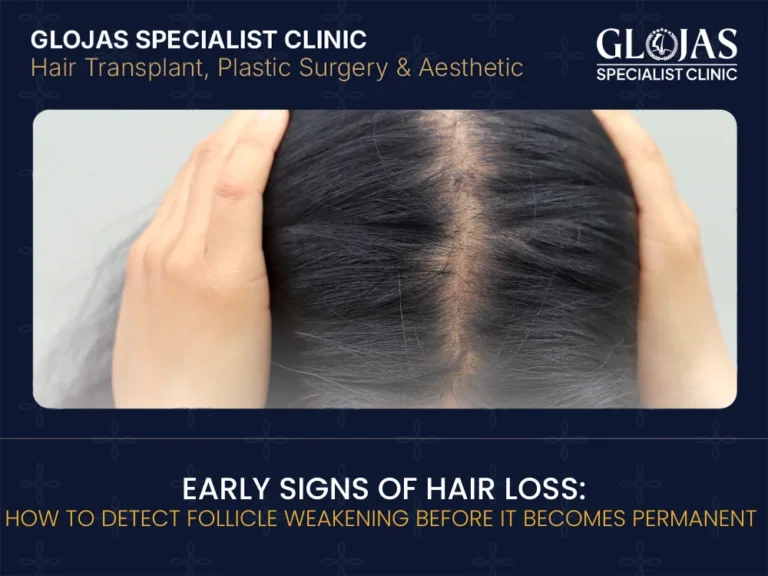
Understanding the Early Signs of Hair Loss
Hair thinning can creep in quietly. Many people miss the early signs of hair loss because the changes happen slowly, sometimes over months or years. Spotting the clues early gives you the best chance of protecting your follicles and preventing long-term damage.
GLOJAS Specialist Clinic is a leading MOH-licensed, LCP-certified centre for hair transplant Malaysia, backed by over 27 years of surgical expertise. Our procedures are performed by NSR-registered surgeons using advanced FUE and FUT techniques, ensuring safe, natural, and medically proven results trusted by patients across Malaysia.
Why Early Signs of Hair Loss Detection Really Matters
Signs of Hair loss rarely happens overnight. Most cases begin with subtle follicle weakening before the hair strands start shedding more noticeably. When you understand these early indicators, you can take action sooner—before the follicles become dormant or permanently inactive.
Whether caused by genetics, hormones, stress, or lifestyle, early intervention often leads to better outcomes. Today, advanced treatments, supportive care, and proper diagnosis can significantly slow, stabilise, or even reverse early-stage thinning.
1. Gradual Thinning at the Crown
One of the earliest and most overlooked signs of hair loss is diffuse thinning at the crown. It doesn’t always look like a bald spot in the beginning—sometimes it’s only a slight see-through area when you stand under bright light or review photos taken from above.
This happens because follicles in the crown region are highly sensitive to hormonal changes (especially DHT) and often shrink earlier than other areas. If you spot this early, you can typically preserve much more density.
2. Increased Hair Fall on Your Pillow or Floor
Seeing 30–50 strands per day can be normal, but if you’re suddenly noticing more hair on your:
- Pillow
- Hairbrush
- Shower drain
- Floor after combing
…it may signal early signs of hair loss. What matters isn’t a single day of shedding but a consistent increase over a week or two.
This pattern usually reflects follicle miniaturisation, where hairs become finer and fall out sooner than they should during the growth cycle.
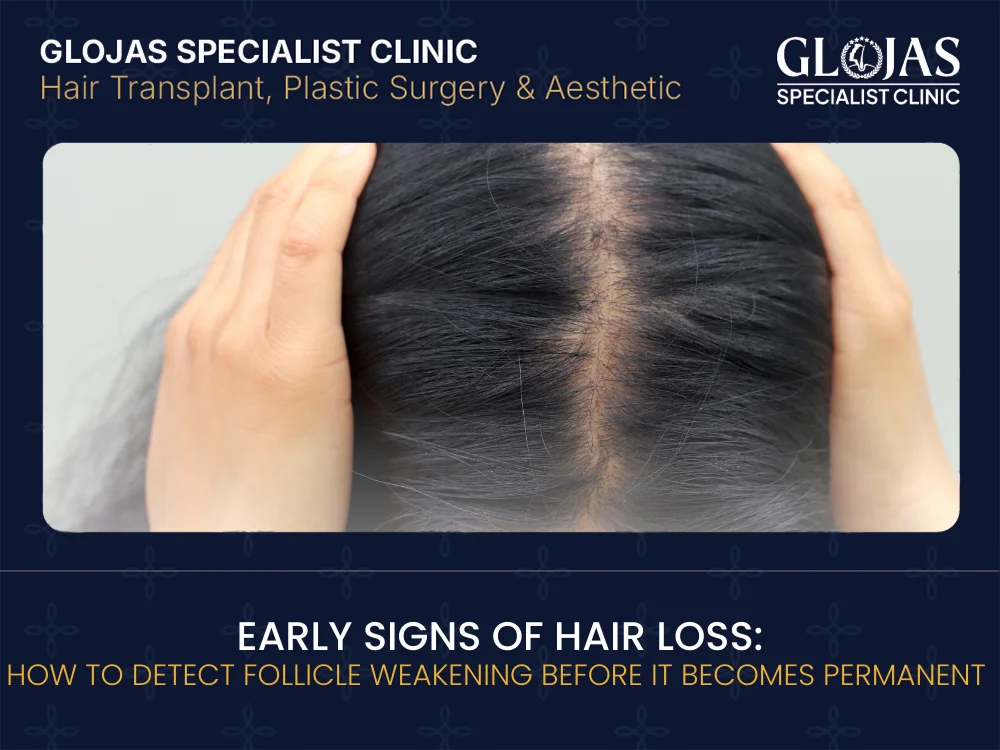
3. A Widening Part Line
For both men and women, the part line is one of the most reliable places to spot changes. If you notice your part:
- Looking wider
- Showing more scalp
- Becoming harder to conceal
…it may indicate reduced volume at the top and mid-scalp. For women especially, this can be an early sign of female-pattern hair loss (FPHL).
4. Hair Feeling Finer or More Fragile
When follicles weaken, they produce thinner strands. Many people notice this before any visible thinning happens. You might feel like your ponytail is less full or your hair loses volume faster throughout the day.
Common signs of hair loss include:
- Hair that breaks more easily
- Loss of natural bounce or body
- Reduced styling hold
- Strands that feel softer but weaker
This is often the earliest stage of signs of hair loss – miniaturisation, it’s highly reversible when treated early.
5. A Receding or Uneven Hairline
A receding hairline is one of the classic early signs of hair loss, especially in men. But it’s not always dramatic at first. You may notice:
- A slightly higher temple area
- Hairline looking less defined
- Mini baby hairs that never grow long
- One side receding faster than the other
Unevenness is very common, and early interventions can help prevent further recession.
6. More Scalp Sunburn or Sensitivity
If your scalp is suddenly more exposed, you may experience:
- Sunburn more easily
- Extra sensitivity
- Visible redness after sun exposure
These symptoms can indicate that your hair density has reduced enough to reveal more scalp than before.
7. Slower Hair Growth Than Usual
Hair that once grew quickly might start taking more time to reach your usual length. Weakened follicles often shift into a prolonged resting phase, producing less growth.
If your barber or hairstylist mentions slower growth or reduced thickness, pay attention—they often notice changes sooner than we do.
8. Changes in Hair Texture
Follicle weakening doesn’t only affect density. It may also cause your hair to change texture. You might notice:
- Straighter strands if you naturally have wavy hair
- Less curl definition
- Limp, flat roots
- Hair feeling “coarser” but not fuller
Texture changes are early biological indicators that hair follicles are responding to hormonal shifts or stress.
9. A Consistently Itchy or Flaky Scalp
While itching alone doesn’t equal signs of hair loss, a scalp that is:
- Itchy
- Flaky
- Irritated
- Inflamed
…may indicate underlying problems like seborrheic dermatitis, buildup, or early follicular stress. Chronic inflammation can weaken follicles over time.
10. The “Miniaturisation Shadow” in Photos
Photos can reveal thinning that isn’t obvious in the mirror. You may notice:
- More visible scalp under bright flash
- Patchy areas at the temples
- Reduced volume on top
- Thinning spots near the cowlick
Reviewing older pictures side-by-side often makes subtle changes easier to spot.
What Causes Early Hair Loss?
Early hair loss can happen for many reasons, and while genetics is the most common factor, several other triggers can accelerate thinning—especially in younger adults. Understanding the root cause is the first step in choosing the right treatment.
Here are the most common contributors:
• Hormonal changes (especially DHT sensitivity)
Excess DHT can shrink hair follicles, causing them to produce thinner and shorter strands over time. Some people are genetically more sensitive to DHT, making them prone to earlier hair loss.
• Stress and lifestyle factors
High stress levels, poor sleep, smoking, or rapid weight changes can push hair into the “shedding phase” too early, leading to noticeable thinning within months.
• Nutritional deficiencies
Low levels of iron, zinc, vitamin D, or protein can weaken the hair growth cycle. Even crash diets or inconsistent eating can trigger temporary hair loss.
• Thyroid irregularities
Both an overactive and underactive thyroid can affect hair quality and density because thyroid hormones play a key role in follicle regulation.
• Poor scalp health
Conditions like dandruff, seborrheic dermatitis, and excess oil buildup can inflame the scalp, blocking proper follicle function and worsening shedding.
• Autoimmune conditions
In some cases, the immune system mistakenly attacks hair follicles, leading to patchy or sudden hair loss.
• Hairstyling habits that strain follicles
Frequent tight ponytails, braids, chemical treatments, or excessive heat styling can cause traction and weaken hair roots over time.
Because hair loss can stem from multiple factors—sometimes more than one at the same time—a proper diagnosis is essential. A scalp analysis or consultation with a hair restoration specialist helps identify the true cause and guides you toward the right treatment plan.
How to Respond If You Notice These Signs
The earlier you act, the better the chance of preserving your natural hair. Here’s what you can do:
1. Document Your Hair Changes
Take clear photos every 1–2 months under consistent lighting. Visual tracking helps identify patterns.
2. Support Your Follicles With Proven Therapies
Evidence-based treatments (medications, low-level laser therapy, PRP, regenerative solutions) work best in early stages.
3. Avoid Traction and Harsh Styling
Reduce tight hairstyles, excessive heat, and chemical processing during this sensitive stage.
4. Consult a Certified Hair Loss Specialist
Seeking early evaluation with an ABHRS/ISHRS-certified doctor ensures accurate diagnosis and personalised guidance.
Long-Term Outlook: Can Early Hair Loss Be Reversed?
In many cases, yes—early hair loss can be improved, controlled, and even reversed, depending on how quickly treatment begins and whether the follicles are still active. The earlier you identify the problem, the greater your chances of restoring healthy hair growth.
Here’s what early intervention can achieve:
• Follicles can be revived
When follicles are still alive but weakened, treatments like topical medications, oral supplements, and regenerative therapies can help reactivate growth and strengthen the hair shaft.
• Density can be preserved
Slowing down shedding while encouraging new growth helps maintain overall thickness, preventing the scalp from becoming increasingly visible over time.
• Miniaturisation can be slowed or reversed
Miniaturisation—the process where hair becomes thinner and shorter—is often reversible in its early stages. Treating inflammation, hormone sensitivity, and scalp issues can help follicles return to a healthier cycle.
When Are Permanent Options Considered?
Hair transplant surgery is only recommended when the follicles are no longer active and cannot be revived through non-surgical treatments. This typically happens in advanced hair loss stages, not early ones.
The good news?
With proactive care, many people never reach the point of needing surgery. Early-stage hair loss responds very well to medications, growth factor therapies, and lifestyle improvements.
Frequently Asked Questions (FAQs)
1. What are the earliest signs of hair loss?
The earliest signs include gradual thinning at the crown, a widening part, increased shedding, and weaker hair strands.
2. Are early signs of hair loss reversible?
Often yes. Early follicle weakening can respond very well to medical treatments and lifestyle adjustments.
3. How much hair fall is normal daily?
Most people shed 30–100 strands per day. A noticeable increase over several days may indicate early loss.
4. Can stress cause early hair loss?
Yes. Stress can disrupt the growth cycle and accelerate shedding or thinning.
5. Does wearing a hat cause hair loss?
No, but tight hairstyles or friction-based habits can contribute.
6. How soon should I see a specialist?
If you notice consistent thinning for more than 2–4 weeks, it’s best to get evaluated early.
7. Can diet affect hair strength?
Absolutely. Low protein, iron, zinc, or vitamin intake can weaken follicles.
8. Is a receding hairline always permanent?
Not always. Early recession can often be stabilised with medical treatment.
9. How do specialists diagnose hair loss?
Through scalp analysis, medical history, trichoscopy, and sometimes blood tests.
10. Can hair grow back after thinning?
If follicles are still active, targeted treatments can stimulate regrowth.