
While often discussed as a male solution, hair restoration is increasingly popular for women. Unlike men, women often face diffuse thinning rather than total baldness. A successful transplant can restore confidence by filling in sparse areas and lowering high hairlines using advanced microsurgical techniques.
GLOJAS Specialist Clinic offers expert women hair transplant in Malaysia. Restore thinning hair with natural results by ABHRS-certified surgeons. Book your consultation today.
Why Women Experience Hair Loss (And How Transplants Help)
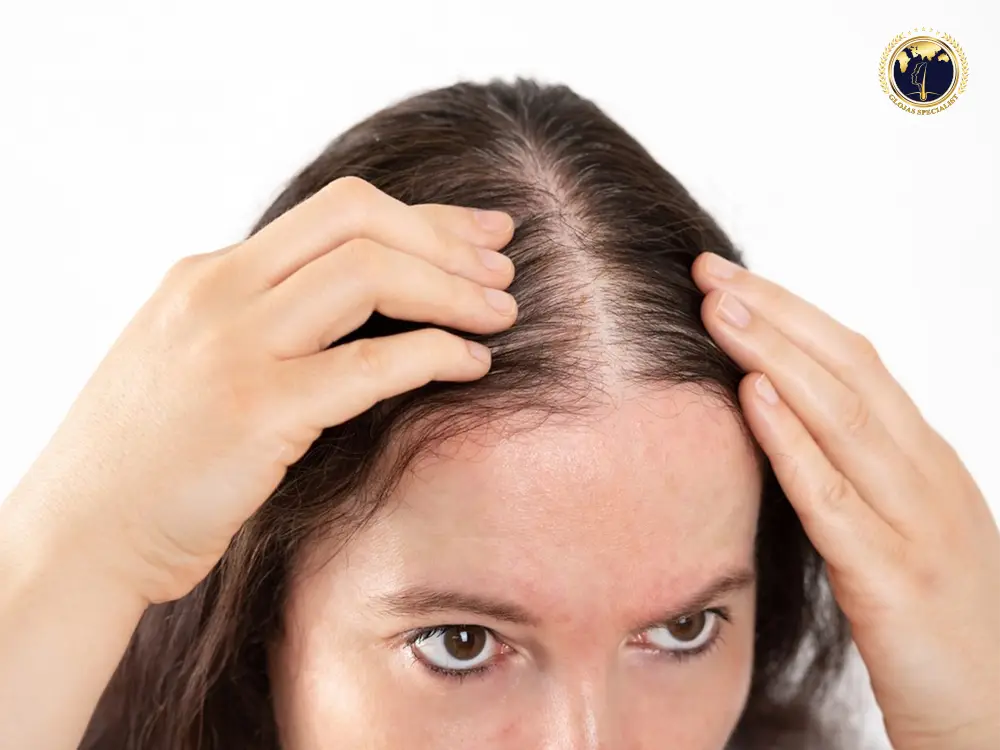
Women’s hair loss is complex, often tied to genetics, hormones, or styling habits. While topical treatments help, they can’t grow hair where follicles have died. Transplants offer a permanent solution by moving healthy, DHT-resistant follicles to areas of thinning or recession.
Female Pattern Hair Loss (Androgenetic Alopecia)
Female Pattern Hair Loss (FPHL) typically manifests as a widening part line. According to the American Academy of Dermatology, this affects millions. Transplants help by increasing density along the part, creating a fuller look that obscures the scalp.
Traction Alopecia from Tight Hairstyles
Years of tight braids, ponytails, or extensions can cause permanent loss along the hairline. This is known as traction alopecia. For these patients, a transplant is highly effective because the donor hair is usually healthy, and the recipient site is localized and well-defined.
Scarring Alopecia and Post-Surgical Hair Loss
Scarring alopecia or hair loss from facelifts can leave permanent bald patches. A transplant can often camouflage these scars. However, it is vital that the underlying inflammatory condition is inactive for at least two years before proceeding with surgery to ensure graft survival.
Who Is a Good Candidate for a Female Hair Transplant?
Not every woman is a candidate. Success depends on the type of thinning. Ideal candidates have localized loss rather than “diffuse unpatterned alopecia,” where the donor hair at the back of the head is also thinning and unstable.
Stable Donor Area and Adequate Density
A “stable” donor area means the hair at the back and sides is thick and healthy. Since this hair is moved to the top, it must be strong enough to survive the move. Doctors use densitometry to measure follicular units per square centimeter before clearing a patient.
Diffuse Thinning vs. Defined Bald Spots
Women with “Ludwig Scale” Type I or II thinning are often better candidates than those with Type III. If thinning is too widespread (diffuse), there may not be enough healthy hair to harvest. Defined areas, like a receding hairline or crown, yield the most dramatic results.
When to Try Medications (Minoxidil, Spironolactone) First
Before surgery, many experts recommend a six-month trial of FDA-approved 5% Minoxidil or Spironolactone. Stabilizing active shedding ensures that the surgeon isn’t “chasing” hair loss, which leads to better long-term aesthetic outcomes after the transplant is complete.
Female Hair Transplant Techniques: FUE vs. FUT
| Feature | FUE (Follicular Unit Extraction) | FUT (Follicular Unit Transplantation) |
| Scarring | Tiny, circular “dot” scars | A thin, linear scar |
| Shaving | Often requires shaving a small patch | No shaving of the recipient area |
| Graft Yield | High, but can be time-consuming | Often higher for large sessions |
FUE for Women: No Linear Scar, Shorter Recovery
FUE involves extracting individual follicles. It’s popular because it avoids a linear scar, allowing women to wear their hair up confidently. Recovery is fast, with most patients returning to normal activities within days. It’s ideal for smaller areas like eyebrow or hairline restoration.
FUT for Women: Higher Graft Yield in Some Cases
FUT, or “strip surgery,” involves removing a thin strip of scalp. For women with significant thinning, FUT often provides more grafts in one session. The resulting linear scar is easily hidden by long hair, making it a “stealth” option for many female patients.
Long Hair FUE (No Shave Option) for Women
“Long Hair FUE” is a premium technique where follicles are extracted and implanted without trimming the hair. This allows for an immediate preview of the result and total discretion. You can walk out of the clinic without anyone knowing you had a procedure done.
Before the Procedure: Consultation and Planning
Hairline Design for Women (Softer, Lower, Irregular)
A woman’s hairline is fundamentally different from a man’s. It should be oval or round, not squared off. Surgeons focus on “micro-irregularity,” placing single hairs in the front to ensure the transition from forehead to hair looks soft, natural, and completely feminine.
Assessing Donor Hair Quality and Density
During your consult, the doctor will check your hair’s “caliber” or thickness. Coarser hair provides better visual coverage. They also calculate the “Transaction Rate”—the percentage of hair that might be damaged during extraction—to ensure they maximize every precious follicle.
Pre-Op Blood Work and Hormonal Evaluation
Since female hair loss is often systemic, surgeons require blood tests for Iron/Ferritin levels, Thyroid function, and PCOS markers. Ensuring your hormones are balanced is essential because a transplant won’t stop loss caused by an untreated underlying medical condition.
Women’s Hair Transplant Before and After: Realistic Results
Timeline: 3 to 12 Months for Full Growth
Patience is key. Transplanted hair typically falls out (shock loss) within three weeks. New growth starts around month four. By month nine, you’ll see significant length, and by month twelve, the full density and texture of the “after” result are finally visible.
Density Expectations: Adding Volume, Not a Full Head
A transplant adds “visual density.” It cannot replace every single hair lost. The goal is to provide enough coverage so the scalp no longer shines through under bright lights. Most women achieve a “fuller” look that makes styling significantly easier.
Before and After Photos by Hair Loss Pattern
When viewing photos, look for patients with your hair color and texture. A “before” photo showing a wide part and an “after” photo showing a tight, narrow part is a hallmark of a successful FPHL transplant. High-resolution, consistent lighting is a sign of a trustworthy clinic.
Recovery and Aftercare Specific to Women
Washing and Styling Around Transplanted Hair
You’ll need to wash your hair very gently for the first week using a cup instead of a high-pressure showerhead. Avoid dyes, heat styling, and chemical straighteners for at least four weeks to prevent damaging the newly rooted follicles.
Returning to Work and Social Activities
Most women return to work within 3 to 7 days. If you have bangs or long hair, you can often hide the recipient area immediately. Swelling usually peaks at day three and subsides by day five, often shifting down toward the forehead or eyes.
Managing Shock Loss of Existing Native Hair
“Shock loss” can affect the healthy hair surrounding the grafts. It’s a temporary reaction to the surgical trauma. Don’t panic—this hair almost always grows back alongside the transplanted grafts. Using Low-Level Laser Therapy (LLLT) can sometimes speed up the recovery of these follicles.
Special Considerations for Women
Pregnancy and Hair Transplants (Timing Matters)
Surgeons generally advise against transplants during pregnancy or breastfeeding due to the medications and local anesthetics used. Furthermore, postpartum “telogen effluvium” (temporary shedding) can skew results. It is best to wait until your hormones have stabilized after birth.
Hair Transplants After Menopause
Menopause causes a drop in estrogen, which can accelerate thinning. Transplants are very successful for post-menopausal women, provided the donor area remains healthy. Many women combine the procedure with Hormone Replacement Therapy (HRT) to maintain the health of their non-transplanted hair.
Combining Transplant with PRP or Laser Therapy
Platelet-Rich Plasma (PRP) therapy uses your own blood growth factors to stimulate follicles. Many clinics perform PRP during the transplant to improve graft “take” rates. Think of it as fertilizer for your newly planted seeds, encouraging faster and thicker growth.
Risks, Limitations, and Red Flags for Women
Poor Candidates: Widespread Diffuse Thinning
If your hair is thinning equally on the back, sides, and top, you may have “DUPA” (Diffuse Unpatterned Alopecia). In this case, a transplant will likely fail because the moved hair is genetically programmed to fall out. Ethical surgeons will refuse surgery in these instances.
Unrealistic Expectations from Low Donor Density
If your donor area is already sparse, you won’t achieve “Victoria’s Secret” volume. A transplant moves hair; it doesn’t create it. A red flag is any clinic promising 100% original density; a realistic goal is usually 30-50% of original density in one pass.
Scarring and Thinning in the Donor Area
Over-harvesting is a risk. If a surgeon takes too many grafts, the back of your head may look moth-eaten or thin. This is why choosing a surgeon who specializes in female scalps—which are often thinner than men’s—is vital for a safe, aesthetic result.
Frequently Asked Questions About Women’s Hair Transplants
Can a hair transplant fix a receding hairline in women?
Yes. Whether it’s due to genetics or traction alopecia, hair transplants are excellent for lowering a high hairline or filling in thin temples. This “facial framing” is one of the most common reasons women seek out hair restoration surgery.
Will transplanted hair fall out again later?
The transplanted follicles are taken from “permanent” zones, meaning they should last a lifetime. However, your original hair around the transplant can still thin. This is why long-term maintenance with Minoxidil or other therapies is often recommended to keep the overall look consistent.
How many grafts do women typically need?
While it varies, a typical female hairline or part-line restoration requires between 1,500 and 2,500 grafts. Large-scale thinning across the entire top of the head may require multiple sessions to achieve the desired density without over-taxing the donor area.
Does the procedure affect future pregnancy or breastfeeding?
The procedure itself is localized and does not have long-term systemic effects on fertility or pregnancy. However, you should avoid the surgery while actively pregnant or nursing to ensure both your safety and the best possible environment for graft growth.