
If you’ve been chasing that “lit-from-within” glow, you’ve likely stumbled upon the world of collagen induction therapy. It sounds a bit clinical, but the concept is simple: by creating tiny, controlled “micro-injuries” in the skin, you trigger your body’s natural healing response, resulting in fresh collagen and smoother texture.
However, not all needles are created equal. When you start looking into the different types of microneedling, the options—Dermaroller vs. Dermapen vs. RF microneedling—can feel a bit overwhelming. Is a manual roller enough? Does the “pen” really work better? And what on earth is “RF”?
In this guide, we’re breaking down the heavy hitters of the skin-needling world so you can choose the right path for your unique complexion.
At GLOJAS Specialist Clinic, our KKM-registered doctors accelerate your microneedling treatment in Malaysia by utilizing medical-grade technology. This expertise ensures a faster microneedling result timeline, safely stimulating collagen for superior skin rejuvenation.
Key Takeaways
Dermarollers are manual tools best suited for entry-level, at-home maintenance and general skin brightening.
Dermapens (Mechanical Microneedling) offer vertical precision and adjustable depth, making them superior for acne scars and delicate areas.
RF Microneedling combines needles with radiofrequency heat for significant skin tightening and deep dermal remodeling.
Safety & Hygiene: Professional devices like the Dermapen use sterile, disposable cartridges, significantly reducing the risk of cross-contamination compared to reusable rollers.
Downtime: While all types involve some redness, RF microneedling typically requires the most recovery time due to the added thermal energy.
1. The Classic: Manual Dermarollers
The Dermaroller is the OG of the industry. It’s a handheld device featuring a drum covered in tiny medical-grade needles. As you roll it across your face, the needles enter the skin at an angle.
The Pros: It’s affordable and accessible. Many people use a “home-rolling” kit to enhance the absorption of serums like Hyaluronic Acid.
The Cons: Because the needles enter and exit at an angle, they can cause “track-mark” tearing or minor epidermal damage. It’s also difficult to reach tiny crevices like the sides of the nose or the delicate skin around the eyes.
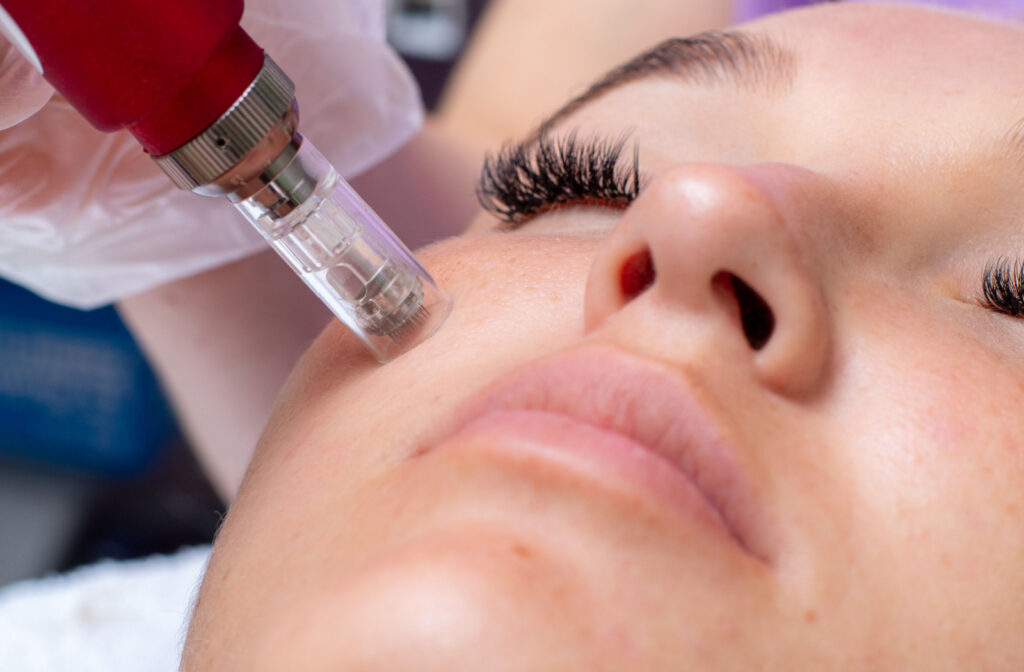
2. The Precision Pro: Dermapen (Mechanical Microneedling)
Think of the Dermapen as the high-tech, motorized evolution of the roller. Instead of rolling, it uses an oscillating tip that pulses needles vertically into the skin thousands of times per minute.
Adjustable Needle Depth: A professional can change the depth on the fly—shallower for the forehead and deeper for the cheeks or acne scars.
Vertical Entry: Because the needles go straight in and straight out, there is far less trauma to the skin surface, meaning faster healing.
Topical Infusion: The micro-channels created are perfect for “mesotherapy,” where vitamins and peptides are delivered directly into the dermis.
3. The Powerhouse: RF Microneedling
If you want to move beyond surface texture and target skin laxity (sagging), RF Microneedling is the gold standard. Devices like the Morpheus8 or Vivace combine traditional needling with Radiofrequency (RF) energy.
When the needles reach their target depth, they release a burst of heat. This thermal energy “shrink-wraps” the underlying tissue and stimulates an even more intense production of elastin and collagen. It is particularly effective for deep wrinkles, surgical scars, and tightening the jawline.
Comparison Table: At a Glance
| Feature | Dermaroller | Dermapen | RF Microneedling |
| Method | Manual Rolling | Motorized Vertical | Needles + Heat |
| Best For | Mild Glow / At-home | Scars / Precision | Tightening / Deep Aging |
| Precision | Low | High | High |
| Pain Level | Mild | Moderate (Numbing used) | High (Numbing used) |
| Downtime | 12–24 Hours | 24–48 Hours | 3–5 Days |
Choosing Your Treatment: Which is Right for You?
Choosing between these types of microneedling depends on your specific “skin goals.”
For the Beginner: If you just want to improve dullness and have a low budget, a professional-grade Dermaroller session (or a very gentle 0.25mm home version) is a great start.
For Acne Scars & Pores: The Dermapen is the winner here. Its ability to break up fibrous scar tissue with vertical precision is unmatched for resurfacing.
For Sagging & Deep Wrinkles: If you are over 40 or dealing with “jowls,” the investment in RF microneedling is worth it. The heat-induced tightening provides results that mechanical needling alone simply can’t achieve.
Remember, regardless of the device, sun protection is non-negotiable after any treatment. Your “new” skin is highly sensitive to UV rays, and skipping SPF can lead to hyperpigmentation.
Frequently Asked Questions (FAQs)
Q: Does microneedling hurt?
Most professional treatments involve a topical numbing cream. With numbing, you’ll feel a vibrating pressure or a “spiky” sensation, but it shouldn’t be painful. RF microneedling feels slightly warmer due to the energy.
Q: How many sessions do I need?
For general rejuvenation, 3 sessions are standard. For deep scarring or significant tightening, 4 to 6 sessions spaced 4–6 weeks apart are usually recommended.
Q: Can I do RF microneedling at home?
No. RF microneedling uses high-energy heat and deep needle penetration that must be performed by a licensed professional to avoid burns or permanent scarring.
Q: How long does it take to see results?
You’ll notice a “glow” within a week, but the real magic happens at the 3-month mark. This is how long it takes for your body to fully synthesize new collagen fibers.
Q: Is there anyone who shouldn’t get microneedling?
Avoid these treatments if you have active cystic acne, eczema flares, or a history of keloid scarring. Always consult a dermatologist first.