
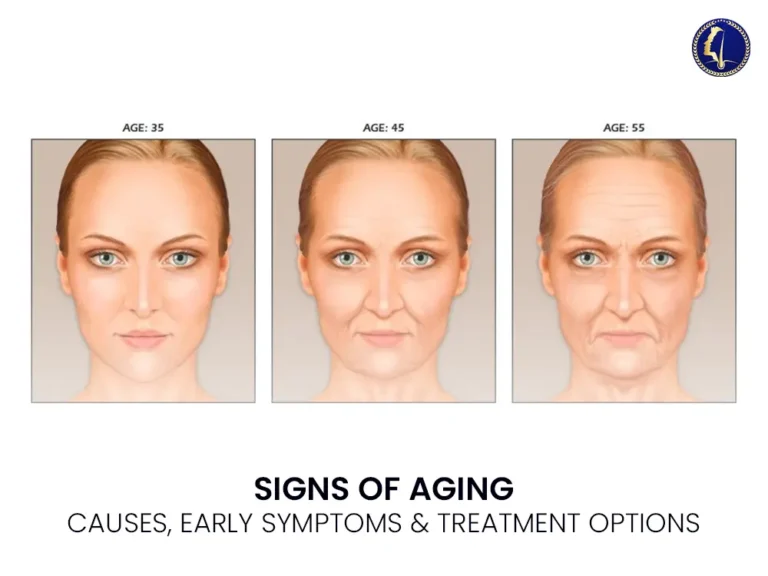
Signs of aging are visible biological changes in the body and skin that occur over time, primarily due to natural cellular decline and environmental stressors. Key indicators include fine lines, wrinkles, sagging skin, and hyperpigmentation, often resulting from the gradual loss of essential proteins like collagen and elastin.
What Are Signs of Aging?
Definition and Overview
Biologically, aging is characterized by a gradual decline in physiological functions and the skin’s ability to repair itself after damage.
In the context of aesthetics, it refers to the thinning of the epidermis and the loss of structural support in the dermal layers.
The American Academy of Dermatology highlights that while genetics play a role, roughly 80% of visible skin aging is caused by external factors like ultraviolet (UV) radiation.
Early vs Advanced Signs of Aging
Early signs often appear as “dynamic wrinkles”—faint lines that only show when you smile or squint—along with slightly enlarged pores.
Advanced signs involve “static wrinkles” that remain visible even when the face is at rest, accompanied by significant volume loss in the cheeks.
You might notice skin becoming translucent or “crepy,” especially in delicate areas like the neck and the backs of the hands.
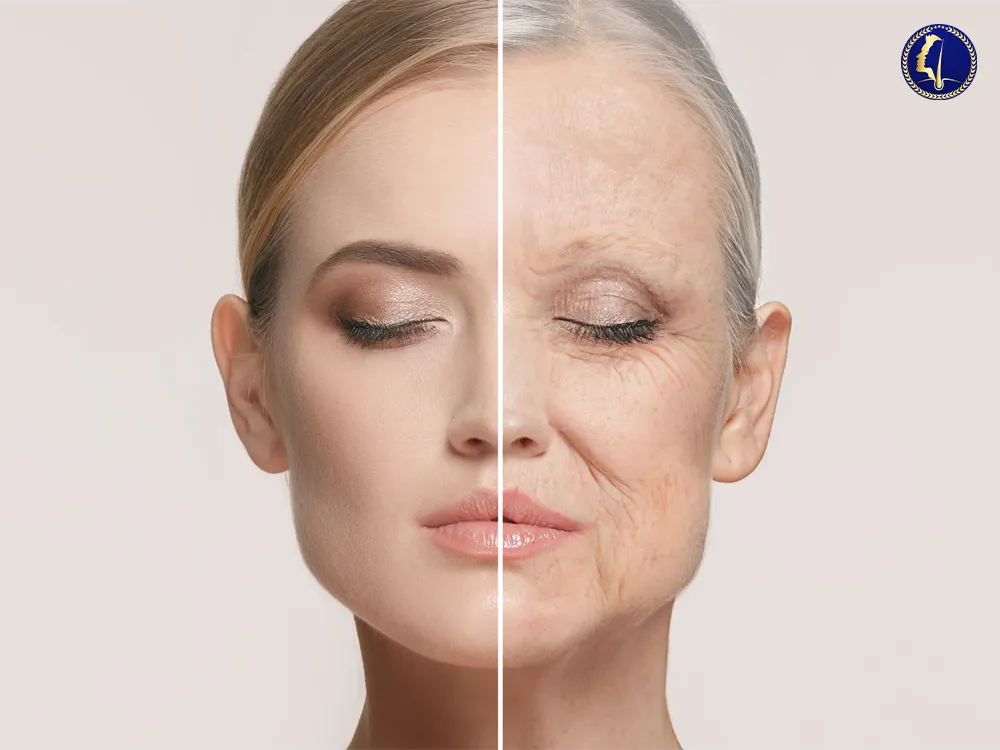
Common Signs of Aging on the Face
Fine Lines and Wrinkles
These often start as “crow’s feet” around the eyes or “frown lines” on the forehead due to repetitive muscular movements.
Over time, these evolve into deeper furrows as the skin loses its “memory” and its ability to snap back into place.
Sagging Skin and Loss of Firmness
Known clinically as skin laxity, this occurs when the “scaffolding” of the face—fat pads and bone—begins to shift or diminish.
Common manifestations include the development of jowls along the jawline and a softening of the facial contour.
Dark Spots and Pigmentation
Also called liver spots or solar lentigines, these are flat, brown areas caused by years of cumulative sun exposure.
Irregular melanin production leads to an uneven skin tone, which is often one of the most stubborn signs to treat.
Dull Skin and Uneven Texture
As cell turnover slows down, dead skin cells accumulate on the surface, preventing light from reflecting evenly off the face.
This results in a “matte” or grayish complexion instead of a healthy, youthful glow.
Eye Bags and Dark Circles
The skin under the eyes is the thinnest on the body, making it the first place to show fatigue and vascular congestion.
Fat deposits can also migrate into the lower eyelids, creating a puffy appearance that persists regardless of how much sleep you get.
Causes of Signs of Aging
Natural Aging Process
Intrinsic aging is a continuous process that usually begins in our mid-20s, though it remains invisible for several years.
The rate of epidermal turnover slows down, meaning it takes longer for fresh, new cells to reach the surface.
Collagen and Elastin Loss
Starting at age 25, we lose approximately 1% of our collagen every year, which is the protein responsible for skin strength.
Elastin fibers, which allow skin to stretch and bounce back, also begin to break down and lose their snap.
Sun Exposure and UV Damage
Known as dermatoheliosis, UV rays trigger the production of free radicals that destroy healthy skin cells and DNA.
According to the Skin Cancer Foundation, UVA rays penetrate deep into the dermis, causing long-term structural damage even on cloudy days.
Lifestyle and Environmental Factors
Smoking introduces toxins that constrict blood vessels, depriving the skin of oxygen and essential nutrients like Vitamin A.
High-sugar diets lead to “glycation,” a process where sugar molecules attach to proteins and make collagen stiff and brittle.
When Do Signs of Aging Start?
Aging in Your 20s, 30s, 40s and Beyond
20s: Most signs are invisible, but hydration levels begin to dip, and the very first faint expression lines may appear.
30s: This is typically when “sun spots” and dullness become noticeable as the skin’s defense mechanisms weaken.
40s: Hormonal changes, particularly a drop in estrogen, lead to increased dryness and more pronounced sagging around the mouth and eyes.
Factors That Accelerate Aging
Chronic stress increases cortisol levels, which can break down collagen and impede the skin’s natural barrier function.
Lack of sleep prevents the “repair phase” of the circadian rhythm, where the body produces growth hormones to fix cellular damage.
How to Prevent Signs of Aging
Daily Skincare and Sun Protection
The most effective anti-aging tool is a broad-spectrum sunscreen with at least SPF 30, applied every single day without exception.
Incorporate antioxidants like Vitamin C to neutralize pollution and retinoids to keep the cell renewal process moving quickly.
Healthy Lifestyle Habits
Stay hydrated with plenty of water and eat a diet rich in Omega-3 fatty acids to keep the skin’s lipid barrier strong.
Prioritize 7–9 hours of quality sleep to allow for nocturnal skin regeneration.
Signs of Aging FAQ
What are the first signs of aging?
The very first signs usually appear around the eyes as fine “dehydration lines” or a slight loss of radiance. You might also notice that your skin feels drier than it used to or that makeup begins to settle into small creases by mid-day.
Can signs of aging be delayed?
Yes, while you cannot stop time, you can significantly slow down extrinsic aging through consistent sun protection, a nutrient-dense diet, and a medical-grade skincare routine. Starting these habits in your 20s provides the best long-term “preventative” results.
Why does skin lose elasticity with age?
Skin loses elasticity because the production of elastin and collagen drops, and the existing fibers become disorganized. Additionally, the loss of hyaluronic acid—a natural humectant in the skin—means there is less moisture to keep the tissues plump and firm.
How to reduce early signs of aging?
To reduce early signs, use a retinoid (Vitamin A derivative) at night to boost collagen and an antioxidant serum during the day. Professional treatments like chemical peels or microneedling can also help resurface the skin and trigger deep-level repair.
Does blue light from screens cause aging?
Recent studies suggest that “High Energy Visible” (HEV) light from smartphones and computers can contribute to oxidative stress and hyperpigmentation, similar to sun damage. Using skincare products with iron oxides can help shield your skin from these digital stressors.