
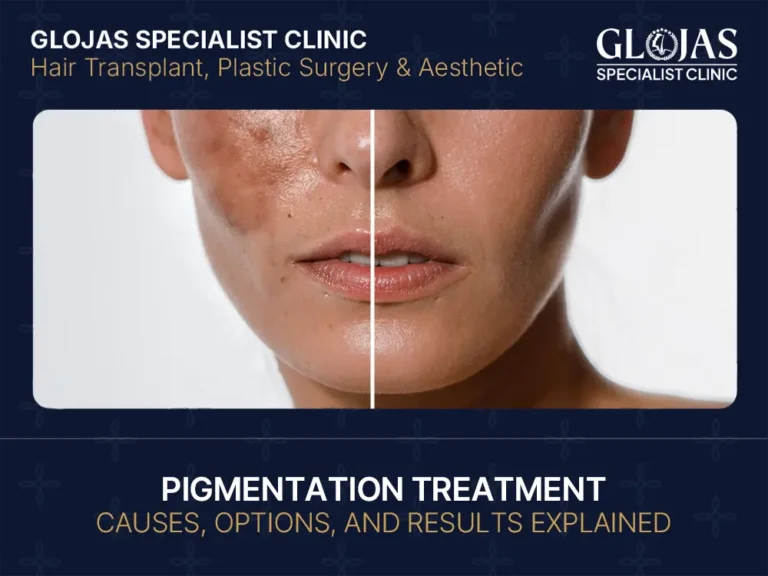
The most effective pigmentation treatment depends on your specific skin condition. For stubborn discoloration like melasma and deep sun spots, advanced medical aesthetic clinic procedures like Pico Laser and professional-grade chemical peels are the gold standard. For surface-level dark spots, consistent topical skincare using medical-grade active ingredients provides optimal brightening results.

What Causes Skin Pigmentation?
Skin pigmentation happens when specialized cells in the skin called melanocytes overproduce melanin, the organic pigment responsible for your natural skin tone. This localized melanin overproduction is usually triggered by external environmental damage or internal hormonal shifts.
Sun Damage and Age Spots
Prolonged, unprotected ultraviolet (UV) exposure is the primary cause of dark patches, solar lentigines (commonly called age spots or liver spots), and flat epidermal freckles. When UV radiation hits unprotected skin layers, it triggers an emergency defensive response that forces melanin to clump together. Over time, these dense pigment clusters rise to the surface, causing visible sun damage and accelerating premature skin aging.
Melasma and Hormonal Changes
Melasma is a chronic, complex skin condition that appears as symmetrical, muddy brown or grayish-brown patches across the cheeks, bridge of the nose, forehead, and upper lip. Unlike standard sun spots, melasma is heavily driven by fluctuating hormone levels:
Pregnancy: Frequently called the “mask of pregnancy” or chloasma due to surging levels of estrogen and progesterone.
Medications: Triggered or worsened by oral contraceptive pills, hormone replacement therapy, or endocrine changes.
Heat & Stress: Active melasma patches are highly sensitive to heat exposure, infrared radiation, and elevated cortisol (stress hormone) levels, making them notoriously difficult to clear.
Post-Inflammatory Hyperpigmentation (PIH) from Acne
Post-Inflammatory Hyperpigmentation, or PIH, is the dark spot left behind after an inflammatory skin injury or cutaneous trauma heals. The most common trigger is acne vulgaris, though it can also stem from eczema, cosmetic burns, or picking at the skin. While the active acne clears, the skin’s natural healing cascade leaves an excess concentration of melanin at the injury site, leaving stubborn red, purple, or dark brown blemishes.
Professional Clinic Treatments for Pigmentation
When over-the-counter brightening creams fail to reach deep dermal layers, medical aesthetic procedures provide faster, safer, and more predictable pigment correction.
Pico Laser and Laser Toning
Picosecond lasers represent the gold standard in modern laser dermatology and pigment reduction.
How it works: Instead of relying on intense thermal heat that can burn darker skin tones, a Pico laser delivers energy in ultra-short bursts measured in trillionths of a second (picoseconds). This rapid pulse creates a targeted photoacoustic shattering effect that mechanically breaks up melanin into tiny, dust-like particles.
The benefit: Your body’s lymphatic system naturally flushes away the shattered pigment debris over time. It successfully targets deep dermal pigmentation while minimizing structural heat damage, drastically lowering the risk of post-laser rebound hyperpigmentation.
Medical-Grade Chemical Peels
Clinical chemical peels use highly concentrated alpha-hydroxy acid (AHA) and beta-hydroxy acid (BHA) solutions to accelerate skin cell turnover.
Superficial Peels: Formulated with glycolic, lactic, salicylic, or mandelic acids to gently dissolve the cellular bonds holding dead, pigmented cells to the surface stratum corneum.
Medium-Depth Peels: Often utilize TCA (Trichloroacetic Acid) or advanced combination formulas to target deeper epidermal staining. This forces the top layers of skin to physically exfoliate away over a week, revealing a fresher, more evenly toned complexion beneath.
Intense Pulsed Light (IPL) Therapy
IPL is a non-laser light therapy that uses broad-spectrum wavelengths to target superficial pigment. The light energy is selectively absorbed by dark melanin spots, heating and destroying the unwanted cells. Within a few days of treatment, the targeted spots darken and flake off like fine coffee grounds. IPL is highly effective for light freckles and scattered sun spots, but it should be avoided for melasma, as its heat can worsen hormonal patches.
Notes from doctors:
“Many patients ask if pigmentation treatment is really necessary, and I usually explain it like this — pigmentation is similar to stains on fabric. Some marks fade slowly, while deeper ones need proper treatment to improve safely. In Malaysia, sun exposure often makes pigmentation more stubborn, which is why we customise pigmentation treatment based on your skin type, lifestyle, and how deep the pigmentation sits beneath the skin.” – Dr. Venu, LCP-Certified Aesthetic Doctor in Malaysia
How to Treat Pigmentation at Home
A robust home care routine is vital to maintain clinical results and keep active melanocytes from producing fresh dark spots.
Effective Ingredients for Fading Dark Spots
When reviewing topical skincare formulations, look for these clinically proven active ingredients and tyrosinase inhibitors:
Retinoids (Retinol, Tretinoin): Speeds up cellular exfoliation, forcing pigmented skin cells to shed more rapidly.
Vitamin C (L-Ascorbic Acid): A potent antioxidant that blocks tyrosinase, the crucial enzyme required for melanin production.
Azelaic & Tranexamic Acid: Excellent options for calming inflammation, making them highly effective for clearing acne-induced PIH and stabilizing vascular-driven melasma.
Cysteamine & Kojic Acid: Powerful brightening agents that break down dark spots without the long-term toxicity risks associated with hydroquinone.
How Sunscreen Prevents Pigmentation from Worsening
No clinical pigmentation treatment will succeed without a strict sun protection routine. UV rays instantly activate melanocytes to produce melanin. To protect your skin investment, apply a broad-spectrum sunscreen with SPF 50 or higher and a PA++++ rating every single day, even when indoors. For those dealing with melasma, tinted sunscreens containing iron oxides offer crucial defense against visible blue light emitted by phone and computer screens.
Costs, Side Effects, and Results
How Much Do Pigmentation Treatments Cost?
Professional clinical costs vary based on the severity of your hyperpigmentation, the technology used, and your geographical location. Below is a realistic price estimation per session:
| Treatment Modality | Target Concern | Estimated Cost Per Session | Recommended Course |
| Medical Chemical Peels | Superficial PIH & Dullness | RM 250 – RM 600 | 4 to 6 sessions |
| IPL Therapy | Surface Freckles & Sun Spots | RM 400 – RM 800 | 3 to 5 sessions |
| Pico Laser / Laser Toning | Deep Melasma, Dark Spots & PIH | RM 600 – RM 1,800 | 3 to 6 sessions |
Expected Downtime and Potential Risks
Laser Therapy: Generally requires minimal downtime. You can expect mild redness and swelling resembling a slight sunburn for 24 to 48 hours. However, improper laser settings on darker skin tones can trigger rebound pigmentation, causing spots to return darker.
Chemical Peels: Can cause visible flaking, redness, and dry patches for 3 to 7 days depending on peel depth. Strict avoidance of picking at peeling skin is required to prevent scarring.
How Many Sessions Are Needed for Clear Skin?
Hyperpigmentation cannot be cleared in a single session. Superficial dark spots or acne marks typically show noticeable improvement after 3 to 4 sessions. Chronic conditions like deep dermal melasma require a long-term approach, often requiring 6 or more sessions combined with ongoing topical maintenance to achieve and preserve clear skin.
Frequently Asked Questions
Can pigmentation be cured permanently?
Sun spots and acne-induced PIH can often be permanently removed if the underlying cause is resolved and you maintain consistent sun protection. However, hormonal melasma cannot be permanently cured. It can be faded into remission using advanced clinical lasers and topicals, but it remains a chronic condition that can reappear if triggered by unprotected sun exposure, heat, or hormonal shifts.
Which laser is best for deep dark spots?
The Pico Laser is widely considered the best laser technology for treating deep dark spots. Its ultra-fast picosecond energy delivery breaks up deep dermal pigment through a safe mechanical impact rather than relying on high heat. This makes it highly effective at clearing stubborn patches while lowering the risk of thermal damage or post-inflammatory hyperpigmentation across all skin types.