
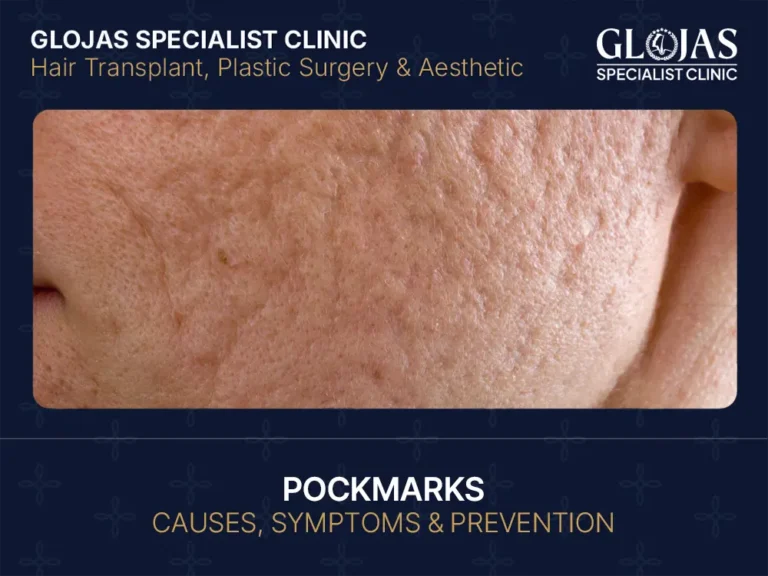
Pockmarks are deep skin indentations often caused by severe acne, chickenpox, or past injuries, and many people feel self-conscious because of them. Professional treatments like laser therapy, microneedling, and chemical peels can improve skin texture. Understanding their causes and prevention offers hope for healthier skin and long-term results.
GLOJAS Specialist Clinic offers expert pockmarks treatment led by board-certified dermatologists and plastic surgeons. Using clinically proven procedures such as laser therapy, microneedling, and chemical peels, the clinic delivers safe, effective, and personalized care to improve skin texture and enhance patient confidence.
What Are Pockmarks?
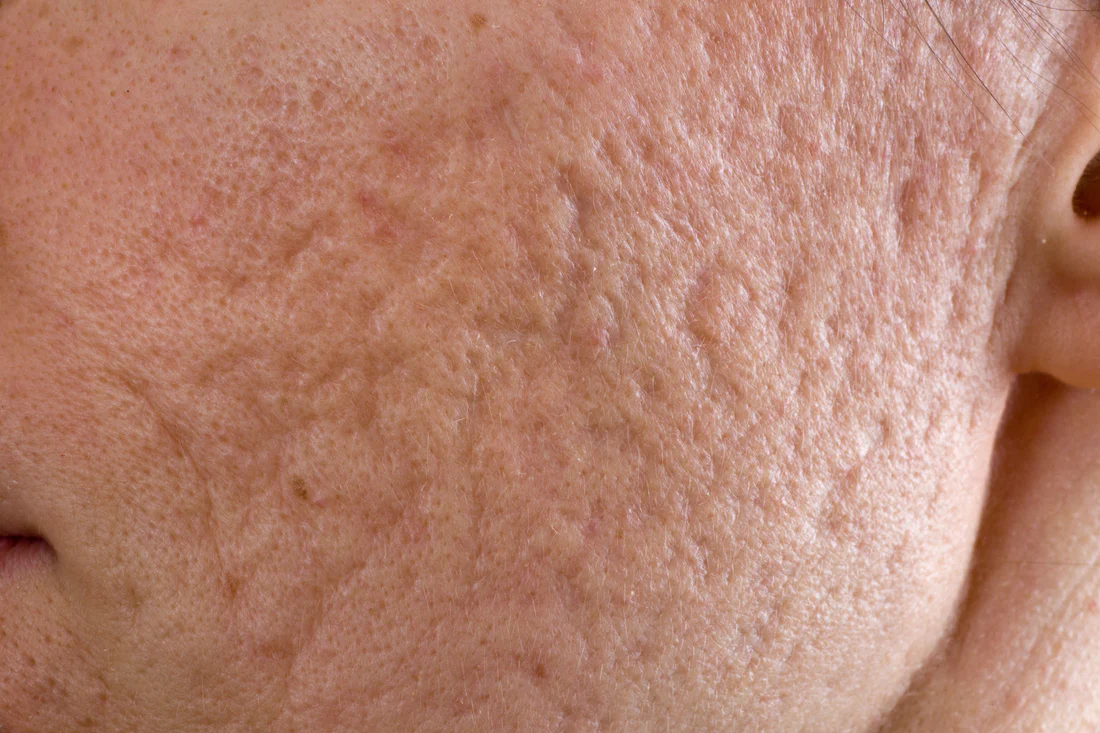
Pockmarks are permanent indentations or depressed scars that form on the skin when the underlying tissue is damaged. They often result from severe acne, chickenpox, or other skin infections. Unlike surface-level scars, pockmarks affect the dermis, leading to uneven texture. They are most noticeable on the face—especially the cheeks, forehead, and jawline—and can appear in different forms, including boxcar, icepick, or rolling scars.
Symptoms & Signs Of How Pockmarks Look
Pockmarks are typically visible as:
Small to deep depressions in the skin
Rough or uneven skin texture
Redness or darker pigmentation around scars
Irregular, crater-like patterns
Residual marks from previous inflammation or acne
Why Pockmarks Happen
Pockmarks occur when the skin’s natural healing is disrupted, leading to collagen loss. Common causes include:
Severe acne: Especially cystic acne that damages deeper layers of skin
Chickenpox or viral infections: Can leave lasting scars
Skin injuries or burns: Trauma that affects dermal tissue
Inflammation or poorly treated wounds: May interfere with normal healing
Risk Factors:
Family history of scarring or poor healing
Delayed or inadequate acne treatment
Picking, squeezing, or scratching skin lesions
How Doctors Check Pockmarks
A dermatologist can identify pockmarks through a visual assessment and targeted evaluation:
Medical history: Past acne, infections, or trauma
Skin mapping: Assess scar type, distribution, and severity
Photographic documentation: Track changes over time
Dermoscopic examination: Examine scar depth and tissue structure
Effective Treatments for Pockmarks
Although pockmarks are permanent, their appearance can be improved with professional treatments:
1. Laser Treatments
Fractional CO2 Laser: Smoothens skin surface and promotes collagen growth
Erbium:YAG Laser: Targets superficial and moderate scars effectively
2. Microneedling / Collagen Induction Therapy
Stimulates collagen production
Often combined with PRP (Platelet-Rich Plasma) for enhanced results
3. Chemical Peels
Medium or deep peels can lessen scar depth and pigmentation
Multiple sessions may be required
4. Dermal Fillers
Temporary solution for deeper scars
Hyaluronic acid fillers help restore volume and smooth contours
5. Subcision
Minimally invasive procedure that releases fibrotic scar tissue
Frequently combined with microneedling for better results
- In a study of 40 patients with “rolling” acne scars, subcision produced roughly a 50% improvement in scar appearance, and about 90% of patients said their skin looked better after treatment. (PubMed)
6. Surgical Options
Punch excision or grafting may be needed for severe icepick scars
Reserved for scars resistant to non-surgical treatments
Choosing the Right Treatment:
Treatment depends on scar type, depth, skin type, and patient goals. Dermatologist consultation is essential for personalized care.
Possible Risks and Side Effects
Temporary redness, swelling, or mild discomfort
Short-term pigmentation changes
Infection risk if aftercare is neglected
Rare scarring from aggressive procedures
How to Prevent Pockmarks
Early and consistent acne management with dermatological guidance
Avoid squeezing or picking pimples
Use sunscreen to prevent post-inflammatory pigmentation
Follow a gentle daily skincare routine
When You Should See a Doctor
Seek professional advice if:
Pockmarks are extensive or affect self-confidence
Acne continues to cause new scars
Home treatments are ineffective
Sudden changes occur in scar appearance or skin texture
Frequently Asked Questions (FAQs)
1. Can pockmarks be completely removed?
Pockmarks cannot be fully erased, but treatments like laser therapy and microneedling can significantly improve their appearance and smooth skin texture.
2. Which treatment works best for deep pockmarks?
Combination therapy—such as fractional laser paired with microneedling or subcision—is often most effective for severe scars.
3. Are these treatments safe for all skin types?
Yes, but treatments should be tailored to skin type to reduce risks of pigmentation changes.
4. How many sessions are usually needed?
Most patients see visible improvement after 3–6 sessions, depending on the scar severity and type of treatment.
5. Can these scars return after treatment?
Once treated successfully, it is generally do not return. However, new scars can form if acne or skin trauma continues.
6. Is downtime required after procedures?
Downtime is usually minimal to moderate, ranging from 1–7 days, depending on the procedure.
7. Can at-home remedies reduce these type of scars?
Home treatments may soften minor scars but are ineffective for deeper scars. Professional care is recommended for lasting improvement.