
Pico and Q-Switched lasers are advanced treatments for pigmentation, including melasma, sunspots, and post-inflammatory marks. Pico lasers deliver ultra-short pulses for precise pigment targeting with minimal downtime, while Q-Switched lasers rely on longer pulses to break pigment. Choosing the right laser depends on skin type, pigmentation depth, and treatment goals.
GLOJAS Specialist Clinic specializes in Pico laser treatments for pigmentation, providing precise, evidence-based care for melasma, sunspots, and post-inflammatory hyperpigmentation. Our board-certified clinicians use advanced Pico technology to deliver fast, safe, and effective results with minimal downtime, ensuring optimal outcomes tailored to each patient’s skin type and concerns.
Introduction
Pigmentation disorders are common aesthetic concerns, ranging from melasma and lentigines to post-inflammatory hyperpigmentation (PIH). Laser therapy has become a cornerstone treatment due to its precision, minimal invasiveness, and consistent results. Pico and Q-Switched lasers are the two most studied options. Understanding their differences ensures optimal clinical outcomes.
How Lasers Work on Pigmentation
Q-Switched Laser:
Uses nanosecond pulse durations.
Delivers high-energy light absorbed by melanin.
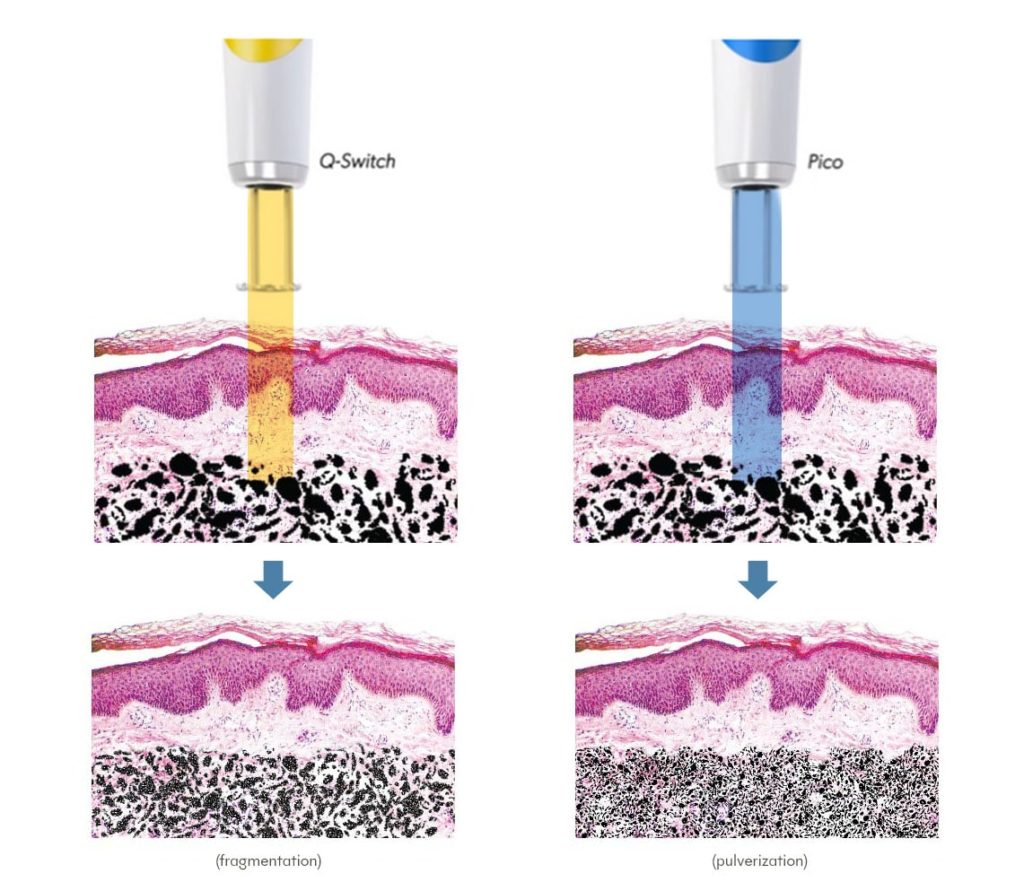
Shatters pigment particles, which are then cleared by the lymphatic system.
Effective for deeper dermal pigmentation but may cause post-inflammatory hyperpigmentation in darker skin types.
Pico Laser:
Uses picosecond pulse durations (trillionths of a second).
Creates a photoacoustic effect rather than primarily thermal, breaking pigment more efficiently.
Reduces collateral tissue damage, lowering risk of redness, swelling, and PIH.
Often requires fewer sessions for similar or superior results.
Indications: When to Use Each Laser
| Condition | Q-Switched Laser | Pico Laser |
|---|---|---|
| Melasma | Moderate improvement; higher PIH risk | High efficacy; lower downtime |
| Sunspots & Lentigines | Good results; multiple sessions | Excellent results; fewer sessions |
| Tattoo Pigmentation | Standard treatment | Faster clearance; fewer side effects |
| Post-Inflammatory Hyperpigmentation | Effective but cautious in darker skin | Preferred in darker skin due to lower PIH risk |
Efficacy & Safety
Q-Switched:
Sessions: 4–8, spaced 4–6 weeks apart.
Side effects: Redness, swelling, temporary hypo/hyperpigmentation.
Depth of pigment targeting: Moderate to deep dermis.
Pico:
Sessions: 2–5, spaced 4 weeks apart.
Side effects: Minimal redness and swelling; lower PIH risk.
Depth of pigment targeting: Superficial to deep dermis with precision.
Clinical Insight: Pico lasers are generally safer for darker Fitzpatrick skin types due to lower heat-induced complications. Q-Switched remains effective for deep dermal pigmentation but may require careful test spots.
Treatment Considerations
Skin Type: Fitzpatrick IV–VI patients benefit more from Pico lasers due to reduced PIH risk.
Pigment Depth: Dermal vs epidermal pigmentation determines which laser delivers optimal results.
Downtime & Recovery: Pico lasers typically have shorter recovery and less post-procedural erythema.
Session Frequency: Pico lasers often require fewer sessions, improving patient compliance and satisfaction.
Combination Therapies
Topical Adjuncts: Hydroquinone, tranexamic acid, and retinoids enhance outcomes.
Fractional Resurfacing: Combining lasers with fractional treatments can improve texture and pigment uniformity.
Sun Protection: Essential to prevent recurrence; SPF 50+ recommended daily.
Patient Experience
Pain Level: Both lasers are tolerable; Pico may feel like a light snapping sensation, Q-Switched slightly more intense.
Immediate Effects: Mild redness and edema resolve in 24–48 hours.
Long-Term Results: Pico lasers often show faster and more uniform pigment clearance with fewer rebound effects.
Cost & Accessibility
Q-Switched: Widely available; typically lower cost per session.
Pico: Higher upfront cost but fewer sessions may offset overall expense.
FAQs
Q1: Can Pico or Q-Switched lasers treat melasma permanently?
A: Pigmentation can be significantly reduced, but recurrence is possible, especially in melasma. Maintenance, sun protection, and topical therapy are essential.
Q2: Which laser is safer for darker skin tones?
A: Pico lasers are preferred for darker skin (Fitzpatrick IV–VI) due to lower risk of post-inflammatory hyperpigmentation.
Q3: How many sessions are typically required?
A: Pico: 2–5 sessions; Q-Switched: 4–8 sessions, depending on pigment type, depth, and skin response.
Q4: Is there downtime after treatment?
A: Pico lasers have minimal downtime (24–48 hours); Q-Switched may cause mild redness and swelling for 2–3 days.
Q5: Can both lasers treat all pigment types?
A: Both can target epidermal and dermal pigment. Pico offers superior results for stubborn or mixed-depth pigmentation and tattoos.
Q6: Are there any risks of scarring?
A: Rare with both lasers if performed by an experienced clinician. Proper parameters and test spots minimize complications.
Conclusion
Choosing between Pico and Q-Switched lasers depends on skin type, pigment depth, and treatment goals. Pico lasers offer faster, safer, and more precise treatment, particularly for darker skin and mixed pigmentation. Q-Switched lasers remain a reliable option for deep dermal pigment and tattoo removal. Consulting a qualified clinician ensures personalized, safe, and effective outcomes.