

Modern aesthetic treatments promise visible results with minimal interruption to daily life. One of the most common questions patients ask is about Pico Laser downtime. While pico laser technology is known for being gentle, understanding what happens after treatment helps set realistic expectations and ensures proper skin recovery.
This guide explains downtime, recovery stages, factors that affect healing, and how pico laser compares to other laser treatments.
What Is Pico Laser Downtime?
Pico Laser downtime refers to the short recovery period after a pico laser treatment, during which the skin may experience redness, mild swelling, or sensitivity. Because pico laser delivers ultra-short pulses in picoseconds, it minimizes heat damage to surrounding tissue. As a result, downtime is significantly shorter than traditional laser treatments, allowing most patients to return to normal activities within one to two days.
Why Pico Laser Has Minimal Downtime
Pico laser technology works differently from older laser systems. Instead of relying mainly on heat, it uses photoacoustic energy to break pigment and stimulate collagen.
Key reasons downtime is reduced:
- Ultra-short pulse duration (picoseconds)
- Less thermal injury to the skin
- Faster cellular recovery
- Lower risk of inflammation
This makes pico laser downtime suitable for busy individuals who want results without extended recovery.
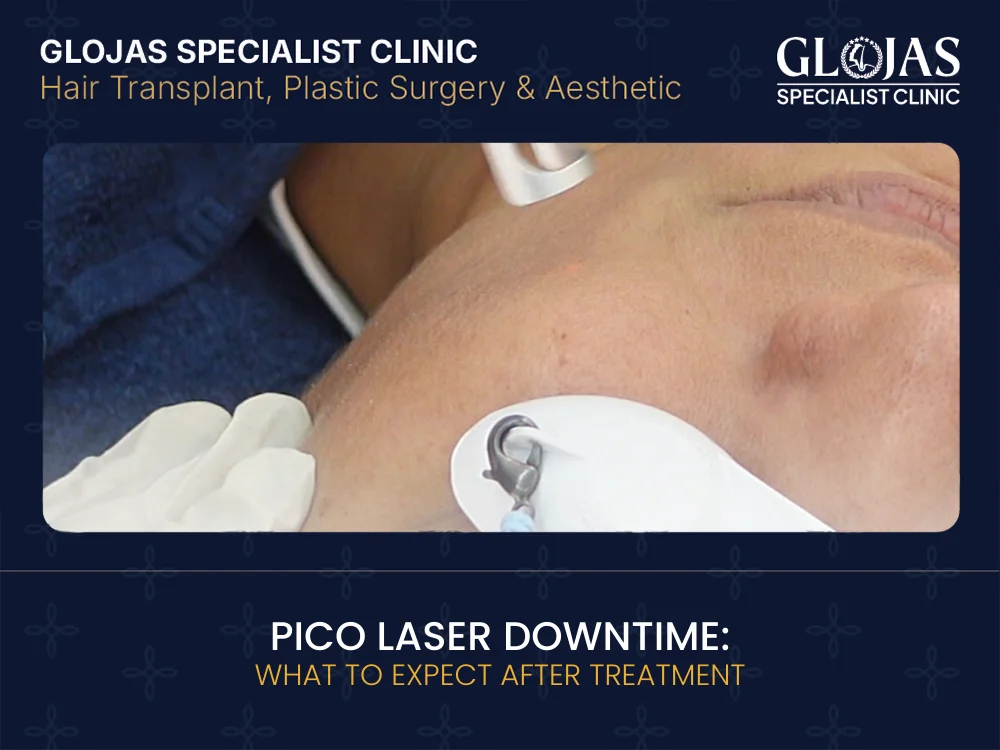
Common Skin Reactions After Pico Laser Treatment
Pico Laser is a non-ablative, high-precision laser, meaning it targets pigment and stimulates collagen without damaging the skin’s surface. Because of this, most post-treatment reactions are mild, short-lived, and completely normal—they actually indicate that your skin is responding to the laser energy.
1. Mild Redness
Immediately after treatment, it’s common to experience mild redness, similar to a mild sunburn. This usually appears in the treated areas and typically subsides within 24–48 hours. In some cases, sensitive skin may remain slightly pink for up to 72 hours.
2. Slight Swelling
A temporary swelling or puffiness may occur, especially around delicate areas like under the eyes or the cheeks. This usually resolves within a day or two and can be minimized with cool compresses if needed.
3. Warm or Tight Skin Sensation
You may feel a warmth or tightness in the treated areas. This sensation is normal and indicates the laser is stimulating collagen and repairing skin tissues. It typically eases within hours after the session.
4. Temporary Dryness or Flaking
As the laser stimulates skin renewal, minor dryness or flaking may occur in the days following treatment. Gentle moisturizing and avoiding harsh scrubs or chemical exfoliants help maintain comfort and support healing.
5. Rare or Mild Bruising or Pinpoint Red Spots
In some cases, tiny red dots or mild bruising can appear, particularly if the treatment involved multiple passes over the same area. These usually fade within a few days.
Timeline for Recovery:
| Reaction | Typical Duration | Tips for Comfort |
|---|---|---|
| Redness | 24–48 hours | Use gentle moisturizer, avoid heat exposure |
| Swelling | 24–48 hours | Apply cold compress if needed |
| Warm/tight sensation | Few hours | Avoid strenuous activity immediately after |
| Dryness/flaking | 2–5 days | Hydrate and use soothing creams |
| Pinpoint redness | 1–3 days | Avoid scratching, let skin heal naturally |
Key Takeaway:
Most reactions are temporary and indicate that your skin is healing and responding to the treatment. With proper aftercare—like hydration, sun protection, and gentle skincare—these effects resolve quickly, allowing you to enjoy the benefits of Pico Laser with minimal downtime.
Pico Laser Downtime Timeline
First 24 Hours
- Redness and sensitivity are most noticeable
- Skin may feel warm or slightly swollen
- Makeup is usually avoided for the first day
Day 2–3
- Redness fades significantly
- Skin texture may feel dry or rough
- Most patients resume work and social activities
Day 4–7
- Skin tone appears brighter and more even
- Collagen stimulation continues beneath the surface
- Minimal visible signs of treatment remain
Unlike aggressive resurfacing lasers, pico laser does not cause open wounds or heavy peeling.
Factors That Affect Pico Laser Downtime
While Pico Laser is known for minimal downtime, the recovery period can vary slightly between individuals. Several factors influence how your skin responds after treatment and how quickly it returns to normal. Understanding these factors can help set realistic expectations and optimize results.
1. Skin Sensitivity and Type
Individuals with sensitive or reactive skin may experience longer-lasting redness or mild swelling after treatment. Darker skin types are also more prone to temporary pigmentation changes, so extra caution and gentler settings may be required to minimize downtime.
2. Treatment Intensity and Settings
The energy level, pulse duration, and spot size chosen by the clinician directly affect how the skin reacts. Higher intensity settings can provide faster or more dramatic results but may also slightly increase redness or swelling for a day or two.
3. Target Concern
Different skin issues respond differently to Pico Laser:
Pigmentation (sunspots, freckles): Usually mild redness for a few hours to a day.
Melasma: May require lower energy and multiple sessions to avoid post-inflammatory pigmentation, which can slightly extend downtime.
Acne scars & texture improvement: Treatments that involve multiple passes may cause temporary sensitivity or minor pinpoint redness for 1–2 days.
4. Number of Passes During Treatment
Each area treated requires “passes” of the laser. More passes increase the energy delivered to the skin, potentially intensifying results but also slightly extending recovery time. A skilled clinician balances the number of passes to maximize improvement while minimizing downtime.
5. Post-Treatment Skincare Routine
Proper aftercare is crucial for reducing downtime and preventing complications. Gentle cleansing, adequate hydration, and strict sun protection can help the skin heal faster. Using harsh products or skipping sunscreen can prolong redness or irritation.
Key Takeaway:
Most patients experience mild redness, slight swelling, or temporary sensitivity, which typically resolves within 24–48 hours. Patients with sensitive skin or darker skin tones may notice slightly longer recovery, but downtime remains minimal compared to traditional laser treatments. Following your clinician’s advice closely ensures a smoother and faster recovery while maximizing the results of Pico Laser treatment.
How Pico Laser Downtime Compares to Other Laser Treatments
Pico Laser vs Q-Switched Laser
- Pico laser: shorter downtime, less heat damage
- Q-switched laser: higher risk of redness and pigmentation issues
Pico Laser vs Fractional CO2 Laser
- Pico laser: minimal downtime (1–3 days)
- CO2 laser: extended downtime (7–14 days)
This difference makes pico laser ideal for maintenance treatments and pigment correction.
Can You Go Back to Work After Pico Laser?
In most cases, yes. Many patients return to work the next day.
However, it is recommended to:
- Avoid direct sun exposure
- Skip intense workouts for 24 hours
- Use gentle skincare products
For social events, waiting 48 hours ensures redness has fully subsided.
Post-Treatment Care to Reduce Downtime
Proper aftercare helps the skin heal faster and enhances results.
Recommended care:
- Apply broad-spectrum sunscreen daily
- Use a gentle cleanser and moisturizer
- Avoid exfoliants and retinoids for several days
- Keep skin hydrated
- Follow your provider’s instructions closely
Good aftercare can shorten downtime and reduce irritation.
Is Pico Laser Safe for All Skin Types?
Pico laser is considered safe for most skin tones, including darker skin types, when performed by trained professionals. Its reduced thermal effect lowers the risk of post-inflammatory hyperpigmentation.
However, personalized settings and proper assessment are essential to minimize side effects and downtime.
How Many Pico Laser Sessions Are Needed?
The number of Pico Laser sessions required varies depending on your skin condition, treatment goals, and individual skin response. Pico Laser works by delivering ultra-short pulses of energy, which means results are gradual and improve with each session rather than happening instantly.
General session guidelines include:
Pigmentation (melasma, sunspots, freckles)
Most patients see noticeable improvement after 2–4 sessions. Stubborn or deeper pigmentation may require additional treatments, spaced a few weeks apart, to safely break down pigment without triggering rebound darkening.Acne scars & uneven texture
Acne scarring usually needs 3–6 sessions, especially for atrophic or deeper scars. Each session stimulates collagen remodeling, so skin texture continues to improve over time even after the final treatment.Skin rejuvenation & tone brightening
For overall skin clarity, pore refinement, and glow, many patients choose ongoing maintenance treatments every few months. This approach helps sustain collagen production and slows visible signs of skin aging.
Treatment spacing & downtime
Sessions are typically scheduled every 3–6 weeks. When spaced correctly, downtime does not significantly increase, even with multiple sessions. Most patients experience only mild redness that subsides within hours to a day, making Pico Laser suitable for busy lifestyles.
A personalized consultation is essential, as factors like skin type, pigment depth, and previous treatments can influence the total number of sessions needed and the final outcome.
Is Pico Laser Downtime Worth the Results?
For most patients, the answer is yes. Pico laser delivers visible improvements in skin tone, texture, and clarity with minimal disruption to daily life. The short downtime is one of its biggest advantages over traditional laser treatments.
Frequently Asked Questions (FAQs)
1. How long does pico laser downtime last?
Usually 1–3 days, depending on skin type and treatment intensity.
2. Can I wear makeup after pico laser?
Most providers recommend waiting 24 hours.
3. Is redness normal after pico laser downtime?
Yes, mild redness is expected and temporary.
4. Does pico laser cause peeling?
Light flaking may occur, but heavy peeling is uncommon.
5. Can I exercise after treatment?
Light activity is fine after 24 hours.
6. Is pico laser downtime painful?
Discomfort is minimal and short-lived.
7. Can darker skin tones get pico laser?
Yes, with proper settings and expertise.
8. Does downtime increase with higher settings?
Slightly, but still less than traditional lasers.
9. How soon can I see results?
Some improvements appear within days; full results develop over weeks.
10. Can pico laser downtime be prevented?
It cannot be eliminated, but proper aftercare reduces it significantly.
Conclusion
Pico Laser downtime is minimal compared to many other laser treatments, making it an excellent option for individuals seeking effective skin improvement without extended recovery. With proper technique and aftercare, most patients enjoy smoother, brighter skin while returning quickly to their normal routine.