
Have you ever wondered why some people seem to have skin that just… bounces back? That firmness and “snap” are thanks to two superstar proteins: collagen and elastin. Think of collagen as the scaffolding that holds your skin up and elastin as the rubber bands that allow it to stretch and recoil.
As we blow out more birthday candles, our natural production of these proteins slows down. Enter collagen induction therapy, more commonly known as microneedling. It might sound a bit intense to use tiny needles to improve your complexion, but the science is actually a brilliant “hack” of your body’s own biology.
GLOJAS Specialist Clinic offers expert-led microneedling treatments, utilizing medical-grade precision to effectively stimulate collagen and elastin for long-lasting, youthful skin rejuvenation and scar revision.
5 Key Takeaways: How Microneedling Works
Triggers Natural Healing: The process uses “micro-injuries” to trick the brain into thinking the skin is wounded, sparking a repair response.
Activates Fibroblasts: These are the “factory cells” in your dermis responsible for churning out fresh collagen and elastin fibers.
Three-Phase Process: Skin rejuvenation happens in three distinct stages: Inflammation, Proliferation, and Remodeling.
Massive Protein Boost: Clinical studies show that a series of treatments can increase collagen and elastin deposition by up to 400% over six months.
Safe for Most: Because it doesn’t use heat or harsh chemicals, it is a versatile option for various skin types and tones.
The Biological “Magic” of Microneedling
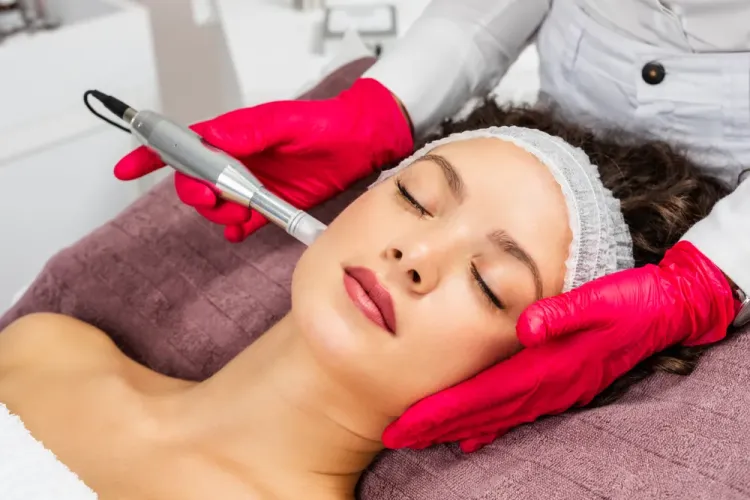
At its core, microneedling is a form of fractional skin rejuvenation. Whether your aesthetician uses a manual dermaroller or an automated pen, the goal is the same: to create thousands of invisible perforations in the epidermis and dermis.
These aren’t “real” wounds in the sense of a cut or scrape that leaves a scar. Instead, they are controlled, sterile channels. The second those needles touch your skin, your body’s internal “alarm system” goes off.
Step 1: The Inflammatory Phase (Days 1–3)
Immediately after the procedure, your skin enters the Inflammatory Phase. Platelets in your blood release growth factors that act like tiny foremen on a construction site, signaling to other cells that it’s time to get to work. This is why you look a little red or “sunburned” right after—your blood flow is increasing to deliver the nutrients needed for repair.
Step 2: The Proliferative Phase (Weeks 1–3)
This is where the heavy lifting happens. New tissue is built using a temporary “scaffolding” of type III collagen and specialized cells called fibroblasts. These fibroblasts begin synthesizing elastin and tropoelastin, which give the skin its youthful resilience. During this time, you might notice your skin feels tighter and looks brighter as neovascularization (the formation of new blood vessels) improves your “inner glow.”
Step 3: The Remodeling Phase (Month 1+)
The final stage is the most rewarding. The temporary collagen is replaced by Type I collagen, which is stronger and more organized. This “remodeling” can continue for up to a year after your last session! This is why professional treatments are often spaced 4–6 weeks apart; you want to “stack” these healing cycles on top of each other for the best results.
Why “Needle Depth” Matters
When discussing how microneedling works for stimulates collagen & elastin, depth is a major factor.
Shallow depths (0.25mm – 0.5mm) are great for product absorption and fine lines.
Deeper depths (1.0mm – 2.5mm) are required to reach the reticular dermis, where the thickest bundles of collagen live. This is usually necessary for treating acne scars or deep wrinkles.
Enhancing the Results
Many people choose to combine microneedling with active topicals. Because the needles create open “micro-channels,” anything you put on your skin afterward penetrates significantly deeper.
Hyaluronic Acid: For a massive hydration boost.
Vitamin C: To supercharge the brightening effect and protect new collagen from oxidative stress.
PRP (Platelet-Rich Plasma): Often called the “Vampire Facial,” this uses your own growth factors to accelerate the healing cascade.
Frequently Asked Questions (FAQs)
Q: Is microneedling better than a chemical peel? It depends on your goal! While peels are fantastic for surface pigmentation, microneedling goes deeper to physically restructure the skin. For sagging and deep texture issues, microneedling usually takes the lead.
Q: Can I do this at home with a roller? While home rollers exist, they are typically limited to 0.25mm. They are great for product absorption but aren’t deep enough to trigger the massive collagen and elastin boost seen with professional-grade medical devices.
Q: How soon will I see more collagen? You’ll see an immediate “plump” from the swelling, but the true structural collagen begins to show around 4 to 6 weeks. The best results usually peak at the 3 to 6-month mark.
Q: Does it hurt? Most professionals apply a numbing cream. You’ll feel a vibrating sensation and a bit of “scratchiness,” but it’s generally very tolerable.
Q: Are the results permanent? While the new collagen created is yours to keep, your body will continue to age naturally. Most people opt for a “maintenance” session once or twice a year to keep their collagen levels topped up.