
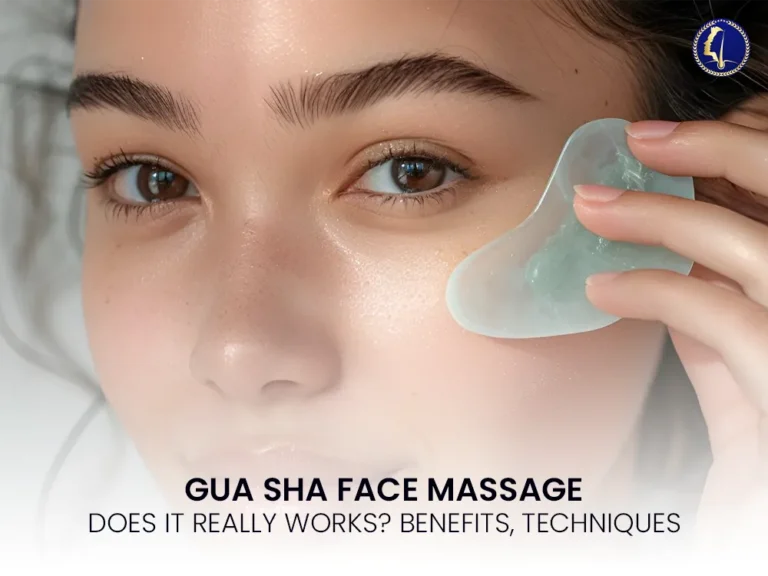
Gua sha is a traditional East Asian healing technique involving a smooth-edged tool to stroke or “scrape” the skin to redirect energy flow (Qi) and improve circulation. In modern skincare, facial gua sha uses gentle, upward pressure to stimulate lymphatic drainage, reduce puffiness, and naturally contour facial features.
What is Gua Sha?
The term “Gua” means to scrape or rub, while “Sha” refers to the temporary redness that appears on the skin after treatment, traditionally believed to be the release of toxins.
Originating from Traditional Chinese Medicine (TCM), this practice has been used for centuries to treat various ailments by promoting blood flow and metabolic repair.
In Malaysia, the practice has transitioned from a clinical TCM treatment into a mainstream beauty staple found in both holistic spas and home skincare routines.
Meaning and traditional Chinese medicine origins
Gua sha is rooted in the belief that “stagnant energy” or chronic inflammation in the body causes disease and skin dullness.
According to WebMD’s medical review, the technique is intended to activate the immune and nervous systems to set off a chain of healing events.
The philosophy centers on “bringing the heat” to the surface, which encourages the body to clear out waste through the lymphatic system.
Facial gua sha vs body gua sha
Facial Gua Sha: Uses extremely light pressure at a 15–45 degree angle; the goal is to move lymph fluid and sculpt the face without causing any bruising.
Body Gua Sha: Often involves firmer, downward strokes on the back, neck, or limbs to break up fascia and treat muscle soreness.
Facial tools are smaller and feature notches for the jawline, whereas body tools are larger and thicker for broader surface areas.
Benefits of Gua Sha
Gua sha provides a natural, non-invasive alternative to fillers by lifting the facial muscles through consistent repetitive motion.
It serves as a form of “facial yoga” that releases tension in the jaw (TMJ) and brow, which can prevent the formation of expression lines.
By moving stagnant fluid out of the face, it can drastically reduce morning “puffiness” within minutes of application.
Facial lifting and sculpting effects
The tool’s edge allows for deeper “gripping” of the facial muscles compared to finger massage, helping to define the cheekbones and jawline.
Many users report a more “snatched” appearance, particularly in the lower face where fluid tends to accumulate as we age.
Lymphatic drainage and de-puffing
The lymphatic system does not have its own “pump”; it relies on manual movement or exercise to flush out toxins.
Gua sha acts as an external pump, pushing fluid toward the lymph nodes located at the neck and behind the ears for disposal.
Blood circulation and skin glow improvement
The gentle scraping motion creates a “controlled micro-trauma” that signals the body to send oxygenated blood and nutrients to the surface.
Studies have shown that regular facial massage can significantly increase microcirculation in the skin, leading to a brighter and more even complexion.
How to Use Gua Sha Correctly
Preparation is key: Never use a gua sha tool on dry skin, as this causes “dragging” and can lead to micro-tears or broken capillaries.
Hold the stone almost flat against your skin (about 15 degrees) rather than using the sharp edge directly at a 90-degree angle.
Step-by-step facial gua sha technique
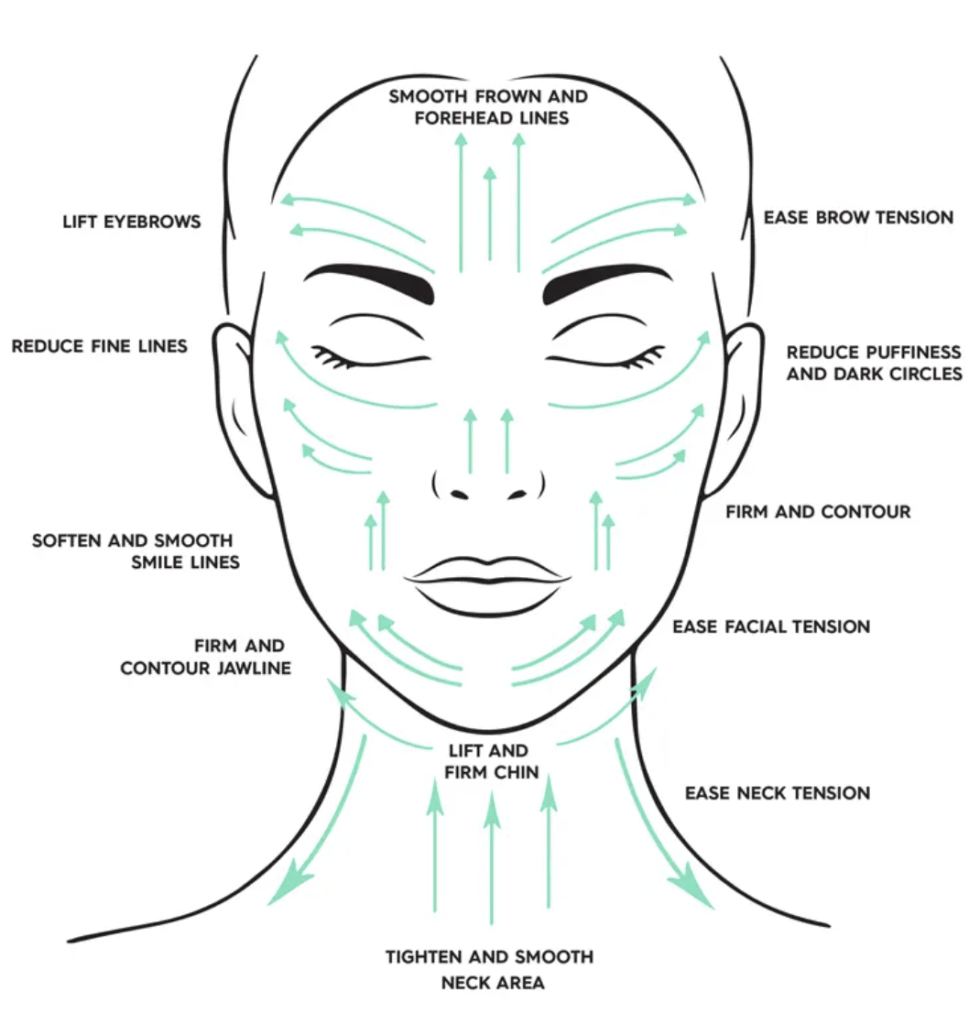
Neck & Jaw: Start at the neck to “open” the lymphatic pathways, moving upward, then sweep from the chin toward the earlobe.
Cheeks & Eyes: Glide from the side of the nose across the cheek and very gently from the inner eye corner outward.
Forehead: Finish by sweeping upward from the brows to the hairline to lift the eyes and release tension.
Direction of strokes for different face areas
Neck: Upward for lifting; downward for drainage.
Face: Always sweep outward and upward toward the ears and hairline to counter gravity.
Third Eye: Swipe straight up from the bridge of the nose to the hairline to relieve stress.
Frequency and duration for best results
For visible lifting and sculpting, aim for 3 to 5 times per week; a full session usually takes about 10 minutes.
Consistency is more important than duration—a 2-minute “quick lift” every day is often more effective than a long session once a month.
Gua Sha Tools and Materials
The material of your tool affects its durability, temperature retention, and the “energy” it brings to your routine.
Regardless of the stone type, the edges must be perfectly smooth to avoid scratching the skin’s surface.
Types of gua sha stones (jade, rose quartz, stainless steel)
Jade: Naturally cooling and thought to balance the skin’s energy and reduce inflammation.
Rose Quartz: Known for its “heart-opening” properties, it stays cool longer than jade and is ideal for sensitive skin.
Stainless Steel: Gaining popularity for being ultra-hygienic, non-porous, and extremely durable.
Choosing the right gua sha tool
Shape: Look for a tool with a “heart” or “V” shape to fit your jawline and a long flat edge for the forehead and cheeks.
Authenticity: Ensure you are buying genuine stone; real stone will feel heavy and cold to the touch.
Proper cleaning and maintenance
Clean your tool after every single use with warm, soapy water to remove bacteria and leftover facial oil.
Dry the tool completely with a clean towel before storing it in a padded pouch to prevent chipping or cracking.
Best Skincare Routine for Gua Sha
Gua sha should be performed after cleansing and toning, but before your final heavy moisturizer or SPF.
The “slip” agent you choose is critical—oils are preferred over water-based serums as they don’t dry out halfway through.
Oils and serums to use with gua sha
Facial oils provide the best glide; look for ingredients like Rosehip or Argan which nourish the skin while you massage.
If you have oily skin, look for non-comedogenic oils like Squalane to avoid clogging pores.
Morning vs night application
Morning: Focuses on drainage and “waking up” the face; great for reducing overnight fluid retention.
Night: Focuses on relaxation and releasing the day’s stress; helps to soothe the nervous system for better sleep.
Skin preparation before gua sha
Mist the face with a hydrating toner or floral water first to help the oil spread more easily.
If you want more de-puffing, pop your tool in the fridge for 5 minutes before use.
Gua Sha Safety and Precautions
Your skin should look slightly pink after use, but it should never be red, bruised, or painful.
If you have had Botox or dermal fillers, wait at least 3–4 weeks before using gua sha to avoid moving the injectables.
Who should avoid gua sha
People with active inflammatory acne, cystic breakouts, or open wounds should avoid the area to prevent spreading bacteria.
Those with severe rosacea or very broken capillaries should use extreme caution as the friction may aggravate the condition.
Common mistakes and skin damage risks
Too much pressure: Pushing too hard does not work the muscle better; it simply damages the delicate surface tissue.
Incorrect angle: Holding the tool at a 90-degree angle “scrapes” rather than “glides,” which can cause irritation.
Safe pressure and technique guidelines
The weight of the stone itself provides most of the pressure you need; think of it as “caressing” the skin.
Always move in one direction—never scrub back and forth, as this disrupts the lymphatic flow.
Gua Sha in Malaysia
In Malaysia, gua sha has become a viral sensation, often sold through local independent wellness brands and major retailers like Sephora Malaysia.
The tropical heat often causes fluid retention; gua sha is the perfect cooling remedy for the local climate.
Popularity of gua sha in Malaysian skincare routines
The community appreciates the blend of “heritage” and “modernity,” connecting with the TCM roots while enjoying the spa-like experience at home.
Malaysian beauty influencers frequently showcase their results, further cementing its status as a must-have tool.
Availability in beauty stores and online platforms
Physical stores carry premium brands, while Shopee and Lazada offer thousands of budget-friendly options.
Local artisanal brands often sell “sets” that include a stone and a specifically formulated facial oil.
Price range of gua sha tools in Malaysia
Budget (RM 10 – RM 40): Usually made of jade or resin; widely available online.
Mid-Range (RM 50 – RM 120): High-quality natural rose quartz or stainless steel from local brands.
Premium (RM 130 – RM 300+): Luxury brands often sold in high-end boutiques.
Frequently Asked Questions About Gua Sha
Does gua sha really shape the face?
Yes, by removing excess fluid through lymphatic drainage and releasing muscle tension, it can create a more defined look. However, results are temporary and require regular maintenance.
How often should gua sha be done?
For the best results, aim for 3 to 5 times a week. It is safe for daily use as long as you use light pressure and plenty of oil.
Can gua sha help with wrinkles or acne?
It can help soften fine lines by relaxing facial muscles. However, it should never be used directly on active inflammatory acne, as the friction can irritate the pimples.