
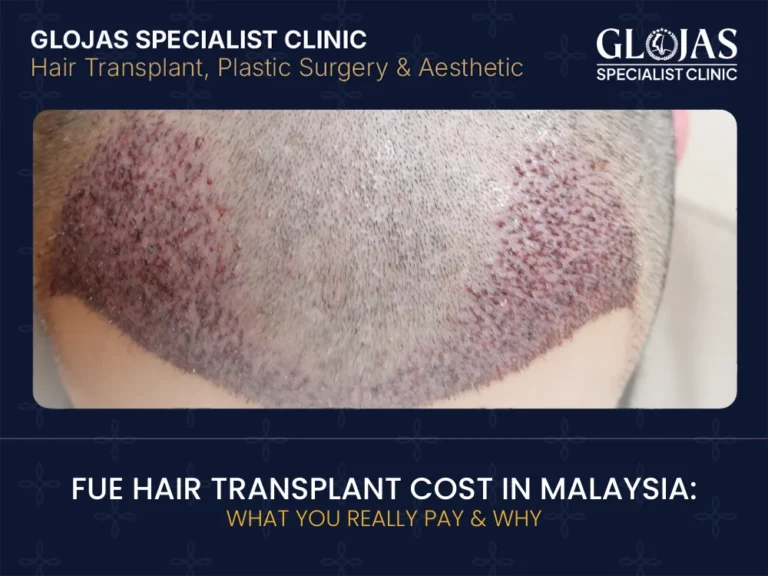
The FUE hair transplant cost Malaysia patients pay depends on several medical and technical factors—not just the clinic name. In Malaysia, Follicular Unit Extraction (FUE) is one of the most requested hair restoration procedures due to its minimally invasive approach, faster recovery, and natural-looking outcomes. Most clinics price FUE by graft count, meaning the number of hair follicle units transplanted directly affects your total FUE Hair Transplant Cost Malaysia. Understanding how pricing works helps you avoid unrealistic promotions and make an informed medical decision.
What Is an FUE Hair Transplant?
FUE (Follicular Unit Extraction) is a modern hair transplant technique where individual hair follicles are extracted from a donor area—usually the back or sides of the scalp—and implanted into thinning or bald areas.
Unlike older strip methods, FUE does not require stitches and leaves only tiny dot scars that are hard to detect once healed. This makes it especially popular among patients who prefer short hairstyles or want minimal downtime.
Average FUE Hair Transplant Cost Malaysia
The average FUE hair transplant cost Malaysia typically ranges between:
- RM 8 – RM 15 per graft
- RM 12,000 – RM 30,000+ total, depending on graft number
Most patients require 1,500 to 3,500 grafts, depending on hair loss severity, density goals, and scalp condition.
Compared to countries like Australia, the UK, or the US—where FUE can cost two to three times more—Malaysia offers a strong balance of affordability and medical standards.
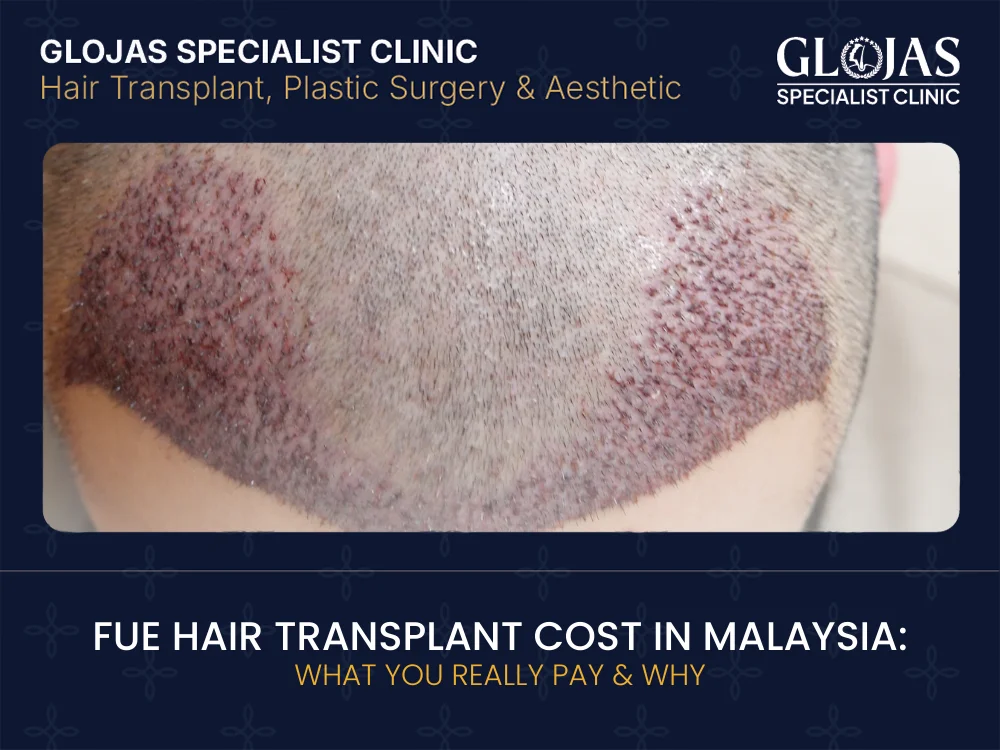
Why FUE Hair Transplant Cost Malaysia Vary
1. Number of Grafts Needed
More grafts mean longer procedure time, more manpower, and higher cost. A mild recession costs less than full crown restoration.
2. Surgeon’s Experience
Clinics led by experienced hair transplant surgeons usually charge higher—but results tend to be more predictable and natural.
3. Technology & Technique
Manual FUE, motorized FUE, sapphire blades, or micro-implanter pens all affect pricing.
4. Clinic Reputation & Location
Established medical centers in Kuala Lumpur or Selangor often price higher due to operating standards, staffing, and equipment.
5. Included Services
Some clinics bundle PRP therapy, medications, follow-ups, or post-op care into the total cost—others charge separately.
Is Cheaper FUE Hair Transplant Cost Malaysia Always Better?
Not necessarily. When it comes to FUE hair transplantation, price alone should never be the deciding factor. Extremely low prices often come with hidden compromises that can affect both your results and your long-term scalp health.
One major risk is high graft transection rates, where hair follicles are damaged during extraction. Damaged grafts have a much lower chance of survival, which directly impacts the final density and appearance of your hair.
Another concern is overharvesting of the donor area. Taking too many grafts without proper planning can leave visible thinning or patchiness at the back and sides of the scalp—damage that is often permanent and difficult to correct.
In many low-cost setups, inexperienced technicians may perform critical steps of the procedure, such as extraction or implantation, instead of a qualified doctor. This increases the risk of unnatural hairlines, poor angulation, and uneven growth.
Lastly, cheaper procedures often result in poor long-term hair survival. Even if hair appears to grow initially, weak graft handling and improper implantation can lead to shedding and suboptimal results over time.
Hair transplantation is a permanent medical procedure, not a disposable service. A failed or poorly executed transplant can cost significantly more—financially and emotionally—to repair later than investing in a well-planned, professionally performed FUE from the start.
FUT vs FUE Hair Transplant Cost Malaysia Comparison
Technique | Cost Range | Scarring | Recovery |
FUE | RM 8–15/graft | Minimal | Faster |
FUT | RM 5–8/graft | Linear scar | Longer |
While FUT is cheaper, FUE remains the preferred option due to comfort, aesthetics, and flexibility.
What’s Usually Included in FUE Hair Transplant Cost?
When considering an FUE hair transplant, understanding what your fee actually covers is essential. Most reputable clinics structure their pricing to include the core components of the procedure, ensuring transparency and avoiding unexpected expenses later.
Surgeon Consultation & Assessment:
Before any procedure, a thorough consultation with the surgeon is included. This helps assess your hair loss pattern, donor area quality, and suitability for FUE. It also allows you to set realistic expectations for your results.
Local Anesthesia:
FUE is typically performed under local anesthesia, which is included in the cost. This ensures a comfortable, pain-free experience during the extraction and implantation process.
Follicle Extraction & Implantation:
The actual harvesting of hair follicles from the donor area and their precise implantation into the recipient area forms the core of the FUE procedure. This labor-intensive step is usually covered in the quoted price.
Medical Consumables:
Items like sterile gloves, surgical instruments, graft storage solutions, and bandages are part of the procedure. Clinics include these consumables to maintain hygiene and graft survival.
Post-Operative Instructions:
Proper aftercare is critical for graft survival. Clinics typically provide written and verbal guidance on scalp care, medications, and lifestyle adjustments during recovery.
Follow-Up Visits:
Most clinics include at least one follow-up visit to monitor healing, address concerns, and track initial hair growth. Some may also provide remote consultations for international patients.
It’s important to always confirm what’s included in your package. Some clinics may advertise low prices but charge extra for anesthesia, graft handling, or follow-ups. Knowing the full scope upfront helps you compare clinics fairly and prevents surprises.
Recovery Timeline After FUE
Understanding the recovery timeline after an FUE hair transplant is crucial for managing expectations and avoiding unnecessary worry. Hair restoration is a gradual process, and results unfold over months—not days.
Day 1–3:
It’s normal to experience mild swelling, redness, and slight discomfort in both the donor and recipient areas. These effects are temporary and usually subside within a few days with proper aftercare.
Week 1:
Small scabs form around the transplanted grafts and naturally fall off within 7–10 days. This stage is an important sign of healing and should not be rushed by scratching or picking.
Month 1–3:
Many patients experience temporary shedding, often called shock loss. This can be alarming, but it is a normal phase where transplanted hairs fall out before entering a new growth cycle.
Month 4–6:
New hair growth begins to appear. The hairs may initially look thin or uneven, but this marks the start of permanent regrowth.
Month 9–12:
Noticeable improvement in hair density and coverage becomes visible. Hair texture thickens, and the transplanted area starts to blend more naturally with existing hair.
12–18 months:
Final results are achieved. Hair reaches optimal thickness, maturity, and natural movement, revealing the full outcome of the procedure.
Understanding this recovery journey helps patients stay confident and patient throughout the process—an aspect often overlooked when focusing only on fast results or low prices.
Who Is a Suitable Candidate for FUE?
Not everyone with hair loss is automatically the right fit for FUE (Follicular Unit Extraction). The best candidates usually meet several key criteria that help ensure natural-looking, long-lasting results.
You may be a suitable candidate if you have stable donor hair density, usually at the back or sides of the scalp, where hair is genetically resistant to hair loss. This area provides the follicles needed for transplantation without causing visible thinning.
FUE works especially well for those with pattern hair loss, whether male or female. Conditions such as androgenetic alopecia respond better to transplant compared to hair loss caused by medical conditions or active scalp diseases.
Having realistic expectations is just as important. FUE can significantly improve density and hairline appearance, but it does not recreate the hair volume of teenage years. Understanding achievable outcomes leads to higher satisfaction.
Lastly, good overall scalp health matters. A healthy scalp supports graft survival and proper healing after the procedure.
Because every case is unique, a proper medical consultation is essential before discussing treatment plans or FUE Hair Transplant Cost Malaysia.
Medical Tourism & FUE Hair Transplant Cost Malaysia
Malaysia has become one of the leading destinations for FUE hair transplants, attracting patients from across Asia, the Middle East, Europe, and Australia. The appeal goes beyond pricing—it’s about accessibility, quality, and continuity of care.
One major advantage is the availability of English-speaking medical professionals, making communication clear and stress-free for international patients throughout consultation, procedure, and aftercare.
Malaysia is also home to many JCI-accredited hospitals and medical facilities, reflecting high standards in patient safety, hygiene, and clinical governance. This reassures overseas patients that procedures are performed in regulated, internationally benchmarked environments.
Competitive pricing is another strong draw. Patients often receive the same FUE techniques, technology, and medical expertise found in more expensive markets, but at a significantly lower overall cost—without sacrificing quality when choosing reputable clinics.
Equally important is strong post-procedure care. Many clinics provide structured follow-ups, recovery guidance, and remote check-ins after patients return home, which plays a critical role in graft survival and final results.
Because FUE is minimally invasive, international patients often combine treatment with a short recovery stay, allowing them to rest comfortably before traveling. This makes Malaysia an especially practical and attractive option for medical tourism focused on hair restoration.
FAQs: FUE Hair Transplant Cost Malaysia
1. How much does FUE hair transplant cost Malaysia?
Most patients pay between RM 12,000 and RM 30,000 depending on graft count.
2. Is FUE permanent?
Yes, transplanted follicles are usually resistant to hair loss.
3. Why do clinics price per graft?
Each graft requires individual extraction and implantation effort.
4. Is FUE painful?
The procedure is done under local anesthesia and is generally well tolerated.
5. Can women undergo FUE?
Yes, FUE is suitable for female pattern hair loss in selected cases.
6. How long does the procedure take?
Typically 6 to 10 hours depending on graft number.
7. Are results immediate?
No. Hair growth is gradual and takes up to 12–18 months.
8. Is PRP included in the cost?
Some clinics include it; others offer it as an add-on.
9. What happens if grafts fail?
Reputable clinics assess graft survival and offer follow-up solutions.
10. How do I choose the right clinic?
Look at surgeon credentials, before-after cases, and transparent pricing.
Final Thoughts: Is FUE Hair Transplant Cost Malaysia Worth It?
When done correctly, an FUE hair transplant cost Malaysia offers excellent value—combining skilled surgeons, modern techniques, and reasonable cost. The key is understanding what you’re paying for, avoiding unrealistic deals, and prioritizing medical quality over price alone.