
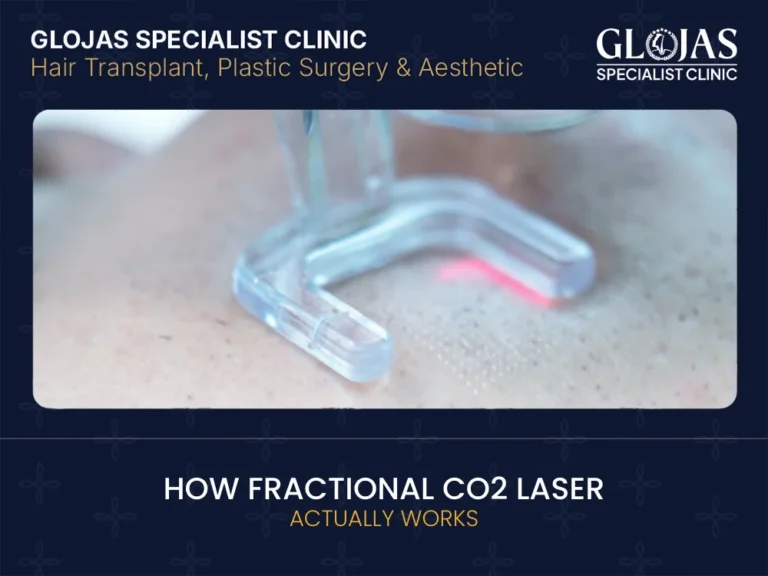
Fractional CO2 laser is one of the most powerful skin resurfacing treatments available today. It is widely used to improve acne scars, wrinkles, enlarged pores, and uneven skin texture. But many people still ask the same question: how fractional CO2 laser works actually and why it delivers such noticeable results.
This guide explains the science, process, benefits, risks, and realistic expectations—without hype or medical jargon. If you are considering laser resurfacing, this article will help you make an informed decision.
How Fractional CO2 Laser Works: A Simple Explanation
How fractional CO2 laser works is based on controlled skin injury and natural healing.
The laser delivers microscopic columns of thermal energy into the skin while leaving the surrounding tissue intact. These micro-injuries stimulate collagen production and skin renewal from within.
Unlike older lasers that treated the entire surface, fractional technology treats only a fraction of the skin at a time. This improves safety, healing speed, and outcomes.
In short:
· The laser creates tiny treatment zones
· Old, damaged skin is replaced
· New collagen forms
· Skin becomes smoother and firmer
This balance between effectiveness and recovery is what makes fractional CO2 laser works so popular.
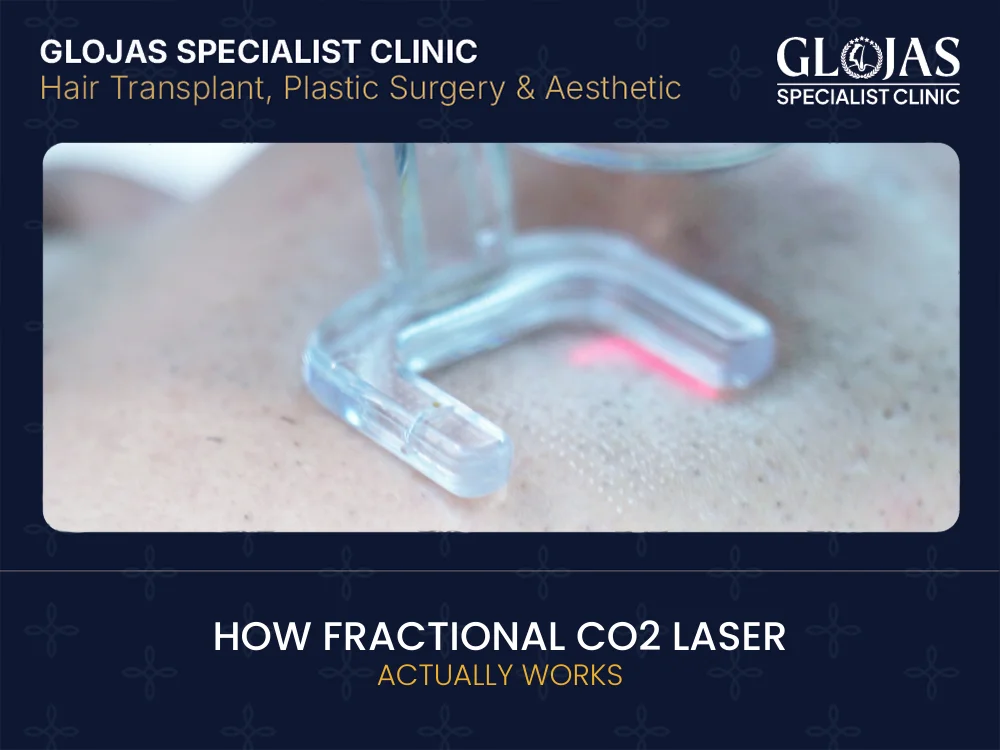
What Is a Fractional CO2 Laser?
Fractional CO2 laser is an ablative laser that uses carbon dioxide (CO2) wavelength at 10,600 nm. This wavelength is strongly absorbed by water in the skin, allowing precise vaporization of damaged tissue.
Key characteristics:
· Ablative (removes micro-layers of skin)
· Fractional (treats skin in tiny columns)
· Deep collagen stimulation
· Medical-grade resurfacing technology
Common devices include:
· Fraxel Repair
· Lumenis UltraPulse
· DEKA SmartXide
· eCO2 Laser Systems
The Science Behind Fractional CO2 Laser Works Technology
To truly understand how fractional CO2 laser works, it helps to know what happens at the cellular level.
1. Creation of Microthermal Treatment Zones (MTZs)
The laser creates thousands of microscopic channels in the skin. These are called microthermal zones.
Each zone:
· Penetrates deep into the dermis
· Triggers controlled thermal damage
· Leaves surrounding skin untouched
2. Collagen Remodeling
The body responds by activating fibroblasts, which produce:
· New collagen
· New elastin
· Healthier skin structure
This process continues for several months after treatment.
3. Skin Renewal
Old skin cells are replaced with new ones. Texture improves, scars soften, and wrinkles become less visible.
What Skin Concerns Can Fractional CO2 Laser Works Treat?
Fractional CO2 laser works is used for moderate to severe skin concerns, including:
· Acne scars (ice pick, boxcar, rolling)
· Surgical or traumatic scars
· Fine lines and deep wrinkles
· Sun damage and photoaging
· Enlarged pores
· Uneven skin texture
· Skin laxity
· Stretch marks (selected cases)
Because it penetrates deeper than non-ablative lasers, results are often more dramatic.
What Happens During a Fractional CO2 Laser Works Treatment?
Before Treatment
· Medical consultation and skin assessment
· Pre-treatment skincare (sometimes retinoids or bleaching agents)
· Antiviral medication if needed
During Treatment
· Topical or local anesthesia is applied
· Laser passes over the treatment area
· Sensation: heat, pressure, mild stinging
Session duration:
· 20–60 minutes depending on area and intensity
After Treatment
· Redness and swelling
· Warm or sunburn-like feeling
· Tiny grid marks may appear temporarily
Fractional CO2 Laser Downtime and Healing Timeline
Downtime depends on treatment intensity.
Typical recovery:
· Day 1–3: Redness, swelling, oozing
· Day 4–7: Crusting and peeling
· Day 7–10: Skin re-epithelialization
· Week 2–4: Pinkness fades
· Month 3–6: Continued collagen improvement
This is why fractional CO2 laser is considered a medium-to-high downtime procedure.
Benefits of Fractional CO2 Laser Works Treatment
Fractional CO2 laser treatment is widely regarded as one of the most powerful skin resurfacing technologies in aesthetic dermatology, especially for patients with advanced skin concerns. Below is an expanded explanation of its key benefits:
Significant collagen stimulation
Fractional CO₂ lasers deliver controlled thermal energy deep into the dermis, triggering the skin’s natural wound-healing response. This process stimulates the production of new collagen and elastin, leading to firmer, thicker, and more youthful-looking skin over time. The collagen remodeling continues for several months after treatment, which is why results keep improving gradually.
Long-lasting results
Unlike superficial treatments that offer temporary improvement, fractional CO₂ laser provides long-term skin remodeling. Once new collagen is formed, improvements in skin texture, scarring, and wrinkles can last for years, especially when combined with good skincare and sun protection.
Highly effective for deep scars and wrinkles
This treatment is particularly effective for deep acne scars, surgical scars, enlarged pores, and pronounced wrinkles. The laser penetrates deeper than non-ablative devices, breaking down scar tissue and encouraging smoother, more even skin regeneration—making it a preferred option for severe or long-standing scarring.
Improves both skin texture and tone
Fractional CO₂ laser resurfacing not only smooths uneven texture but also improves overall skin tone. Patients often notice brighter skin, reduced roughness, refined pores, and a more even complexion as damaged surface layers are replaced with healthier skin.
Customizable treatment depth and intensity
One of the major advantages of fractional CO₂ laser technology is its high level of customization. Treatment depth, energy levels, and coverage can be adjusted based on skin type, concern severity, and downtime tolerance. This allows clinicians to tailor treatments for acne scars, wrinkles, pigmentation irregularities, or skin laxity with precision.
For patients with severe acne scarring or advanced skin aging, fractional CO₂ laser treatment remains a gold-standard solution due to its ability to deliver dramatic, clinically proven results that many other modalities cannot achieve.
Risks and Side Effects You Should Know
While effective, fractional CO2 laser is not risk-free.
Possible side effects:
· Prolonged redness
· Post-inflammatory hyperpigmentation (PIH)
· Infection (rare with proper care)
· Scarring (very rare)
· Temporary acne flare-ups
Risk is higher in darker skin tones if not properly managed. This is why doctor-led treatment and proper settings are critical.
Who Is a Good Candidate for Fractional CO2 Laser Works?
Fractional CO₂ laser treatment is a powerful resurfacing procedure, but it is not suitable for everyone. Careful patient selection is essential to achieve safe, effective, and predictable results.
Ideal candidates include:
Individuals with moderate to severe acne scars
Patients with deep, pitted, boxcar, or rolling acne scars tend to benefit the most. Fractional CO₂ laser penetrates deep into the dermis, breaking down scar tissue and stimulating collagen remodeling where superficial treatments are often insufficient.
Those with deep wrinkles or skin laxity
This treatment is well suited for patients with pronounced wrinkles, crepey skin, or mild-to-moderate skin laxity caused by aging or sun damage. The strong collagen-stimulating effect helps tighten and firm the skin over time.
Fair to medium skin tones (Fitzpatrick I–III)
Fractional CO₂ lasers are traditionally safest and most predictable in lighter skin tones, where the risk of post-inflammatory hyperpigmentation (PIH) is lower. Outcomes in these skin types are generally more consistent.
Good overall skin health
Candidates should have healthy skin without uncontrolled conditions such as eczema, psoriasis, or chronic dermatitis in the treatment area. A strong skin barrier supports faster healing and better results.
Patients with realistic expectations
The best candidates understand that improvement is gradual, results may require multiple sessions, and some downtime is expected. Fractional CO₂ laser can significantly improve skin quality but will not create “perfect” skin.
Not ideal candidates include:
Those with active skin infections or inflammation
Bacterial, viral (e.g., herpes simplex), or fungal infections increase the risk of complications and must be fully treated before considering laser resurfacing.
Individuals prone to keloid or hypertrophic scarring
Patients with a known tendency to form thick or raised scars may be at higher risk of abnormal healing following ablative laser treatments.
Recent isotretinoin (Accutane) users
Patients who have taken isotretinoin within the past 6–12 months may have impaired wound healing, increasing the risk of scarring and delayed recovery.
Very dark skin tones without specialist expertise
Darker skin types (Fitzpatrick IV–VI) have a higher risk of PIH and other pigmentary complications. Treatment may still be possible but should only be performed by highly experienced practitioners using carefully modified settings and strict pre- and post-treatment protocols.
Because individual skin characteristics vary greatly, a personalized consultation is essential. A qualified practitioner can assess skin type, scarring depth, medical history, and treatment goals to determine whether fractional CO₂ laser is the safest and most effective option—or if alternative treatments would be more appropriate.
Fractional CO2 Laser vs Other Laser Treatments
Treatment | Downtime | Depth | Best For |
Fractional CO2 | High | Deep | Severe scars, wrinkles |
Er:YAG Laser | Moderate | Medium | Texture, fine lines |
Pico Laser | Minimal | Shallow | Pigmentation |
Low | Medium | Mild scars, tightening |
Fractional CO2 laser offers the most dramatic resurfacing results but requires more recovery time.
How Many Sessions Are Needed?
Most patients need:
· 1–3 sessions
· Spaced 3–6 months apart
Results improve gradually and can last for years with proper skincare and sun protection.
Post-Treatment Care Tips
· Avoid sun exposure
· Use broad-spectrum sunscreen
· Keep skin moisturized
· Do not pick peeling skin
· Follow doctor instructions strictly
Good aftercare reduces complications and improves results.
Frequently Asked Questions (FAQs)
1. How fractional CO2 laser works for acne scars?
It creates micro-injuries that stimulate collagen, lifting depressed scars over time.
2. Is fractional CO2 laser painful?
Discomfort is controlled with anesthesia. Most patients tolerate it well.
3. How long do results last?
Results can last several years with proper maintenance.
4. Can fractional CO2 laser treat pigmentation?
It can help, but pigmentation-focused lasers may be better for some cases.
5. Is fractional CO2 laser works safe for Asian skin?
Yes, with proper settings and experienced doctors.
6. How soon can I wear makeup?
Usually after 7–10 days, once skin has healed.
7. Can I do fractional CO2 laser works once only?
Yes, but multiple sessions improve results.
8. What age is suitable for this treatment?
Typically 25–60 years, depending on skin condition.
9. Does fractional CO2 laser works tighten skin?
Yes, collagen remodeling leads to visible tightening.
10. Is fractional CO2 laser better than microneedling?
For deep scars and wrinkles, fractional CO2 is more effective.
Final Thoughts
Understanding how fractional CO2 laser works helps you decide whether it is the right treatment for your skin concerns. It is powerful, science-backed, and capable of delivering long-term improvements when performed correctly.
However, results depend heavily on:
· Proper patient selection
· Experienced medical providers
· Correct laser settings
· Good post-treatment care
A professional consultation ensures safety, effectiveness, and realistic expectations.