
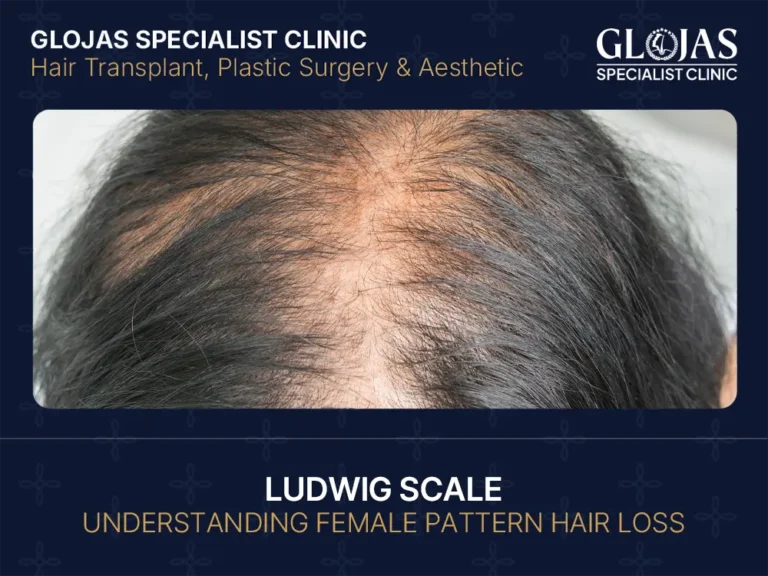
Managing thinning hair can be an emotional journey, but the Ludwig Scale provides a scientific framework to navigate it. In Malaysia’s tropical climate—where humidity and sweat can make hair appear flatter—understanding these stages is vital for early detection. This guide offers an insightful analysis of how to recognize, diagnose, and treat female hair loss effectively.
What Is the Ludwig Scale?
Definition of Ludwig Scale
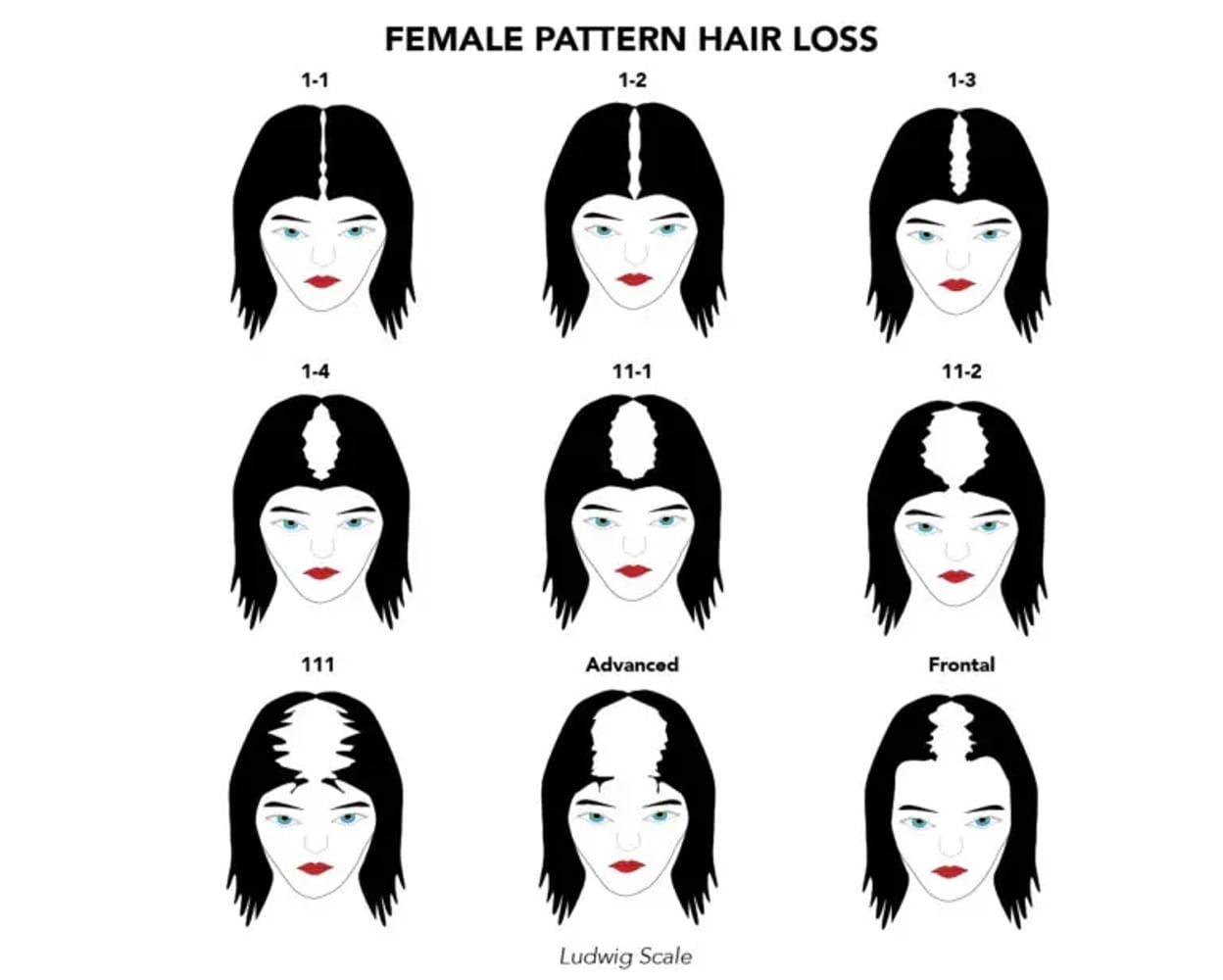
The Ludwig Scale is a specialized clinical tool used by doctors to categorize the severity of Female Pattern Hair Loss (FPHL). Introduced in 1977, it remains the global standard for identifying diffuse thinning. Unlike male hair loss, which often follows a receding hairline, the Ludwig Scale tracks thinning that radiates from the center of the scalp.
Why Ludwig Scale Is Used for Female Hair Loss
This scale is essential because female hair loss is biologically distinct. Women rarely go completely bald; instead, their follicles shrink, leading to finer and shorter hairs (miniaturization). By using this scale, qualified aesthetic doctors in Malaysia can distinguish between temporary shedding (telogen effluvium) and chronic genetic thinning, ensuring a targeted treatment plan.
Ludwig Scale Stages
Ludwig Stage I: Mild Thinning
Stage I represents the earliest sign of thinning, characterized by a slight widening of the central part line. Interestingly, many women miss this stage because the frontal hairline remains intact. Insight: If you notice your scalp becomes more visible under bright sunlight or when your hair is wet, you may be in this manageable early phase.
Ludwig Stage II: Moderate Hair Loss
At Stage II, thinning becomes significant. The part line widens noticeably, and there is a general decrease in volume. This is often the “tipping point” where women seek professional hair restoration. The scalp is easily seen, and styling becomes more difficult as the hair lacks the density to hold its shape.
Ludwig Stage III: Advanced Diffuse Hair Loss
Stage III is the most advanced level, where the hair on the crown is so sparse that the scalp is clearly visible. While the front hairline usually stays, the top of the head appears significantly bald. At this stage, non-surgical treatments focus more on stabilization rather than full regrowth, often requiring a combination of therapies.
Causes of Ludwig Pattern Hair Loss
Hormonal Changes
The primary driver is Dihydrotestosterone (DHT). While women have lower levels of androgens than men, some are genetically more sensitive to them. Analysis: In Malaysia, conditions like Polycystic Ovary Syndrome (PCOS) can cause hormonal spikes that accelerate Ludwig-pattern thinning, making it a metabolic as well as an aesthetic concern.
Genetic Factors
Your DNA determines how your follicles react to age and hormones. If your female relatives experienced thinning, your follicles are likely programmed for a shorter growth phase. Understanding your family history allows for “preventative aesthetics,” where you start maintenance treatments before visible thinning even begins.
Menopause-Related Hair Loss
Menopause causes a sharp drop in estrogen, which previously protected your hair. This shift leaves androgens “unopposed,” often causing a rapid progression from Stage I to Stage II. In Malaysia’s aging population, hormone replacement therapy combined with scalp treatments is becoming a standard approach for restoring hair density.
How Ludwig Scale Is Diagnosed
Scalp Examination
A doctor will perform a physical check, often using dermoscopy to look for follicle miniaturization. This high-magnification view reveals the ratio of thick “terminal” hairs to thin “vellus” hairs. This is the most reliable way to confirm an FPHL diagnosis and rule out other scalp conditions.
Hair Density Assessment
Clinicians use the “pull test” to see if hair is actively shedding. If fewer than three hairs come away during a gentle pull of 50 hairs, the issue is likely Ludwig pattern thinning rather than a temporary shedding event. This distinction is critical because shedding and thinning require entirely different medical protocols.
Medical Consultation
In Malaysia, an LCP-certified doctor will also check for iron deficiency, thyroid issues, and Vitamin D levels. Insight: Many Malaysian women suffer from low ferritin (stored iron), which mimics or worsens FPHL. A blood test ensures that you aren’t just treating the symptoms, but also any underlying systemic causes of hair loss.
Treatment Based on Ludwig Scale
Treatment for Ludwig Stage I
At this stage, the goal is preservation. Topical Minoxidil (2% or 5%) is the gold standard for extending the hair’s growth cycle. When started early, many women see a 20–40% increase in hair density. Combining this with a nutrient-rich diet can often halt progression for years.
Treatment for Ludwig Stage II
Moderate thinning requires “biological boosting.” Platelet-Rich Plasma (PRP) or Exosome therapy are now the 2026 standards in Malaysia. These regenerative treatments use growth factors to “re-wake” dormant follicles. For many, this restores enough density to close the widening part line and improve self-confidence.
Treatment for Ludwig Stage III
For advanced loss, FUE hair transplant offer a permanent solution. Modern AI-driven robotic systems now ensure high graft survival rates. However, even after surgery, patients must continue medical therapy to protect the non-transplanted hair from the ongoing effects of the Ludwig progression.
Results and Progression
Hair Loss Progress Over Time
FPHL is a slow, progressive condition. It doesn’t happen overnight; rather, hairs get slightly thinner with every cycle. Insight: Because the change is gradual, many women lose 50% of their hair density before they even notice. This “silent progression” is why regular scalp checks are important for women over 30.
Treatment Response by Stage
Early-stage patients (Stage I) have the best prognosis for regrowth. Stage II patients can expect visible thickening, while Stage III focuses on coverage. All clinically-backed treatments require 3 to 6 months before results appear. Patience is the most important part of any hair restoration journey in Malaysia.
FAQs About Ludwig Scale
What is Ludwig Scale in hair loss?
It is a 3-stage grading system used by dermatologists to measure the severity of thinning on the top of the scalp in women, helping to track the widening of the hair part.
What causes Ludwig hair loss?
The main cause is Androgenetic Alopecia, where follicles shrink due to genetic sensitivity to hormones. Stress, poor nutrition, and hormonal shifts like menopause can speed up this process.
Can Ludwig Stage 1 be treated?
Yes! Stage 1 is highly responsive to treatment. Using topical vasodilators and improving scalp health can often reverse early thinning and prevent the move to Stage 2.
Is Ludwig hair loss permanent?
If left until the follicle completely dies (advanced Stage 3), it can be permanent. However, most stages are manageable with consistent medical care and early intervention.
What treatment works best for Ludwig Scale?
For early stages, Minoxidil works best. For moderate stages, PRP and Exosomes offer the best density boost. For advanced stages, a hair transplant is the only way to restore hair to a bald area.