
What Is a Hairline Transplant?
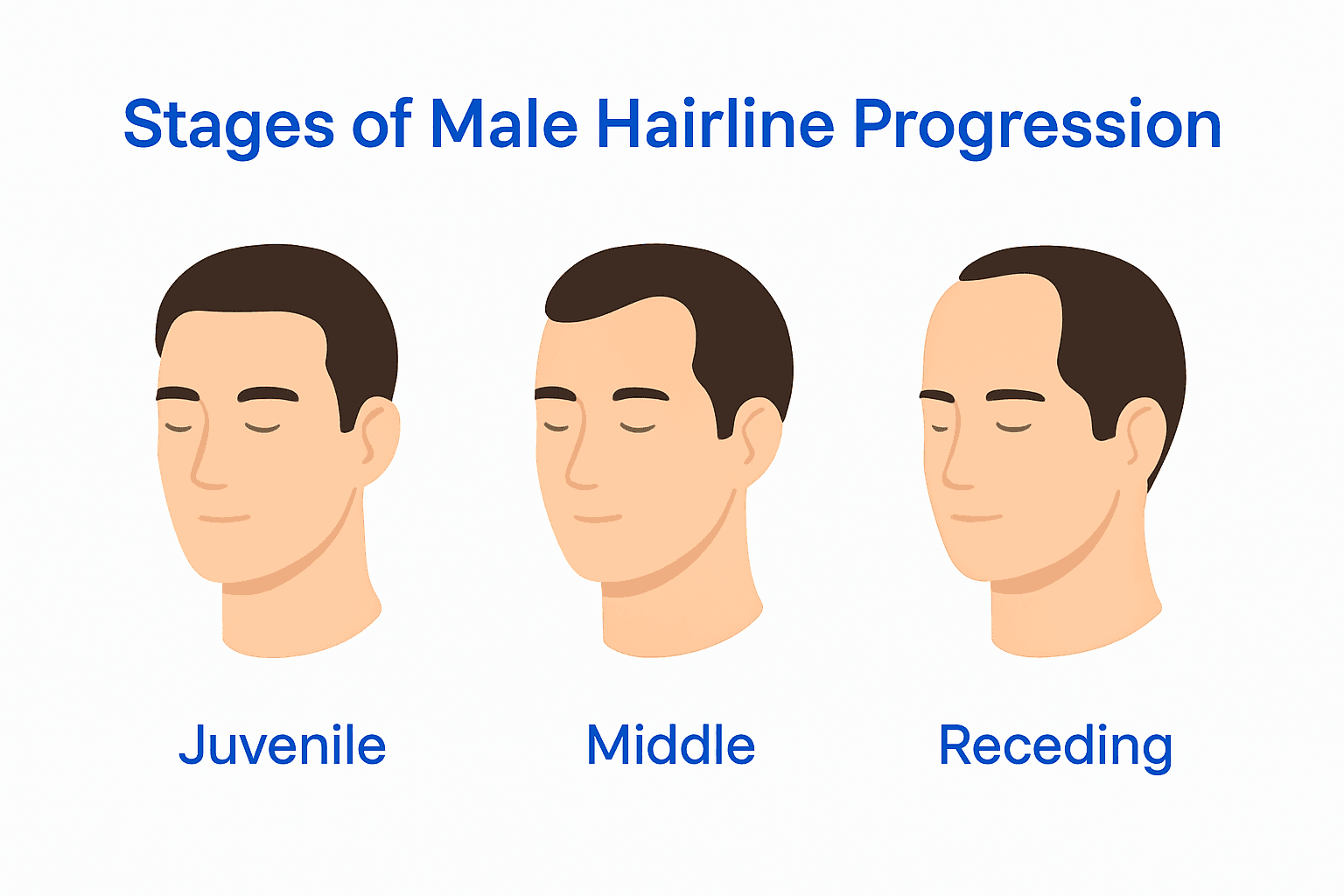
A hairline transplant is a specialized surgical procedure where healthy hair follicles are moved from a “donor site”—usually the back of the head—to the thinning frontal area. It’s designed to lower a high forehead or fill in the “M-shaped” recession common in male pattern baldness.
Definition and How It Works
Technically known as hair restoration surgery, the process involves harvesting follicles that are genetically resistant to balding. Once transplanted into the hairline, these follicles continue to grow naturally for a lifetime. Modern techniques ensure that the newly placed hair mimics the direction and angle of your original strands.
Hairline Design for Natural Results
Artistry is everything here. A “ruler-straight” hairline looks fake, so surgeons use a “macro-irregularity” approach. They place single-hair grafts at the very front to create a soft transition, gradually increasing density further back. This careful planning ensures your new hairline design looks completely natural and age-appropriate.
Types of Hairline Transplant Procedures
Malaysia’s top clinics offer several cutting-edge methods. While they all aim for the same result, the way follicles are harvested and implanted differs. Your choice often depends on your hair type, the number of grafts needed, and your preferred recovery speed.
FUE (Follicular Unit Extraction)
Follicular Unit Extraction (FUE) is the most popular choice in 2026. Surgeons extract individual follicles one by one using a tiny punch tool. It leaves virtually no linear scarring, making it perfect for those who prefer short hairstyles. Healing is quick, usually taking just a few days.
FUT (Follicular Unit Transplantation)
Often called the “strip method,” FUT involves removing a small strip of scalp from the donor area. While it leaves a fine linear scar, it’s highly efficient for mega-sessions requiring thousands of grafts. It’s often a more cost-effective hair transplant option for patients with extensive hair loss.
DHI (Direct Hair Implantation)
DHI is an evolution of FUE. Using a specialized tool called a Choi Implanter Pen, the surgeon extracts and implants the follicle simultaneously. This minimizes the time follicles spend outside the body, potentially increasing survival rates. It also allows for high-density placement without the need for pre-made incisions.
Sapphire FUE
This premium version of FUE uses blades made from sapphire gemstones instead of steel. Because sapphire is smoother and sharper, it creates smaller “micro-channels.” This leads to less tissue trauma, reduced scabbing, and a faster healing process, making it a favorite in high-end Kuala Lumpur clinics.
Who Is a Good Candidate for Hairline Transplant?
Not everyone is ready for the chair just yet. A good candidate typically has stable hair loss and enough healthy donor hair. Malaysian surgeons prioritize patients who have realistic expectations and a healthy scalp environment to support new growth.
Receding Hairlines and Early Hair Loss
The ideal candidate is someone in the early to mid-stages of androgenetic alopecia. If you’re just starting to see a receding hairline, a transplant can “frame” your face again. However, if hair loss is still very active, doctors may suggest stabilizing it with medication first.
Donor Area and Hair Density Requirements
You need enough “savings” in your donor bank to fund your new hairline. Surgeons look for thick hair density at the back and sides of your head. If your donor area is too thin, the results might look sparse, or you might risk visible thinning at the back.
Age and Health Considerations
Most experts recommend waiting until at least age 25, as hair loss patterns become more predictable. Being in good general health is vital for healing. Conditions like uncontrolled diabetes or certain scalp infections could affect the success rate of grafts, so a full medical screening is mandatory.
Hairline Transplant Cost in Malaysia (2026)
Malaysia remains a top destination for “medical tourism” due to competitive pricing and high standards. In 2026, costs are generally calculated per graft, but many clinics offer all-inclusive packages for larger sessions.
| Factor | Estimated Range (MYR) |
| Cost Per Graft | RM5 – RM12 |
| Small Session (1,000 grafts) | RM6,000 – RM10,000 |
| Large Session (2,500+ grafts) | RM15,000 – RM25,000 |
Average Cost Per Graft
On average, expect to pay between RM6 to RM10 per graft in reputable urban clinics. While “budget” options exist, remember that you’re paying for the surgeon’s expertise and the technology used. Sapphire FUE and DHI typically sit at the higher end of this price bracket.
Total Cost Estimates
For a standard hairline restoration, most patients need between 1,500 and 2,500 grafts. This brings the total investment to somewhere between RM12,000 and RM20,000. This usually includes the consultation, the procedure itself, local anesthesia, and basic post-operative medications.
Hairline Transplant Procedure Step-by-Step
Knowing what happens during the 6 to 8-hour session helps ease anxiety. It’s a meticulous process that requires patience from both the surgeon and the patient. Most clinics provide entertainment like Netflix to help you pass the time comfortably.
Consultation and Hairline Planning
First, the surgeon draws your new hairline. This is a collaborative effort; they’ll balance your wishes with facial proportions. Once agreed upon, the donor area is trimmed, and a local anesthetic is applied. You’ll be awake and able to chat throughout the entire day.
Graft Extraction and Implantation
Follicles are harvested using the chosen method (FUE or FUT). These “grafts” are then cleaned and sorted under a microscope. Finally, the surgeon carefully implants them into the thinning areas. Precision is key here—the depth and angle must be perfect to ensure the hair grows in the right direction.
Duration and Comfort Level
While it’s a long day, pain is minimal thanks to local anesthesia. Most patients describe the sensation as a mild pressure. You can take breaks for lunch or use the restroom. By the time the final graft is placed, the area is bandaged, and you’re ready to head home.
Recovery and Aftercare
The first few days are critical for graft survival. While you can resume light activities almost immediately, the “newly planted seeds” need time to take root. Following your clinic’s aftercare manual is the difference between a good result and a great one.
First Week Healing Process
In the first 3 to 5 days, expect some swelling around the forehead and tiny scabs at the graft sites. You’ll need to wash your hair using a special “gentle patting” technique. By day 7, most of the redness and crusting should start to flake off naturally.
Hair Growth Timeline (1–12 Months)
Weeks 2–8: The “Ugly Duckling” phase—transplanted hairs fall out (this is normal!).
Months 3–4: New, thin hairs begin to sprout.
Months 6–9: Significant growth and thickening occur.
1 Year: Final results are visible; the hairline is fully matured.
Aftercare Tips for Optimal Results
Sleep Elevated: Use two pillows for the first 3 nights to reduce swelling.
No Scratching: Even if it itches, don’t touch the scabs!
Avoid Sun: Wear a loose hat if you’re outdoors in the Malaysian sun.
Skip the Gym: Avoid heavy sweating or swimming for at least two weeks.
Hairline Transplant Results
The goal is a hairline that looks like it’s always been there. Because it’s your own hair, the color, texture, and growth rate will perfectly match the rest of your head. Once it grows in, you can cut, style, and dye it just like before.
Expected Density and Natural Appearance
Modern techniques achieve a density of about 40–60 grafts per square centimeter, which provides excellent coverage. Because the surgeon uses “single-hair units” for the leading edge, the hairline looks soft and blurred, avoiding the “pluggy” look of the 1990s.
Before and After Expectations
Before and after photos usually show a dramatic change in facial framing. A well-executed transplant can make you look 5 to 10 years younger. However, remember that density might not match your 16-year-old self perfectly—the goal is realistic, natural-looking fullness.
How Long Results Last
Hairline transplants are considered permanent. The hairs taken from the back of the head are genetically programmed to resist DHT (the hormone that causes balding). While your non-transplanted hair might continue to thin over the years, the transplanted hairline should stay put for decades.
Risks and Side Effects
Like any minor surgery, there are risks, but they are generally low when performed by a licensed professional. In Malaysia, clinics must adhere to strict MOH (Ministry of Health) guidelines to ensure patient safety and sterile environments.
Common Side Effects
Expect temporary swelling (edema), minor itching, and small scabs. Some patients experience “shock loss,” where original hair near the transplant site thins temporarily due to the trauma of surgery. This almost always grows back within a few months along with the new grafts.
Rare Complications
Infection or scarring is rare but possible if aftercare is ignored. Some might experience folliculitis (inflamed hair follicles) as new hair breaks through the skin. Choosing an LCP-certified aesthetic doctor in Malaysia significantly minimizes these risks, as they are trained to handle surgical complications.
FAQs About Hairline Transplant in Malaysia
Is It Permanent?
Yes! The follicles are harvested from the “permanent zone” at the back of the scalp. They retain their genetic resistance to balding even after being moved to the front.
How Many Grafts Are Needed?
Most hairline cases require 1,500 to 2,500 grafts. A small “touch-up” might only need 800, while a very high forehead might require 3,000+.
When Can I Return to Work?
Most people return to office work after 3 to 5 days. If your job involves heavy lifting or a helmet, wait at least 14 days.
Does It Hurt?
The only “pain” is the initial local anesthetic injections (like a quick bee sting). Once the area is numb, you won’t feel a thing for the rest of the day.