
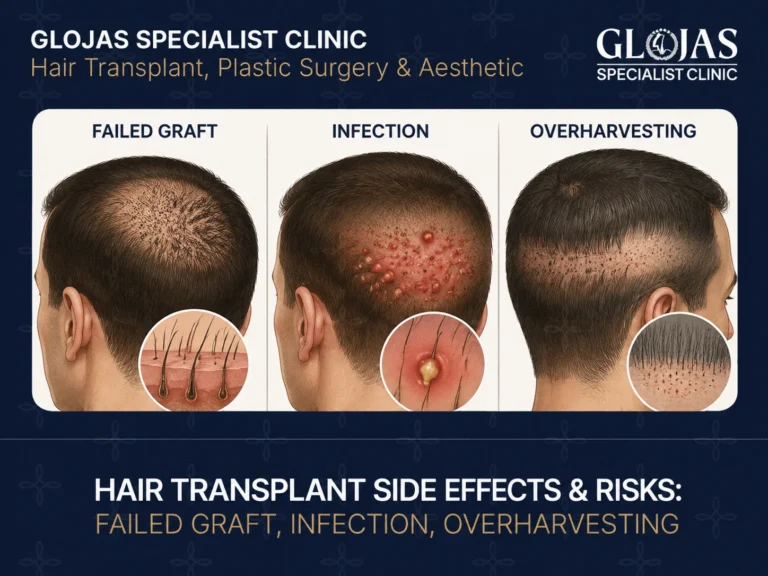
Hair transplant Malaysia is popular, but it’s not risk-free. Failed grafts, infections, and overharvesting can ruin results and donor area permanently. Understanding these 3 major risks helps you choose a qualified surgeon and set realistic expectations. Here’s what every patient in Malaysia should know before booking.
Failed Graft After Hair Transplant: Causes and Warning Signs
What is graft failure? When transplanted follicles don’t survive or grow. You’ll see poor density, patchy growth, or no hair after 12 months.
Common causes:
- Poor graft handling: Excessive time outside the body, dehydration, or trauma during implantation kills follicles
- Ischemia: Follicles are more tolerant of ischemia than hair bulbs, but prolonged out-of-body time reduces survival
- Technical errors: Punch design, follicular unit density, and ischemia time influence complications
- Patient factors: Smoking, diabetes, poor scalp blood supply, or not following post-op care
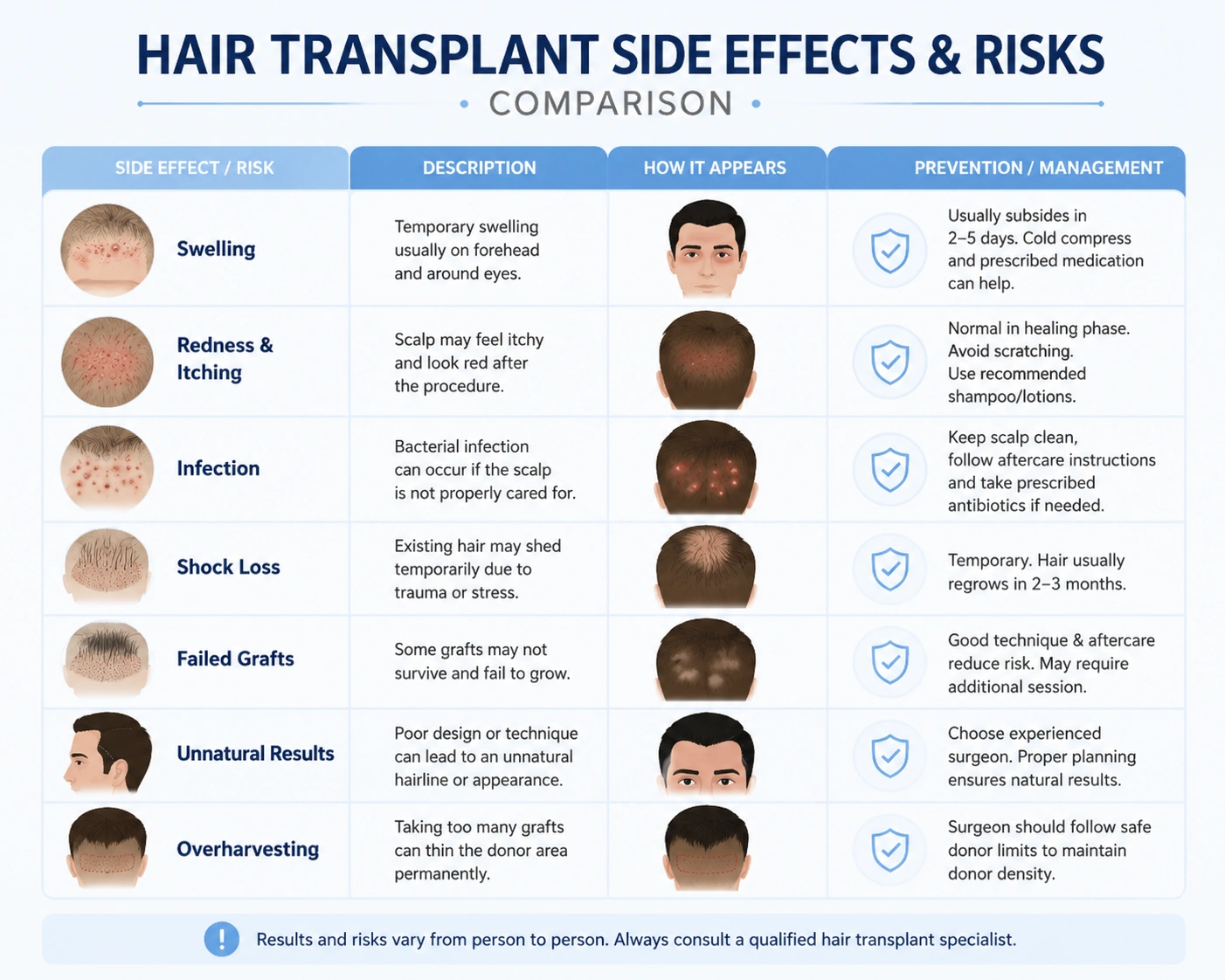
Warning signs by 1 month: Excessive shedding beyond normal shock loss, no growth at 4–6 months, visible empty spots where grafts were placed. Shedding of implanted hairs typically occurs after several days and may take several months to regrow, but total absence of regrowth signals failure.
Hair Transplant Infection: Symptoms, Risks, and Treatment in Malaysia
How common? Localized infections can occur in both recipient and donor areas. The incidence of serious infections is rare <1%, due to the scalp’s strong blood flow. However, two large series reported infection rates up to 11%.
Why infections happen: Poor hygiene, excessive crust formation, or preexisting medical risk factors. A high-tension closure at the donor site leading to circulatory compromise can increase risk. Nonadherence to aseptic norms or lowered patient resistance also contribute.
Symptoms: Papulo-pustules, fluctuance, erythema, tenderness, pus or yellowish discharge, foul smell, fever, redness, bleeding, unpleasant taste in the mouth. Septicemia has been reported after hair transplant.
Treatment in Malaysia: Application of appropriate antibiotics after sensitivity testing. Open wounds are maintained using a moist dressing protocol and allowed to heal via secondary intention. Secondary scar revisions can be performed later. Mupirocin ointment and chlorhexidine shampoo pre-op lower risk.
Prevention: Wash hair per surgeon’s instructions, follow aftercare, and attend follow-ups. Difficulty sticking to hygiene recommendations increases infection risk.
Overharvesting in Hair Transplants: Damage, Donor Depletion, and Repair Options
What is overharvesting? Removing too much hair from the donor site, usually in FUE. It’s a donor area complication that affects clinical outcomes.
Damage caused:
- Donor depletion: Visible thinning, see-through patches, or “moth-eaten” look. Overharvesting can lead to permanent damage in the donor area, including hair loss
- Scarring: Hypopigmentation, hypertrophic scarring, and epithelial cysts in donor area
- No future surgeries: You burn your donor supply. Operating on patients with extensive hair loss with minimal donor hair creates unfavorable results
Repair options: Limited. SMP, body hair transplant to donor, or accepting the loss. Prevention is key — choose surgeons who plan long-term donor management, not just max grafts in one session.
Hair Transplant Side Effects: Scarring and Shock Loss Linked to Failed Grafts
Scarring: FUT leaves a linear scar; FUE leaves dot scars. Hypertrophic scarring/keloid formation occurs in up to 15.1% after FUT. Poor technique or high-tension closure worsens it.
Shock loss (effluvium): Temporary shedding of native hair around donor or recipient site. Occurs in up to 4.1% donor and 6.5% recipient. It’s usually transient, with new hairs appearing after 3–6 months. But excessive shock loss can mimic graft failure if the area doesn’t recover.
Link to failed grafts: Trauma, poor angulation, or ischemia during implantation can cause both graft death and shock loss in surrounding hair. Recipient site necrosis is rare but devastating, compromising graft survival.
How Infection and Overharvesting Increase Hair Transplant Risks
These two complications compound other risks:
- Infection → Necrosis → Graft failure: Early-onset recipient-site necrosis complicated by Pseudomonas aeruginosa infection can cause irreversible tissue loss. Infected grafts die.
- Overharvesting → Poor growth → Visible scarring: Aggressive FUE leaves the donor area damaged and reduces graft quality. Development of complications is influenced by punch design, graft handling, and follicular unit density.
- Both reduce future options: Once infected or overharvested, you may not qualify for repair surgery. The overall significant life-threatening complications were zero, but minor complications’ percentage was 0.10% in one 2896-patient study.
5 FAQs
1. What are the signs of a failed hair transplant graft?
Signs include no hair growth after 6–12 months, excessive shedding without regrowth, patchy/pore-like empty spots, and scalp that looks the same as pre-op. Shedding is normal for several days, but new hairs should appear after 3–6 months. Partial loss of implanted hair was seen in some cases.
2. How common are infections after hair transplants in Malaysia?
Serious infections are rare <1%, but some studies report up to 11%. Scalp infections are very rare because of strong blood flow. Risk increases with poor hygiene, crusting, or medical risk factors.
3. Can overharvesting permanently damage the donor area?
Yes. Overharvesting can lead to permanent damage in the donor area, including hair loss. It causes visible thinning, scarring, and depletes grafts for future surgeries. This is a known FUE complication.
4. What causes graft failure after a hair transplant?
Major causes: prolonged ischemia time, trauma during extraction/implantation, dehydration of grafts, poor patient healing, smoking, infection, and technical errors like punch design or graft handling. Medical history and examination issues increase complications.
5. How do you treat an infected hair transplant?
See a doctor immediately. Treatment includes antibiotics after sensitivity testing, moist dressing for open wounds, and allowing healing by secondary intention. Shampooing twice daily, warm compresses, and exfoliation may help. Never self-treat pus, fever, or spreading redness.
Key takeaway for Malaysia: Choose MOH-registered clinics with board-certified plastic surgeons. Serious complications are rare in experienced hands, but failed grafts, infection, and overharvesting are devastating when they happen. Detailed counselling, medical history, and proper examination minimize complaints and complications.