
Hair Transplant Cost in the United States
Navigating hair restoration prices in the U.S. can feel overwhelming. Unlike overseas clinics that offer “all-inclusive” bundles, American facilities typically use itemized billing. This guide breaks down current 2026 market rates and the specific variables that will influence your final investment in a fuller head of hair.
GLOJAS Specialist Clinic offers the cheaper hair transplant price in Malaysia, providing safe, effective treatments in Kuala Lumpur with experienced doctors and advanced hair restoration techniques.
Average Hair Transplant Cost in the United States
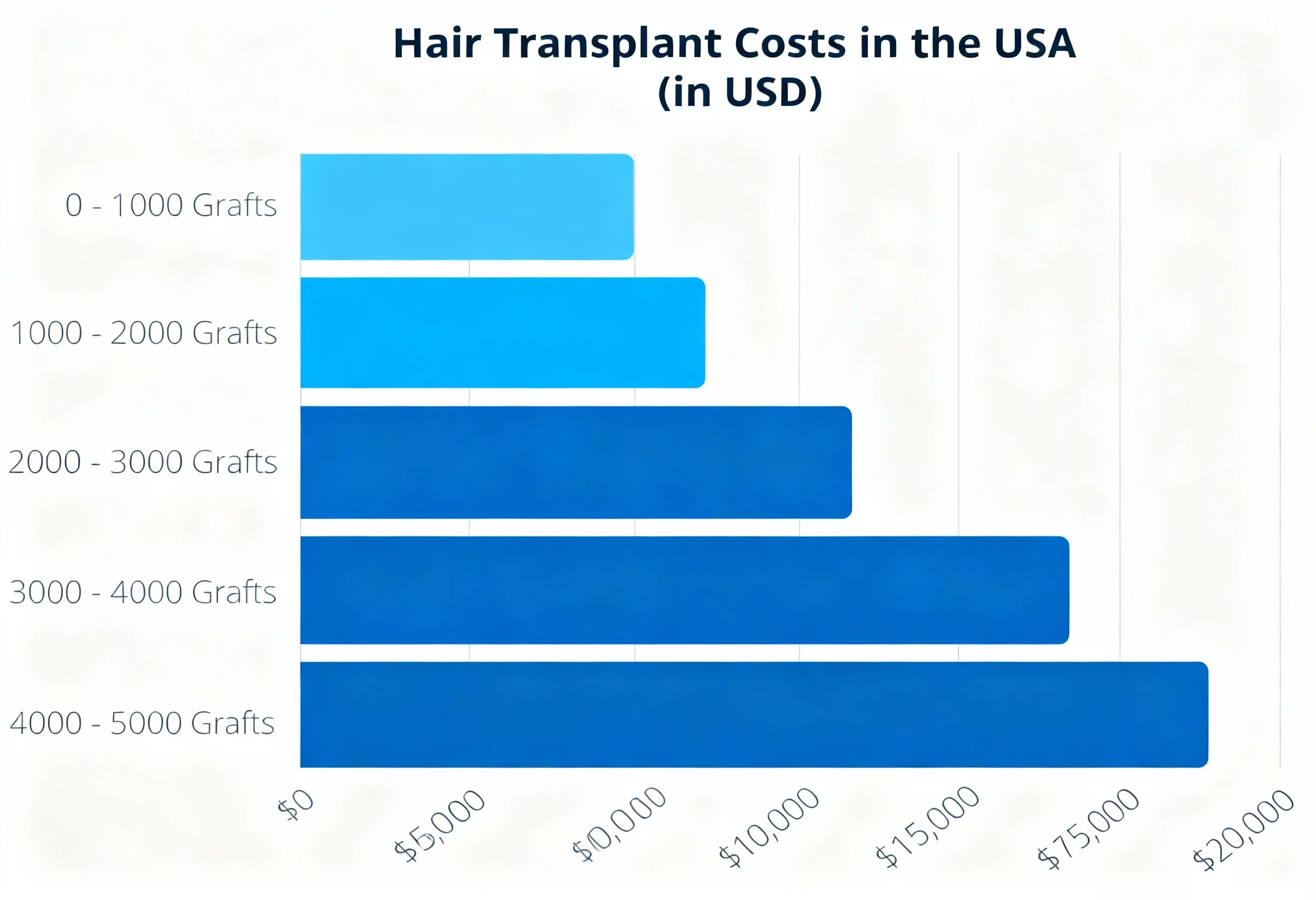
In 2026, the national average for a hair transplant in the U.S. ranges from $8,000 to $20,000. While some minor touch-ups start near $5,000, extensive restorations for advanced balding can exceed $25,000. These figures reflect the high regulatory standards and surgeon expertise found across American clinics.
Typical Cost for FUE Hair Transplant
Follicular Unit Extraction (FUE) is the most sought-after method due to its “scarless” results. In the U.S., a standard FUE session typically costs between $10,000 and $18,000. This reflects the labor-intensive nature of manually extracting and implanting individual follicles over several hours.
Typical Cost for FUT Hair Transplant
Follicular Unit Transplantation (FUT), often called the “strip method,” remains a budget-friendly alternative. Patients usually pay between $6,000 and $12,000. While it leaves a linear scar, it is highly efficient for harvesting a large number of grafts in a single surgical session.
Cost Per Graft Across U.S. Clinics
Most American clinics charge on a “per graft” basis rather than a flat fee. Current rates sit between $5.00 and $10.00 per graft for FUE. Some high-end boutique clinics in major metros may charge up to $15.00 for specialized or celebrity-grade surgeon involvement.
Factors That Influence Hair Transplant Cost
The price tag isn’t just about the hair; it’s about the resources required. From the surgeon’s zip code to the technology in the operating room, several elements shift the needle on your total bill.
Number of Grafts Required
The primary cost driver is the volume of hair moved. Moving 1,000 grafts to fix a hairline is significantly cheaper than moving 3,000 grafts to cover a bald crown. Most surgeons provide a lower “price per graft” as the total volume of the procedure increases.
Surgeon Experience and Credentials
You are paying for a surgeon’s eye for aesthetics and technical precision. Board-certified surgeons with the American Board of Hair Restoration Surgery (ABHRS) often charge a premium. Their specialized training ensures higher graft survival rates and a more natural-looking hairline design.
Clinic Reputation and Technology
Clinics investing in the latest tools—like Sapphire blades or high-powered microscopes—often have higher overhead. A facility with a long-standing reputation for excellence in a city like New York or Beverly Hills will naturally cost more than a rural practice due to demand.
Additional Treatments and Aftercare
Comprehensive plans often include auxiliary therapies. Treatments like PRP (Platelet-Rich Plasma) or Exosome therapy can add $500 to $1,500 to the total. These are used to speed up healing and maximize the growth of newly transplanted follicles during the first year.
Hair Transplant Cost by Procedure Type
FUE Hair Transplant Cost United States
FUE remains the premium choice, typically landing between $10,000 and $20,000. Because the doctor must extract each graft individually, the procedure can take 8+ hours. This high time-commitment from the medical team is the main reason for the elevated price point.
FUT Hair Transplant Cost United States
FUT is generally 30% to 40% cheaper than FUE, averaging $7,000 to $12,000. It is often recommended for patients needing maximum density. The lower cost is due to the faster extraction process, where a single strip of skin is removed and dissected.
DHI Hair Transplant Cost United States
Direct Hair Implantation (DHI) uses a “Choi Pen” to implant grafts immediately after extraction. This specialized technique can cost between $12,000 and $25,000. The higher fee covers the specialized disposable equipment and the extreme precision required by the surgeon.
Robotic Hair Transplant Cost United States
Systems like ARTAS use AI to assist in harvesting grafts. A robotic session usually costs between $12,000 and $22,000. While the tech reduces human fatigue and ensures uniform extraction, the high lease and maintenance costs of the robot are passed to the patient.
Cost Comparison: United States vs Other Countries
Many Americans look abroad to save money, but lower prices often come with different trade-offs. Here is how the U.S. market stacks up against popular medical tourism destinations in 2026.
Hair Transplant Cost U.S. vs Turkey
Turkey is the global leader in volume, with all-inclusive packages ranging from $2,500 to $5,500. While the U.S. is nearly four times more expensive, American patients benefit from local FDA-regulated safety standards and easier access to long-term follow-up care.
Hair Transplant Cost U.S. vs Mexico
Mexico is a popular middle ground, with procedures costing between $4,000 and $8,000. Clinics in border cities often cater specifically to U.S. residents. While cheaper, quality can vary wildly, requiring extensive research into the specific surgeon’s credentials before booking.
Is It Worth Getting a Hair Transplant in the U.S.?
For many, the answer is yes. Getting treated locally provides legal recourse and continuity of care. If a complication arises, your doctor is just a short drive away. This “peace of mind” factor often outweighs the potential savings of traveling internationally.
Hair Transplant Cost by Hair Loss Severity
The Norwood Scale is used to categorize the extent of male pattern baldness. The further you are along the scale, the more grafts you’ll need, which directly scales the total cost of your restoration.
Mild Hair Loss (1000–1500 Grafts)
For Norwood Stage 2 or 3, you can expect to pay $6,000 to $10,000. This typically involves filling in the temples or lowering the hairline. These are often half-day procedures with very straightforward recovery timelines for most patients.
Moderate Hair Loss (2000–3000 Grafts)
Norwood Stage 4 or 5 requires significant coverage, costing $12,000 to $18,000. This volume is necessary to bridge the gap between a receding front and a thinning crown. It usually requires a full day of surgery and a larger medical team.
Severe Hair Loss (3500+ Grafts)
Advanced balding at Stage 6 or 7 often costs $20,000 or more. These cases may require two separate sessions to protect the “donor area” from over-harvesting. Some patients opt for a lower-density look to keep costs within a specific budget.
What’s Included in Hair Transplant Cost
Understanding the breakdown of your quote is vital. A “cheap” quote might exclude essential services that you’ll end up paying for later. Most reputable U.S. clinics provide a comprehensive estimate after your initial scan.
Consultation and Hair Loss Assessment
Expect to pay $100 to $300 for your first visit. Many clinics will credit this fee toward your surgery if you book. The doctor will use a densitometer to check your donor hair health and ensure you are a viable candidate.
Surgical Planning and Hairline Design
This phase involves the “artistry” of the procedure. Your surgeon will map out the placement of every graft to ensure the hair flows naturally. This planning is usually bundled into the surgical fee, but it is the most critical part of the process.
Procedure and Medical Team
The bulk of your payment covers the “chair time.” This includes local anesthesia, the surgeon’s fee, and the specialized technicians who sort and clean the grafts under microscopes. High-quality clinics maintain a strict ratio of technicians to ensure grafts don’t dry out.
Post-Procedure Care and Follow-Up
A standard package should include your initial wash, a “post-op kit” (special shampoos and saline spray), and follow-up appointments at the 6-month and 12-month marks. Some clinics also provide a few sessions of Low-Level Laser Therapy (LLLT) to boost early growth.
Financing and Insurance Options for Hair Transplant
Hair transplants are strictly cosmetic, meaning health insurance will not cover them. However, most clinics offer financing through providers like CareCredit or LendingUSA. These plans often feature 0% interest for the first 6–12 months, making a $12,000 procedure more manageable at around **$1,000/month**.
Frequently Asked Questions About Hair Transplant Cost
Cheapest Hair Transplant Cost in the U.S.
The most affordable way to get a transplant in the U.S. is via the FUT method, which can start around $5,000 for small sessions. Be cautious of “bargain” clinics that use unlicensed technicians for the entire procedure, as this can lead to poor results.
How Many Grafts Are Needed?
Every scalp is different. Generally, 1,000 grafts cover about the size of a postage stamp with high density. A reputable hair restoration clinic will use a graft calculator during your consultation to give you an exact count based on your specific hair diameter.
Does Higher Cost Guarantee Better Results?
Not necessarily, but extremely low costs are a major red flag. Higher prices usually reflect a lower “patient-to-doctor” ratio. In premium clinics, the surgeon performs the critical steps, whereas cheaper clinics may rely almost entirely on technicians, increasing the risk of graft failure.
Can International Patients Get a Hair Transplant in the U.S.?
Absolutely. Many international patients travel to the U.S. specifically for “repair work” after failed procedures elsewhere. While the cost is higher, the medical infrastructure and surgical expertise make it a global destination for high-stakes hair restoration.