
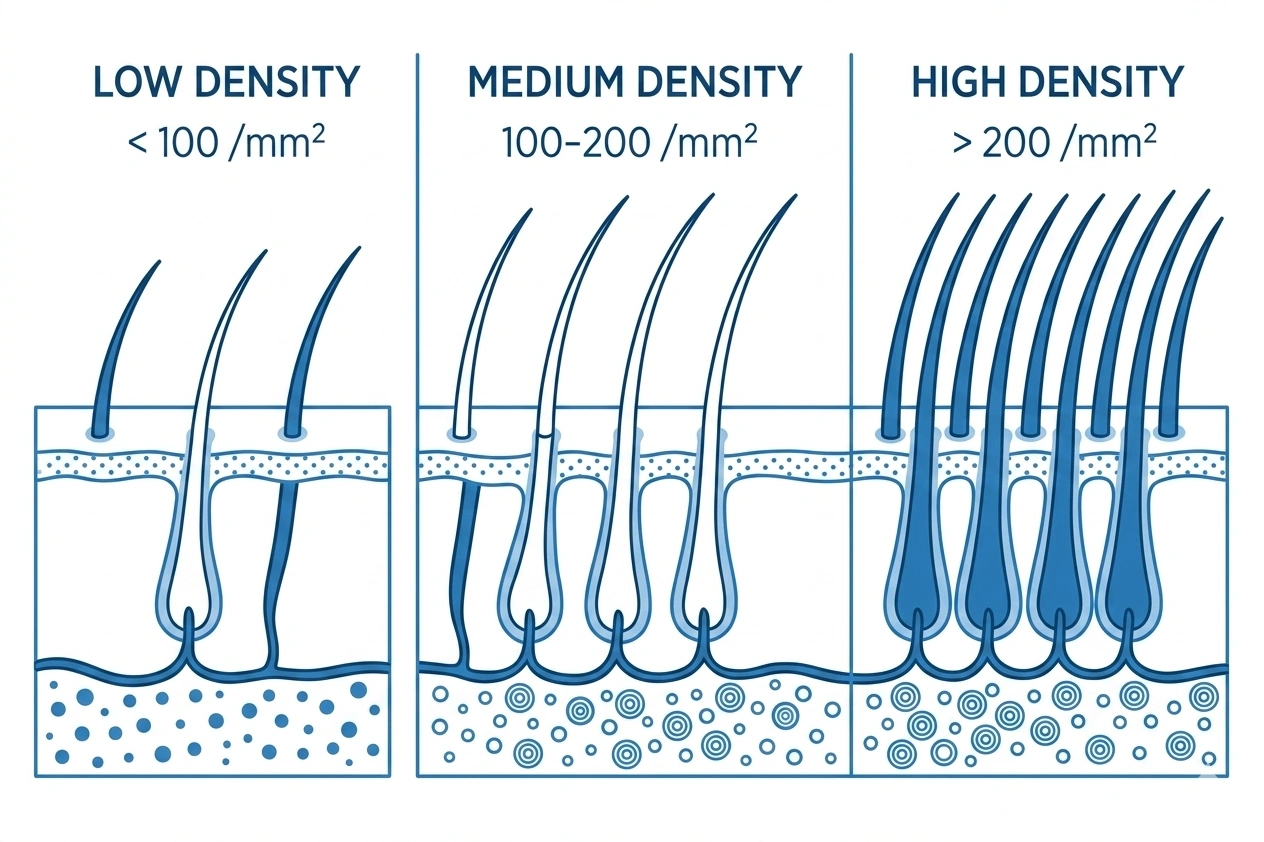
Hair density is one of the most important factors influencing the appearance of thick, healthy hair. While many people associate hair fullness with the number of strands they have, hair density is a distinct characteristic that refers to the number of hair follicles growing within a specific area of the scalp. Individuals with normal hair density may still experience the appearance of thinning if hair shafts become finer or if hair loss occurs.
What Is Hair Density?
Hair density refers to the number of individual hair strands or hair follicles per square centimeter (hairs/cm²) of the scalp. It differs from hair thickness, which describes the diameter of each individual hair shaft.
A person may have:
- High hair density with fine hair
- Low hair density with thick hair
- Normal hair density with medium-thickness hair
Because both density and hair shaft diameter contribute to overall scalp coverage, they are evaluated together during a hair assessment.
Hair Density vs Hair Thickness: What’s the Difference?
Although these terms are often used interchangeably, they describe different characteristics of hair.
| Feature | Hair Density | Hair Thickness |
|---|---|---|
| Definition | Number of hairs per unit area | Diameter of each hair strand |
| Measurement | Hairs/cm² | Micrometers (µm) |
| Determines | Fullness of hair | Volume and texture |
| Changes with Hair Loss | Yes | May also decrease through miniaturization |
Someone with fine hair can still have high density, while someone with thick hair may have low density if fewer follicles are present.
How Is Hair Density Measured?
Hair density is measured using specialized diagnostic tools that allow clinicians to evaluate the number of hairs within a defined scalp area.
Common methods include:
Trichoscopy
A dermatoscope or digital trichoscope magnifies the scalp, allowing visualization of hair follicles, hair shaft diameter, and follicular density.
Phototrichogram
High-resolution images are captured before and after trimming a small area of hair. Computer software calculates hair density, growth rate, and the proportion of hairs in different growth phases.
Hair Count Per Square Centimeter
Clinicians manually or digitally count hairs within a marked 1 cm² section of the scalp to determine density.
Hair Transplant Consultation Assessment
Hair restoration surgeons evaluate donor and recipient hair density to estimate graft availability and determine the number of follicular units required for optimal coverage.
What Is Considered Normal Hair Density?
Hair density varies depending on genetics, age, ethnicity, and scalp region.
Average ranges include:
| Hair Density | Approximate Hair Count |
|---|---|
| High Density | More than 180 hairs/cm² |
| Normal Density | 120–180 hairs/cm² |
| Low Density | Fewer than 120 hairs/cm² |
These values are approximate and may vary among individuals and populations.
Top 3 Causes of Low Hair Density
Genetic Hair Loss (Androgenetic Alopecia)
The most common cause of reduced hair density is androgenetic alopecia, also known as male or female pattern hair loss. Hair follicles gradually shrink (miniaturize), producing finer and shorter hairs until some follicles stop producing visible hair.
Telogen Effluvium
Telogen effluvium is characterized by excessive shedding following physical or emotional stress, illness, surgery, childbirth, nutritional deficiencies, or certain medications. Although usually temporary, it can noticeably reduce hair density.
Nutritional Deficiencies
Inadequate intake or absorption of essential nutrients—including iron, vitamin D, zinc, protein, and vitamin B12—can impair normal hair growth and contribute to diffuse thinning.
Other Factors That Affect Hair Density
Several additional factors can influence hair density, including:
- Increasing age
- Hormonal changes
- Thyroid disorders
- Autoimmune diseases
- Scalp inflammation
- Certain medications
- Chronic stress
- Smoking
- Poor nutrition
- Excessive chemical treatments
- Tight hairstyles causing traction alopecia
Signs of Reduced Hair Density
Individuals with low hair density may notice:
- Increased scalp visibility
- Wider hair part
- Reduced ponytail thickness
- Decreased hair volume
- Difficulty styling hair
- Excessive daily hair shedding
- Progressive thinning over time
Can Hair Density Be Increased?
The answer depends on the underlying cause.
Hair density can often improve if follicles remain alive but are producing thinner hairs. However, follicles that have been permanently destroyed or replaced by scar tissue cannot regenerate naturally.
Early diagnosis and treatment generally provide the best opportunity to preserve existing hair density.
Medical Treatments for Improving Hair Density
Topical Minoxidil
Minoxidil promotes hair growth by prolonging the growth phase (anagen) of the hair cycle and increasing follicle size. It is commonly recommended for androgenetic alopecia in both men and women.
Oral Finasteride
Finasteride is prescribed for eligible adult men with androgenetic alopecia. It reduces levels of dihydrotestosterone (DHT), slowing follicular miniaturization and helping maintain hair density.
Dutasteride
In selected patients, dutasteride may be prescribed off-label under specialist supervision. It inhibits additional forms of the enzyme responsible for DHT production and may offer greater efficacy than finasteride in some cases.
Platelet-Rich Plasma (PRP)
PRP hair therapy involves injecting concentrated platelets derived from the patient’s own blood into the scalp. Growth factors released by platelets may stimulate follicular activity in selected patients.
Low-Level Laser Therapy (LLLT)
Low-level laser devices may improve hair density by stimulating cellular activity within hair follicles. Results vary, and treatment requires consistent use.
Is Hair Transplant Surgery Suitable for Low Hair Density?
Hair transplantation may be appropriate for patients with stable pattern hair loss and adequate donor hair.
The procedure redistributes healthy follicles from the donor area to thinning regions, improving scalp coverage and visual density. Surgical planning considers:
- Existing hair density
- Donor hair availability
- Hair shaft thickness
- Hair color contrast
- Curl pattern
- Long-term progression of hair loss
Lifestyle Tips to Support Healthy Hair Density
Although lifestyle changes cannot reverse genetic hair loss, they can support healthy hair growth by:
- Eating a balanced diet rich in protein, iron, and essential vitamins
- Managing chronic stress
- Avoiding smoking
- Limiting excessive heat styling
- Reducing harsh chemical treatments
- Treating underlying medical conditions promptly
- Following prescribed hair loss treatments consistently
Recovery After Hair Density Treatments
Recovery depends on the treatment selected.
- Topical medications: No downtime.
- PRP therapy: Mild tenderness for 24–48 hours.
- Hair transplant surgery: Initial healing typically occurs within 7–14 days, while new hair growth becomes noticeable after 3–4 months and continues to improve over 12–18 months.
Frequently Asked Questions
What is the difference between hair density and hair volume?
Hair density refers to the number of hairs growing in a specific scalp area, whereas hair volume is the overall appearance of fullness created by density, hair thickness, curl pattern, and styling.
Can hair density increase naturally?
If reduced density is caused by temporary conditions such as telogen effluvium or nutritional deficiencies, hair density may improve once the underlying cause is corrected. Permanent follicle loss cannot regenerate naturally.
Does washing hair reduce hair density?
No. Washing removes hairs that have already reached the shedding phase of the normal hair cycle and does not decrease the number of healthy follicles.
What is the ideal hair density for a natural appearance?
Most individuals achieve a cosmetically full appearance with approximately 120–180 hairs/cm², although perceived fullness also depends on hair shaft diameter, color contrast, and hairstyle.
Can vitamins improve hair density?
Vitamins may improve hair growth in individuals with confirmed nutritional deficiencies. Taking supplements without a documented deficiency has not consistently been shown to increase hair density.
Conclusion
Hair density is a key determinant of scalp coverage and overall hair fullness. It is influenced by genetics, age, hormonal balance, nutrition, and medical conditions. Accurate assessment through clinical examination and diagnostic tools helps identify the underlying cause of reduced density and guides treatment selection.
Early intervention with evidence-based therapies—such as topical or oral medications, platelet-rich plasma, lifestyle optimization, or hair transplantation when appropriate—can help preserve existing follicles and improve cosmetic outcomes. Anyone experiencing persistent thinning or noticeable reductions in hair density should seek evaluation from a qualified dermatologist or hair restoration specialist.