
Panduan Lengkap Senaman Kegel Lelaki: Cara Betul Untuk Prestasi Padu
Uji Tahap Prestasi & Kawalan Otot Pelvis Anda Jawab soalan mudah di bawah untuk semak tahap kesihatan dan kawalan senaman kegel anda: 1. Adakah anda mengalami masalah air kencing menitis selepas selesai membuang air? Tidak, kawalan baikYa, kadang-kadangYa, kerap berlaku 2. Berapa lama anda mampu bertahan semasa fasa kemutan asas (Hold)? Lebih dari 5 saat dengan selesa3 hingga 5 saatKurang dari 3 saat / Sukar kekal kemut Semak Keputusan Sekarang Keputusan Analisis Anda: Dapatkan Konsultasi Percuma via WhatsApp Senaman Kegel untuk lelaki ialah senaman fizikal yang bertujuan untuk menguatkan otot lantai pelvis (pelvic floor muscles), iaitu rangkaian otot berbentuk buaian yang menyokong pundi kencing, usus, dan mengawal fungsi seksual serta aliran urin. Sama seperti wanita, lelaki juga mempunyai otot lantai pelvis. Otot ini boleh menjadi lemah akibat faktor penuaan, pembedahan prostat, atau berat badan berlebihan, yang kemudiannya menjejaskan kawalan pundi kencing dan prestasi intim. Manfaat Senaman Kegel Untuk Lelaki Melatih otot lantai pelvis secara konsisten memberikan impak besar kepada kesihatan dalaman lelaki: Mengatasi Masalah Kencing Terbabas: Membantu mengawal pundi kencing daripada terbocor (urinary incontinence), terutama semasa batuk, bersenam, atau bersin. Meningkatkan Kesihatan Seksual: Membantu mendapatkan dan mengekalkan ketegangan yang lebih padu serta mengurangkan masalah pancutan pramatang. Mempercepatkan Pemulihan Prostat: Membantu memulihkan kawalan kencing dengan lebih cepat selepas menjalani pembedahan membuang atau merawat prostat. Sokongan Sistem Usus: Meningkatkan kawalan otot dubur untuk mengelakkan masalah kebocoran angin atau najis secara tidak sengaja. Cara Kenal Pasti Otot Lantai Pelvis Lelaki Sebelum memulakan latihan, anda perlu tahu cara mengesan otot yang betul tanpa melibatkan otot perut, paha, atau punggung. Kaedah 1: Menahan Urin (Gunakan Sekali-Sekala Sahaja): Semasa anda sedang membuang air kecil, cuba hentikan atau perlahankan aliran urin secara tiba-tiba. Otot yang mengecut untuk menahan aliran tersebut ialah otot lantai pelvis anda. Kaedah 2: Menahan Angin: Bayangkan anda sedang cuba menahan diri daripada membuang angin (kentut). Kemutan yang anda lakukan pada bahagian dubur itu melibatkan otot yang sama. Kaedah 3: Perhatikan Cermin: Berdiri di hadapan cermin tanpa pakaian. Cuba kemutkan otot pelvis anda. Jika betul, anda akan melihat zakar terangkat sedikit dan skrotum (pundi buah zakar) bergerak ke atas. Baca : Panduan Lengkap Mati Pucuk Teknik Senaman Kegel Yang Betul Untuk Lelaki Sesi latihan boleh dilakukan dalam posisi berbaring (paling mudah untuk pemula), duduk, atau berdiri. 1.Kosongkan Pundi Kencing:Persediaan. Pastikan anda membuang air kecil terlebih dahulu sebelum memulakan senaman. Melakukan Kegel dengan pundi kencing yang penuh boleh melemahkan otot dan meningkatkan risiko jangkitan saluran kencing. 2.Kemut dan Tahan:Fasa Kemutan. Kemutkan otot lantai pelvis anda secara perlahan-lahan. Tahan kemutan tersebut selama 3 hingga 5 saat pada peringkat awal. Pastikan anda bernafas seperti biasa dan jangan tahan nafas. 3.Lepaskan Perlahan-lahan:Fasa Rehat. Lepaskan kemutan secara total dan rehatkan otot tersebut selama 3 hingga 5 saat. Fasa rehat ini sangat penting bagi mengelakkan otot menjadi terlalu tegang atau kejang. 4.Lakukan Satu Set:Ulang. Ulangi kitaran kemut, tahan, dan lepas ini sebanyak 10 hingga 15 kali ulangan untuk melengkapkan satu set latihan. Jadual dan Kekerapan Senaman Kegel Lelaki Untuk mendapatkan hasil optimum, jadikan senaman ini sebagai rutin harian yang berjadual: Kekerapan: Lakukan 3 set sehari (Pagi, Tengah Hari, dan Malam). Variasi Posisi: Mulakan dengan posisi berbaring pada minggu pertama. Apabila otot semakin kuat, beralih kepada posisi duduk di kerusi pejabat, dan akhirnya lakukan secara berdiri (contohnya semasa menggosok gigi). Fokus Kualiti: Lebih baik melakukan 10 kali kemutan yang berkualiti dan tepat daripada melakukan 50 kali kemutan secara terburu-buru menggunakan otot yang salah. Kesilapan Biasa Semasa Buat Senaman Kegel Menahan Nafas: Ramai pemula menahan nafas semasa mengemut. Sentiasa bernafas secara semula jadi sepanjang latihan. Menggunakan Otot Salah: Mengetatkan otot perut, punggung, atau paha secara berlebihan. Jika perut anda terasa keras atau paha anda bergerak, bermakna teknik anda salah. Terlebih Latihan (Over-training): Melakukan ratusan kali kemutan sehari boleh menyebabkan kelesuan otot dan memburukkan lagi masalah kawalan kencing. Membuat Kegel Semasa Kencing: Menahan urin secara sengaja setiap kali membuang air kecil sebagai rutin senaman boleh mengganggu isyarat saraf pundi kencing dan menyebabkan takungan urin. Berapa Lama Untuk Nampak Kesan Senaman Kegel Minggu 1 – 3: Fasa suai kenal saraf. Anda akan mula berasa lebih mudah untuk mengesan dan mengawal otot tanpa melibatkan otot lain. Minggu 4 – 6: Peningkatan kekuatan otot mula ketara. Masalah kencing terbabas atau titisan urin selepas membuang air kecil (post-micturition dribble) mula berkurangan. Bulan 2 – 3 (8 hingga 12 Minggu): Kesan maksimum dicapai. Kawalan pundi kencing menjadi lebih stabil, stamina seksual meningkat, dan otot lantai pelvis menjadi lebih anjal. Latihan perlu diteruskan untuk mengekalkan kekuatan tersebut. Senaman Kegel Untuk Kawalan Kencing Lelaki Senaman Kegel merawat masalah kencing terbabas dengan menguatkan otot sfinter (sphincter) uretra. Apabila otot ini kuat, ia dapat menutup saluran kencing dengan lebih rapat, sekali gus menyekat tekanan mengejut daripada pundi kencing yang menyebabkan kebocoran urin. Senaman ini sangat efektif untuk mengatasi masalah Stress Urinary Incontinence (kebocoran akibat tekanan fizikal) dan menghentikan sisa air kencing daripada menetes keluar sejurus selepas anda selesai membuang air kecil. Senaman Kegel Untuk Kesihatan Seksual Lelaki Otot utama yang dilatih dalam senaman Kegel ialah otot bulbocavernosus. Otot ini bertanggungjawab membenarkan zakar dipenuhi darah semasa ereksi, mengepam darah tersebut untuk mengekalkan ketegangan, dan mengecut semasa fasa ejakulasi. Dengan menguatkan otot ini, lelaki mempunyai kawalan sedar yang lebih tinggi untuk menunda isyarat ejakulasi, yang secara langsung membantu memanjangkan tempoh hubungan intim dan mengatasi masalah pancutan pramatang secara semula jadi. Senaman Kegel Selepas Pembedahan Prostat Pesakit yang menjalani pembedahan Radical Prostatectomy (pembuangan prostat akibat kanser) sering mengalami masalah kencing terbabas kerana sebahagian mekanisme sokongan pundi kencing telah terjejas. Saranan Doktor: Pakar urologi amat menyarankan pesakit mula mempelajari dan mempraktikkan senaman Kegel beberapa minggu SEBELUM pembedahan dilakukan. Pasca-Pembedahan: Selepas pembedahan, tunggu sehingga tiub kateter kencing ditanggalkan dan dapatkan kebenaran bertulis daripada doktor atau pakar fisioterapi sebelum menyambung semula latihan Kegel untuk mengelakkan kecederaan pada kawasan jahitan dalaman. Bila Perlu Jumpa Doktor Jika Buat Senaman Kegel Sila rujuk kepada pakar urologi atau pakar fisioterapi pelvis jika anda mengalami situasi berikut: Merasa sakit, pedih, atau ketidakselesaan yang tajam pada bahagian ari-ari, testis, atau perineum (kawasan antara dubur dan zakar) semasa atau selepas melakukan Kegel. Teknik senaman
Shockwave Therapy for ED in Malaysia – Effective & Non-Invasive
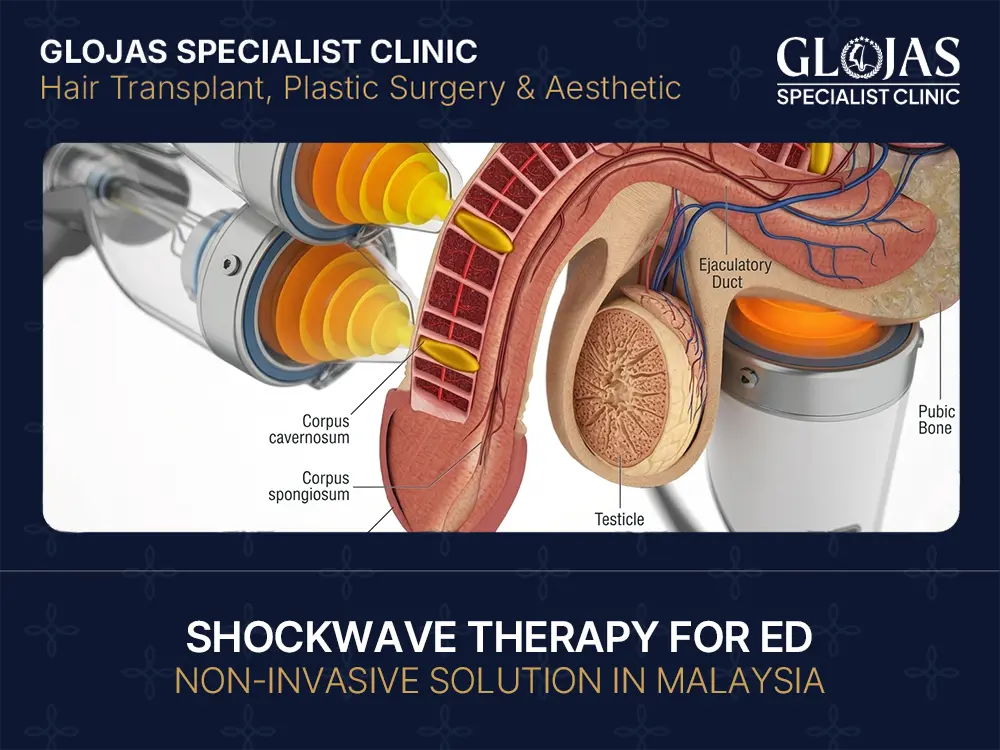
Shockwave Therapy for ED is a non-invasive, drug-free treatment that uses low-intensity acoustic waves to improve blood flow in the penis by stimulating new blood vessel growth. In Malaysia, it is offered by men’s health and urology clinics as an option for mild to moderate vascular erectile dysfunction. Typical protocols involve 6–12 sessions, with no needles, surgery, or downtime. Results can last 12–24 months for suitable candidates, and most men report improved erection quality within 3–6 weeks. Low-intensity extracorporeal shockwave therapy, or Li-ESWT, is becoming a go-to option for Malaysian men who want to address the root cause of ED without relying on pills. Instead of forcing a temporary erection, it targets vascular function so your body can respond naturally to stimulation. What Is Shockwave Therapy for ED (Erectile Dysfunction)? Shockwave therapy for ED is a medical procedure that delivers gentle acoustic pulses to penile tissue. The goal is angiogenesis: creating new micro blood vessels and repairing existing ones. It has been used in orthopedics and cardiology for years, and is now adapted for sexual medicine. How Low-Intensity Shockwave Therapy Works for ED The process is straightforward: Application: A handheld probe is placed on different areas of the penis and perineum. Pulse delivery: Low-intensity sound waves pass through skin and tissue. Biological response: The microtrauma triggers release of growth factors, nitric oxide, and stem cell activation. Result: New capillaries form and plaque in existing vessels can reduce, improving blood flow. Each session lasts 15–20 minutes. No anesthesia is needed and you can resume normal activities right after. Benefits of Shockwave Therapy for ED (Malaysia Patients) Drug-Free & Surgery-Free ED Treatment For men who cannot take PDE5 inhibitors like sildenafil due to heart medication, or who are tired of planning sex around a pill, shockwave offers an alternative. There are no systemic side effects because nothing is ingested. It also avoids the risks and recovery time of penile implants or vascular surgery. Improves Natural Blood Flow for Longer Lasting Erections Unlike oral meds that work for 4–36 hours, Li-ESWT aims to restore function. Clinical studies report that 60–75% of men with vasculogenic ED see meaningful improvement in IIEF-5 scores. The benefit is spontaneity: erections occur with arousal, not medication timing. Key Benefit Why It Matters for Malaysian Men Non-invasive No cuts, needles, or downtime. Done during lunch hour in KL, Penang, JB clinics. Addresses root cause Targets poor blood flow, not just symptoms. No drug interactions Safe if you are on nitrates or have high blood pressure. Long-term potential Effects can last 1–2 years. Maintenance sessions may extend results. Discreet Private clinic setting. No pharmacy visits for refills. Who Is a Good Candidate for Shockwave Therapy in Malaysia? Ideal candidates are men whose ED is caused by poor blood flow, often linked to age, diabetes, hypertension, high cholesterol, or smoking. You should still have some natural erectile function and be responsive to PDE5 inhibitors, even if the effect has weakened. You may not be suitable if you have a pacemaker, are on blood thinners, have active prostate cancer, or have severe Peyronie’s disease. Always get a urologist assessment first. Mild to Moderate Vascular ED Only – Not for Nerve Damage Shockwave therapy works on the vascular system. If your ED stems from nerve damage after prostate surgery, pelvic trauma, or severe diabetes neuropathy, results are limited. A proper diagnosis with Doppler ultrasound helps confirm if your case is vasculogenic. Estimated Shockwave Therapy for ED Cost in Malaysia Location Per Session 6-Session Package 12-Session Package Kuala Lumpur RM400–RM800 RM2,200–RM4,200 RM4,000–RM7,800 Penang RM350–RM650 RM1,900–RM3,600 RM3,500–RM6,500 Johor Bahru RM300–RM600 RM1,700–RM3,300 RM3,200–RM6,000 Where to Get Shockwave Therapy for ED in Malaysia Most treatments are offered at men’s health clinics, urology centers, and some aesthetic clinics that have expanded into sexual wellness. Look for: Doctor-led clinics: Treatment should be supervised by a urologist or trained MD. Proper diagnosis: Good clinics do a medical history, IIEF questionnaire, and Doppler scan before starting. Transparent protocols: You should know device brand, energy level, and pulses per session. Verified Clinics Offering FDA-Approved Shockwave Devices While specific clinic names change, Malaysian men should verify 3 things before booking: Device certification: FDA 510(k), CE Mark, or MDA Malaysia approval for ED indication. Doctor credentials: LCP-certified or urology board registered. Realistic claims: Avoid places promising “100% cure in 1 session.” Evidence supports 6–12 sessions. Shockwave Therapy Results & Success Rate for Malaysian Men European Association of Urology guidelines list Li-ESWT as a treatment option for vasculogenic ED. Peer-reviewed data shows: Success rate: 60–75% of mild to moderate ED patients report improvement. Timeline: Initial changes at 3–4 weeks, peak benefit at 3 months post-treatment. Duration: Results last 12–24 months. Annual maintenance may help. Safety: Side effects are rare. Mild tingling or redness resolves in 24 hours. Your age, severity, and lifestyle factors like smoking or uncontrolled diabetes will affect outcomes. Typical Number of Sessions Needed (6–12) The standard protocol is 6 sessions over 3 weeks, or 12 sessions over 6 weeks for severe cases. Each session delivers 3000–5000 pulses. Clinics in Malaysia usually schedule 2 sessions per week. Missing sessions can reduce effectiveness, so commit to the full course. Frequently Asked Questions – Shockwave Therapy for ED Malaysia Is shockwave therapy painful? Most men describe it as mild tapping or tingling. Energy is low intensity. No numbing cream needed. How soon can I have sex after treatment? Same day. There are no restrictions, but many doctors suggest waiting 24 hours after the first session. Is it covered by insurance in Malaysia? Usually no. ED is classed as lifestyle treatment by most insurers. Some corporate panels cover it under men’s health benefits. Check with your provider. Can I combine it with ED pills? Yes. Many KL clinics use a combined protocol for faster results. You may be able to reduce or stop pills after completing shockwave. Are results permanent? Not permanent, but long lasting. Blood vessels age and lifestyle affects flow. Maintenance sessions every 12–18 months are common. What if it does not work
Mati Pucuk (Disfungsi Erektil): Punca, Simptom dan Rawatan Berkesan
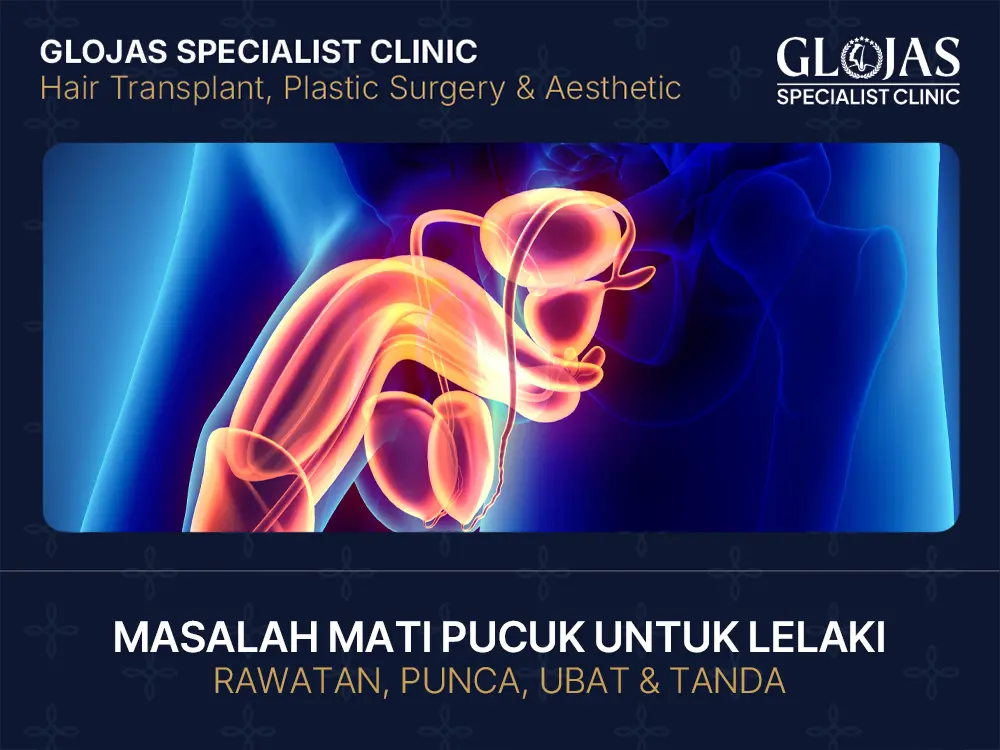
Semak Tahap Kesihatan Ereksi Anda (Kuiz Ringkas) Sila jawab soalan di bawah secara jujur untuk mengetahui sama ada anda mengalami gejala Disfungsi Erektil (Mati Pucuk). Berapa kerapkah anda sukar mengekalkan ereksi sehingga selesai hubungan intim? Sentiasa / Hampir Setiap Kali Kerap Kali (Lebih 50% daripada cubaan) Kadang-kadang / Jarang Sekali Semak Keputusan Analisis Jangan biarkan masalah ini menjejaskan kebahagiaan rumah tangga anda. Dapatkan konsultasi peribadi dan rawatan yang selamat sekarang. 💬 Hubungi Pakar Kami via WhatsApp (+60122700122) Mati pucuk atau disfungsi erektil (erectile dysfunction) ialah keadaan apabila lelaki mengalami kesukaran mendapatkan atau mengekalkan ereksi yang cukup keras untuk hubungan seksual. Keadaan ini boleh berpunca daripada masalah aliran darah, diabetes, tekanan darah tinggi, hormon testosteron rendah, obesiti, merokok, stres, atau penyakit jantung. Rawatan mati pucuk bergantung kepada punca dan boleh merangkumi perubahan gaya hidup, ubat oral, terapi gelombang kejutan (ESWT/Shockwave Therapy), terapi hormon, PRP, atau rawatan perubatan lain yang sesuai. GLOJAS Specialist Clinic menyediakan penilaian dan rawatan untuk masalah mati pucuk (disfungsi erektil) di Malaysia. Pasukan perubatan kami menawarkan pendekatan berasaskan bukti yang merangkumi diagnosis menyeluruh, rawatan moden dan pelan penjagaan yang disesuaikan mengikut keperluan pesakit. Apa Itu Mati Pucuk? Mati pucuk atau disfungsi erektil ialah keadaan di mana seorang lelaki tidak mampu mendapatkan ereksi atau mengekalkan ereksi yang mencukupi untuk melakukan hubungan intim secara memuaskan. Ia merupakan salah satu masalah kesihatan lelaki yang paling kerap berlaku dan boleh memberi kesan kepada keyakinan diri, hubungan pasangan, serta kualiti hidup secara keseluruhan. Walaupun ramai menganggap masalah ini hanya berlaku kepada lelaki berusia, hakikatnya mati pucuk boleh berlaku pada semua peringkat umur termasuk lelaki dalam lingkungan 30-an dan 40-an. Perbezaan Mati Pucuk dan Masalah Ereksi Sementara Kegagalan mendapatkan ereksi sekali-sekala bukan semestinya bermaksud seseorang mengalami mati pucuk. Faktor seperti keletihan, stres, kurang tidur atau tekanan emosi boleh menyebabkan masalah ereksi sementara. Disfungsi erektil biasanya didiagnosis apabila masalah ereksi berlaku secara berulang dan berterusan selama beberapa minggu atau bulan. Bagaimana Ereksi Berlaku? Ereksi berlaku apabila rangsangan seksual menyebabkan peningkatan aliran darah ke dalam zakar. Proses ini melibatkan kerjasama antara sistem saraf, hormon lelaki seperti testosteron, saluran darah dan otot zakar. Jika terdapat gangguan pada mana-mana sistem ini, ereksi mungkin menjadi lemah, tidak bertahan lama atau tidak berlaku langsung. Tanda dan Simptom Mati Pucuk Sukar Mendapatkan Ereksi Sesetengah lelaki mendapati zakar tidak tegang walaupun menerima rangsangan seksual yang mencukupi. Sukar Mengekalkan Ereksi Ada juga yang mampu mendapatkan ereksi tetapi tidak dapat mengekalkannya sehingga hubungan seksual selesai. Penurunan Keinginan Seksual Sesetengah pesakit mengalami penurunan libido atau minat terhadap aktiviti seksual akibat masalah hormon atau faktor psikologi. Antara simptom lain yang sering dikaitkan dengan mati pucuk termasuk: Ereksi tidak kuat seperti biasa Zakar tidak keras sepenuhnya Hubungan seksual terganggu Kebimbangan terhadap prestasi seksual Keyakinan diri yang menurun Punca Mati Pucuk Dalam Kalangan Lelaki Diabetes Diabetes merupakan antara punca utama mati pucuk. Paras gula darah yang tinggi boleh merosakkan saraf dan saluran darah yang diperlukan untuk ereksi normal. Tekanan Darah Tinggi Hipertensi boleh menyebabkan kerosakan pada saluran darah dan mengurangkan aliran darah ke zakar. Kolesterol Tinggi Kolesterol tinggi boleh menyebabkan penyempitan saluran darah, sekali gus mengurangkan bekalan darah yang diperlukan untuk ereksi. Obesiti Berat badan berlebihan sering dikaitkan dengan keradangan kronik, gangguan hormon dan masalah kardiovaskular yang meningkatkan risiko disfungsi erektil. Penyakit Jantung Masalah ereksi kadangkala merupakan petanda awal penyakit jantung kerana kedua-duanya melibatkan gangguan aliran darah. Merokok dan Alkohol Merokok boleh merosakkan saluran darah manakala pengambilan alkohol berlebihan boleh mengganggu fungsi saraf dan hormon lelaki. Tahap Testosteron Rendah Testosteron memainkan peranan penting dalam fungsi seksual lelaki. Paras hormon yang rendah boleh menyebabkan penurunan libido dan masalah ereksi. Tekanan dan Kebimbangan Stres, kemurungan, kebimbangan prestasi seksual dan masalah hubungan boleh menyumbang kepada masalah ereksi walaupun tiada penyakit fizikal yang serius. Siapa Yang Berisiko Mengalami Mati Pucuk? Lelaki Berusia Lebih 40 Tahun Risiko disfungsi erektil meningkat dengan pertambahan usia kerana perubahan semula jadi pada sistem saluran darah dan hormon. Pesakit Diabetes Lelaki yang menghidap diabetes mempunyai risiko yang jauh lebih tinggi untuk mengalami masalah ereksi. Perokok Tabiat merokok yang berpanjangan meningkatkan risiko kerosakan saluran darah dan mengurangkan keupayaan ereksi. Pesakit Obesiti Individu yang mengalami obesiti lebih cenderung menghadapi gangguan hormon dan masalah metabolik yang berkait rapat dengan mati pucuk. Bagaimana Doktor Mendiagnosis Mati Pucuk? Sejarah Perubatan Doktor akan menilai sejarah kesihatan pesakit termasuk penyakit kronik, penggunaan ubat dan simptom yang dialami. Pemeriksaan Fizikal Pemeriksaan fizikal membantu mengenal pasti tanda-tanda masalah hormon, penyakit vaskular atau gangguan lain yang berkaitan. Ujian Darah Ujian darah sering dilakukan untuk memeriksa paras gula darah, kolesterol, fungsi buah pinggang dan faktor kesihatan lain. Pemeriksaan Hormon Paras testosteron dan hormon berkaitan mungkin diperiksa jika terdapat tanda-tanda kekurangan hormon lelaki. Rawatan Mati Pucuk Yang Tersedia Perubahan Gaya Hidup Dalam banyak kes, perubahan gaya hidup boleh memberikan manfaat yang ketara. Ini termasuk mengurangkan berat badan, berhenti merokok, bersenam secara berkala dan mengawal penyakit kronik. Ubat Oral Untuk Disfungsi Erektil Ubat oral merupakan antara rawatan paling biasa untuk membantu meningkatkan aliran darah ke zakar dan memudahkan ereksi. Doktor akan menentukan sama ada ubat tersebut sesuai berdasarkan keadaan kesihatan pesakit. Shockwave Therapy (ESWT) Shockwave Therapy atau Extracorporeal Shockwave Therapy (ESWT) merupakan rawatan moden yang menggunakan gelombang tenaga rendah untuk merangsang pembentukan saluran darah baharu dan meningkatkan aliran darah ke zakar. Rawatan ini semakin popular dalam kalangan lelaki yang mengalami mati pucuk akibat masalah vaskular. Platelet-Rich Plasma (PRP) PRP menggunakan komponen daripada darah pesakit sendiri yang kaya dengan faktor pertumbuhan untuk menyokong proses pemulihan tisu dan meningkatkan fungsi seksual. Terapi Hormon Jika masalah berpunca daripada testosteron rendah, terapi hormon mungkin dipertimbangkan selepas penilaian menyeluruh oleh doktor. Implan Zakar Bagi kes yang lebih serius dan tidak memberi respons kepada rawatan lain, implan zakar mungkin menjadi pilihan yang sesuai. Adakah Mati Pucuk Boleh Sembuh? Dalam banyak keadaan, mati pucuk boleh dirawat dengan berkesan apabila punca sebenar dikenal pasti. Kejayaan rawatan bergantung kepada faktor seperti tahap kesihatan pesakit, penyakit yang mendasari, gaya hidup dan jenis rawatan yang digunakan. Ramai pesakit mengalami peningkatan ketara dalam fungsi ereksi selepas mendapatkan rawatan yang sesuai dan mengamalkan gaya hidup yang lebih sihat. Cara Mengurangkan Risiko Mati Pucuk
Extracorporeal Shockwave Therapy (ESWT) In Malaysia: Complete Guide
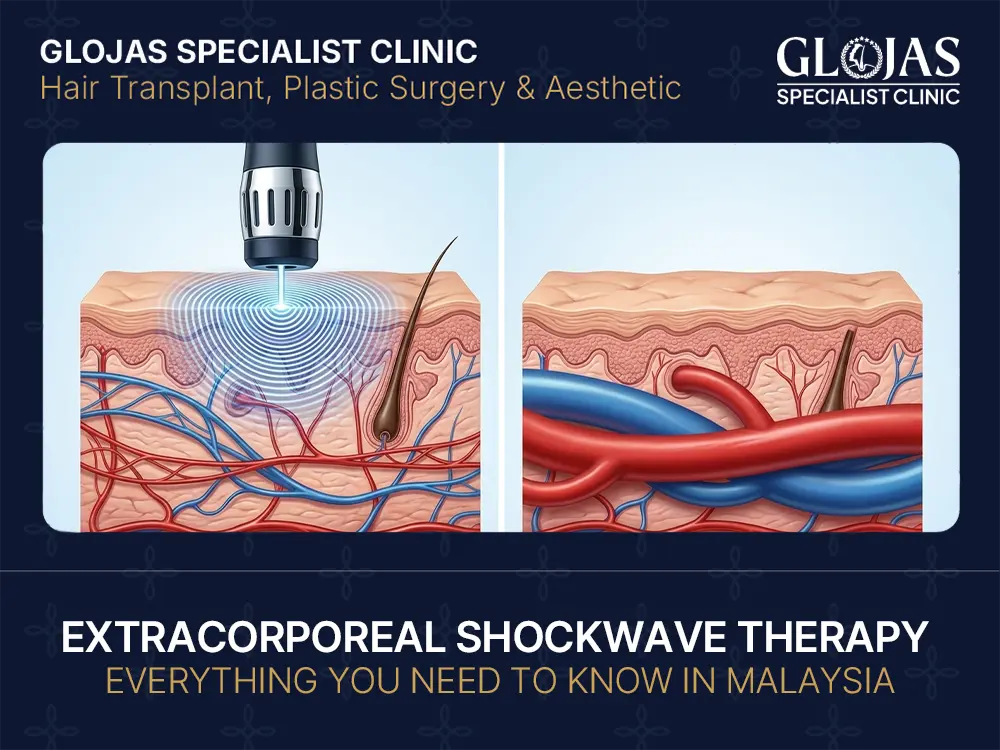
Living with chronic pain is exhausting, but surgery isn’t your only option. In Malaysia, Extracorporeal Shockwave Therapy (ESWT) has become a top-tier choice for those seeking non-invasive relief. It is a modern, evidence-based approach that helps Malaysians return to their active lifestyles without the risks of the operating theater. What Is Extracorporeal Shockwave Therapy (ESWT)? Extracorporeal Shockwave Therapy (ESWT) is a non-invasive medical treatment that uses high-energy acoustic waves to stimulate healing in injured tendons, ligaments, and soft tissues. Commonly used for chronic conditions like plantar fasciitis and tennis elbow, ESWT promotes blood flow, breaks down scar tissue, and triggers the body’s natural repair mechanisms without surgery or medication. How ESWT Works: The Science Of Acoustic Wave Regeneration The device generates rapid pressure pulses that penetrate the skin. These waves induce neovascularization, which is the formation of new blood vessels. According to the International Society for Medical Shockwave Treatment, this increases blood flow and nutrient delivery, stimulating collagen production and cellular repair in damaged tendons. Types Of ESWT: Focused vs. Radial Shockwave Therapy Radial Shockwave Therapy (rESWT) spreads energy over a wider surface, making it ideal for large muscle groups or trigger points. Conversely, Focused Shockwave Therapy (fESWT) concentrates energy into a precise point deep within the body. This precision is essential for treating bone-related issues or deep-seated tendon calcifications. Key Musculoskeletal Conditions Treated With ESWT ESWT is primarily used for “overuse” injuries. It is highly effective for conditions like calcific tendinitis, hip bursitis, and non-union bone fractures. Medical standards suggest ESWT when 6 to 12 months of conservative care fail, offering a potent middle ground between physiotherapy and invasive surgical procedures. Benefit of ESWT Treatment 1. Non-Invasive & Surgery-Free No incisions, needles, or anesthesia required. Eliminates surgical risks and recovery time while treating the underlying condition directly. 2. Stimulates Natural Healing Acoustic waves increase blood flow and trigger collagen production. Activates the body’s own repair mechanisms for lasting tissue regeneration. 3. Effective for Chronic Musculoskeletal Pain Clinically proven to resolve plantar fasciitis, tennis elbow, shoulder tendinitis, and knee osteoarthritis with high success rates. 4. Minimal Downtime Patients resume daily activities immediately after each session. No prolonged recovery period or post-treatment restrictions are required. 5. Drug-Free Pain Relief Reduces reliance on anti-inflammatories and corticosteroid injections. Provides effective pain management without medication side effects or dependency. 6. Restores Men’s Sexual Health Treats erectile dysfunction and Peyronie’s disease by improving penile blood flow and breaking down plaque. Needle-free and medication-free. Medical Indications For ESWT In Malaysia From weekend warriors to office professionals, many Malaysians suffer from repetitive strain. ESWT addresses these issues by targeting the root cause of the pain—tissue degeneration—rather than just masking the symptoms with temporary painkillers or topical creams. Chronic Plantar Fasciitis & Heel Pain If those first steps in the morning feel like sharp stabs, you likely have plantar fasciitis. Research indicates ESWT success rates for heel pain often exceed 80%. It breaks down scar tissue in the foot’s thick connective band, significantly reducing inflammation and long-term discomfort. Tennis Elbow & Lateral Epicondylitis Tennis elbow is common among heavy computer users in Kuala Lumpur’s corporate sector. ESWT targets the outer elbow tendons to stimulate repair. Studies show a 60-70% improvement in grip strength following treatment, allowing patients to work and play without the nagging ache of tendonitis. Shoulder Calcific Tendinitis Calcium deposits in the shoulder can cause agonizing “frozen” sensations. Focused ESWT is uniquely capable of breaking these deposits down into smaller particles that the body can reabsorb. This non-surgical “shattering” of calcium often restores full range of motion within just a few sessions. Knee Osteoarthritis & Patellar Tendinopathy For those suffering from “jumper’s knee” or early-stage knee wear, ESWT provides a regenerative boost. It reduces pain-signaling chemicals in the joint while promoting tissue density. This is a popular option for active Malaysians looking to delay joint replacement surgery while maintaining their mobility. Finding Accredited ESWT Providers In Malaysia Quality care requires medical-grade technology and expert application. Not all “vibration” machines found in spas are true ESWT. Patients should seek specialized orthopedic or sports medicine centers that utilize certified Swiss or German shockwave technology for genuine therapeutic results. Leading Orthopedic & Sports Medicine Clinics In Kuala Lumpur Kuala Lumpur is home to world-class sports medicine facilities. Many private hospitals and specialized clinics offer ESWT under the supervision of senior consultants. These centers integrate shockwave therapy into holistic recovery plans, ensuring that the treatment is part of a broader, evidence-based rehabilitation strategy. ESWT Centers In Penang, Johor Bahru, & Selangor Residents in Penang and Johor Bahru have excellent access to ESWT through regional private hospitals. In Selangor, numerous boutique sports physiotherapy centers provide this service. These locations often feature advanced diagnostic tools, like musculoskeletal ultrasound, to ensure the shockwaves are directed with pinpoint accuracy. How To Verify Certified ESWT Specialists Always ensure your therapist is registered with the Malaysian Physiotherapy Association (MPA) or the Malaysian Medical Council (MMC). Certified specialists have the training to adjust frequency and energy levels safely, minimizing risks while maximizing the regenerative impact on your specific injury. What To Expect During Your ESWT Consultation Your consultation begins with a physical assessment and history review. The specialist will identify the “trigger point” of your pain to determine the optimal wave intensity. They will also check for contraindications, such as pregnancy or blood-clotting disorders, ensuring the procedure is entirely safe for you. ESWT Treatment Costs & Insurance In Malaysia As technology has advanced in 2026, ESWT has become more affordable and accessible. While it represents an upfront investment, the long-term savings from avoiding surgery and reducing medication reliance make it a cost-effective choice for many patients. Average ESWT Price Per Session In Malaysia (2026) In 2026, a single ESWT session typically costs between RM 250 and RM 600 at private Malaysian facilities. Most protocols require 3 to 5 sessions for lasting results. Many clinics offer package rates, making the total cost of a full recovery cycle more manageable for patients. Understanding ESWT Coverage Under Malaysian Health
Ozempic Price Malaysia (2026): Cost Per Pen & Monthly Treatment Budget
If you’ve been scrolling through social media or chatting with friends in KL about weight management, the conversation almost always lands on the “skinny jab.” But while the results are famous, the Ozempic price in Malaysia can be a bit of a maze. Whether you’re managing Type 2 Diabetes or exploring off-label weight loss, here is the 2026 breakdown of what your wallet should expect. What Is the Current Ozempic Price in Malaysia? Average Price Per Pen As of early 2026, the retail price for a single Ozempic (semaglutide) pen in Malaysia typically ranges between RM850 and RM1,150. This variation depends largely on whether you are purchasing from a high-end aesthetic clinic in Bangsar or a specialized hospital pharmacy. Price by Dosage (0.25mg, 0.5mg, 1mg) Interestingly, the price per pen is often uniform across different strengths (0.25mg, 0.5mg, and 1mg). This is because the pen itself contains a set amount of medication (e.g., 2mg or 4mg total), and the dial determines the dose. However, a “starter pen” used for 0.25mg doses will last longer than a pen used for 1mg doses, impacting your long-term budget. Estimated Monthly Cost For most users, the monthly investment sits between RM900 and RM1,200. During the initial “titration” phase (starting at 0.25mg), one pen might last you six to eight weeks. Once you reach a maintenance dose of 1mg per week, you will need exactly one pen per month. Factors Affecting Ozempic Price in Malaysia Dosage and Treatment Duration The National Pharmaceutical Regulatory Agency (NPRA) ensures that all semaglutide products imported into Malaysia meet strict safety standards, but they do not set a “ceiling price” for private retailers. As your dosage increases, your “price per dose” effectively goes up. Clinic vs Hospital Pricing Private Aesthetic Clinics: Often bundle the pen with body composition analysis and nutritional coaching, which can push the price toward RM1,100+. Private Hospitals: Generally stick closer to the pharmaceutical retail price, often around RM850–RM950 per pen, excluding consultation. Consultation and Follow-Up Fees Don’t forget the “hidden” costs. Most clinics require an initial blood test to check kidney and liver function. These medical screenings can add a one-time cost of RM200 to RM500 to your first bill. Supply and Availability Global demand still fluctuates. In 2026, while supply has stabilized, “scalper” prices still exist in unregulated spaces. Always buy from licensed sources to ensure cold-chain integrity, as semaglutide must be stored between 2°C and 8°C. Ozempic for Diabetes vs Weight Loss: Price Differences Indication-Based Prescribing In Malaysia, Ozempic is officially registered for the treatment of Type 2 Diabetes. When used for weight loss, it is considered “off-label.” While the physical pen is the same, the price may differ based on the “package” the clinic offers for weight management vs. chronic disease care. Insurance Coverage for Type 2 Diabetes If you are a diagnosed diabetic, some premium medical insurance plans in Malaysia may cover the cost of Ozempic if it is deemed medically necessary. However, coverage is rarely 100% and often requires a specialist’s referral. Self-Pay for Weight Management For those using it strictly for weight loss, expect to pay out-of-pocket. Most Malaysian insurers categorize weight management as a “lifestyle” or “cosmetic” concern, which is excluded from standard policy coverage. Where to Get Ozempic in Malaysia Private Medical Clinics Many LCP-certified (Letter of Credentialing and Privileging) aesthetic clinics stock Ozempic. They are popular because they offer a more “lifestyle-oriented” approach, focusing on “Ozempic Face” prevention and body contouring alongside the injections. Hospitals Major private hospitals (like Gleneagles or Prince Court) are the safest bet for consistent stock. You will need to book an appointment with an endocrinologist or internal medicine specialist first. Licensed Pharmacies You cannot walk into a pharmacy and buy Ozempic over the counter. However, with a valid prescription from a Malaysian doctor, retail pharmacies like Alpro or Big Pharmacy can dispense the medication, often at the most competitive retail rates. Ozempic vs Other Weight Loss Injections Price Comparison Medication Frequency Estimated Monthly Price (RM) Ozempic Weekly RM900 – RM1,200 Saxenda Daily RM1,000 – RM1,400 Wegovy Weekly RM1,100 – RM1,500 Mounjaro Weekly RM1,400 – RM3,000 Saxenda Price Malaysia Saxenda (liraglutide) is a daily injection. Because you need more pens per month, the cost can often exceed Ozempic, though it is the only one with a specific MOH “weight loss” indication. Wegovy Price Malaysia Wegovy is the higher-dose version of semaglutide. While it is more effective for weight loss, its price in Malaysia reflects its premium status, often starting at RM1,100 per month. Mounjaro Price Malaysia Mounjaro (tirzepatide) is the “heavy hitter” in terms of results, but it comes with a heavy price tag. According to clinical data from the FDA, tirzepatide can lead to higher weight loss percentages, but in Malaysia, you’ll pay a significant premium for it. Is Ozempic Worth the Cost? Clinical Effectiveness The World Health Organization recognizes obesity as a complex chronic disease. For many, the “cost” of Ozempic is an investment in preventing long-term complications like heart disease or joint failure, which carry much higher price tags in the future. Long-Term Financial Considerations Consider the “food noise” reduction. Many users report spending significantly less on groceries, dining out, and alcohol, which can partially offset the monthly RM1,000 cost of the medication. FAQs About Ozempic Price Malaysia How Much Does Ozempic Cost Per Month? On average, expect to spend RM1,000 per month. This includes the pen and a basic follow-up consultation. Can I Buy Ozempic Without Prescription in Malaysia? No. Ozempic is a Group B Poison under the Poisons Act 1952. Selling or buying it without a prescription is illegal and dangerous, as you risk getting counterfeit products. Why Does Ozempic Price Vary Between Clinics? Clinics factor in their overhead, cold-chain storage costs, and the level of medical supervision provided. A clinic that offers 24/7 access to a nutritionist will naturally charge more than a hospital pharmacy.
10 Cara Kecilkan Punggung Secara Berkesan di Malaysia
Kuiz Pantas Apakah Cabaran Utama Bentuk Punggung Anda? Pilih masalah utama anda di bawah untuk ketahui cara pengecilan yang paling berkesan. 🏃♀️ Lemak Berlebihan di Sisi Punggung (Saddlebags) 🪑 Punggung Lebar Akibat Lama Duduk Bekerja 🤱 Punggung Kembang & Kendur Selepas Bersalin Tanya Pakar Melalui WhatsApp Nak pakai seluar jeans kegemaran tapi sangkut di bahagian punggung? Jangan risau, anda tidak bersendirian. Ramai rakyat Malaysia mencari cara kecilkan punggung yang bukan sahaja berkesan, tapi juga selamat dan praktikal untuk gaya hidup kita yang kaya dengan makanan sedap! Ingin cara kecilkan punggung yang pantas dan selamat? GLOJAS Specialist Clinic menawarkan teknologi terkini untuk membentuk kontur badan idaman anda dengan hasil yang nampak semula jadi dan memukau oleh doktor pakar. Apa Itu Punggung Besar & Punca Utama Punggung yang besar selalunya disebabkan oleh pengumpulan tisu adiposa (lemak) di bahagian bawah badan. Walaupun bentuk badan “pear” dianggap sihat oleh sesetengah pakar, namun lemak yang berlebihan boleh membuatkan kita rasa kurang yakin. Faktor Genetik & Bentuk Badan Genetik memainkan peranan besar dalam menentukan di mana badan anda menyimpan lemak. Jika ahli keluarga anda cenderung mempunyai pinggul yang lebar, kemungkinan besar anda juga akan mewarisi struktur tulang dan taburan lemak yang sama. Lemak Berlebihan di Kawasan Punggung Lemak subkutaneus adalah lemak yang berada tepat di bawah kulit. Kawasan punggung dan paha merupakan “kawasan simpanan” utama bagi wanita kerana faktor biologi untuk persediaan kehamilan dan penyusuan. Gaya Hidup, Diet & Kurang Aktiviti Fizikal Tabiat suka makan makanan berlemak (seperti nasi lemak atau roti canai setiap pagi) tanpa melakukan aktiviti fizikal akan menyebabkan kalori berlebihan disimpan sebagai lemak. Pekerjaan pejabat yang memerlukan anda duduk terlalu lama juga boleh melemahkan otot gluteus. Hormon & Perubahan Berat Badan Hormon estrogen sangat mempengaruhi pengumpulan lemak di bahagian bawah badan. Perubahan hormon semasa akil baligh, kehamilan, atau menopaus boleh menyebabkan saiz punggung berubah secara drastik. Cara Kecilkan Punggung Secara Semula Jadi Tiada jalan pintas yang ajaib, tetapi kombinasi pergerakan yang betul boleh membuahkan hasil yang sangat memuaskan. Senaman Fokus Untuk Mengecilkan Punggung Untuk “tone up” otot, anda perlu melakukan senaman kekuatan. Squats, lunges, dan glute bridges adalah senaman wajib. Walaupun ia tidak membakar lemak secara setempat (spot reduction), otot yang pejal akan membuatkan punggung nampak lebih kecil dan kemas. Senaman Kardio Paling Berkesan Kardio adalah kunci untuk membakar kalori keseluruhan. Berlari, berbasikal, atau mendaki (hiking) adalah antara senaman membakar lemak yang paling efektif untuk mengecilkan bahagian bawah badan. Regangan & Postur Badan Kadangkala, punggung nampak lebih besar disebabkan oleh Anterior Pelvic Tilt (punggung tertonggok ke belakang). Melakukan regangan hip flexors secara rutin boleh membetulkan postur dan memberikan ilusi badan yang lebih ramping. Tempoh & Kekerapan Senaman Yang Disarankan Konsistensi adalah kunci. Cuba sasarkan sekurang-kurangnya 150 minit aktiviti intensiti sederhana seminggu mengikut saranan World Health Organization untuk kesihatan optimum. Pemakanan Untuk Kecilkan Punggung Abs are made in the kitchen! Begitu juga dengan punggung yang idaman. Makanan Yang Perlu Dikurangkan Kurangkan pengambilan gula ringkas, minuman manis, dan makanan diproses. Garam berlebihan juga perlu dielakkan kerana ia menyebabkan “water retention” yang membuatkan badan nampak bengkak. Diet Rendah Lemak & Kalori Fokus kepada pengambilan protein tanpa lemak, sayur-sayuran hijau, dan karbohidrat kompleks seperti nasi perang atau oat. Diet seimbang membantu badan membakar simpanan lemak sedia ada untuk tenaga. Contoh Pelan Pemakanan Harian Sarapan: Telur hancur dengan roti bijirin penuh. Makan Tengah Hari: Ayam bakar, ulam-ulaman, dan separuh senduk nasi putih. Makan Malam: Sup ikan dengan sayur sawi. Peranan Air & Metabolisme Minum air secukupnya membantu melancarkan sistem pencernaan dan meningkatkan kadar metabolisme. Air juga membantu otot berfungsi dengan lebih baik semasa bersenam. Rawatan Estetik Untuk Kecilkan Punggung di Malaysia Bagi mereka yang mahukan hasil lebih pantas tanpa pembedahan, teknologi moden kini ada jawapannya. Fat Reduction Non-Surgical Rawatan non-invasif semakin popular di klinik estetik sekitar Kuala Lumpur dan Selangor. Ia tidak memerlukan waktu pemulihan yang lama (no downtime). Teknologi Pelangsingan Badan (RF, Ultrasound, Cryolipolysis) Cryolipolysis (CoolSculpting): Membekukan sel lemak sehingga mati dan disingkirkan secara semula jadi oleh badan. Radiofrequency (RF): Menggunakan haba untuk menegangkan kulit dan mengurangkan selulit. Ultrasound: Memecahkan dinding sel lemak menggunakan gelombang bunyi. Kelebihan & Kekangan Rawatan Tanpa Pembedahan Kelebihannya ialah prosedur ini tidak menyakitkan dan selamat. Namun, kekangannya ialah anda mungkin memerlukan beberapa sesi untuk nampak hasil yang ketara dan kosnya boleh menjadi agak tinggi. Pembedahan Untuk Mengecilkan Punggung Jika kaedah semula jadi dan estetik ringan tidak mencukupi, prosedur perubatan adalah pilihan terakhir. Liposuction Punggung Liposuction adalah prosedur pembedahan untuk menyedut keluar lemak degil secara terus. Ini adalah cara paling drastik untuk mengubah bentuk badan dalam masa singkat. Siapa Calon Yang Sesuai Calon terbaik adalah individu yang mempunyai berat badan stabil tetapi mempunyai lemak degil yang tidak hilang dengan diet atau senaman. Anda juga perlu berada dalam tahap kesihatan yang baik. Proses, Risiko & Tempoh Pemulihan Seperti mana-mana pembedahan, terdapat risiko jangkitan atau lebam. Pemulihan biasanya mengambil masa 2 hingga 4 minggu sebelum anda boleh kembali melakukan aktiviti lasak. Anda boleh merujuk portal MyHealth KKM untuk maklumat lanjut mengenai prosedur kosmetik di Malaysia. Hasil Sebelum & Selepas Rawatan Hasil liposuction adalah sangat ketara, namun ia memerlukan penjagaan rapi seperti memakai compression garment untuk memastikan kulit mengecut dengan cantik. Cara Mengecilkan Punggung Dengan Selamat Keselamatan harus menjadi keutamaan anda sebelum memulakan mana-mana regimen baru. Kesilapan Biasa Yang Perlu Dielakkan Ramai orang tersilap dengan mengambil produk “kurus” yang tidak berdaftar. Produk ini selalunya mengandungi bahan terlarang yang boleh merosakkan buah pinggang. Kepentingan Nasihat Pakar Sebelum memulakan senaman berat atau rawatan estetik, berbincanglah dengan doktor atau pakar kecergasan bertauliah untuk memastikan kaedah tersebut sesuai dengan kondisi jantung dan sendi anda. Keselamatan & Jangkaan Realistik Fahami bahawa badan manusia memerlukan masa untuk berubah. Jangan terpedaya dengan iklan “kecilkan punggung dalam 3 hari”. Matlamat yang sihat adalah penurunan yang konsisten dan kekal. Berapa Lama Untuk Nampak Hasil Mengecilkan Punggung Sabar itu separuh daripada kejayaan! Faktor Yang Mempengaruhi Keputusan Kadar metabolisme, umur, dan tahap aktiviti harian mempengaruhi kepantasan anda nampak hasil. Orang muda biasanya nampak kesan lebih cepat berbanding mereka yang lebih berusia. Senaman vs Rawatan Estetik Senaman memerlukan masa (3-6 bulan), manakala rawatan estetik seperti CoolSculpting mungkin
Excess Skin: Why It Happens & How to Treat It in Malaysia

Malaysia Skin Tightening & Removal Estimator Select your treatment area to check estimated recovery time, typical Malaysian price ranges, and direct consultation options. Choose Treatment Area: Tummy Tuck (Abdominoplasty)Arm Lift (Brachioplasty)Thigh LiftNon-Surgical RF / Laser Tightening Estimated Recovery: 2 to 4 weeks Est. Cost Range (MYR): RM 15,000 – RM 28,000 Best Suited For: Significant skin laxity after massive weight loss or pregnancy. WhatsApp Doctor / Clinic Loose or excess skin happens when your skin loses elasticity due to aging, rapid weight loss, or post-pregnancy changes. This can lead to sagging, folds, or dermatochalasis in certain areas. Treatments range from non-surgical skin tightening to surgical excision like abdominoplasty (tummy tuck), brachioplasty (arm lift), thighplasty, and facial lifts. What Causes Excess Skin? Extra skin develops when collagen and elastin fibers lose their tension. Common causes include: Rapid weight loss (after bariatric surgery or dieting) Aging – skin naturally loses elasticity Pregnancy and post-partum body changes Genetics or predisposition to sagging skin Areas commonly affected: abdomen, arms, thighs, neck, face, chest. Beyond aesthetics, sagging skin can cause skin irritation, rashes, intertrigo, and hygiene issues. Why It Happens (Mechanisms) Collagen and elastin breakdown reduces skin recoil Gravity pulls tissue downward over time Rapid fat loss leaves skin unsupported Excess skin can occur around eyelids, abdomen, arms, and thighs Sun damage and smoking accelerate collagen degradation Conditions like ptosis or dermatochalasis can affect function Treatment Options for Excess Skin Non-Surgical Approaches Radiofrequency / Ultrasound Skin Tightening: Stimulates collagen production, improves firmness Laser Therapy (CO2 / Fractional): Enhances skin texture and tightness Topical Treatments: Retinoids, peptides, antioxidants, hyaluronic acid Fat Grafting or Dermal Fillers: Restores volume under minor sagging areas Best for mild sagging, often requires multiple sessions to see visible improvement Surgical Approaches Abdominoplasty (Tummy Tuck): Removes excess abdominal skin, tightens underlying fascia and muscles Brachioplasty (Arm Lift) & Thighplasty (Thigh Lift): Excises hanging skin after weight loss Blepharoplasty: Eyelid Surgery Body Contouring Surgery: Combines liposuction and skin removal for smooth, natural results Facial and Neck Lifts: Correct sagging in jawline, neck, and cheeks Reconstructive Surgery: Post-bariatric or post-trauma skin repair Always performed by board-certified plastic or reconstructive surgeons, following pre-op assessment including BMI stability, comorbidities, and skin condition. Board-certified surgeons at GLOJAS Specialist Clinic in Kuala Lumpur, Malaysia, ensure safe, effective results while minimizing risks such as hematoma, infection, or hypertrophic scarring. Who Is a Good Candidate? Generally healthy adults Stable weight for at least 6–12 months No active skin infections, diabetes, cardiovascular, or clotting issues Non-smokers or willing to stop before surgery Realistic expectations and adherence to post-op care What Happens During Treatment? Non-Surgical Outpatient procedure, minimal downtime Gradual results over weeks Often combined with topical skin treatments and exercise Surgical Anesthesia: General or local (twilight sedation) Incision: Strategically placed along natural creases or supratarsal line, tarsal plate, or abdomen fold Excision: Removes excess skin; underlying muscle tightening and fat repositioning Recovery: Swelling/bruising 1–3 weeks, full results 2–3 months Compression garments, wound care, and follow-ups required Benefits of Excess Skin Treatment Restores natural body contour and firmness Enhances mobility and reduces skin irritation or infections Improves self-confidence and body image Long-lasting results with healthy lifestyle maintenance Risks & Considerations Common: bruising, swelling, temporary numbness Surgical: hematoma, seroma, infection, hypertrophic scarring, anesthesia risks Minimizing risks: choose board-certified, Ministry of Health-accredited surgeons in Malaysia Aftercare Tips Wear compression garments 4–6 weeks Keep incisions clean, moisturized, and protected from sun Avoid heavy lifting and strenuous activity for 2–4 weeks Gradually resume exercise and daily activities Follow all surgeon instructions and attend follow-ups Other Helpful Approaches Exercise: Strengthens underlying muscles, supporting skin Healthy diet: Boosts collagen and elastin production Topical skincare: Retinoids, peptides, antioxidants for mild improvements Cost of Excess Skin Treatment in Malaysia (2026) Non-surgical: RM1,500–RM6,000 per session Surgical: RM10,000–RM50,000+ depending on complexity Insurance may cover functional skin removal after massive weight loss Frequently Asked Questions (FAQ) 1. Can excess skin tighten naturally?Mild sagging may improve slowly, but significant loose skin usually requires treatment. 2. How long does surgical recovery take?Initial healing: 1–3 weeks; full results visible in 2–3 months. 3. Are non-surgical treatments effective?Yes, for minor sagging, but multiple sessions are often needed. 4. Will scars be noticeable?Surgeons hide incisions strategically; scars fade over time but never fully disappear. 5. Can I get an infection?Yes, but proper hygiene, antibiotics, and follow-ups reduce risk. 6. Will removing excess skin improve mobility?Yes, it improves comfort and ability to exercise. 7. How long will results last?Long-lasting if weight is stable and healthy habits maintained. 8. Is treatment painful?Discomfort is mild; pain is managed with medications and care. 9. Who should perform skin removal?A board-certified plastic or reconstructive surgeon, preferably Ministry of Health-accredited in Malaysia. 10. Can skin removal be combined with other procedures?Yes, often combined with liposuction, tummy tuck, or body contouring for optimal results.
Cara Kecilkan Peha: Tips, Senaman & Rawatan Lemak Degil Dengan Selamat
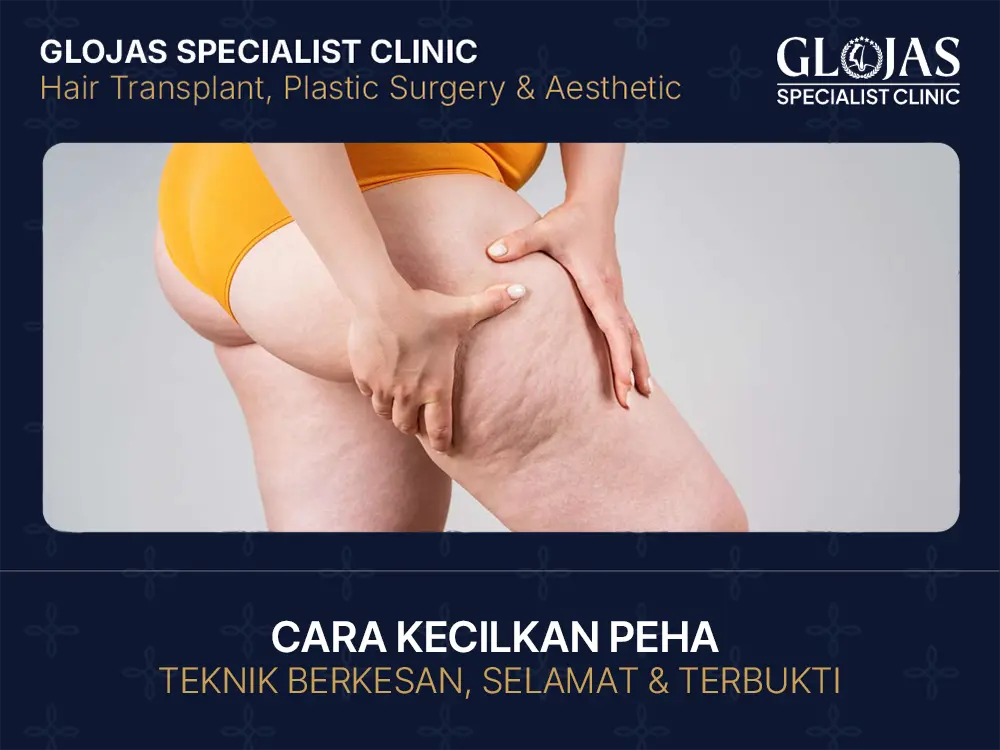
Ingin Peha Kecil & Terbentuk Dengan Selamat? Jangan biarkan lemak degil di peha merosakkan keyakinan diri anda. Dapatkan panduan senaman khusus dan konsultasi rawatan profesional hari ini! 💬 Hubungi Kami di WhatsApp Cara kecilkan peha termasuk mengamalkan pemakanan seimbang, senaman kardio, latihan kaki, dan mengurangkan lemak badan secara keseluruhan. Aktiviti seperti squats, lunges, dan berjalan pantas boleh membantu membentuk peha lebih ramping. Bagi sesetengah individu, rawatan estetik atau liposuction juga dipertimbangkan untuk mengurangkan lemak degil pada bahagian peha. Apa Punca Peha Besar? Lemak berlebihan pada peha Peha adalah antara kawasan pertama badan menyimpan lemak, terutamanya pada wanita. Tubuh menyimpan lemak di peha sebagai simpanan tenaga. Apabila kalori yang masuk melebihi kalori yang dibakar, lemak terkumpul di kawasan ini . Faktor genetik dan hormon Genetik memainkan peranan besar dalam bentuk badan anda. Jika ibu atau nenek anda mempunyai peha besar, kemungkinan anda juga mewarisi ciri ini. Hormon estrogen juga mempengaruhi penyimpanan lemak di peha dan pinggul, terutama pada wanita. Inilah sebabnya mengapa wanita cenderung menyimpan lebih banyak lemak di bahagian bawah badan berbanding lelaki . Kurang aktiviti fizikal Gaya hidup sedentari (banyak duduk) menyebabkan otot peha menjadi lemah dan lemak mudah terkumpul. Apabila anda jarang bergerak, kalori yang dimakan tidak dibakar dengan efisien. Di Malaysia, kerja pejabat dan pengangkutan kereta menyumbang kepada gaya hidup kurang aktif . Duduk berjam-jam setiap hari juga boleh menyebabkan peredaran darah yang lemah di kawasan peha. Pemakanan tidak seimbang Pengambilan makanan tinggi kalori, gula, dan lemak tepu menyebabkan badan menyimpan lebih banyak lemak. Jika anda makan lebih daripada keperluan badan, lebihan kalori akan disimpan sebagai lemak – termasuk di peha. Makanan segera, minuman manis, dan makanan bergoreng adalah antara penyumbang utama penambahan lemak di Malaysia . Cara Kecilkan Peha Secara Semula Jadi Kawal pemakanan harian Kunci utama kecilkan peha adalah kekal dalam defisit kalori – maksudnya makan kurang sedikit daripada apa yang badan anda bakar sehari-hari. Tanpa defisit kalori, lemak peha tidak akan berkurang walaupun anda bersenam setiap hari. Mulakan dengan : Catat apa yang anda makan selama seminggu Kurangkan saiz hidangan secara beransur-ansur Makan lebih kerap tetapi dalam kuantiti kecil Kurangkan makanan tinggi gula dan lemak Gula berlebihan ditukar menjadi lemak dan disimpan di badan – termasuk peha. Kurangkan : Minuman manis (teh tarik, sirap, soda, jus kotak) Kuih-muih dan manisan Makanan bergoreng dan berlemak Roti putih, nasi putih, mi dan pasta (karbohidrat ringkas) Gantikan dengan makanan yang lebih berkhasiat dan mengenyangkan. Tingkatkan pengambilan protein dan serat Protein dan serat membantu anda berasa kenyang lebih lama, mengurangkan keinginan untuk snek tidak sihat. Sumber protein baik : Ayam tanpa kulit Ikan (terutama ikan kembung, salmon, sardin) Telur Tahu dan tempe Kacang-kacangan Sumber serat baik : Sayuran hijau (bayam, brokoli, kangkung) Buah-buahan (epal, betik, pisang) Bijirin penuh (oat, beras perang) Minum air secukupnya Air membantu metabolisme badan berfungsi dengan baik. Kadangkala rasa lapar sebenarnya adalah tanda dehidrasi. Matlamat minum 6 hingga 8 gelas air sehari (1.5 hingga 2 liter). Lebih jika anda aktif bersenam atau berada di cuaca panas Malaysia. Senaman untuk Kecilkan Peha Tidak ada senaman yang “membakar lemak peha secara spesifik” (spot reduction adalah mitos). Tetapi senaman tertentu menguatkan dan menegangkan otot peha, menjadikannya kelihatan lebih ramping dan terdefinisi. Squat Squat adalah senaman terbaik untuk peha, punggung, dan pinggul. Cara buat : Berdiri dengan kaki seluas bahu Turunkan badan seolah-olah hendak duduk di kerusi Pastikan belakang lurus dan lutut tidak melebihi hujung jari kaki Naik semula ke posisi berdiri Lakukan 3 set, 12-15 ulangan setiap sesi. Lunges Lunges menyasarkan bahagian depan dan belakang peha. Cara buat : Berdiri tegak, kemudian langkah satu kaki ke hadapan Turunkan badan sehingga kedua-dua lutut bengkok 90 darjah Tolak badan naik semula ke posisi berdiri Ulang dengan kaki sebelah lagi Lakukan 3 set, 10-12 ulangan setiap kaki. Walking dan jogging Berjalan dan berjoging adalah senaman kardio yang berkesan membakar kalori dan lemak seluruh badan, termasuk peha. Berjalan pantas – 30 minit, 5 kali seminggu Joging – 20-30 minit, 3-4 kali seminggu Mulakan dengan berjalan dahulu jika anda baru memulakan rutin senaman. Cycling dan skipping Basikal (stationary atau luar) dan lompat tali adalah senaman kardio intensiti sederhana hingga tinggi yang sangat baik untuk peha. Basikal – 20-30 minit setiap sesi Lompat tali – 10-15 minit (sangat membakar kalori) Senaman Kalori Dibakar (30 minit, 60kg) Kesan pada Peha Squat ~150-200 Menguatkan otot Lunges ~150-200 Menegangkan peha Berjalan pantas ~120-150 Bakar lemak seluruh badan Joging ~240-300 Bakar lemak + kuatkan otot Lompat tali ~300-400 Bakar kalori tinggi Berapa Lama Nak Nampak Hasil? Faktor yang mempengaruhi perubahan Beberapa faktor menentukan seberapa cepat anda melihat perubahan : Titik permulaan – Lebih berat badan, lebih cepat perubahan awal kelihatan Konsistensi – Senaman 4-5 kali seminggu lebih berkesan daripada 1-2 kali Pemakanan – Tanpa kawalan diet, hasil lambat atau tidak kelihatan Genetik – Sesetengah orang susah hilangkan lemak peha kerana faktor keturunan Umur – Metabolisme semakin perlahan dengan usia Konsistensi senaman dan diet Kunci utama adalah konsisten. Bukan intensiti yang melampau tetapi dilakukan secara berterusan. Tips kekal konsisten : Tetapkan jadual tetap (contoh: setiap Selasa, Khamis, Sabtu) Mulakan dengan senaman pendek (15-20 minit) dan tingkatkan perlahan-lahan Catat kemajuan anda untuk kekal bermotivasi Jangka masa hasil yang realistik Inilah jangka masa yang realistik untuk kecilkan peha : Tempoh Perubahan Yang Dijangka 2-4 minggu Perasaan lebih bertenaga, otot rasa lebih kuat, pakaian sedikit longgar 4-8 minggu Peha kelihatan sedikit ramping, otot mula kelihatan terdefinisi 3-6 bulan Perubahan ketara pada saiz dan bentuk peha 6-12 bulan Peha ramping dan tegang, mencapai matlamat Penurunan lemak yang sihat adalah 0.5 hingga 1 kg seminggu. Jangan mengharapkan perubahan drastik dalam sebulan. Ini adalah proses yang memerlukan kesabaran. GLOJAS Specialist Clinic Insight Dalam pengalaman klinikal kami, ramai pesakit wanita datang dengan kekecewaan kerana mereka sudah bersenam bertungkus-lumus tetapi peha masih kelihatan besar. Apabila kami tanya tentang diet, ramai yang mengaku masih mengambil minuman manis dan kuih-muih setiap hari. Hakikatnya, senaman sahaja tidak cukup. Anda tidak boleh “mengatasi” diet yang buruk dengan senaman. Defisit kalori adalah keutamaan. Kami juga sering mengingatkan pesakit bahawa bentuk badan sebahagiannya ditentukan oleh genetik. Matlamatnya adalah kesihatan dan keyakinan, bukan memaksa badan menjadi sesuatu yang tidak mungkin dicapai secara sihat. Tips Kekalkan Peha Ramping Kekalkan berat
Small Breasts: Causes, Concerns & Enhancement Options in Malaysia
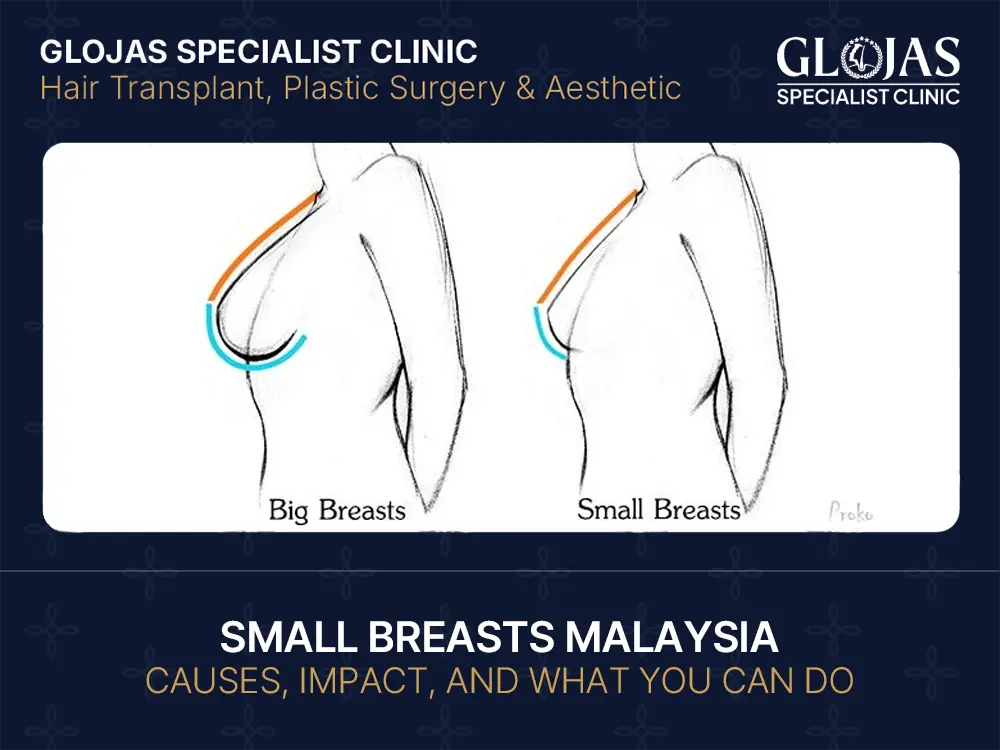
What Are Small Breasts? Small breasts, medically referred to as micromastia or hypomastia, describe a condition where there is a lack of breast tissue volume relative to a person’s chest wall and body frame. In many cases, this is purely an aesthetic preference rather than a medical pathology, but for some, it can be a source of significant self-consciousness. Breast Size Variation and Normal Anatomy The human breast is composed primarily of fatty (adipose) tissue and glandular tissue (lobules and ducts) supported by the Cooper’s ligaments. “Normal” anatomy varies wildly; some women have a higher ratio of dense glandular tissue, while others have more soft fat, which determines how the breasts feel and sit. In Malaysia, the average cup size typically falls around an A or B cup, which is perfectly normal for the smaller skeletal frames common in the region. Size can also be influenced by the width of the chest wall—the broader the chest, the smaller a specific volume of tissue may appear. How Breast Size Differs Among Women Individual size is determined by the number of estrogen receptors in the breast tissue during the developmental years of puberty. Fluctuations in weight significantly impact size, as the fat cells in the breast are often the first to shrink during weight loss. Hormonal cycles play a role; many women notice their breasts feel “fuller” or tender just before menstruation due to fluid retention. Age-related changes, such as the drop in estrogen during menopause, can cause the glandular tissue to shrink, making the breasts look smaller or deflated. Causes of Small Breasts Genetics and Hormonal Factors Genetic heritage is the most influential factor; if your mother or sisters have smaller breasts, you are biologically programmed to likely follow suit. Estrogen and progesterone are the “engineers” of breast growth; a lack of these hormones during puberty can result in less development. In rare medical cases, conditions like Turner Syndrome or certain adrenal disorders can inhibit full breast development. Thyroid imbalances, such as hypothyroidism, can sometimes delay puberty and affect how much breast tissue grows during the teen years. Body Fat Percentage and Nutrition Since breasts are largely made of fat, women with a very low Body Mass Index (BMI) or high muscle mass (like athletes) typically have smaller breasts. Severe nutritional deficiencies during the critical growth years of 12 to 18 can stunt the development of secondary sexual characteristics. Rapid weight loss often leads to “breast involution,” where the fat cells disappear, leaving behind loose skin and less volume. Interestingly, hormonal imbalances caused by diet can also play a minor role in how fat is distributed across the body. Developmental Factors Early exposure to certain environmental toxins or medications can sometimes interfere with the endocrine system during puberty. Physical trauma to the chest area or chest wall surgery during childhood can occasionally hinder the symmetry or growth of the breast buds. Congenital conditions like Poland Syndrome can lead to the underdevelopment or total absence of a breast on one side of the body. Most women find their breasts continue to change until their early 20s, as final fat deposition concludes. Can Small Breasts Be Increased? Natural Limitations of Breast Growth While exercises like chest presses and push-ups can strengthen the pectoral muscles, they do not actually increase the glandular or fatty volume of the breast itself. Over-the-counter “enlargement creams” or herbal supplements often lack clinical evidence and are not recommended by the National Pharmaceutical Regulatory Agency (NPRA). Weight gain can increase size, but you cannot “spot-gain” fat specifically in the breasts; it will distribute according to your genetic pattern. Temporary increases occur during pregnancy and breastfeeding, though the breasts often return to a smaller size once nursing ends. Medical Breast Enlargement Options Modern aesthetic medicine in Malaysia offers safe, long-term solutions that provide predictable and measurable increases in volume. Breast Augmentation Surgery remains the gold standard for those wanting a significant jump in cup size (e.g., from an A to a C cup). Fat Transfer (Autologous Fat Grafting) is a popular “natural” alternative that uses your own body fat to enhance the breasts. Injectable fillers for the breast are generally discouraged by major medical boards due to the risk of complications and interference with mammogram screenings. Treatment Options for Small Breasts in Malaysia Breast Augmentation Surgery This procedure involves placing high-quality silicone or saline implants either over or under the pectoral muscle. In Malaysia, surgeons use NPRA-approved implant brands like Motiva or Mentor to ensure patient safety and longevity. It is the most effective way to address severe volume loss or cases where a patient desires a very specific, rounder shape. The surgery is typically performed under general anesthesia and requires a few weeks of recovery for the implants to “settle.” Fat Transfer Breast Enlargement This “2-in-1” procedure involves performing liposuction on areas like the thighs or abdomen and processing that fat to be injected into the breasts. It is ideal for women looking for a subtle 0.5 to 1 cup size increase with a completely natural feel. Because it uses your own tissue, there is no risk of implant rupture or capsular contracture (scar tissue hardening). A portion of the transferred fat (about 30-40%) may be reabsorbed by the body, so surgeons often slightly “over-fill” during the session. Breast Augmentation for Small Breasts Implant Types and Selection Silicone Gummy Bear Implants: These are the most popular in Malaysia as they maintain their shape and have a natural, soft feel. Round vs. Teardrop: Round implants provide more “upper pole” fullness (push-up look), while teardrop (anatomical) shapes mimic the natural slope of a breast. Texture Options: Smooth implants move more naturally within the breast pocket, while textured ones are designed to stay firmly in place. Your surgeon will use 3D imaging technology to show you how different sizes will look on your specific frame before you commit. Surgical Procedure Overview The procedure usually takes 1.5 to 3 hours and involves a small incision—most commonly in the fold under the breast (inframammary)
Cara Ketatkan Miss V: Semula Jadi, Tradisional & Rawatan Moden
🌸 Panduan Asas Senaman Kegel (Cara Semula Jadi) Klik di bawah untuk ketahui cara melakukan senaman Kegel yang betul bagi menguatkan otot lantai pelvik: 1. Kenal Pasti Otot Pelvik yang Betul + Cuba hentikan aliran air kencing separuh jalan. Otot yang anda gunakan untuk menahan itulah kumpulan otot lantai pelvik (Kegel). 2. Teknik Kemutan & Rehat (Hold & Release) + Kemut otot tersebut dengan ketat selama 5 saat, kemudian tarik nafas dan rehatkan otot selama 5 saat. Ulang langkah ini sebanyak 10 kali. 3. Konsistensi Amalan Harian + Lakukan senaman ini 3 kali sehari (pagi, petang, malam) secara konsisten untuk melihat kesan ketegasan otot yang ketara dalam beberapa minggu. Inginkan hasil yang lebih cepat melalui rawatan moden yang selamat? 💬 WhatsApp Kami Sekarang Masalah miss V longgar adalah sesuatu yang biasa dialami wanita, terutamanya selepas bersalin atau dengan peningkatan usia. Keadaan ini berlaku akibat perubahan hormon, kehilangan kolagen, atau kelemahan otot lantai pelvis. Walaupun ia bukan masalah perubatan serius, ia boleh menjejaskan keyakinan diri, keselesaan, dan hubungan intim. Artikel ini membincangkan cara ketatkan miss V melalui kaedah semula jadi, tradisional, dan rawatan moden di klinik estetik Malaysia yang MOH-certified, serta fakta klinikal untuk membantu wanita membuat keputusan yang selamat. Apa Punca Miss V Longgar? Berdasarkan kajian ginekologi, punca utama termasuk: Kehamilan & kelahiran normal – meregangkan otot lantai pelvis. Penuaan & penurunan estrogen – mengurangkan kolagen dan elastin, menjadikan tisu faraj kurang anjal. Obesiti & tekanan intra-abdominal tinggi – menambah beban pada otot pelvis. Gaya hidup – merokok, kekurangan senaman, atau pemakanan tidak seimbang. Menurut American Urogynecologic Society, kira-kira 50% wanita selepas bersalin melaporkan perubahan ketat faraj. Cara Semula Jadi Ketatkan Miss V Senaman Kegel Dilakukan dengan mengetatkan otot lantai pelvis selama 5–10 saat. Kajian menunjukkan senaman ini meningkatkan kekuatan otot pelvis sehingga 60% dalam 3 bulan. Yoga & Squat Posisi seperti bridge pose dan squat membantu meningkatkan peredaran darah dan menguatkan otot pelvis. Pemakanan Berkhasiat Ambil makanan kaya kolagen, vitamin C, dan fitoestrogen (soya, kekacang, flaxseed). Kekurangan nutrisi seperti zat besi dan vitamin D boleh mempercepatkan kelemahan otot. Hidrasi & Gaya Hidup Sihat Minum air mencukupi, tidur berkualiti, dan kurangkan stres untuk keseimbangan hormon. Cara Tradisional Ketatkan Miss V Herba Manjakani Digunakan sejak turun-temurun untuk mengurangkan keputihan & mengetatkan faraj. Mengandungi tanin yang membantu mengecutkan tisu. Daun Sireh Popular untuk pembersihan intim, mempunyai sifat antibakteria semula jadi. Jamu & Akar Kayu Sesetengah wanita percaya ia membantu menguatkan tenaga batin, namun bukti saintifik masih terhad. ⚠️ Penting: Kaedah tradisional mungkin berkesan bagi sesetengah wanita, tetapi tidak boleh menggantikan rawatan klinikal. Rawatan Moden Ketatkan Miss V di Klinik Estetik Di Malaysia, terdapat rawatan moden yang dijalankan oleh doktor estetik LCP-certified dan lebih terbukti secara klinikal: Laser Vaginal Tightening (CO₂ / Er:YAG) Merangsang kolagen & elastin. Kajian klinikal menunjukkan peningkatan ketat faraj sehingga 80% selepas 3 sesi. Radiofrequency (RF) & HIFU Intim Tenaga haba yang menembusi lapisan tisu, merangsang penghasilan kolagen. Tidak memerlukan pembedahan, downtime rendah. PRP Vaginal Rejuvenation Menggunakan platelet-rich plasma dari darah pesakit sendiri untuk memperbaiki tisu. Pembedahan Vaginoplasty Pilihan terakhir bagi kes yang teruk. Prosedur ini menyempitkan faraj melalui pembedahan. Adakah Rawatan Klinik Selamat? Ya, jika dilakukan di klinik bertauliah: Peralatan mesti FDA-approved. Doktor perlu mempunyai LCP (Letter of Credentialing & Privileging) KKM. Risiko seperti jangkitan & iritasi adalah rendah (<5% mengikut laporan klinikal). Bila Perlu Jumpa Doktor? Jika terdapat simptom seperti: ketidakselesaan, kekeringan, sakit ketika hubungan intim, atau keputihan berlebihan. Selepas bersalin, jika senaman Kegel tidak berkesan. Jika ingin memilih rawatan moden dengan hasil lebih cepat & terbukti. FAQ Mengenai Cara Ketatkan Miss V 1. Adakah senaman Kegel cukup untuk mengetatkan miss V?Ya, ia membantu, tetapi hasil berbeza mengikut tahap kelemahan otot. Sesetengah kes memerlukan rawatan tambahan. 2. Adakah rawatan laser miss V menyakitkan?Tidak, pesakit biasanya hanya rasa sedikit panas atau tekanan ringan. 3. Berapa lama hasil rawatan moden bertahan?Biasanya 12–18 bulan, bergantung kepada gaya hidup & tahap hormon. 4. Adakah rawatan moden selamat untuk wanita selepas bersalin?Ya, selamat selepas 6 bulan postpartum, tetapi perlu pemeriksaan doktor terlebih dahulu. 5. Mana lebih baik: kaedah tradisional atau moden?Kaedah tradisional boleh menyokong kesihatan intim, tetapi rawatan moden lebih terbukti secara saintifik dengan hasil yang lebih konsisten. Kesimpulan Cara ketatkan miss V boleh dilakukan dengan pelbagai kaedah – daripada senaman Kegel, herba tradisional, hinggalah rawatan moden seperti laser & HIFU. Pilihan terbaik bergantung kepada punca, tahap kelonggaran, dan matlamat individu. Bagi hasil yang selamat dan berkesan, wanita digalakkan berjumpa dengan pakar sakit puan atau doktor estetik LCP-certified di Malaysia untuk diagnosis dan pelan rawatan yang sesuai.