
Breast reduction surgery removes excess fat, glandular tissue, and skin to relieve chronic physical discomfort and reshape the chest profile. This procedure effectively targets permanent back, neck, and shoulder pain caused by heavy breasts. Ideal candidates seek both physical relief and proportional aesthetics through customized modern surgical techniques that restore body symmetry.
What Is Breast Reduction Surgery?
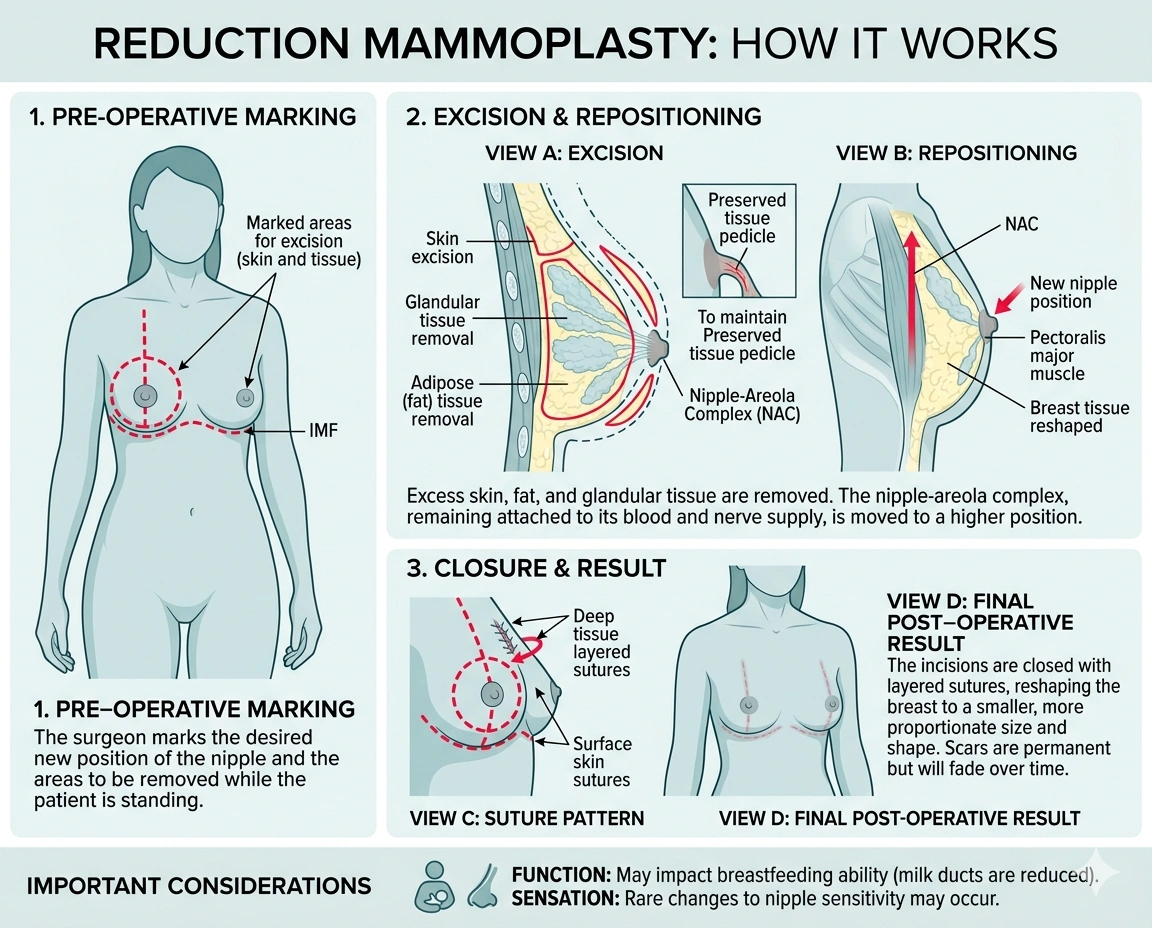
Breast reduction surgery, clinically known as reduction mammoplasty, is a specialized surgical procedure designed to decrease the volume, weight, and overall size of oversized breasts. During the operation, a qualified surgeon excises excess breast tissue, fat, and redundant skin.
The structural goal is twofold: it lightens the heavy physical load on the musculoskeletal system and elevates the nipple-areola complex to a higher, more youthful, and anatomically natural position on the chest wall.
Who Should Get a Breast Reduction?
Oversized breasts—a condition medically referred to as macromastia or breast hypertrophy—can cause extensive physical and emotional distress. You are likely an excellent candidate for this procedure if you experience:
Chronic Physical Pain: Constant, aching pain radiating through your upper back, neck, and shoulders due to the downward pull of heavy breast tissue.
Nerve Issues and Posture Distortions: Deep shoulder grooving caused by bra straps digging into the skin, which can lead to localized numbness or tension headaches.
Skin Irritation: Chronic skin rashes, chafing, or fungal infections recurring in the crease beneath the breast fold.
Activity Restrictions: An inability to participate in sports, running, or general physical fitness due to excessive breast weight and movement.
Proportion Discomfort: Feeling that your breasts are significantly out of proportion with the rest of your frame, leading to self-consciousness or difficulty finding clothing that fits.
How Much Does Breast Reduction Surgery Cost in Malaysia?
If the surgery is deemed strictly cosmetic, or if you do not meet your insurance provider’s strict criteria for tissue removal weight, you will pay out-of-pocket. In Malaysia, self-funded breast reduction costs typically range from RM 18,000 to RM 35,000+, depending on the complexity of the case, the specific surgical facility used, and whether complementary techniques like liposuction are integrated.
What Are the Different Types Breast Reduction Surgery?
Every individual anatomy requires a distinct surgical blueprint. Surgeons evaluate your degree of sagging and the total volume of tissue to be resected before selecting one of three core techniques.
| Technique | Incision Pattern | Ideal Candidate | Pros & Cons |
| Anchor / Inverted-T | Around the areola, vertically down, and horizontally along the breast crease. | Severe enlargement; massive tissue removal needed. | Pros: Maximum control over shaping. Cons: Most extensive scarring pattern. |
| Lollipop / Vertical | Around the areola and straight down to the breast fold. | Moderate tissue enlargement and mild-to-moderate sagging. | Pros: Eliminates the horizontal scar under the breast. Cons: Not suitable for massive reductions. |
| Liposuction-Only | Tiny, discrete puncture incisions around the chest wall. | Patients with excellent skin elasticity and high fatty tissue content. | Pros: Near-zero scarring, incredibly rapid recovery. Cons: Cannot lift sagging skin or remove dense glandular tissue. |
What Is Recovery Like?
Healing from a reduction mammoplasty is a gradual journey that requires strict adherence to post-operative instructions to secure clean scarring and prevent wound complications.
Recovery Timeline
Days 1–3: You will wear a specialized, wireless surgical support bra continuously. Mild to moderate swelling and bruising are completely normal.
Weeks 1–2: Most patients can return to light desk work and normal daily walking. Any surgical drains or external sutures are typically removed during this window.
Weeks 4–6: Swelling subsides significantly, and your new breast shape begins to settle. You can gradually reintroduce light lower-body exercise.
Months 3–6: Strenuous upper-body workouts, heavy lifting, and high-impact sports can be safely resumed. The breasts drop into their permanent, natural position.
Pain and Scarring
Post-operative pain is typically well-managed with prescribed oral medications for the first few days, transitioning quickly to over-the-counter pain relievers. While surgical scars are inevitable, they fade dramatically over 12 to 18 months from raised pink lines to faint, flat white tracks. Diligent use of medical-grade silicone gel sheets or scar creams starting at week three will optimize your skin’s cosmetic healing.
What Are the Risks of Breast Reduction Surgery?
As with any major operation under general anesthesia, reduction mammoplasty carries potential risks. These include localized infection, delayed wound healing at the junction of the incisions, minor asymmetry between the breasts, and temporary or permanent alterations in nipple sensation.
Can You Breastfeed After Surgery?
One of the most frequent patient concerns is future lactation. Your ability to breastfeed largely depends on the internal surgical pattern used. Techniques that preserve the deep underlying blood vessels and nerve tracts keep the connection between the milk ducts and the nipple intact. Many women successfully breastfeed after surgery, but if future pregnancy is on your immediate horizon, you should discuss your surgical design explicitly with your practitioner.
What Results Can You Expect?
The primary feedback from post-operative patients is a profound sense of physical and emotional weight being lifted.
Before and After
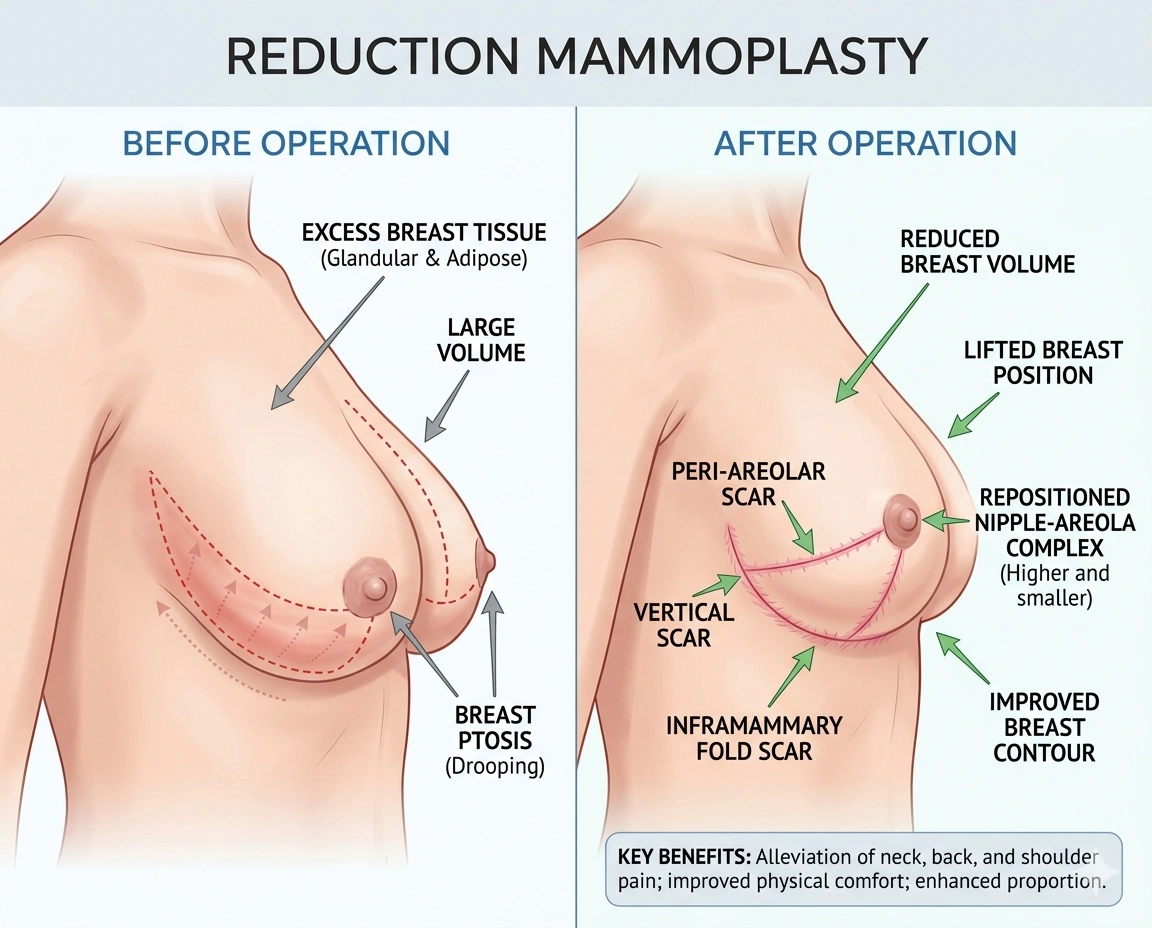
Immediately following surgery, your chest will appear sitting higher and firmer on your ribcage. Over the first year, as internal swelling completely resolves, your breasts will soften, settle, and mold into a highly proportionate, natural silhouette that complements your frame.
Patient Reviews
Clinical satisfaction surveys and long-term follow-ups show that breast reduction consistently ranks among the highest patient-satisfaction scores across all plastic surgery disciplines, with over 90% of patients reporting they would undergo the operation again. Patients note immediate relief from back pain, improved body posture, and a massive boost in self-confidence.
How to Choose a Surgeon in Malaysia
If you are seeking treatment within Malaysia, safeguarding your health requires choosing a verified expert. Ensure your practitioner is a Board-Certified Plastic Surgeon recognized by the National Specialist Register (NSR) of Malaysia and holds an active membership with the Malaysian Association of Plastic, Aesthetic and Craniomaxillofacial Surgeons (MAPACS).
Avoid general practitioners or aesthetic doctors who lack formal residency training in plastic surgery. Schedule an in-person consultation to review their direct before-and-after portfolio, discuss their surgical approach, and establish clear expectations for your body profile.
Doctor’s Notes:
“As a plastic surgeon in Malaysia, I see firsthand how breast reduction surgery transforms lives. It is fundamentally a functional, corrective procedure that lifts a massive physical burden off a patient’s shoulders. When considering this journey, prioritizing an NSR-certified specialist ensures your safety, structural symmetry, and optimal long-term healing.” – Dr. Muya, NSR-Certified Plastic Surgeon in Malaysia
Conclusion
Breast reduction surgery is far more than a cosmetic alteration; it is a life-changing corrective procedure that resolves chronic physical strain while restoring natural body proportions. By understanding the nuances of the various surgical techniques, managing your recovery expectations, and partnering with a highly qualified, board-certified plastic surgeon, you can achieve long-lasting physical relief and a renewed sense of personal comfort.