
Post inflammatory hyperpigmentation (PIH) is a temporary skin discoloration that occurs following an injury or inflammatory disorder, such as acne or eczema. It results from an overproduction of melanin in response to skin trauma, appearing as flat tan, brown, or black spots that are particularly common in darker Fitzpatrick skin types III to VI.
What Is Post Inflammatory Hyperpigmentation (PIH)?
How PIH Develops After Skin Injury or Inflammation
When your skin is stressed by a wound or inflammation, it triggers an immune response that activates melanocytes (pigment-producing cells).
These cells release an excess of melanosomes—pigment granules—into the surrounding skin cells, essentially “staining” the area as it heals.
The intensity of the final mark is usually proportional to the severity of the initial inflammation; the deeper the trauma, the more stubborn the spot.
In Malaysia’s tropical climate, heat and humidity can keep the skin in a slightly inflamed state, potentially making these marks look more prominent.
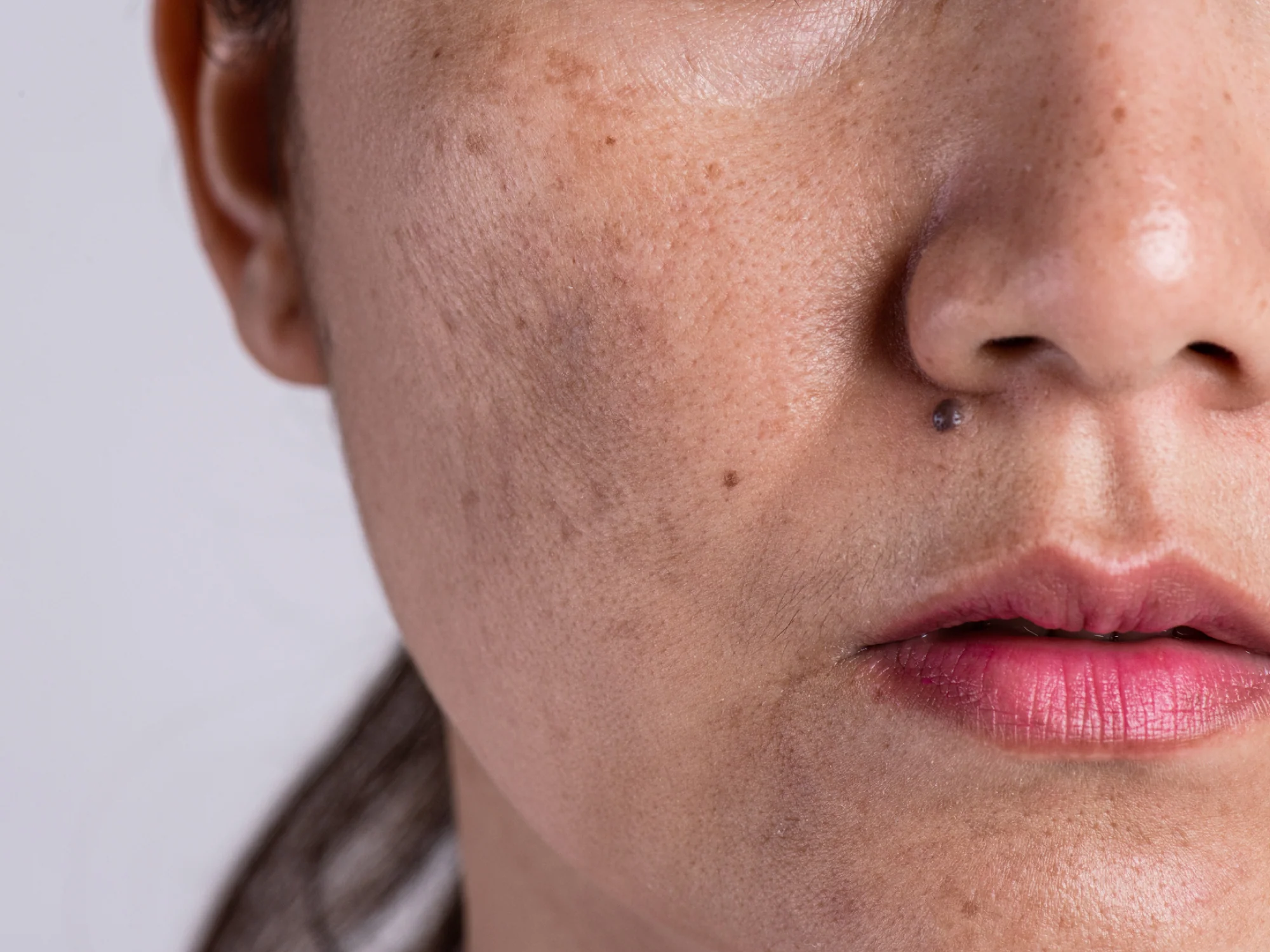
Common Areas Affected (Face and Body)
On the face, PIH often follows acne breakouts, appearing as “post-acne marks” on the cheeks, chin, and forehead.
It is equally common on the body, frequently appearing on the back or chest after “backne” or following minor cuts, burns, and insect bites.
Areas with thinner skin or those frequently exposed to the sun tend to show darker, more persistent pigmentation.
Friction-prone areas, such as the inner thighs or underarms, can also develop PIH due to constant low-grade irritation.
Difference Between PIH and Melasma
While both involve dark patches, PIH is a direct reaction to a specific “event” like a pimple or a scratch, appearing exactly where the injury occurred.
Melasma is a chronic, symmetrical condition typically triggered by internal factors like hormones or pregnancy, often appearing on the cheeks and upper lip.
PIH has irregular shapes based on the preceding wound, whereas melasma often presents as larger, mask-like patches with fuzzy borders.
Most cases of PIH will eventually fade on their own over several months, but melasma is notoriously persistent and requires long-term maintenance.
What Causes Post Inflammatory Hyperpigmentation?
Acne and Breakouts
This is the most common cause in Malaysia, affecting roughly one in two acne sufferers.
The red or purple “ghost” of a pimple is actually the skin’s way of protecting itself during the healing phase.
Severe cystic acne is more likely to leave behind deep-seated dermal PIH compared to minor whiteheads.
Skin Injury, Irritation, and Inflammation
Conditions like eczema (atopic dermatitis) or psoriasis cause chronic itching and inflammation that frequently result in widespread PIH.
Modern aesthetic procedures, such as aggressive chemical peels or improper laser settings, can inadvertently cause “rebound” pigmentation.
Even minor household burns from cooking or “maskne” from prolonged mask-wearing can trigger the pigment response.
Picking, Scratching, or Improper Extractions
Manually “popping” a pimple increases the depth of the injury and forces bacteria deeper into the pore, skyrocketing the risk of dark marks.
Scratching an itchy patch or an insect bite damages the basement membrane of the skin, allowing pigment to “leak” into the deeper dermis.
Professional extractions should only be done by Ministry of Health (MOH) certified clinics to ensure the skin’s integrity is preserved.
Sun Exposure After Skin Damage
UV rays act like “fuel” for PIH; they darken existing spots and significantly slow down the natural fading process.
Even if the initial inflammation has healed, sun exposure can turn a light tan spot into a dark, semi-permanent brown mark.
In Malaysia, where the UV index is frequently high, even brief outdoor trips can “set” the pigment deeper into the skin.
Types of Post Inflammatory Hyperpigmentation
Epidermal PIH (Surface-Level Pigmentation)
This type sits in the top layer of the skin and typically appears as tan or light brown spots.
It responds very well to topical brightening agents because the pigment is easily accessible to skincare ingredients.
Under a Wood’s lamp examination, epidermal spots become more visible and clearly defined.
Dermal PIH (Deeper Pigmentation)
Dermal PIH occurs when melanin “drops” into the deeper dermis, appearing as bluish-gray or ashy patches.
These marks are much more difficult to treat and can take years to fade without professional medical intervention.
They are common in people who have a history of picking at deep, painful cysts.
Mixed-Type PIH
This is a combination of surface and deep pigment, often appearing as dark brown spots with a grayish haze.
Most adult acne sufferers in Malaysia present with mixed-type PIH, requiring a multi-layered treatment approach.
Using a combination of Pico Lasers and topical retinoids is often necessary to clear both levels of pigment.
How to Treat Post Inflammatory Hyperpigmentation
Topical Treatments (Retinoids, Vitamin C, Hydroquinone, Azelaic Acid)
Retinoids: These speed up cell turnover, literally pushing the pigmented cells out to be replaced by fresh, clear skin.
Vitamin C: A powerful antioxidant that inhibits the enzyme tyrosinase, preventing the production of new melanin.
Hydroquinone: Often called the “gold standard,” this medical-grade lightener must be used under strict supervision in Malaysia to avoid side effects like ochronosis.
Azelaic Acid: Excellent for acne-prone skin as it kills bacteria while gently fading dark spots without being overly irritating.
Skincare Routine for PIH (Gentle Cleansing and Barrier Repair)
Avoid harsh physical scrubs; micro-tears from scrubs can cause more inflammation and worsen your PIH.
Use a cleanser with a low pH to keep your skin barrier intact, which helps the skin heal faster and more evenly.
Incorporate ceramides and niacinamide into your moisturizer to strengthen the skin’s defense against external triggers.
Importance of Daily Sunscreen for PIH Control
Sunscreen is the most important part of any PIH routine; without it, all other treatments will likely fail.
Look for broad-spectrum SPF 50+ that protects against both UVA and UVB rays to prevent the pigment from darkening.
Physical blockers containing Zinc Oxide or Titanium Dioxide are ideal as they reflect heat away from the skin.
Aesthetic Treatments for Post Inflammatory Hyperpigmentation in Malaysia
Laser Treatments (Pico Laser, Q-Switched Laser)
Pico Laser: The current favorite in Malaysia, it uses photoacoustic energy to shatter pigment into tiny particles without generating excess heat.
Q-Switched Nd:YAG: A reliable “workhorse” laser that targets melanin effectively and is often more budget-friendly than newer Pico models.
These lasers are particularly effective for dermal PIH that topical creams simply cannot reach.
Chemical Peels for Pigmentation Removal
Medical-grade peels using Salicylic Acid or Glycolic Acid dissolve the top layer of dead, pigmented skin cells.
In addition to fading spots, they help clear the pores to prevent the new breakouts that cause PIH in the first place.
Most Malaysian clinics offer different strengths of peels tailored to your specific skin sensitivity and pigment depth.
Microneedling for Skin Renewal
This treatment involves tiny needles that create “micro-channels,” stimulating the skin’s natural repair mechanism and collagen production.
It is often used to treat “post-acne” issues that include both dark marks and slight textural irregularities.
Combining microneedling with brightening serums (like Tranexamic Acid) allows the ingredients to penetrate deeper for better results.
Post Inflammatory Hyperpigmentation Treatment Results
When Results Start to Show
For surface-level (epidermal) PIH, you might see a visible “glow” and slight fading within 4 to 6 weeks.
Deep-seated marks usually require 3 to 4 months of consistent treatment before significant improvement is seen.
Patience is key; clearing hyperpigmentation is a “marathon,” not a “sprint.”
Number of Sessions Needed for Improvement
Laser Treatments: Most patients see excellent results after 3 to 5 sessions, spaced about 4 weeks apart.
Chemical Peels: A series of 4 to 6 sessions is typically recommended for cumulative brightening.
Your doctor will adjust the frequency based on how quickly your skin regenerates and how well you follow the post-care routine.
How to Prevent PIH from Recurring
The #1 rule: Stop picking your skin! Every time you squeeze a pimple, you are essentially “ordering” a new dark spot.
Manage active acne or eczema immediately to reduce the duration of the inflammation phase.
Wear sunscreen every single day, even if you are staying indoors or it’s a cloudy day in Kuala Lumpur.
Cost of Post Inflammatory Hyperpigmentation Treatment in Malaysia
Average Price Range by Treatment Type
| Treatment Type | Estimated Cost (Per Session) |
| Topical Creams (Prescription) | RM 80 – RM 250 |
| Chemical Peels | RM 250 – RM 600 |
| Pico Laser | RM 600 – RM 1,500 |
| Q-Switched Laser | RM 400 – RM 900 |
Factors Affecting Treatment Cost (Severity, Clinic, Technology Used)
Severity: Deep, chronic PIH requires more sessions and potentially more advanced (and expensive) laser settings.
Clinic Reputation: Established aesthetic centers with LCP-certified doctors often charge more for their expertise and safety standards.
Technology: Newer, FDA-approved machines like PicoWay or PicoSure typically have higher per-session costs than older laser models.
Post Inflammatory Hyperpigmentation FAQs
What causes PIH on the face?
It is most commonly caused by acne, but can also result from eczema, skin rashes, or “picking” at the skin, which triggers melanin overproduction during healing.
How long does post inflammatory hyperpigmentation take to fade?
On its own, surface PIH can take 3 to 12 months to fade. Without treatment, deeper dermal PIH can persist for several years or even a decade.
Can PIH be permanently removed?
Yes, the “stain” can be cleared completely with the right combination of lasers and topicals, although new injuries can always cause new spots.
What is the fastest treatment for PIH in Malaysia?
Pico Laser is generally considered the fastest option as it shatters pigment more efficiently with fewer sessions than traditional treatments.
Is laser treatment safe for PIH?
Yes, provided it is performed by a qualified professional. Improper laser use on darker Asian skin can actually cause “rebound” PIH, so expertise is vital.
Does sunscreen help PIH fade faster?
Absolutely. By blocking UV rays from darkening the pigment further, you allow the skin’s natural shedding process and treatments to work much more effectively.
Can PIH come back after treatment?
PIH itself doesn’t “return” once cleared, but any new inflammation (like a fresh pimple) in the same spot will likely create a brand new mark.
What skincare ingredients are best for PIH?
Look for Retinoids, Vitamin C, Niacinamide, Azelaic Acid, and Tranexamic Acid to safely and effectively brighten post-inflammatory marks.