
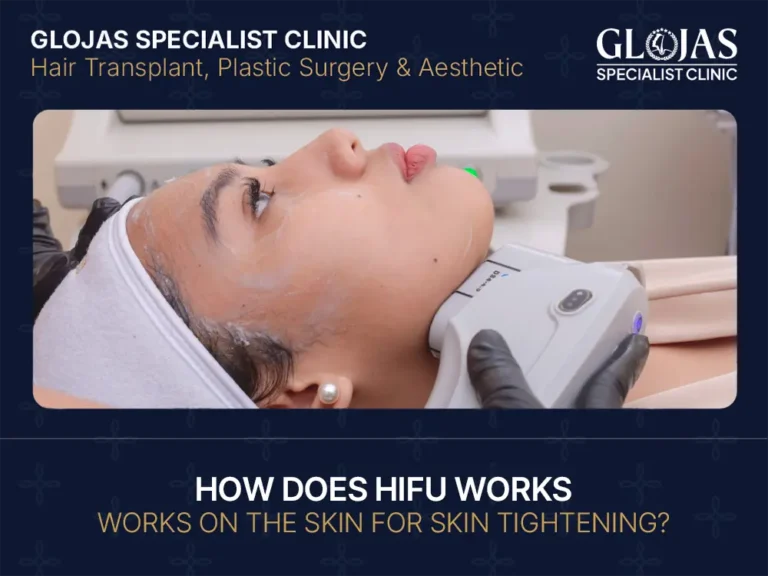
How Does HIFU Works on the Skin?
Ever wondered how some people seem to age backward without ever going under the knife? The secret isn’t just good lighting or “drinking more water”—it’s likely High-Intensity Focused Ultrasound, or HIFU.
If you’re looking for a non-invasive way to lift sagging skin and sharpen your jawline, understanding how does HIFU work is the first step toward that youthful glow. Let’s dive into the science of this “lunchtime facelift.“
What Is HIFU Treatment?
High-Intensity Focused Ultrasound (HIFU) is a medical-grade cosmetic treatment that uses targeted ultrasound energy to stimulate the deep structural layers of the skin. Unlike lasers, which treat the surface, HIFU bypasses the upper layer (epidermis) to deliver energy where it matters most.
It’s a favorite for those who want the results of a facelift without the scars, anesthesia, or downtime.
How HIFU Delivers Energy Beneath the Skin
Focused Ultrasound Technology
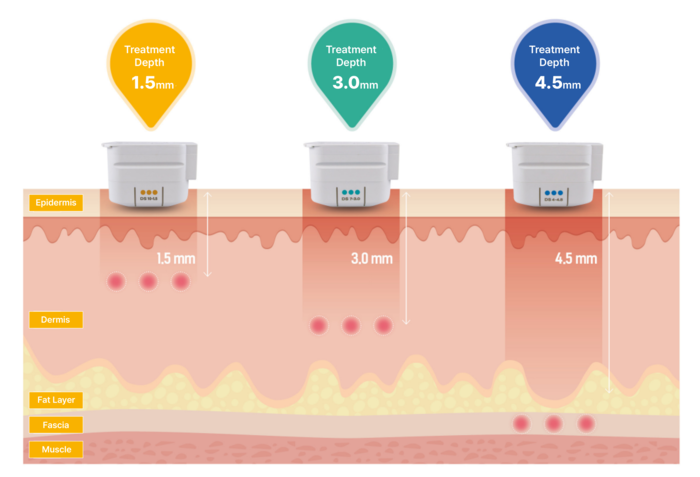
Think of HIFU like a magnifying glass focusing sunlight. The device sends highly concentrated ultrasound waves to a specific focal point beneath the skin. Because the energy is so focused, the surface of your skin remains completely unharmed while the tissues underneath are heated to between 60°C and 70°C.
Thermal Coagulation Points
At these precise depths, the energy creates Thermal Coagulation Points (TCPs). These are tiny “micro-injuries” that jumpstart your body’s natural repair system. When the body detects this heat, it realizes it’s time to get to work and repair the tissue, which is exactly how HIFU works to create a firmer look.
Which Skin Layers HIFU Targets
Dermis Layer
The dermis is the middle layer of your skin, home to the most collagen and elastin. By targeting the dermis (usually at 1.5mm and 3.0mm depths), HIFU triggers immediate tightening of existing fibers and encourages the growth of new ones.
SMAS Layer
This is the “magic” of HIFU. The SMAS (Superficial Musculo-Aponeurotic System) is the layer of tissue that surgeons physically pull and tighten during a traditional facelift. HIFU is the only non-invasive technology that can reach this 4.5mm depth. This is how HIFU works to provide a structural lift that other treatments simply can’t reach.
How HIFU Stimulates Collagen Production
Collagen Denaturation
When the ultrasound heat hits your collagen fibers, they undergo “denaturation.” This causes the fibers to contract and shorten immediately. This is how HIFU works to give you that slight “instant lift” right after you leave the clinic.
Neocollagenesis Process
The real transformation happens over the next few months through a process called neocollagenesis. Your body produces fresh, high-quality collagen and elastin to replace the old, weakened ones. This is truly how HIFU works to remodel your skin from the inside out.
What Happens During and After HIFU Treatment
Immediate Skin Response
During the session, you might feel a warm, prickly sensation. This is a sign that the energy is reaching the correct depths. Post-treatment, you might experience slight redness or minor swelling, but this typically fades within a few hours.
Gradual Tightening Effect
Because the body takes time to build new tissue, you won’t see the full “wow” factor immediately. Understanding how HIFU works involves having a little patience while your biology does the heavy lifting.
How Long HIFU Takes to Show Results
While you might notice your skin feels firmer right away, the peak results usually appear 3 to 6 months after treatment. This is the timeline for your body to fully complete the collagen remodeling process.
How Long HIFU Results Last
On average, the lifting and tightening effects of a single session last between 12 to 18 months. To maintain your results, many practitioners recommend a “top-up” session once a year. This consistent stimulation is how HIFU works to keep aging at bay over the long term.
Who HIFU Works Best For
The ideal candidate is someone aged 30 to 65 with mild to moderate skin laxity. It’s perfect for:
Sharpening a soft jawline.
Lifting drooping eyelids or brows.
Reducing “turkey neck” or sagging on the décolletage.
Safety and Side Effects of HIFU
HIFU is highly safe when performed by a trained professional. Common side effects are mild and temporary, including:
Redness and slight swelling.
A tingling sensation or temporary numbness.
Occasional bruising in thin-skin areas.
According to the American Board of Cosmetic Surgery, non-surgical skin tightening has seen a massive surge in popularity due to its high safety profile and effective results.
Final Summary: How HIFU Tightens and Lifts Skin
In short, how HIFU works is by using the body’s own healing power. By targeting the SMAS and dermis layers with focused heat, it creates a foundation for new collagen, resulting in a natural, surgical-free lift.
Frequently Asked Questions (PAA)
How does HIFU work for skin tightening? It uses focused ultrasound to create heat at deep skin layers, triggering a healing response that produces new collagen.
How does HIFU work on the SMAS layer? It reaches 4.5mm deep to thermally contract the same tissue layer addressed in surgery, providing a deep-seated lift.
How does HIFU work to reduce wrinkles? By stimulating neocollagenesis, it fills in fine lines and firms the skin structure from within.
How does HIFU work for a double chin? At specific settings, HIFU can target subcutaneous fat cells while simultaneously tightening the skin for a more contoured profile.
How does HIFU work compared to lasers?