
Man boobs, or gynecomastia surgery, affect many Malaysian men, often causing psychological distress. To address this, surgeons use a standardized grading system to categorize the severity of breast tissue enlargement. Understanding gynecomastia grades is the first step toward finding the right clinical solution in Malaysia’s growing aesthetic medicine landscape.
Overview of Gynecomastia Grading System
Medical professionals primarily use the Simon Grading Scale to classify gynecomastia. This system evaluates the volume of glandular tissue and the presence of skin redundancy. Categorizing patients into four distinct grades helps surgeons determine the complexity of the required surgical intervention or medical treatment.
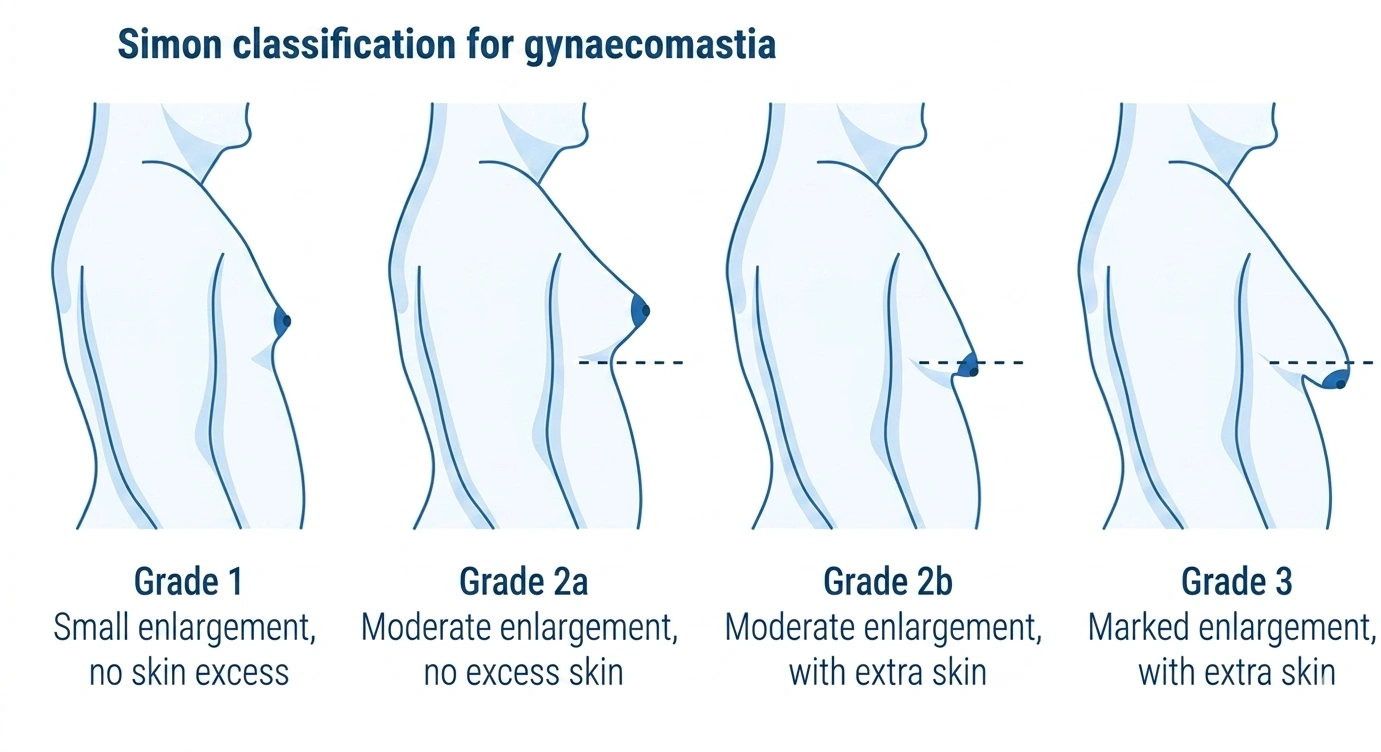
Grade 1 Gynecomastia (Mild Enlargement)
Grade 1 represents the mildest form of the condition. In Malaysia, many young men experience this during puberty due to temporary hormonal fluctuations. It is often subtle enough to be hidden under a standard cotton t-shirt but remains noticeable to the individual during physical activities.
Characteristics and Severity
At this stage, there is minor breast enlargement without any skin excess. The condition is localized, and the chest remains relatively flat, with only a small “bud” of tissue. Most patients in this category do not require aggressive surgery and may find success with lifestyle changes.
Tissue Composition and Appearance
The enlargement is typically confined to the area directly behind the nipple and areola. The tissue feels firm or rubbery to the touch. Visually, it may appear as a “puffy nipple” rather than a fully developed breast, making it less obvious from a distance.
Grade 2 Gynecomastia (Moderate Enlargement)
Grade 2 is characterized by moderate breast enlargement. This is a common stage where Malaysian men seek professional consultation, as the chest contour begins to look more rounded. The growth is now clearly visible through light-colored or fitted clothing.
Characteristics and Severity
Like Grade 1, Grade 2 lacks redundant or sagging skin. However, the volume of glandular and fatty tissue is significantly higher. The enlargement spreads beyond the areola, covering a larger portion of the pectoral muscle, which creates a noticeable bulge in the chest profile.
Chest Contour Changes
The chest takes on a softer, more hemispherical shape. While there is no “fold” underneath the breast (the inframammary fold), the transition from the chest wall to the breast tissue becomes more pronounced. This grade usually requires a combination of liposuction and glandular excision.
Grade 3 Gynecomastia (Severe Enlargement)
Grade 3 indicates severe enlargement where the physical changes become much more prominent. At this stage, the condition mimics the appearance of female breast development. Patients often report significant social anxiety and avoid swimming or wearing tight traditional Malaysian attire like the Baju Melayu.
Characteristics and Severity
The defining feature of Grade 3 is the presence of excess skin. The breast tissue has enough mass and weight to cause the skin to stretch and droop slightly. This creates a visible fold at the bottom of the breast, known medically as the inframammary fold.
Skin and Tissue Involvement
In this phase, the glandular tissue is often mixed with significant adipose (fat) tissue. Because the skin has lost some elasticity, a simple liposuction procedure is usually insufficient. Surgeons must address both the internal tissue mass and the stretched skin to restore a masculine chest.
Grade 4 Gynecomastia (Severe with Skin Excess and Feminization)
Grade 4 is the most advanced stage, presenting as a fully developed female-like breast. This severity level is often linked to significant weight fluctuations, aging, or underlying medical conditions that require thorough endocrine evaluation by a specialist in Malaysia.
Characteristics and Severity
Patients with Grade 4 gynecomastia exhibit major breast enlargement with significant skin redundancy. The nipple and areola often sit below the inframammary fold due to gravity. The physical weight of the tissue can sometimes cause back pain or skin irritation in the fold area.
Chest Shape and Skin Redundancy
The chest appears heavily feminized with pendulous breasts. This grade requires complex surgery, often involving a “skin lift” or mastopexy, alongside tissue removal. Malaysian plastic surgeons must carefully plan incisions to minimize scarring while removing a substantial amount of excess skin and tissue.
Comparison of Gynecomastia Grades and Severity Levels
Choosing the right treatment starts with an accurate diagnosis. The following table summarizes how the Simon Scale differentiates between the stages of male breast development based on volume and skin laxity.
| Grade | Enlargement Level | Skin Excess | Visual Description |
| Grade 1 | Mild | None | Puffy nipple area only |
| Grade 2 | Moderate | None | Rounded chest, no sagging |
| Grade 3 | Severe | Minor | Visible fold underneath (Inframammary fold) |
| Grade 4 | Extreme | Significant | Pendulous, female-like breast appearance |
How Gynecomastia Grades Affect Treatment Decisions
The grade determines the surgical technique. Grade 1 and 2 are often treated via Vaser Liposuction or small periareolar incisions. These minimally invasive methods ensure faster recovery times, which is ideal for the busy lifestyle of many Malaysians.
For Grades 3 and 4, the approach is more involved. Surgeons must perform a surgical excision to remove the tough glandular tissue and redundant skin. Without skin tightening, the chest might appear deflated or hollow after the fat is removed.
In Malaysia, always ensure your surgeon is registered with the National Specialist Register (NSR). A qualified specialist will assess your grade to provide a tailored treatment plan, ensuring safety and a natural, masculine result that aligns with your aesthetic goals.