

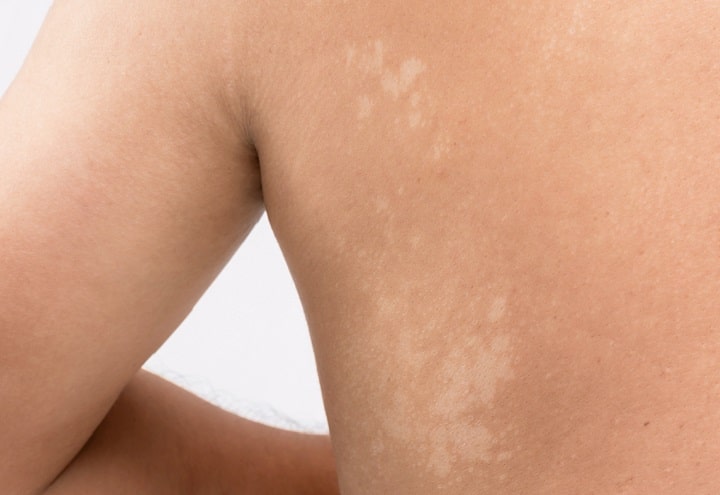
White skin patches are localized areas of hypopigmentation where the skin loses its natural melanin or pigment. In Malaysia’s tropical climate, these patches often stem from fungal overgrowth, autoimmune conditions like vitiligo, or secondary healing after inflammation, resulting in noticeable light-colored spots that contrast with the surrounding healthy skin.
What Are White Skin Patches?
Definition of Hypopigmentation
Hypopigmentation refers to any condition where melanin production is reduced or absent, leading to skin that appears significantly lighter than normal.
It can be categorized as “depigmentation” (total loss of color, as seen in vitiligo) or “hypopigmentation” (partial loss of color, common after injury).
These patches can vary in size from tiny “confetti” spots to large, interconnected maps covering significant portions of the body.
Common Causes of White Skin Patches
Vitiligo
Vitiligo is an autoimmune disorder where the body’s immune system attacks and destroys melanocytes (pigment-producing cells).
It affects roughly 0.5% to 1% of the global population and often presents as milky-white, well-defined patches on the face, hands, and joints.
In Malaysia, vitiligo can be particularly distressing due to the high contrast against darker Asian skin tones.
Fungal Infections (Tinea Versicolor)
Locally known as “panau,” Tinea Versicolor is a common fungal infection caused by Malassezia yeast overgrowth in hot, humid weather.
The yeast produces azelaic acid, which temporarily bleaches the skin, leaving behind small, scaly white or pinkish spots.
This is frequently seen among active individuals and athletes in Malaysia due to increased sweating and moisture.
Post-Inflammatory Hypopigmentation
This occurs as a “ghost” of a previous skin injury, such as a burn, scrape, or resolved acne.
The skin’s pigment-producing cells take time to recover after trauma, leaving a temporary light spot while the area heals.
It is a common secondary effect following dermatological procedures if post-care sun protection is ignored.
Eczema and Skin Inflammation
Atopic dermatitis (eczema) can lead to a condition called Pityriasis Alba, which causes dry, pale patches on the cheeks and arms.
It is especially prevalent in children and adolescents with a history of allergies or sensitive skin.
While benign, these patches often become more obvious after sun exposure as the surrounding skin tans while the patch remains light.
Symptoms of White Skin Patches
Patchy Skin Discoloration
The primary symptom is a visible difference in skin color that does not resolve with regular moisturizing.
Depending on the cause, these patches may be smooth (vitiligo) or slightly scaly and itchy (fungal infections).
Uneven Skin Tone
Affected individuals often notice an “interrupted” complexion where the natural tan line is broken by lighter spots.
These spots can appear anywhere, but are most common on sun-exposed areas like the face, neck, and forearms.
Spread of Patches
Some white patches remain stable for years, while others, like active vitiligo, can spread rapidly across the body.
Monitoring the border of the patch is crucial; “fuzzy” or expanding edges often indicate an active, progressing condition.
Diagnosis of White Skin Patches
Clinical Skin Examination
A dermatologist in Malaysia will perform a visual check to determine the texture, border, and location of the patches.
They will look for “satellite lesions” or specific patterns that distinguish autoimmune issues from fungal overgrowth.
Wood’s Lamp Test
The Wood’s Lamp uses long-wave UV light to illuminate the skin in a dark room; vitiligo patches will glow a bright “blue-white” under this light.
Fungal infections like Tinea Versicolor may show a distinct yellowish or orange fluorescence, aiding in immediate diagnosis.
Dermatology Consultation
For complex cases, a skin specialist may perform a small biopsy to rule out rare conditions like cutaneous T-cell lymphoma.
Early consultation is vital, especially since Malaysia’s National Pharmaceutical Regulatory Agency (NPRA) strictly regulates the types of treatments available for pigmentary disorders.
Treatment Options for White Skin Patches
| Treatment Type | Best For | Recovery Time |
| Antifungal Creams | Tinea Versicolor (Panau) | 2–4 Weeks |
| Topical Steroids | Vitiligo / Eczema | 1–3 Months |
| Phototherapy (UVB) | Extensive Vitiligo | 3–6 Months |
| Skin Boosters | Post-Inflammatory healing | Instant hydration |
Topical Steroid Creams
These are prescribed to reduce inflammation and “calm” the immune response in cases of vitiligo or severe eczema.
Long-term use must be monitored by a doctor to avoid skin thinning (atrophy) or stretch marks.
Antifungal Treatment
Medicated shampoos (containing Ketoconazole or Selenium Sulfide) or creams are the standard for treating fungal white patches.
Note: While the fungus is killed quickly, the white spots may take several weeks or months to repigment naturally.
Phototherapy (UVB Treatment)
Narrowband UVB (NB-UVB) is a gold-standard treatment that uses light to stimulate melanocytes back into action.
Clinics in KL and Selangor often offer Excimer Laser for targeted spots or full-body booths for more widespread vitiligo.
Skin Repigmentation Therapy
This includes specialized serums, microneedling, or even surgical skin grafting for stable vitiligo cases.
In Malaysia, doctors may also recommend sun protection as a primary “treatment” to prevent the surrounding skin from tanning and making the patches more obvious.
FAQ About White Skin Patches
What causes white patches on skin?
White patches are caused by a lack of melanin, which can be triggered by autoimmune attacks, fungal infections, or past skin inflammation.
In Malaysia, the high humidity specifically makes fungal-related patches (Tinea Versicolor) extremely common.
Are white skin patches permanent?
Not always; patches caused by fungus or eczema usually repigment once the underlying issue is treated.
Vitiligo is a chronic condition, but modern therapies can often achieve significant repigmentation of the skin.
Can white patches be treated?
Yes, treatments range from antifungal lotions and steroid creams to advanced UV phototherapy and laser sessions.
The success of treatment depends on early intervention and an accurate diagnosis of the root cause.
When should I see a doctor?
You should see a dermatologist if the patches are spreading rapidly, become itchy/painful, or cause significant emotional distress.
Any patch that appears “porcelain white” and has sharp borders should be evaluated for vitiligo immediately.
Are white patches on skin contagious?
Most causes, including vitiligo and eczema, are absolutely not contagious.
While Tinea Versicolor is a fungal overgrowth, it is generally not considered “infectious” to others as the yeast lives naturally on everyone’s skin.