
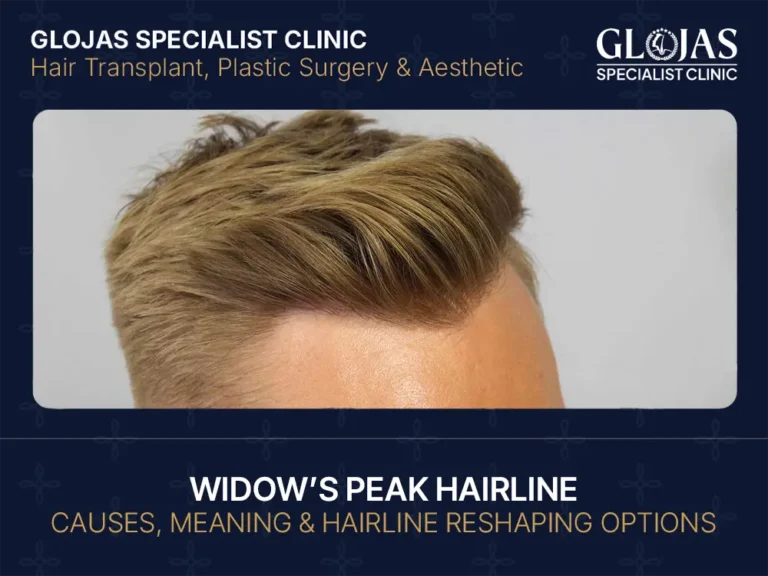
A widow’s peak is a V-shaped point in the center of the frontal hairline. It is usually a natural genetic hairline trait and does not automatically indicate hair loss or balding. While many people are born with a widow’s peak, some individuals may seek cosmetic correction through hairstyling, hairline lowering procedures, or a widow’s peak hairline transplant to achieve a straighter hairline.
What Is a Widow’s Peak?
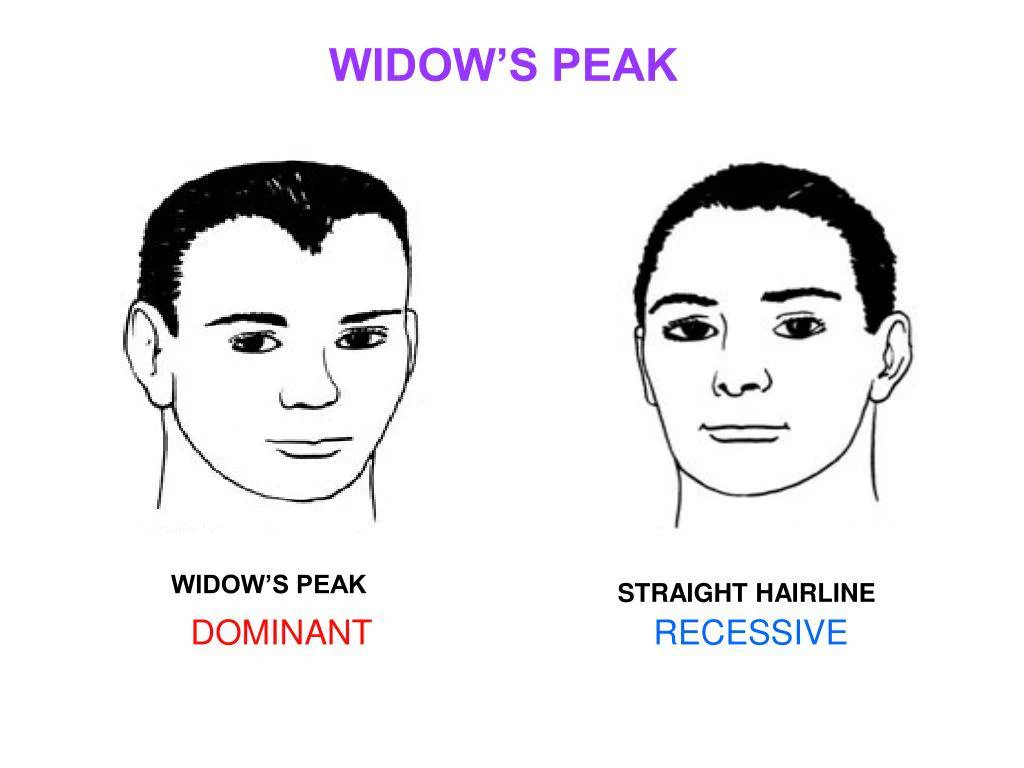
A widow’s peak is a distinct hairline shape where the hair forms a central downward point in the middle of the forehead. This creates a V-shaped appearance that differs from a straight or rounded hairline.
The widow’s peak hairline is considered a normal variation of human hairline anatomy and can occur in both men and women.
Widow’s Peak Definition
The term refers to a central point of hair growth that extends lower on the forehead than the surrounding hairline.
How a Widow’s Peak Hairline Looks
Common characteristics include:
- V-shaped hairline
- Central hairline point
- Symmetrical or asymmetrical appearance
- Varying degrees of prominence
- Natural hairline pattern
Why Is It Called a Widow’s Peak?
The name originated from historical references to mourning hoods worn by widows, which often featured a pointed shape over the forehead resembling the V-shaped hairline.
What Causes a Widow’s Peak?
A widow’s peak is primarily caused by genetics and inherited hairline characteristics.
The shape develops during growth and is determined by the arrangement of hair follicles along the frontal hairline.
Is a Widow’s Peak Genetic?
Yes. Most research suggests that widow’s peak genetics play a significant role in determining hairline shape.
Can You Inherit a Widow’s Peak From Your Parents?
A widow’s peak can be inherited from one or both parents. However, hairline inheritance is complex and influenced by multiple genetic factors.
Is Widow’s Peak a Dominant Genetic Trait?
Earlier studies suggested widow’s peak inherited patterns were dominant traits. Modern genetics indicates hairline shape is more complex and cannot be explained by a single gene alone.
Is a Widow’s Peak Normal?
Yes. A widow’s peak is completely normal and does not indicate a medical condition.
How Common Is a Widow’s Peak?
Millions of people worldwide have a widow’s peak hairline.
Are Widow’s Peaks Rare?
No. Widow’s peaks are relatively common among both men and women.
Does a Widow’s Peak Affect Hair Growth?
No. The presence of a widow’s peak does not affect hair growth rate, hair density, or scalp health.
Widow’s Peak vs Receding Hairline
One of the most common misconceptions is confusing a widow’s peak with a receding hairline.
Key Differences Between a Widow’s Peak and Hair Loss
| Widow’s Peak | Receding Hairline |
|---|---|
| Present naturally | Develops over time |
| Stable hairline shape | Progressive hair loss |
| Genetic hairline trait | Often linked to androgenetic alopecia |
| Hair density remains normal | Hair density decreases |
| Usually symmetrical | May become uneven |
Signs of a Receding Hairline
- Thinning temples
- Hairline moving backward
- Increased hair shedding
- Reduced hair density
- Visible scalp exposure
Can a Widow’s Peak Become More Noticeable With Age?
Yes. As surrounding hair thins naturally with age, a widow’s peak may appear more prominent.
Mature Hairline vs Widow’s Peak
A mature hairline is a normal age-related change where the frontal hairline moves slightly backward. A widow’s peak remains a distinct V-shaped central point regardless of hairline maturity.
Widow’s Peak in Men
Why Men Commonly Notice a Widow’s Peak
Men tend to pay closer attention to hairline changes due to concerns about male pattern baldness.
Widow’s Peak and Male Pattern Baldness
A widow’s peak does not cause male pattern baldness. However, men can have both a widow’s peak and androgenetic alopecia simultaneously.
When To Consider Hair Restoration
Hair restoration may be beneficial if:
- Hairline recession is progressing
- Temple thinning is present
- Hair density is decreasing
- Cosmetic concerns affect confidence
Widow’s Peak in Women
Female Widow’s Peak Hairline
A widow’s peak female hairline is common and often becomes a defining facial feature.
Widow’s Peak and Female Hair Loss
Women with a widow’s peak are not inherently more likely to experience hair loss.
When Hairline Changes May Need Evaluation
Medical assessment may be appropriate when:
- Hair thinning develops suddenly
- Hair loss becomes diffuse
- Scalp irritation occurs
- Hairline changes rapidly
Can a Widow’s Peak Cause Baldness?
No.
Does a Widow’s Peak Mean You Will Go Bald?
A widow’s peak alone is not a predictor of future baldness.
Is There a Link Between Widow’s Peak and Hair Thinning?
There is no direct evidence showing that widow’s peaks cause hair thinning.
Risk Factors For Hair Loss
Common causes of hair loss include:
- Genetics
- Hormonal changes
- Aging
- Medical conditions
- Nutritional deficiencies
- Stress
Can You Get Rid of a Widow’s Peak?
Many people like their widow’s peak, while others prefer a straighter hairline.
Is It Possible To Change Your Natural Hairline?
Yes. Both surgical and non-surgical options may alter the appearance of a widow’s peak.
Non-Surgical Ways To Conceal a Widow’s Peak
Options include:
- Hair styling
- Hair fibers
- Strategic haircuts
- Hair volumizing products
Makeup and Hairstyling Techniques
Women may use contouring products or hairstyle adjustments to soften the appearance of the V-shaped hairline.
Hair Transplant for Widow’s Peak Correction
A widow’s peak hair transplant is one of the most effective solutions for individuals seeking permanent hairline reshaping.
Who Is a Good Candidate?
Ideal candidates typically have:
- Stable hair loss patterns
- Adequate donor hair
- Realistic expectations
- Good scalp health
How Hairline Design Is Planned
Hair transplant specialists evaluate:
- Facial proportions
- Forehead shape
- Existing hair density
- Ethnicity
- Age
- Future hair loss risk
The goal is to create an aesthetic hairline that appears natural from all angles.
FUE Hair Transplant for Widow’s Peak
Follicular Unit Extraction (FUE) is commonly used for widow’s peak correction.
The procedure involves:
- Harvesting individual hair follicles
- Designing a customized hairline
- Implanting grafts around the widow’s peak
- Creating a smoother frontal hairline
Expected Results
Most patients begin seeing visible growth within:
- 3–4 months: Initial growth
- 6 months: Significant improvement
- 9–12 months: Final results
Recovery Timeline
Recovery is generally quick:
- Day 1–7: Mild redness and scabbing
- Week 2–4: Temporary shedding phase
- Month 3–6: New hair growth
- Month 12: Full maturation
Before and After Expectations
Successful widow’s peak correction should:
- Maintain natural hair direction
- Preserve facial harmony
- Improve hairline symmetry
- Avoid an artificial appearance
Hairline Lowering Surgery vs Hair Transplant
Key Differences
| Hairline Lowering Surgery | Hair Transplant |
|---|---|
| Moves scalp forward | Redistributes hair follicles |
| Immediate hairline change | Gradual growth |
| Requires scalp laxity | Requires donor hair |
| Surgical scar possible | Tiny extraction sites |
Advantages and Limitations
Hairline lowering may achieve greater forehead reduction, while hair transplantation offers flexibility in hairline design.
Which Option Produces More Natural Results?
Both procedures can provide natural outcomes when performed by experienced specialists. The best option depends on individual anatomy and treatment goals.
Best Hairstyles for a Widow’s Peak
Hairstyles for Men
Popular options include:
- Textured crop
- Side part
- Crew cut
- Pompadour
- Messy fringe
Hairstyles for Women
Suitable styles include:
- Side-swept bangs
- Curtain bangs
- Layered cuts
- Long waves
- Textured bob
Hairstyles to Avoid
Some people may prefer to avoid:
- Slicked-back hairstyles
- Extremely tight ponytails
- Flat center-part styles
Are Widow’s Peaks Attractive?
Attractiveness is subjective, but many people consider a widow’s peak a unique and distinctive feature.
Facial Symmetry and Hairline Shape
A well-balanced widow’s peak can enhance:
- Facial proportions
- Forehead contour
- Hairline definition
- Overall facial character
Celebrity Examples of Widow’s Peaks
Many actors, athletes, and public figures have prominent widow’s peaks, demonstrating that this hairline pattern is common and often considered attractive.
When Should You See a Hair Restoration Specialist?
Signs Your Hairline Is Receding
Consider professional evaluation if you notice:
- Progressive temple recession
- Visible scalp exposure
- Hair miniaturization
- Increased shedding
When Hair Loss May Require Treatment
Early diagnosis allows more treatment options and may improve long-term outcomes.
Conclusion
A widow’s peak is a natural V-shaped hairline pattern that is usually determined by genetics. While it does not cause hair loss or baldness, it is often confused with a receding hairline. Individuals who wish to modify their hairline can explore hairstyling techniques, hairline lowering procedures, or a widow’s peak hair transplant. A professional hair restoration assessment can determine the most suitable approach based on facial proportions, hair density, and long-term aesthetic goals.
Frequently Asked Questions
1. What is a widow’s peak?
A widow’s peak is a V-shaped point in the center of the frontal hairline where hair extends lower onto the forehead than the surrounding hairline.
2. Is a widow’s peak genetic?
Yes. A widow’s peak is primarily influenced by genetics and inherited hairline characteristics.
3. Does a widow’s peak mean hair loss?
No. Having a widow’s peak does not mean you are experiencing hair loss or will eventually become bald.
4. Can a hair transplant correct a widow’s peak?
Yes. A widow’s peak hair transplant can reshape the frontal hairline by strategically placing hair grafts to create a straighter or more balanced appearance.
5. Can women have a widow’s peak?
Yes. Widow’s peaks occur in both men and women and are considered a normal variation in hairline shape.