
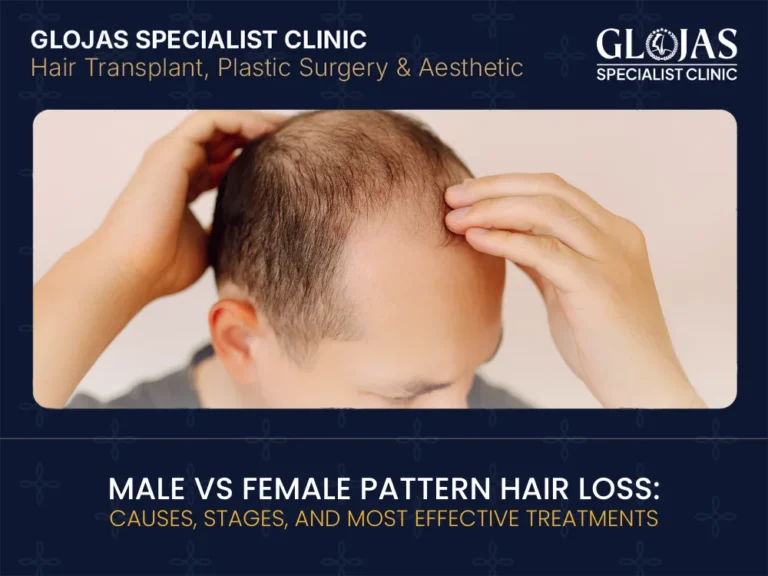
Male vs female pattern hair loss, or androgenetic alopecia, is a genetically influenced condition where hair follicles progressively shrink. While men typically experience a receding hairline and crown balding, women suffer diffuse thinning across the top of the scalp while preserving their frontal hairline.
Understanding Pattern Hair Loss
What Is Androgenetic Alopecia?
Androgenetic alopecia is a genetically determined, chronic progressive medical condition characterized by the gradual miniaturization of hair follicles. It affects millions globally, including substantial numbers of adults across Southeast Asia. Over time, the anagen (growth) phase shortens, producing finer, shorter hairs until active follicles eventually cease production altogether.
The Role of Genetics and Hormones
Hereditary predisposition and specific androgen hormones drive the progression of pattern thinning. Testosterone converts into dihydrotestosterone (DHT) via the enzyme 5-alpha reductase. In genetically vulnerable individuals, DHT binds to scalp receptors, shrinking hair follicles and disrupting healthy hair cycles. Understanding how androgenetic alopecia operates helps physicians formulate targeted interventions.
Male Pattern Hair Loss
Common Symptoms and Progression Stages
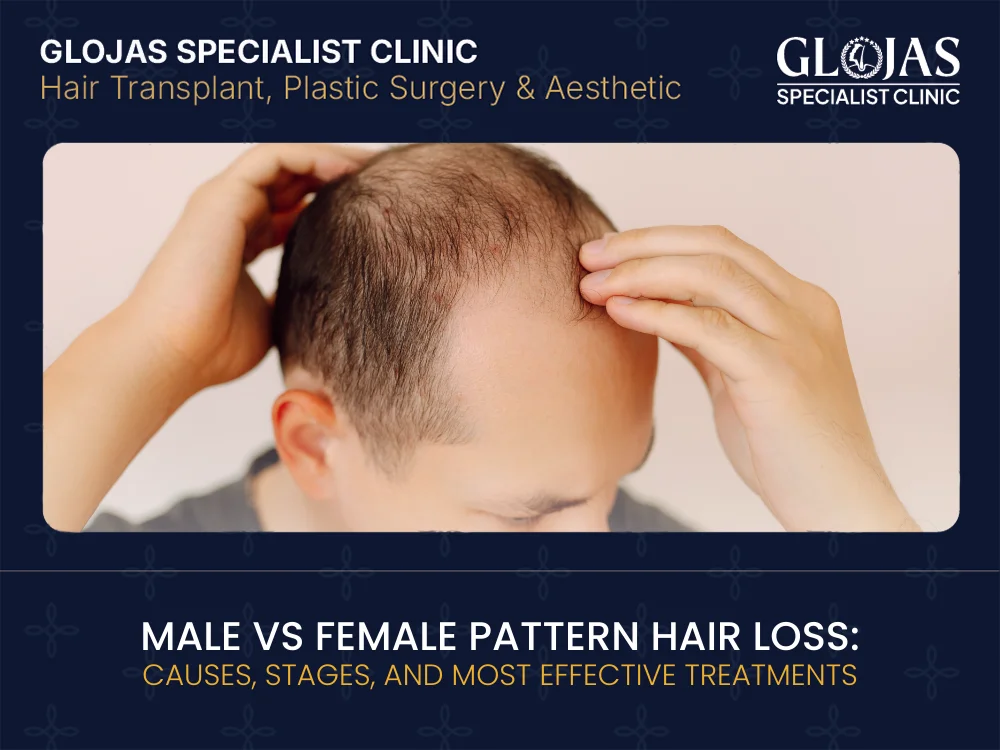
Male pattern hair loss typically begins subtly at the temples or the vertex (crown). Men often notice increased shedding on pillows or in the shower, followed by a receding hairline that forms an distinct “M” shape. Over time, hair at the crown thins concurrently, eventually leaving a horseshoe-shaped ring around the sides and back of the head.
The Norwood Scale for Men
Dermatologists and hair restoration surgeons utilize the Norwood Scale to classify the severity of male pattern baldness. Ranging from Stage 1 (minimal recession) to Stage 7 (extensive hair loss leaving only a sparse rim), this standardized tool helps medical professionals track deterioration rates and determine appropriate clinical options.
Primary Causes of Male Hair Thinning
While genetics and elevated scalp sensitivity to DHT remain primary factors, environmental and systemic elements play supporting roles. High stress levels, nutritional gaps, and progressive aging amplify follicular stress. Clinical data notes that up to 60% of Malaysian men experience visible hair thinning by age 50.
Female Pattern Hair Loss
How Female Hair Thinning Differs from Men
Unlike males, women rarely experience a completely receding hairline or total baldness. Instead, female pattern hair loss manifests as diffuse thinning across the top and crown of the scalp. The frontal hairline usually remains intact, creating an illusion of overall volume loss rather than defined bald patches.
The Ludwig Scale for Women
Medical specialists use the Ludwig Scale to grade female hair loss across three distinct stages:
Stage I: Mild thinning confined to the crown area, easily masked by styling.
Stage II: Pronounced widening of the central hair part with noticeable volume reduction.
Stage III: Severe, diffuse thinning across the entire top of the scalp, exposing the skin.
Common Triggers: Hormones, Menopause, and Stress
Hormonal fluctuations heavily influence female hair health. Postpartum shifts, polycystic ovary syndrome (PCOS), and the drop in estrogen during menopause frequently trigger or accelerate shedding. Chronic psychological stress and thyroid imbalances also disrupt the normal hair cycle, leading to prolonged telogen effluvium overlapping with genetic thinning.
Key Differences Between Male and Female Hair Loss
Hairline Receding vs. Widening Part Line
The most visible clinical distinction lies in pattern presentation. Men experience localized hairline recession and crown bald spots. Conversely, women experience a widening central part line while maintaining a strong frontal frame.
Progression Speed and Severity Patterns
Male hair loss can start as early as late adolescence or early twenties, often progressing rapidly. Female pattern hair loss typically has a later onset—often emerging during perimenopause or post-menopause—and progresses more gradually. Complete baldness is exceedingly rare in women compared to men.
Hair Loss Diagnosis and Clinical Assessment in Malaysia
Professional Scalp Analysis and Trichoscopy
An accurate diagnosis requires a comprehensive physical and digital evaluation. Specialists use high-magnification trichoscopy to examine scalp skin health, hair density per square centimeter, shaft diameter diversity, and follicular unit counts. This rules out scarring alopecias and inflammatory scalp conditions.
Medical Tests and Identifying Underlying Causes
Clinicians frequently order blood panels to isolate hidden contributors. Standard assessments check complete blood counts, ferritin and iron levels, thyroid-stimulating hormone (TSH), and hormonal markers (such as free and total testosterone or DHEAS) to ensure a customized and accurate medical strategy.
Available Treatments and Solutions in Malaysia
Medical Options: Minoxidil and Prescription Medications
Topical minoxidil remains a foundational over-the-counter solution to stimulate microcirculation around hair follicles. For men, oral or topical 5-alpha reductase inhibitors like finasteride help block DHT conversion. Anti-androgen medications or spironolactone are sometimes prescribed off-label for women under strict clinical supervision.
Advanced Hair Loss Therapies: PRP and Laser Treatments
Regenerative medicine offers non-surgical alternatives to stimulate dormant follicles. Platelet-Rich Plasma (PRP) therapy utilizes concentrated growth factors derived from the patient’s own blood injected into the scalp. Low-Level Laser Therapy (LLLT) further energizes cellular metabolism within thinning tissues.
Hair Transplant Options in Malaysia
For permanent restoration of advanced balding areas, surgical options like Follicular Unit Extraction (FUE) and Follicular Unit Transplantation (FUT) provide natural, permanent results. Surgeons extract healthy donor grafts from the back of the head and meticulously implant them into thinning zones.
Clinical Experience: Managing pattern hair loss successfully relies on early intervention. Because miniaturized follicles can remain salvageable for only a limited window, prompt diagnosis by an accredited specialist yields significantly better long-term preservation rates than delayed treatment.
Frequently Asked Questions
What is the main difference between male and female pattern hair loss?
Male pattern hair loss typically causes a receding hairline and bald spots at the crown, whereas female pattern hair loss involves diffuse thinning across the top of the head with a widening part line, keeping the frontal hairline intact.
Can pattern hair loss be completely reversed?
While pattern hair loss cannot be “cured” due to its genetic nature, it can be effectively managed, slowed down, and partially reversed using medical treatments, regenerative therapies, or surgical hair restoration.
At what age does pattern hair loss usually begin?
It can begin as early as post-puberty or the early twenties for both genders, though it becomes progressively more common and pronounced with advancing age.
Is hair loss in women always genetic?
Not always. While androgenetic alopecia is hereditary, female hair thinning can also be triggered by nutritional deficiencies, thyroid disorders, severe stress, hormonal changes, or autoimmune conditions.
Where can I get a professional hair loss assessment in Malaysia?
To receive a definitive diagnosis and a personalized medical roadmap, you are welcome to consult our expert team at GLOJAS Specialist Clinic