
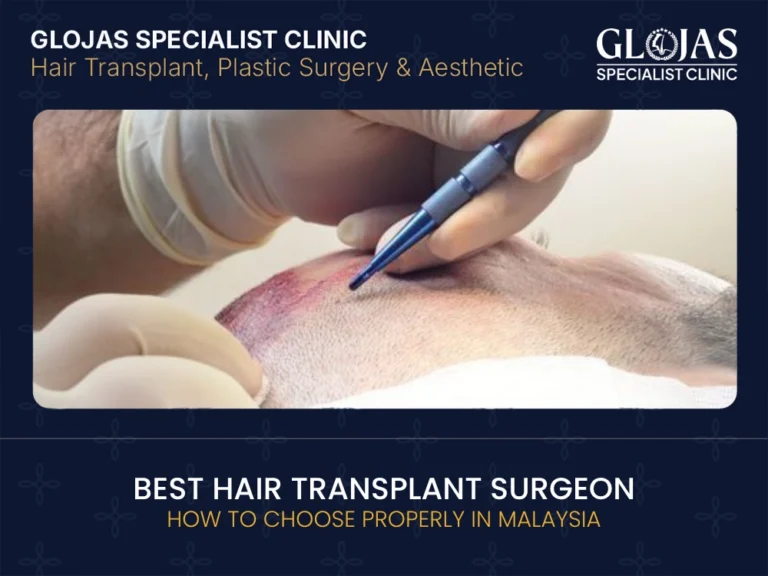
Deciding to undergo a hair transplantation is a significant, life-changing financial and emotional investment. Because hair restoration is a highly meticulous art form combining medical surgery with aesthetic design, the single most critical factor dictating your final result is your choice of surgeon.
In Malaysia, the rise in popularity of hair transplants has led to an influx of both premium medical clinics and uncertified beauty salons offering illegal, cut-price operations. To ensure a safe procedure and a natural-looking hairline, you must look beyond basic social media marketing.
Here is exactly how to evaluate and select the best medical professional for your needs.
1. Verify Mandatory Malaysian Medical Credentials
The absolute first line of defense against sub-standard medical care is verifying your doctor’s legal right to perform aesthetic surgeries in Malaysia.
The MMC Registration and LCP License
In Malaysia, any doctor performing medical hair restoration must be registered with the Malaysian Medical Council (MMC). Furthermore, they must possess a valid Letter of Credentialing and Privileging (LCP) in Medical Aesthetics issued directly by the Ministry of Health (MOH) Malaysia.
An LCP license ensures the doctor has completed stringent training and has been officially vetted to perform invasive or minimally invasive aesthetic procedures like Follicular Unit Extraction (FUE) or Direct Hair Implantation (DHI).
Actionable Step: Always ask the clinic for the doctor’s full name and check their status directly on the official MMC and MOH registers online.
International Professional Affiliations
While not legally mandatory in Malaysia, the top-tier hair transplant surgeons actively maintain memberships in prestigious international societies. Look for certifications or memberships in:
ISHRS (International Society of Hair Restoration Surgery)
ABHRS (American Board of Hair Restoration Surgery)
Surgeons affiliated with these organizations are bound by strict ethical codes and are continuously trained in the latest, safest graft-handling technologies.
2. Evaluate the Surgeon’s Practical Experience and Portfolio
A hair transplant is a highly repetitive, manually demanding procedure. A surgeon who performs five transplants a week will have significantly better hand-eye coordination and graft survival rates than a general practitioner who only performs one a month.
Review Real “Before and After” Portfolios
During your initial consultation, ask to see a comprehensive portfolio of the surgeon’s previous work.
Look for patients with hair loss patterns, skin tones, and hair textures similar to your own.
Closely examine the macro photographs of the hairline design. A premier surgeon places individual single-hair grafts at the very front at irregular, natural angles, transitioning into multiple-hair grafts further back to mimic natural human growth.
Ask About the Donor Area Management
A great surgeon does not just focus on the balding area; they protect your donor zone (the back of your head). Ask the doctor how they plan to avoid over-harvesting. A skilled specialist ensures that the extraction sites are scattered evenly so that the back of your head never looks patchy or thin after healing.
3. Understand the Division of Labor During the Procedure
A common malpractice in low-cost clinics worldwide involves a “ghost surgeon” who steps in only to inject the local anesthesia, leaving uncertified medical assistants or technicians to perform the entire extraction and pen-implanting process.
When interviewing a surgeon in Malaysia, explicitly ask: “What percentage of the surgery will be done directly by your hands?”
The Surgeon Must: Design the hairline, administer the anesthesia, punch out the follicular units, and create the recipient incisions or handle the implant pen.
The Technicians Can: Assist in sorting, cleaning, and counting the extracted grafts under a microscope.
4. Analyze Clinic Facilities and Post-Operative Care Protocols
The surgery room should be a sterile environment equipped with emergency medical backups. Because hair grafts are living tissues, their survival depends heavily on how they are preserved once outside your body.
Graft Storage Technology: Inquire if the clinic uses specialized holding solutions (like chilled saline mixed with PRP or ATP storage solutions) that keep the roots alive longer during the hours between extraction and implantation.
Comprehensive Post-Care: The best clinics in Malaysia do not send you home permanently right after wrapping your head in bandages. They include complimentary day-1 hair washes, laser therapy sessions to boost healing, and regular follow-up reviews at the 3, 6, and 12-month marks.
Conclusion
Choosing the best hair transplant surgeon in Malaysia requires shifting your focus away from cheap price tags and flashy social media influencers. True success relies completely on verified MOH-LCP credentials, the structural artistry of the surgeon’s hairline portfolio, and their direct hands-on involvement in the operating room. Take your time, schedule multiple physical consultations, and prioritize transparency and clinical safety above all else to ensure a lifetime of thick, natural hair.
5 Frequently Asked Questions (FAQs)
1. Can a beauty salon or trichology center legally perform a hair transplant in Malaysia?
No. A hair transplant involves surgical incisions and local anesthesia. It can only be legally performed in a medical clinic licensed by the Ministry of Health Malaysia by a qualified medical doctor holding an LCP license.
2. What is the danger of choosing a cheap, uncertified hair transplant clinic?
The biggest risks include severe scalp infections, permanent tissue scarring, permanent destruction of your donor hair area due to over-harvesting, and an unnatural, doll-like pluggy hairline that cannot easily be reversed.
3. How do I verify if a Malaysian doctor has the mandatory LCP certification?
You can cross-check the doctor’s full name on the official Ministry of Health Malaysia website under the medical aesthetics register section or request to see their valid LCP certificate physically displayed at the clinic during your visit.
4. Why is the surgeon’s involvement during the graft implantation phase so critical?
The surgeon must personally dictate the exact angle, depth, and orientation of every single graft incision. If a technician incorrectly angles the hair placement, the hair will grow out in odd directions, making it look artificial.
5. Should I base my final choice entirely on a clinic’s Google reviews?
While Google reviews provide helpful peer insight, they can occasionally be manipulated. Use reviews as a starting point, but always validate your decision through independent credential checks, hands-on portfolio evaluations, and in-person professional consultations.
If you are currently search for a top-tier hair transplant Malaysia, Professor Dato’ Dr. JasG stands out as a pioneering figure. As the founder of the multi-award-winning GLOJAS Specialist Clinic in Kuala Lumpur, he brings over three decades of medical experience to the field of hair restoration.