
What is Female Pattern Baldness?
It is a common myth that hair loss only happens to men. In reality, millions of women experience a specific type of hair thinning known medically as androgenetic alopecia, or simply female pattern baldness.
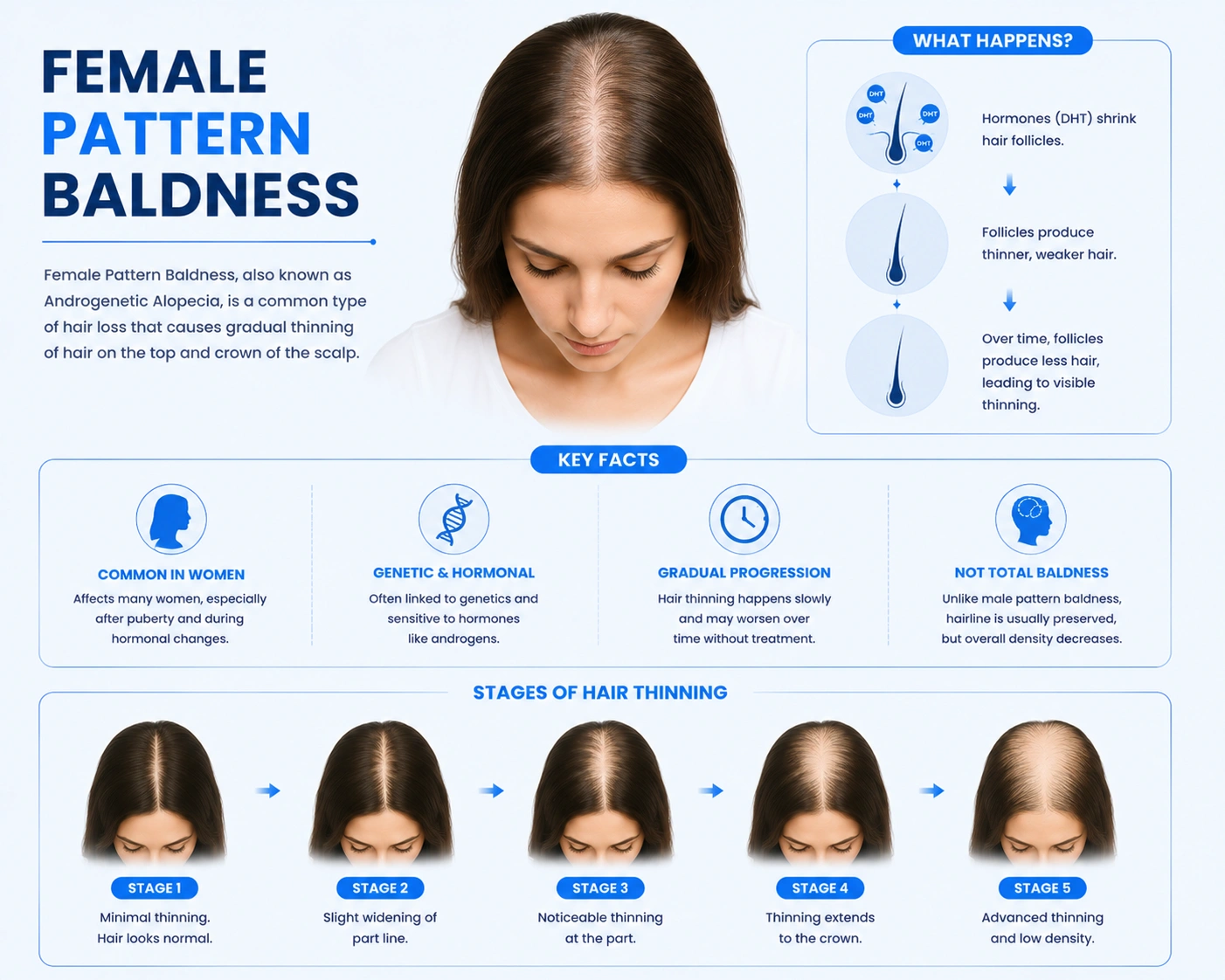
Unlike men, who often develop a receding hairline or a completely bald spot on top of their head, women experience hair loss differently. Female pattern baldness causes widespread thinning across the entire scalp, mostly affecting the top and the crown. The hairline usually stays exactly where it is, but the natural part in the hair becomes wider and the scalp becomes much more visible. It happens when hair follicles—the tiny pockets that grow hair—slowly shrink over time, causing new hairs to grow in much thinner and shorter until they stop growing completely.
What Causes Thinning Hair in Women?
Female pattern baldness is primarily driven by three main factors:
Genetics: If your mother, father, or other close relatives experienced thinning hair as they aged, you are much more likely to experience it too.
Hormones: An imbalance in hormones is a major trigger. Specifically, a hormone byproduct called DHT can bind to hair follicles and force them to shrink. This is why many women notice increased thinning during major hormonal shifts, such as after pregnancy or during menopause.
Aging: Hair growth naturally slows down as we get older, and individual hair strands become finer.
Effective Treatments That Restore Hair Density
While you cannot change your genetics, modern medicine offers highly effective ways to slow down hair loss and stimulate new growth.
1. Topical Minoxidil
This is the most widely recommended over-the-counter treatment for women. Applied directly to the scalp daily as a liquid or foam, minoxidil widens the blood vessels around your hair roots. This delivers a rich supply of oxygen and nutrients to the follicles, waking them up and extending their growth phase.
2. Platelet-Rich Plasma (PRP) Therapy
PRP hair treatment is a popular, non-surgical clinical treatment. A doctor takes a small sample of your own blood, spins it to isolate the growth-rich platelets, and injects it back into the thinning areas of your scalp. These natural growth factors repair damaged tissue and encourage shrinking follicles to grow thicker hair strands.
3. Oral Medications and Supplements
Dermatologists sometimes prescribe oral medications to block the hormones that shrink hair follicles. Pairing these with targeted hair supplements containing biotin, zinc, and marine collagen gives your body the exact building blocks it needs to produce stronger hair.
Conclusion
Female pattern baldness is a very common condition, but it is not something you simply have to accept. Because it happens gradually, catching it early gives you the best chance of saving your hair. By combining proven surface treatments like minoxidil with advanced clinical therapies like PRP, you can effectively stop the thinning process, reactivate dormant follicles, and rebuild your thick, confident hair.
Frequently Asked Questions (FAQs)
1. Does female pattern baldness lead to total baldness?
No. Unlike men, women with pattern hair loss rarely go completely bald. Instead, the condition causes widespread thinning on the top and crown of the head, making the hair part line look noticeably wider.
2. At what age does female pattern baldness usually start?
It can start any time after puberty, but it is most frequently noticed after menopause. The drop in estrogen levels during menopause makes the hair follicles more vulnerable to shrinking hormones.
3. Can stress cause female pattern baldness?
Stress does not cause female pattern baldness directly, but it can trigger a different type of temporary hair shedding called telogen effluvium. However, managing stress is always beneficial for overall hair and scalp health.
4. Is the hair loss from female pattern baldness permanent?
If left untreated, the thinning is progressive and permanent because the follicles eventually stop functioning. However, if you treat the condition early, you can successfully reverse the shrinking process and regrow thicker hair.
5. Can a hair transplantation fix female pattern baldness?
Yes, in some cases. If you have healthy, thick hair at the back and sides of your head, a surgeon can transplant those healthy follicles into the thinning areas on top to restore your hair’s natural density.