
Choosing between Dermal Fillers vs Botox depends on whether you want to “freeze” or “fill.” While both are popular anti-aging injectables in Malaysia, they work in entirely different ways. Understanding their mechanisms ensures you achieve natural-looking results that align with your specific aesthetic goals.
What’s the Difference Between Dermal Fillers and Botox?
How Dermal Fillers Work
Dermal fillers are gel-like substances, typically made of Hyaluronic Acid (HA), injected beneath the skin. They physically restore lost volume, smooth out deep folds, and enhance facial contours. Modern fillers mimic the body’s natural sugars to provide immediate structural support to sagging or thinning dermal layers.
How Botox Works
Botox is a neurotoxin derived from Clostridium botulinum. It works by temporarily blocking nerve signals to specific muscles. When the muscle can no longer contract, the skin above it relaxes, causing existing wrinkles to soften and preventing new expression lines from forming during facial movement.
Key Differences at a Glance
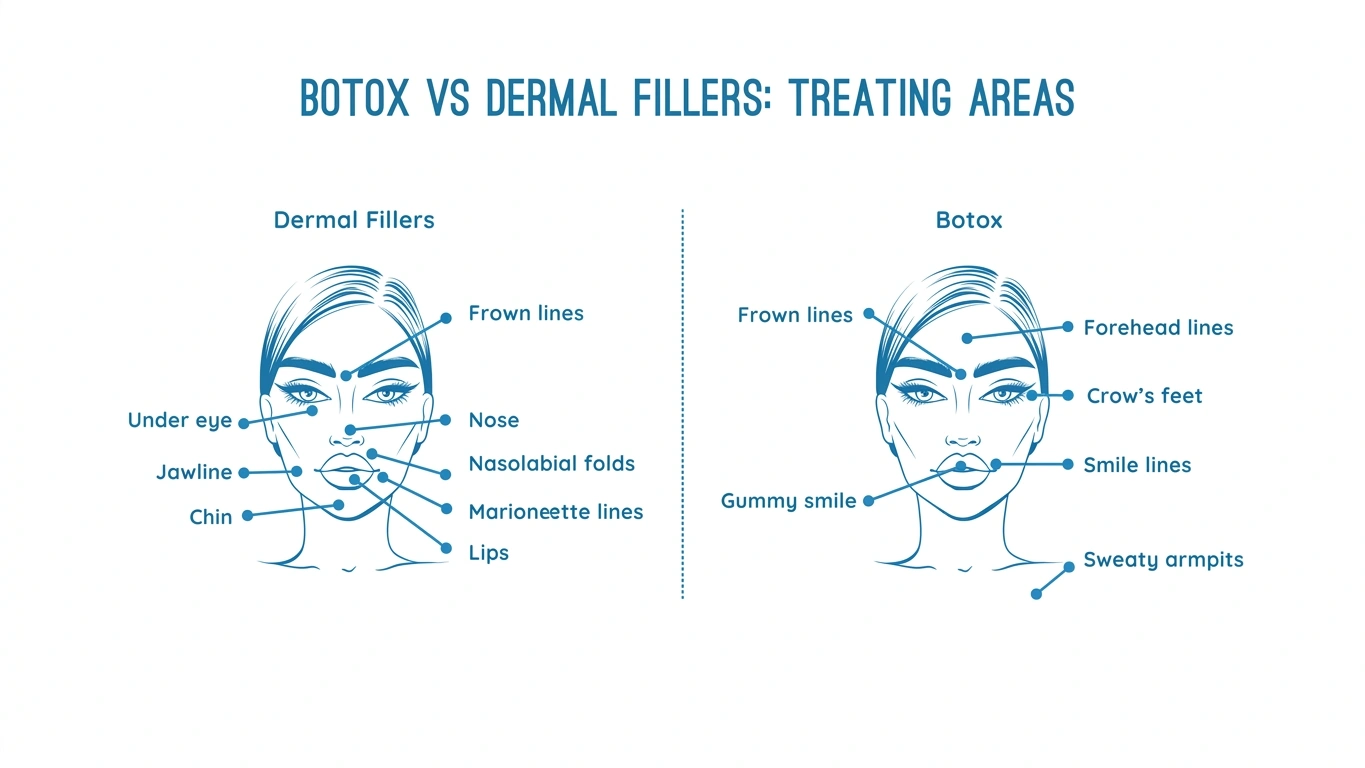
The primary difference lies in the target: Botox treats dynamic wrinkles caused by muscle movement (like crow’s feet), while fillers treat static wrinkles and volume depletion (like nasolabial folds). GLOJAS Specialist Clinic provides both treatments, tailoring the approach based on your unique facial anatomy.
Dermal Fillers vs Botox: Which Treats What?
Best Uses for Dermal Fillers
Fillers are the gold standard for adding “plumpness.” They are best used for enhancing lips, lifting cheeks, sharpening jawlines, and filling in hollow under-eyes (tear troughs). If your concern is a “sunken” look or deep creases that appear even when your face is at rest, fillers are likely the answer.
Best Uses for Botox
Botox excels at smoothing the upper face. It is the go-to treatment for forehead lines, “11” lines between the brows, and fine lines around the eyes. Beyond aesthetics, Botox is FDA-approved for medical conditions like chronic migraines and hyperhidrosis (excessive sweating), making it a highly versatile protein.
Combining Both Treatments
Many Malaysians opt for a “liquid facelift,” which combines both injectables. Botox relaxes the muscles to prevent further wrinkling, while fillers restore the youthful volume that gravity and age have taken away. This synergistic approach often yields the most comprehensive and harmonious facial rejuvenation results.
Cost Comparison: Dermal Fillers vs Botox in Malaysia
Average Cost of Dermal Fillers in Malaysia
In 2026, dermal fillers cost in Malaysia typically ranges from RM 1,500 to RM 3,500 per syringe. The total price depends on the brand used and the volume required. For example, a full jawline contouring session may require multiple syringes, increasing the overall investment.
Average Cost of Botox in Malaysia
Botox is usually priced per “unit” or per “area.” In Malaysia, you can expect to pay between RM 15 and RM 40 per unit, or roughly RM 800 to RM 2,000 per area. Since the dosage varies by muscle strength, men often require more units than women.
Duration of Results: Fillers vs Botox
How Long Do Dermal Fillers Last?
Hyaluronic Acid fillers are long-lasting but not permanent. Depending on the product density and the area treated, results typically last between 9 to 24 months. Areas with high movement, like the lips, tend to break down the filler faster than static areas like the chin.
How Long Does Botox Last?
Botox results are temporary, usually lasting between 3 to 6 months. As muscle function gradually returns, the lines and wrinkles will begin to reappear. Regular maintenance sessions are recommended to keep the muscles relaxed and maintain a smooth, youthful complexion over the long term.
Dermal Fillers vs Botox: Safety & Side Effects
Common Side Effects of Fillers
Most patients experience mild swelling, redness, or bruising at the injection site, which resolves within a few days. While rare, serious risks include vascular occlusion. Ensuring your treatment is performed by an LCP-certified doctor significantly minimizes these risks and ensures medical-grade safety protocols are followed.
Common Side Effects of Botox
Botox side effects are generally minimal, including temporary bruising or a mild headache. In rare cases, “ptosis” (drooping of the eyelid) can occur if the toxin migrates. Choosing an experienced injector who understands precise facial muscle anatomy is essential to avoid an “unnatural” or frozen look.
Which Treatment Is Best for Your Concerns?
For Wrinkles: Fillers or Botox?
If the wrinkles appear only when you smile or frown, Botox is the best choice. If the wrinkles are deep “valleys” present even when your face is neutral, fillers are needed to “fill” the gap. Often, a combination is used to address both types of lines.
For Volume Loss: Fillers or Botox?
For volume loss, dermal fillers are the clear winner. Botox cannot restore fat pads or bone density. Fillers act as a substitute for lost tissue, lifting the skin and providing the structural scaffolding necessary to reverse the sagging associated with the aging process.
For Lip Enhancement: Fillers or Botox?
For significant volume and shaping, dermal fillers treatment is the standard. However, a “Botox Lip Flip” can be used to subtly roll the upper lip outward for a poutier look without adding actual volume. Most patients seeking a “Kylie Jenner” effect choose HA fillers.
For Forehead Lines: Fillers or Botox?
Botox is the primary treatment for forehead lines. By relaxing the frontalis muscle, the skin flattens out. Fillers are rarely used in the forehead due to the high density of blood vessels, making Botox the safer and more effective option for this specific region.
Frequently Asked Questions About Dermal Fillers vs Botox
Can I Get Fillers and Botox Together?
Absolutely. Performing both during the same appointment is common and safe. This “full-face” approach addresses different layers of aging simultaneously. Your doctor will create a mapped-out plan to ensure the products are placed at the correct depths for optimal harmony and balance.
Which Is More Painful: Fillers or Botox?
Neither is considered highly painful. Botox uses a very fine needle and feels like a tiny prick. Fillers involve a slightly thicker gel, but most premium brands contain Lidocaine (a numbing agent) to ensure comfort. Topical numbing cream is usually applied beforehand to further minimize sensation.
How Soon Will I See Results?
Fillers provide instant gratification, with immediate visible volume, though final results settle after two weeks. Botox takes time to work; you will notice the muscle softening within 3 to 5 days, with the full “smoothing” effect peaking at the 14-day mark post-injection.